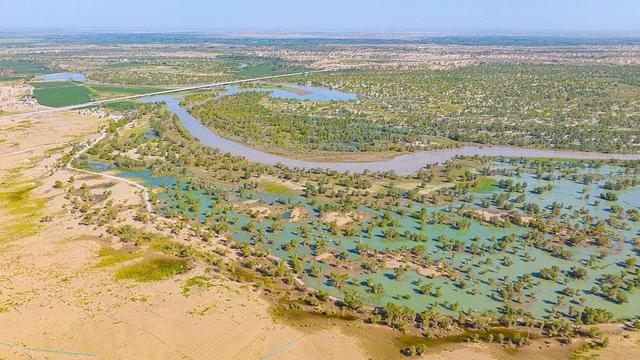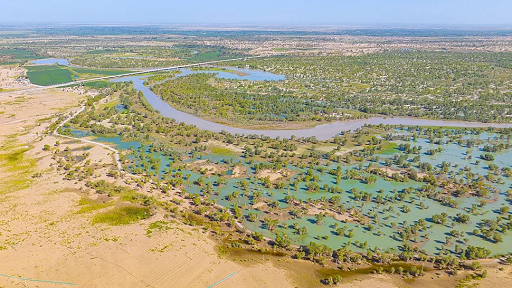
Massive news in carbon sequestration: The Taklamakan Desert's "Green Wall" is now a verified carbon sink. Satellite data shows a 1-2 ppm CO2 drop over the region during wet seasons. 66 billion trees later, a "biological void" is now helping the planet breathe. 🌍🛰️

https://www.livescience.com/planet-earth/plants/china-has-planted-so-many-trees-around-the-taklamakan-desert-that-its-turned-this-biological-void-into-a-carbon-sink

#ClimateScience #Afforestation #CarbonSink

China has planted so many trees around the Taklamakan Desert that it's turned this 'biological void' into a carbon sink

Huge-scale ecological engineering around the edges of one of the world's largest and driest deserts has turned it into a carbon sink that absorbs more CO2 than it emits, research suggests.

Live Science

The Year The #ArcticTundra Went From #CarbonSink to Carbon Source : Medium

A #Record-Breaking #Drill Beneath #Antarctic #Ice Revealed a Big #Surprise : Misc

#Webb #Telescope Uncovers #HydrogenSulfide on Super-#Jupiters, Offering New #Clues About #Planet Formation : Misc

Latest #KnowledgeLinks

https://knowledgezone.co.in/resources/bookmarks

China's 3,046-Kilometer "Great Green Wall" Has Transformed Its Largest Desert Into A Carbon Sink

#China has a new #GreatWall but this one isn't built of stone and mortar to repel marauding invaders from the north. Instead, the “Great Green Wall” is a vast belt of #trees and #shrubs lining the bottom of its northern deserts, designed to halt the steady creep of #desertification. New research suggests this massive megaproject is already functioning as a vital #CarbonSink, helping to stabilize the local #environment.

Located in northwest China’s Xinjiang Uyghur Autonomous Region, the #TaklamakanDesert is one of the driest places on Earth and the largest #desert in the country. It’s sometimes called the “Sea of Death” and “The Place of No Return” because of its desolate landscape, defined by towering dunes and a scarcity of #wildlife

https://www.iflscience.com/chinas-3046-kilometer-great-green-wall-has-transformed-its-largest-desert-into-a-carbon-sink-82590

#ClimateCrisis

#JWST fully solves the #Mystery of “Little #RedDots” : Medium

#China has planted so many trees around the #Taklamakan #Desert that it's turned this '#Biological void' into a #CarbonSink : Live Sci

#Researchers unlock #FiberOptic connection 1.2 million times faster than #Broadband : Pop Sci

Latest #KnowledgeLinks

https://knowledgezone.co.in/resources/bookmarks

The UK government’s proposed 3p-a-mile electric vehicle tax lays bare its true nature: it is a Treasury revenue-raising exercise masquerading as environmental policy. Far from a green initiative, this mileage-based levy exposes a systemic geographic and political disparity that disproportionately punishes rural Scotland and Wales to the benefit of London and the South East.

​Consider the stark regional financial disparities. Under this proposal, drivers in densely populated, heavily polluted urban centres with extensive public transport networks, such as London, will pay an average of just £33 a year. Conversely, drivers in rural Scotland and Wales—who rely entirely on their vehicles for essential travel across vast geographies—face averages of over £156 a year, with a standard 8,500-mile driver paying upwards of £255.
​What this mileage-based tax completely ignores is the environmental heavy lifting performed by these rural landscapes. The extensive forests, mountains, and peatlands of Scotland and Wales act as vital carbon sinks for the entire UK. UK woodlands currently hold roughly 150 million tonnes of carbon in their biomass and sequester millions more annually. Furthermore, through the process of evapotranspiration, these vast green spaces act as natural air conditioning, significantly cooling the wider UK climate and regulating regional temperatures.

​To understand the inherent value of these rural spaces, one only has to look at the continent. European cities are currently investing millions in urban tree-planting initiatives, desperately trying to mitigate the 'Urban Heat Island' effect that traps emissions and drives up deadly urban temperatures. The irony here is profound: a tax purportedly born of environmental concern now financially penalises rural drivers who live amongst and navigate natural carbon sinks, whilst effectively offering a massive discount to drivers contributing to the very urban heat islands that the rest of Europe is spending fortunes to cool.

​However, the inequity extends far beyond the roads and into the very power grid that charges these vehicles. Both Scotland and Wales are significant net exporters of electricity. Through vast wind, hydro, and renewable energy infrastructure, they generate considerably more power than they consume, exporting the surplus directly to England to meet the massive energy demands of cities like London. Despite powering the UK, neither Scottish nor Welsh consumers receive a discount on their electricity bills. In fact, due to the structure of the national grid, rural consumers frequently pay higher standing charges for their electricity than the consumers in the urban areas that absorb their exported energy.

​This presents a stark picture of two UK nations being disproportionately squeezed. They generate the clean electricity and their landscapes absorb the carbon, yet their residents are forced to pay the highest transport taxes and energy premiums simply because of their geography.

​The ultimate pay-off of this policy failure is highly political. For decades, a prevailing Westminster narrative has accused Scotland and Wales of being heavily subsidised by England. Yet, when one examines the actual flow of resources—clean energy flowing south, whilst punitive mileage taxes and high energy standing charges flow north and west—the narrative is exposed as nonsense. Policies like the 3p-a-mile EV tax serve as undeniable fuel for Scottish and Welsh independence movements, providing empirical evidence of an economic union that extracts resources from the rural periphery merely to subsidise the urban core.

#UKPolitics #ElectricVehicles #Taxation #NetZero #ClimateChange #ScottishIndependence #YesCymru #CarbonSink #EnergyPolicy #UrbanHeatIsland

Weekend #Plankton Factoid 🦠🦐
The White Cliffs of Dover are an iconic formation often seen on television or films that can be over 100 m high. The white colour is chalk "biomicrite" formed by the compacted deposits from dense blooms of Coccolithophore phytoplankton covered with distinct plates of calcite (coccoliths) in a shallow sea during the Late Cretaceous. The dark bands of flint within the chalk are formed from silica skeletons of sponges and radiolarian zooplankton.
#CarbonSink #geology

#climate #forests #CarbonSink

Germany’s dying forests are losing their ability to absorb CO2. Can a new way of planting save them? | Germany | The Guardian
https://www.theguardian.com/environment/2026/jan/08/germany-forests-bark-beetle-spruce-co2-carbon-sink-monoculture-aoe

Germany’s dying forests are losing their ability to absorb CO2. Can a new way of planting save them?

Vast swathes of the country’s trees have been killed off by droughts and infestations, in a trend sweeping across Europe. A shift towards more biodiverse cultivation could offer answers

The Guardian

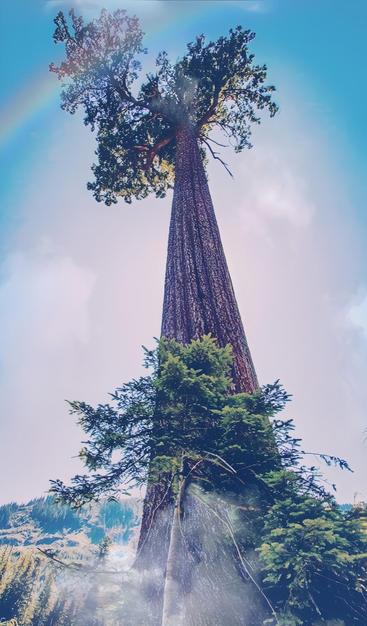
My #PhotoArt tribute to #BigLonelyDoug - one of the biggest #DouglasFir #trees in the world.

Learn more about this lonely #OldGrowth tree:
"It has the third highest tree score and third widest diameter of any known Douglas-fir in Canada, following the Red Creek Fir in the nearby San Juan Valley and the Bonin Giant in the Coquitlam River watershed in British Columbia's Lower Mainland"
https://en.wikipedia.org/wiki/Big_Lonely_Doug

#SaveOldGrowth #WorthMoreStanding #BCForestryReform #ProtectForests #StopDeforestation #StopEcocide #PortRenfrew #Pacheedaht #Dididaht #TreeLovers #fir #EarthNeedsGuardians #nature #CarbonSink #Climate #BanCorporateLobbyists #StopCorporateWelfare #BCpoli #BCNDP #BCNewDeathParty #CapitalismKillsEverything #Environmentalist #PhotoEdit #VisualArt #ThickTrunkTuesday

Greece. Another carbon sink one bites the dust. After Germany, Finland, and ...? Yet EU policy is still to use national carbon sinks to balance insufficient or absent sectoral CO2 reduction. Which is allowed practice according to the UNFCCC as well. Stupid, isn't it. It's called the pyrocene for a reason.

https://www.theguardian.com/environment/2025/dec/19/survived-wildfires-drought-killing-greece-fir-forests-aoe

#Forest #BarkBeetle #WildFire #CarbonSink #Greece #Pyrocene #Anthropocene #EconObscene

They survived wildfires. But something else is killing Greece’s iconic fir forests

In the Peloponnese mountains, the usually hardy trees are turning brown even where fires haven’t reached. Experts are raising the alarm on a complex crisis

The Guardian