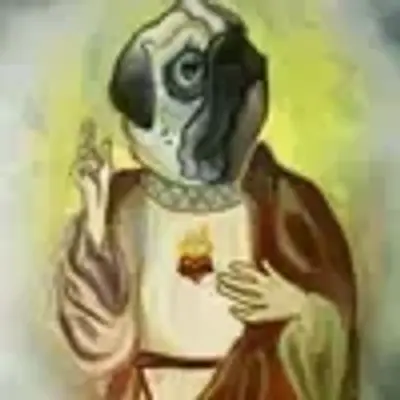
 PugJesus
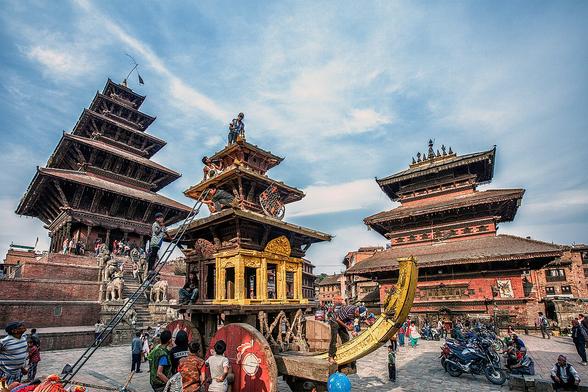
Chariot being prepared for New Year's festivals, Bhaktapur, Nepal
If you own a 🛴#Segway and haven't done this, what's even the point in a 🛴#Rome #RomanEmpire #RomanLegion #Legionnaire #Chariot #Chariots.


Jason (& the Argonauts)
Jason was an ancient Greek mythological hero & leader of the Argonauts, whose quest for the Golden Fleece is in Greek literature.He’s the son of Aeson, who was the rightful King of Iolcos (modern-day Vollos). He was married to the “sorceress” Medea, the granddaughter of Helios, the sun god.
Jason appears in various literary works in the classical world of Greece & Rome, including the epic poem Argonautica & the tragedy Medea.
Pelias (Jason’s half-uncle & his dad’s half-brother) was power hungry & sought to gain authority over all of Thessaly. Pelias was the offspring of a union between their shared mom, Tyro (the daughter of Salmoneus), & the sea god, Poseidon.
In a bitter feud, Jason overthrew Aeson (again, who was the rightful King), killing all the descendants of Aeson that he could. He spared his half-brother for unknown reasons.
Aeson’s wife, Alcimede I, had a newborn son named Jason. She saved from Pelias by having female attendants cluster around the infant & cry as if he were stillborn. Being scared that Pelias would eventually notice & unalive her son, Alcimede sent him away to be raised by the centaur, Chiron. Chiron also tutored Achilles & Asclepius.
She claimed that she had been having an affair with him all along. Pelias, fearing that his ill-gotten kingship might be challenged, consulted an Oracle who warned him to beware of a man wearing only 1 sandal.
Many years later, Pelias was holding games in honor of Poseidon when the grown Jason arrived in Iolcus, having lost 1 of his sandals. He lost this sandal in the river Anauros/Anaurus while helping an old woman across the water.
The old woman was actually Hera, the goddess, in disguise. She (Hera) blessed him because she knew what Pelias had planned. When Jason entered Iolcus, Pelias recalled what the Oracle had warned him about. Jason aware that he was the rightful King, informed Pelias.
Pelias agreed to step down from the throne, on the condition that Jason brings back the Golden Fleece. Jason agrees to these terms.
Jason then assembles the group that becomes known as the Argonauts. They were named after their ship, the Argo. Jason commissions the shipbuilder Argus to build the Argo. (We feel like Argus named the ship after himself.)
The Argo was a vessel that was outfitted with a piece of talking oak from the sacred grove of Dodona. Argus becomes an Argonaut. Jason then recruits the rest of the Argonauts.
The Argonauts list:
Acastus
Admetus
Atalanta, the formidable huntress
Augeas
The winged Boreads, Zetes & Calais (sons of the North Wind)
The Dioscuri, Castor & Pollux/Polydeuces
Euphemus
Heracles/Hercules (Yes, THAT one. He eventually left the quest.)
Idas
Idmon, the seer
Lynceus
Meleager
Orpheus
Peleus (Achilles’ dad)
Philoctetes
Telamon
Tiphys, the helmsman
After a few detours, Jason & his comrades came to Colchis (modern-day Black Sea coast of Georgia, the country) to get that sweet, sweet Golden Fleece. Colchis had a king (King Aeetes). The Fleece was given to him by Phrixus. The king promised to give Jason the Fleece, for a price: 3 tasks.
When presented with these tasks, Jason got discouraged & depressed. The goddess Hera was on Jason’s side. Hera convinced Aphrodite to convince her son, Eros, to make King Aeetus’ daughter, Medea, fall in love with Jason. As a result of this love-god meddling, Medea ended up being the key to Jason’s success.
First, Jason had to plow a field with a fire-breathing oxen (the Khalkotauroi) that he had to yoke himself, Medea gave Jason an ointment that made his skin fireproof from the oxen’s flames. Then Jason planted the teeth of a dragon into a field. The teeth sprouted into an army of warriors called spartoi. Medea told Jason how to defeat the spartoi.
Before the spartoi attacked Jason, he threw a rock into the crowd. The spartoi weren’t able to figure out where the rock came from. So the spartoi turned on each other & defeated one another. Jason’s last task was to overcome the sleepless dragon that guarded the Golden Fleece. Medea to the rescue, again.
She gave Jason a potion that he sprayed the dragon with. The dragon fell asleep. Jason was able to get the Golden Fleece. Then he sails away with Medea. Medea distracted her dad (who chased the pair as they fled) by unaliving her brother, Apsyrtus, & throwing pieces of his body into the sea.
King Aeetus stopped to gather each piece of Apsyrtus’ body. This gave Jason, & Medea, time to escape. On the way back to Iolcus, Medea prophesied to Euphemus (the Argo’s helmsman) that he would one day rule Cyrene. This prophecy came true through Euphemus’ descendant, Battus.
Zeus, as punishment for the slaughter of Medea’s brother, sent a series of storms at the Argo & blew it off course. The Argo then actually spoke & said that they should seek purification with Circe, a nymph living on the island of Aeaea. After being cleansed, they continued their journey home.
Chiron had told Jason that without the aid of Orpheus, the Argonauts would never be able to pass by the Sirens. The same Sirens encountered by Odysseus in Homer’s The Odyssey. The Sirens lived on 3 small, rocky islands called Sirenum scopuli & sang beautiful songs that enticed sailors to come to them, which result in the wrecking of their ships on the islands.
When Orpheus heard their voices, he said, “Here, hold my drink a sec!” He pulls out his lyre & played music that was more beautiful & louder, drowning out the Sirens’ songs so the sailors couldn’t hear them!
The Argo then came to the island of Crete, guarded by Talos, who was a man made of bronze. As the ship came close, Talos hurled huge stones at the ship, keeping it at bay. Talos had 1 ichor vessel (like a blood vessel) that went from his neck to his ankle, bound shut by 1 bronze nail. (Ichor is pretty much the blood of the gods.)
Medea, helping Jason, cast a spell on Talos to calm him. She then removes the bronze nail. Talos ends up bleeding to death. The Argo was able to sail on.
Jason, celebrating his return with the Golden Fleece, saw his dad was too sick & old to participate in the celebrations. Jason asks Medea to take some years from his own life & add the years to his dad’s life. (This is actually sweet.)
Medea complied. There was no cost to Jason’s life. Medea withdrew the blood from Aeson’s body & infused it with certain herbs. She put it back into his veins. This invigorated him. Pelias’ daughters took notice of this, & wanted a piece of that action from their own dad.
Using her sorcery, Medea told Pelias’ daughters that she could make their dad smooth & vigorous as a kid by chopping him up into pieces & boiling the pieces in a cauldron of water & magical herbs. Medea shows that she can do this with the oldest ram in a flock, which leapt out of the cauldron as a lamb. The girls naively sliced up their dad & put in the cauldron.
Medea just didn’t put in the magical herbs to revive Pelias. So Pelias was dead. Pelias’s son, Acastus, drove Jason, & Medea, into exile for the unaliving. The couple settles in Corinth.
In Corinth, Jason gets engaged to marry Creusa/Glauce, a daughter of the king of Corinth. He did this for political advancement. Medea confronts Jason about this engagement. Because SHE’S already his wife. She reminds Jason of all the help she’s given him & the vow he made, to Hera, to love Medea & only Medea forever.
Jason tells Medea that it’s not her that he should thank but it’s Aphrodite who should get the kudos. Because Aphrodite made Medea fall in love with Jason. (Ok, Jason’s kinda right. It was Aphrodite via Eros.) Medea was incensed! (Rightfully so.)
Jason had vowed to be only Medea’s forever so Medea took her revenge by giving Creusa/Glauce a cursed dress, as a wedding gift. This dress stuck to her body & burned her to death as soon as she put it on. Cerusa/Glauce’s dad, Creon, burned to death with his daughter as he tried to save her.
Then Medea killed her sons that she had with Jason to ensure he had no legacy. When Jason learned of this, Medea was already gone. She fled to Athens in a chariot pulled by dragons that was sent by her grandpa, Helios (the sun-god).
As a result of breaking his vow to love Medea only forever, Jason lost his favor with Hera & died lonely & unhappy. He spent his final years as a broken man, wandering the docks where the rotting hull of the Argo sat. One day, while he was resting under the ship’s prow, a piece of the decaying wood broke off & fell onto Jason’s head, unaliving him instantly.
Make a one-time donation
Your contribution is appreciated.
DonateMake a monthly donation
Your contribution is appreciated.
Donate monthlyMake a yearly donation
Your contribution is appreciated.
Donate yearly#Acastus #Achilles #Admetus #Anauros #Aphrodite #Apsyrtus #Argo #Argonautica #Argonauts #Argus #Asclepius #Atalanta #Athens #Augeas #Battus #BlackSea #Boreads #Calais #Castor #Cauldron #Centaur #Chariot #Chiron #Circe #Colchis #Corinth #Crete #Creusa #Dioscuri #Dodona #Dragon #Eros #Euphemus #Filicide #Georgia #Glauce #GoldenFleece #Greece #Greek #GreekMythology #Helios #Hera #Heracles #Hercules #Homer #Ichor #Idas #Idmon #Iolcos #Iolcus #Jason #Khalkotauroi #KingAeetes #KingAeson #KingPelias #Lynceus #Medea #Meleager #Odysseus #oracle #Orpheus #Peleus #Pelias #Phrixus #Pollux #Polydeuces #Poseidon #QueenAlcimedeI #Rome #Salmoneus #Sirens #SirenumScopuli #Spartoi #Talos #Telamon #TheOdyssey #Thessaly #Tiphys #Tyro #Zetes #Zeus
Upanishads
Written primarily between 800-200 BCE. This is Sanskrit texts of the late Vedic & post-Vedic periods that “document the transition from the archaic ritualism of the Veda into new religious ideas & institutions” & the emergence of the central religious concepts of Hinduism.
The word Upanishad comes from the Sanskrit roots upa (near), ni (down), & shad (to sit). It literally describes a student sitting at the feet of a guru to receive “secret” or “higher” knowledge.
The central concern of all Upanishads is to discover the relations between ritual, cosmic realities (including gods), & the human body/person, postulating Atman & Brahman as the “summit of the hierarchically arranged & interconnected universe.” But various ideas about the relation between Atman & Brahman can be found.
The Upanishads isn’t a single book but a collection of over 200 texts (with 13 “Principal” Upanishads). Despite their diversity, they all converge on 1 revolutionary equation that changed religious thought: Atman=Brahman. Atman – the individual soul or the “true self” that resides deep within a person, beyond the ego & the body. Brahman – the ultimate, infinite, & formless reality that underlies the entire universe.
108 Upanishads are known, of which the 1st dozen or so are the oldest & most important & are referred to as the principal, or main (mukhya), Upanishads. The mukhya Upanishads predate the Common Era.
Of the remainder, 95 Upanishads are part of the Muktika canon, composed from about the last centuries of 1st-millennium BCE through about the 15th century CE.
The Upanishads argue that our suffering (Samsara) comes from the illusion (Maya) that we are separate from the universe. Liberation (Moksha) occurs the moment a person realizes that their inner self is identical to the cosmic reality.
Translation of the Upanishads in the early century started to attract attention from a Western audience.
The Upanishads gave the vocabulary for the next 2,500 years of Eastern spirituality:
One of the oldest, & largest, it contains the famous dialogue between the sage Yajnavalkya, & his wife, Maitrey. When Yajnavalkya offers her his worldly wealth before retiring to the forest, she asks: “If this whole earth filled with wealth were mine, would I become immortal through it?” (Wise girl, we like that around here!)
His answer (which was a “Um, no ma’am. That’s not how that works around here, partner.”) leads into a profound discourse on how the Self is the only thing truly dear to us.
The Chandogya Upanishad (The “Song” Teaching) is famous for the phrase “Tat Tvam Asi” (Thou Art That). It tells of a dad teaching his son, Shvetaketu, using metaphors (parables if you’re from that world) from nature. He asks his son to dissolve salt in water. Even though the salt cannot be seen, its essence is everywhere in the water. This explains how Brahman permeates everything.
The Katha Upanishad (The Dialogue with Death) is perhaps the most “US culture”-friendly Upanishad. A young boy, named Nachiketa, finds himself at the gates of the underworld & waits for Yama (the God of Death). Yama is impressed by Nachiketa’s persistence & offers Nachiketa 3 boons/blessings/gifts (vara).
The 1st boon was Peace. Nachiketa asks that his dad’s anger be appeased & that Nachiketa would be welcomed home lovingly. This represents family harmony & emotional peace.
The 2nd boon was Knowledge of the Fire Sacrifice. Nachiketa asks for knowledge of the sacred fire sacrifice ritual (Agni Vidya) that leads to the Heavenly Realms. This represents righteous action(s) & spiritual discipline.
The 3rd boon was Self-Realization. Nachiketa asks for the mystery of what happens after death & the nature of the soul, seeking true knowledge of the Atman. Yama grants Nachiketa this request only after testing his dedication. For this last boon, Nachiketa asked: “What happens after death?” Yama’s teachings on the nature of the soul & the “chariot” of the body is a cornerstone of Vedantic thought.
One-Time Monthly YearlyMake a one-time donation
Make a monthly donation
Make a yearly donation
Choose an amount
$1.00 $5.00 $10.00 $1.00 $1.00 $10.00 $1.00 $1.00 $10.00Or enter a custom amount
$Your contribution is appreciated.
Your contribution is appreciated.
Your contribution is appreciated.
DonateDonate monthlyDonate yearly #15thCenturyCE #1stMillenniumBCE #800BCE #Atman #Aum #Brahman #ChandogyaUpanishad #Chariot #CommonEra #GodOfDeath #Hinduism #Karma #KathaUpanishad #LateVedicPeriod #Maitrey #MandukyaUpanishad #Maya #Moksha #Mukhya #MuktikaCanon #Nachiketa #Om #PostVedicPeriod #Reincarnation #Samsara #Sanskrit #Shvetaketu #SongTeaching #TheDialogueWithDeath #Upanishads #Vedas #Yajnavalkya #Yama
Meanwhile, on sandy arenas of Terra Australis…


#tbt: Jan. 1st 2025, I'd just arrived in #Udupi #India on #sabbatical, a "baby"; knew no one. With Sri Krishna's grace, the Swamijis' guidance, and the kindness of hundreds, I now feel I belong and welcomed there. 🙏
Some pictures I took that day (PS alt text):


 Absolute Memery 🎭
 Joe Noonan
 Kit Author
 U3dn
U3dn Spirituality & Religious Studies
 Brie Mmm
 Brandi
 Sean Murthy