65 Followers
74 Following
16 Posts
Genome editing, functional genomics, and cells figuring out how to eat themselves without dying. Professor of Genome Biology at ETH Zürich. https://cornlab.com
Websitehttps://cornlab.com
LocationZürich, Switzerland
We need more #CRISPR Cas systems isolated from bacteria unknown to our immune system. You can look around on this planet, in every single corner. Or you can travel back in time. We chose the second path, and reported the outcome today in #NatureMicrobiology
https://www.nature.com/articles/s41564-022-01265-y
Evolution of CRISPR-associated endonucleases as inferred from resurrected proteins | Nature Microbiology

Clustered regularly interspaced short palindromic repeats (CRISPR)-associated Cas9 is an effector protein that targets invading DNA and plays a major role in the prokaryotic adaptive immune system. Although Streptococcus pyogenes CRISPR–Cas9 has been widely studied and repurposed for applications including genome editing, its origin and evolution are poorly understood. Here, we investigate the evolution of Cas9 from resurrected ancient nucleases (anCas) in extinct firmicutes species that last lived 2.6 billion years before the present. We demonstrate that these ancient forms were much more flexible in their guide RNA and protospacer-adjacent motif requirements compared with modern-day Cas9 enzymes. Furthermore, anCas portrays a gradual palaeoenzymatic adaptation from nickase to double-strand break activity, exhibits high levels of activity with both single-stranded DNA and single-stranded RNA targets and is capable of editing activity in human cells. Prediction and characterization of anCas with a resurrected protein approach uncovers an evolutionary trajectory leading to functionally flexible ancient enzymes. The CRISPR–Cas9 system is widely studied for its role as a phage defence system and for gene editing applications, but its evolutionary origins are poorly understood. Here the authors use ancestral sequence reconstruction to determine the evolutionary history and ancient protein sequences of Streptococcus pyogenes Cas9 ancestors.

At least, I assume this is CRISPR… not explicit mention in the article.
#CRISPR always moves faster than even I anticipate. I remember discussing technology like this with a different team back in 2016. It seemed at least a decade years away. Yet here we are! https://www.bbc.co.uk/news/science-environment-63937438
Gene-edited hens may end cull of billions of chicks

Israeli researchers claim to have developed a flock of gene-edited hens that lay eggs from which only female chicks hatch.

BBC News

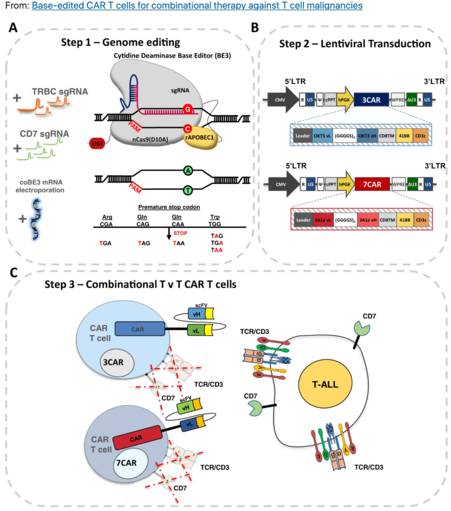
Exciting to see that the base editing strategies for gene inactivation that Pierre Billon in our lab and the Adli lab contributed to develop have been useful to engineer T cells for the treatment of a patient with T-ALL! #iSTOP #CRISPRSTOP #GenomeEditing #CRISPR #cancer

World-first use of base-edited cells to treat ‘incurable’ leukaemia
https://www.ukri.org/news/world-first-use-of-base-edited-cells-to-treat-incurable-leukaemia/#:~:text=A%20patient%20with%20'incurable'%20T,acute%20lymphoblastic%20leukaemia%20in%202021

Base-edited CAR T cells for combinational therapy against T cell malignancies
https://www.nature.com/articles/s41375-021-01282-6

World-first use of base-edited cells to treat ‘incurable’ leukaemia

A patient with ‘incurable’ T-cell leukaemia has been treated with base-edited T-cells in the world’s first reported use of a base-edited therapy.

Join The First Swiss #CRISPR Symposium, Feb 9th @ Zürich https://crisprsymposium202.wixsite.com/crisprsymposium2023
Home | Crisprsymposium2023

The first Swiss CRISPR symposium that brings together the CRISPR community in Switzerland

Crisprsymposium2023
Come join us on February 9 for a great lineup of speakers at the 2023 #Swiss #CRISPR symposium in #Zurich. Plenary talks from Sam Sternberg, Roger Geiger, Fyodor Urnov, Adriano Aguzzi, Alexis Komor, and Toni Cathomen. Co-organized by Randall Platt, Gerald Schwank, Martin Jinek, and myself. https://crisprsymposium202.wixsite.com/crisprsymposium2023
Home | Crisprsymposium2023

The first Swiss CRISPR symposium that brings together the CRISPR community in Switzerland

Crisprsymposium2023

Meanwhile, in Switzerland

"The SNSF is adapting its Open Access requirements as of the beginning of 2023. Scientific articles will now need to be accessible immediately. This is in line with the principles of cOAlition S, which the SNSF joined in June 2022."

#ScientificPublishing #ScienceFunding #SciencePublishing #OpenAccess #OpenScience

https://www.snf.ch/en/33WC4FGNdpfXrqPV/news/immediate-open-access-without-restrictions-changes-as-of-1-january-2023

Immediate Open Access without restrictions – changes as of 1 January 2023

Swiss National Science Foundation (SNSF)

Swiss National Science Foundation (SNSF)
New research discovered protein droplets act as a "smart molecular glue" in cell division, helping position the nucleus correctly. These findings solve a long-standing mystery about how moving protein structures in cells are held together. #science https://www.nature.com/articles/s41556-022-01035-2
Multivalency ensures persistence of a +TIP body at specialized microtubule ends - Nature Cell Biology

Maan et al., Meier et al. and Song et al. report that microtubule plus-end binding proteins can undergo liquid–liquid phase separation to regulate microtubule dynamics.

Nature

Continuing #introduction: by day I'm a professor (biochemistry & cell biology) running a research lab where we've published many studies using budding yeast (think beer and bread).

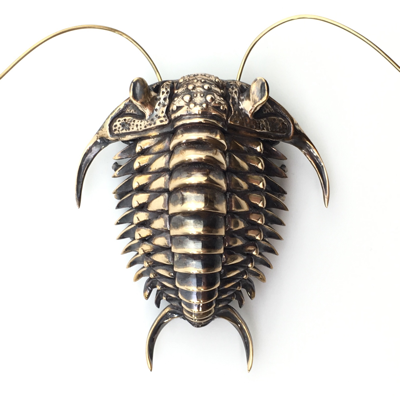
So naturally, as an artist by night, I had to sculpt our favorite organism. Here is Saccharomyces cerevisiae in late anaphase, mother cell producing a daughter cell, jeweled chromosomes separating inside the nucleus. Bronze, silver, 3D printed steel, and apatite gemstones. #sciart #cellbiology #celldivision

#Multiplex Generation, Tracking, and Functional #Screening of Substitution Mutants Using a #CRISPR/Retron System | ACS Synthetic Biology

https://pubs.acs.org/doi/10.1021/acssynbio.0c00002

#synbio #genetictools #GenomeEditing #crispr #retron