📰 "Cell Division Changes Fate Decisions in a Genetic Toggle Switch"
https://arxiv.org/abs/2606.16803 #CellDivision #Q-Bio.Sc
#Dynamics #Q-Bio.Mn
#Cell
Cell Division Changes Fate Decisions in a Genetic Toggle Switch
Gene regulatory networks govern cellular fate decisions through multistable dynamics. The genetic toggle switch is a canonical model of such behaviour; yet, the impact of cell division on its dynamics remains poorly understood. We derive analytical separatrices for a simplified Boolean toggle switch with and without division. We show that division can redirect trajectories with identical initial conditions to opposing stable states, and we define a region of disagreement where fate decisions are predicted incorrectly if division is neglected. Our results imply that division can fundamentally reshape fate boundaries in multistable regulatory networks.
📰 "Molecular interplay between Integrative Mobile Elements exploiting Xer drives the evolution of cholera pandemics"
https://www.biorxiv.org/content/10.64898/2026.06.12.731946v1?rss=1 #CellDivision #CellMolecular interplay between Integrative Mobile Elements exploiting Xer drives the evolution of cholera pandemics
XerC and XerD are ubiquitous bacterial recombinases dedicated to chromosome dimer resolution. They add a crossover at a specific chromosomal site, dif, when activated by the FtsK cell division protein. Several integrative mobile elements exploiting Xer (IMEXs) have been reported. IMEXs hijack XerCD to integrate at dif in an FtsK-independent manner. The most notable IMEX is the CTXΦ bacteriophage of Vibrio cholerae, which encodes the Cholera toxin. V. cholerae isolates often contain several sequentially integrated IMEX, forming arrays. In the current cholera pandemic lineage, CTXΦ integrated in the dif site of the primary V. cholerae chromosome, difI, after the integration of another IMEX, TLCΦ (Toxin-Linked Cryptic). The strict order of TLCΦ and CTXΦ integration has been explained via a dif site-correction hypothesis, where the difI site of the environmental ancestor of the current pandemic isolates was non-functional and was corrected by the integration of TLCΦ. Here, we traced the inheritance of difI variants and IMEXs in environmental and pandemic isolates. We show that IMEX arrays undergo rearrangements not congruent with the core genome phylogeny and that TLCΦ integration preceded CTXΦ integration in pandemic lineages. We demonstrate that the difI sites of environmental and pandemic isolates are equally functional for dimer resolution and CTXΦ integration, and show that TLCΦ and another IMEX, VGJΦ, encode a Xer activation factor that facilitates CTXΦ integration, suggesting an alternate explanation for the integration order of IMEX in environmental and pandemic isolates.
### Competing Interest Statement
The authors have declared no competing interest.
Agence Nationale de la Recherche, ANR-21-CE35-0013, ANR-25-CE11-7933
Fondation pour la Recherche Médicale, EQU202003010328
📰 "PAR3-mediated coordination of hepatocyte proliferation, maturation, and architecture in liver development and regeneration"
https://doi.org/doi:10.1038/s41467-026-73856-whttps://pubmed.ncbi.nlm.nih.gov/42285921/ #CellDivision #Cell #Par3📰 "Dynamics of phosphofructokinase condensation are regulated by metabolic and redox cues"
https://www.biorxiv.org/content/10.64898/2026.06.09.731068v1?rss=1 #CellDivision #Dynamics #Cell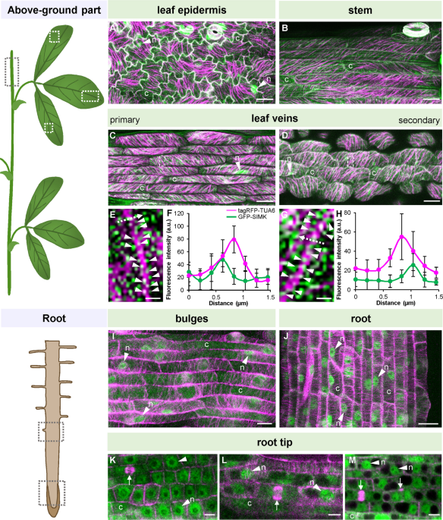
Stress-induced MAPK (SIMK)-dependent organization of microtubules in alfalfa - Molecular Horticulture
Mitogen-activated protein kinases (MAPKs) modulate the organization of the plant cytoskeleton. The spatial organization of microtubules is critical for cell division, polarity, shape control, and elongation during plant growth and morphogenesis. Here, we analyzed the impact of the stress-induced MAPK (SIMK) abundance on the tubulin cytoskeleton in different plant organs and tissues of an important legume crop species, alfalfa (Medicago sativa L.). For this purpose, we have established unique transgenic double lines with genetically manipulated SIMK, possessing microtubular molecular fluorescent marker, the tag RED FLUORESCENT PROTEIN-TUBULIN ALPHA 6 (tagRFP-TUA6). We show that lower or higher SIMK abundance can change cell division planes (CDPs) and phragmoplast orientations in roots. In addition, the transgenic line with downregulated SIMK shows disordered and disorganized microtubules, and a reduced degree of microtubule bundling mainly in leaves and stems. This may be linked to smaller habitus, shorter stems, and smaller leaves. Obtained results indicate that the genetic manipulation of SIMK abundance has effect on microtubule organization and plant development in alfalfa. This study also paves the way for testing anti-microtubular drugs on alfalfa and for biotechnological use of the newly-developed lines.
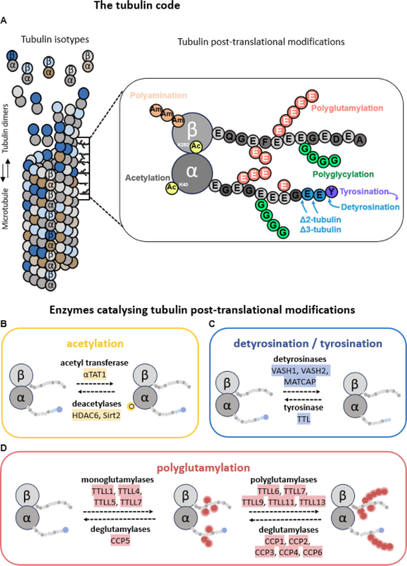
Prognostic, diagnostic and therapeutic value of the cancer tubulin code - Cancer and Metastasis Reviews
Microtubules are essential cytoskeleton polymers composed of α/β-tubulin heterodimers that play a central role in the regulation of various cellular processes, including cell division, cell shape, cell polarity, motility and intracellular trafficking. The expression of different tubulin genes results in a variety of isotypes that, combined with post-translational modifications (PTMs), define a “tubulin code” that generates microtubule diversity. Growing evidence has shown promising links between tubulin isotypes and PTMs with several cancer properties, leading to the emergence of the concept of a “cancer tubulin code”. In this review, we focus on dissecting the impact of tubulin acetylation, detyrosination and polyglutamylation on microtubule properties and functions, and how these PTMs, together with specific tubulin isotypes, affect cancer cell division, invasion and metastasis. Because conventional chemotherapy with microtubule-targeting drugs often leads to resistance and accounts for a high mortality rate among cancer patients, we discuss possible directions that explore the potential of the cancer tubulin code and respective microtubule diversity in improving drug response, while overcoming resistance. Lastly, we address the therapeutic value of small-molecule inhibitors of tubulin-modifying enzymes in cancer treatment. Overall, this review showcases the potential of exploring the cancer tubulin code to open new avenues in diagnostic, prognostic and therapeutic applications for precision oncology.
📰 "Effects of ERK1/2 Signaling on Cell Cycle Regulation by the Tuberin-Cyclin B1 Complex"
https://www.biorxiv.org/content/10.64898/2026.06.03.729845v1?rss=1 #CellDivision #Cell📰 "Constitutive plasma membrane interaction of active Rho GEF Ect2 inhibits cortex contraction pulses"
https://www.biorxiv.org/content/10.64898/2026.06.03.729549v1?rss=1 #CellDivision #Cell📰 "Transcription factor CCTF1 plays a decisive role in regulating the proteasome activity during archaeal cell division"
https://www.biorxiv.org/content/10.64898/2026.06.04.729166v1?rss=1 #CellDivision #Cell Rxiv mechanobio