 Hacker News
WH proposes rules giving political appointees final approval on research grants
#HackerNews #WHrules #politicalappointees #researchgrants #policychange #sciencefunding
WH proposes rules giving political appointees final approval on research grants
#HackerNews #WHrules #politicalappointees #researchgrants #policychange #sciencefunding
Big Picture Science for May. 11, Preventing Future Pandemics
We may not want to think about another pandemic, but, as epidemiologists say, it is once again a “when,” not “if,” scenario. For his latest book, journalist Jon Cohen, who has written extensively about infectious disease for the magazine Science, interviewed top epidemiologists around the world and followed virus hunters into damp and daunting bat caves to assess our pandemic preparedness readiness. Jon and Molly sit down before an audience in Los Angeles to talk about worrisome cuts to science funding and our ability (or inability) to be vigilant and respond quickly to emerging disease. There is good news: we know how to stop outbreaks. The question is, will we put our tools and vast knowledge to use?
Guest:
* Jon Cohen – senior correspondent with Science Magazine, author of “Planning Miracles: How to Prevent Future Pandemics”
Reading: The Trump Administration is Dismantling Efforts to Fight the Next Pandemic
Download podcast at - https://bigpicturescience.org/episodes/preventing-future-pandemics
You can listen to this and other episodes at http://bigpicturescience.org/
Get early access to ad-free versions of every episode by joining us on Patreon. Thanks for your support!
#PandemicPreparedness #GlobalHealth #Epidemiology #PublicHealth #InfectiousDisease #VirusHunters #ScienceFunding #PathogenResearch #BigPictureScience #SETI #News #Podcast #Science
Trump Dissolves National Science Board in Sweeping Dismissal
President Trump dismissed all National Science Board members on April 24. This affects how the National Science Foundation plans research.
#NSFBoardFired, #TrumpScience, #ResearchPolicy, #WashingtonDC, #ScienceFunding
https://newsletter.tf/trump-fires-national-science-board-april-24/
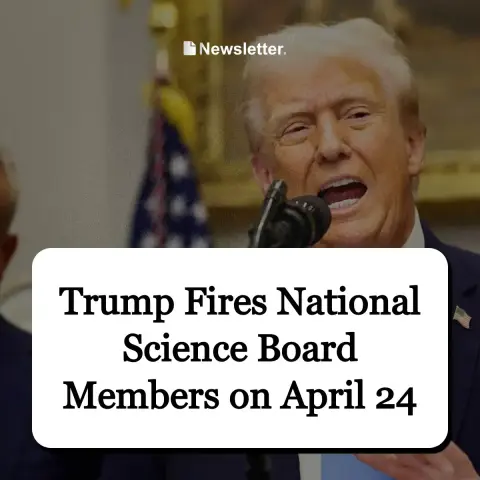
All members of the National Science Board were dismissed by President Trump on April 24. This is a significant change to the agency that guides scientific research funding.
#NSFBoardFired, #TrumpScience, #ResearchPolicy, #WashingtonDC, #ScienceFunding
https://newsletter.tf/trump-fires-national-science-board-april-24/
Trump fires independent board overseeing National Science Foundation
All 22 board members have been sent termination letters, one week prior to this year's in-person meeting and a state of US Science report to be published.
Trump has tried to reduce science funding in the US by $9 Billion and further impacted it through the dismantling of important organisations and agencies
#StateOfScience #TrumpRegime #ScienceFunding
https://www.theguardian.com/us-news/2026/apr/28/trump-fires-national-science-foundation-board
NIH FUNDING SLOWDOWN RAISES QUESTIONS ON RESEARCH TRAJECTORY
NIH grant awards have slowed by 24%, impacting medical research and fellowships. Find out how this affects scientists and future healthcare innovation.
#NIHGrants, #MedicalResearch, #ScienceFunding, #ResearchImpact, #GrantSlowdown
https://newsletter.tf/nih-grant-awards-slowdown-medical-research-impact/
NIH has seen a 24% drop in major grant types like R01s, meaning fewer fellowships are awarded. This is a significant decrease compared to previous periods.
#NIHGrants, #MedicalResearch, #ScienceFunding, #ResearchImpact, #GrantSlowdown
https://newsletter.tf/nih-grant-awards-slowdown-medical-research-impact/
China is set to become the world’s largest public funder of research within two years, as US investment stalls.
This shift could reshape the global scientific landscape.
🔗 https://www.nature.com/articles/d41586-026-00618-5
#ScienceFunding #ChinaResearch #GlobalScience #researchpolicy #sciencetrends
How NOT to do a NASA Budget Proposal - OR This Will Not Fly (pun intended!)
- cut and paste last year's rejected proposal
- include errors like ending programs that had already been cancelled
- including the wrong fiscal year for existing on-going program funding
- limited program cost breakdowns
- no comparisons to previous years' funding levels
- cancelling joint missions with other countries
This crap is an attempt at obfuscation. https://www.space.com/astronomy/nasa-science-faces-very-serious-threat-from-new-white-house-budget-scientists-say #NASA #Space #Funding #ScienceFunding #Budget #NASABudget #SpaceScience #Artemis
 LeidenForce
 Bi Sasquatch
 NewsletterTF
 Amy Roberts


 BGDon 🇨🇦 🇺🇸 👨💻