 Spaceflight 🚀
The first #Starhopper flight was in 📆 2019. First #Starship landing (without #RUD 💥) 📆 2021. First #atmospheric entry 📆 2024. When do you expect the first (uncrewed) Starship #Mars 🔴 landing attempt ? 🤔
2025
2027
2029
> 2030
Poll ended at .
"Two years down the road it seems feasible.It would be enough for #SpaceX to have a fleet of three launchers, one per pad. The bottleneck may lie in the supply of the thousands of liters of #methane and oxygen needed to maintain a sustained hourly launch rate. Some have proposed building a jetty and a small gas #pipeline so that the fuel can arrive in large methane tankers." https://english.elpais.com/science-tech/2024-11-04/elon-musks-plans-to-go-to-mars-within-two-years.html
The proof of concept shows that at the current achievable flow rates of #CO2 and water, it is possible to meet #NASA’s 16-month deadline for refueling #rockets on #Mars 🔴. It can be scaled further to meet tighter rocket refueling ⛽ deadlines. The use of Martian nighttime temperatures for heat 🌡️ exchange can potentially reduce the dependence on power-hungry cryogenic methods for gas liquefaction. https://pmc.ncbi.nlm.nih.gov/articles/PMC9118664

In-situ resource utilization (ISRU) to refuel rockets on Mars will become critical in the future. The current effort presents a thorough feasibility analysis of a scalable, Matlab-based, integrated ISRU framework from the standpoint of the second ...
For Starship to go to #Mars 🔴, you’ve got to get #Starship tankers ⛽ on orbit and perfect orbital refueling. #SpaceX will have to perfect the #robots 🤖 that will help build spacecraft #LandingPads and human #habitats on the Martian surface, prospect for water 💧 underground, and convert the water and carbon dioxide captured from the atmosphere into vast reservoirs of super-cooled oxygen and methane for the Starships’ return voyage to Earth. https://www.forbes.com/sites/kevinholdenplatt/2025/03/11/spacexs-starship-plan-to-land-first-humans-on-mars-but-not-till-2031
#Reuters - #Starship is set to depart for #Mars at the end of next year, carrying humanoid bot #Optimus. https://www.reuters.com/technology/space/starship-carrying-teslas-bot-set-mars-by-end-2026-elon-musk-2025-03-15

Each #technological breakthrough brings us closer to realizing the goal of living on #Mars 🔴. Mars colonization 👩🚀👨🚀 is within our potential reach. This paper has outlined a feasible timeline⌛
📆 2020s: Continued #robotic exploration
📆 2030s: Test missions for human life-support systems and #ISRU ⚒️ on the Martian surface
https://pmc.ncbi.nlm.nih.gov/articles/PMC10884476
#HumanSpaceflight #SpaceTravel #SpaceExploration #SpaceColonization
This paper thoroughly explores the feasibility, challenges, and proposed solutions for establishing a sustainable human colony on Mars. We quantitatively and qualitatively analyze the Martian environment, highlighting key challenges such as ...
#ZARM scientists have identified the #cyanobacterium strain Anabaena sp. PCC 7938 as a highly promising one for a life support system on #Mars 🔴. Fed with a simulant of Martian dust and atmosphere, the selected strain demostrated its ability to produce oxygen and form biomass, which could serve the production of food 🥔, fuels, drugs 💊 and other materials https://www.zarm.uni-bremen.de/en/in-focus/space-exploration
#MaMBA #habitat #artificial #photosynthesis #HumanSpaceflight #SpaceTechnology #Bremen #University
There are #bacteria 🧫 on Earth that enjoy perchlorates as a food. The organisms could not only get rid of a toxic component in Martian 🔴 dirt to make it farmable 🌱, but perhaps also help produce breathable oxygen for #astronauts https://www.sciencenews.org/article/mars-farming-harder-martian-regolith-soil

This Review highlights how extremophile microbiomes and synthetic biology approaches could support Martian terraforming by driving biogeochemical cycles, regolith transformation, and future life-support ecosystems.
Do indigenous #Martian 🔴 bacteria have precedence over human exploration ? https://marspapers.org/paper/McKay_2000.pdf
"I’m surprised to see people get so wildly excited about a possible #bacterium 🦠 on #Mars 🔴 when our own planet is crawling with undiscovered species"
George Schaller, #mammalogist, #biologist, #conservationist and #author https://en.wikiquote.org/wiki/Mars
4.1. Are Earth-based #microbes alive on the surface of #Mars 🔴 today ?
With the bioburden estimates, millions of viable spore-forming organisms 🦠 would still be present on the protected external and internal components of the #robotic landers. The landers likely landed on the surface with an appreciable bioburden. Microbes are most likely to survive underneath a layer of regolith. The survivability of Earth-based microbes may far extend 25 Mars years ⏳
February 11 2026 https://iopscience.iop.org/article/10.3847/PSJ/ae38b4

A Mars Microbial Survival Model: Calculating Bioburden Reductions for Past Mars Spacecraft to Estimate Forward Contamination on Mars, Bischof, Grace, Moores, John E., Ordinaria, Ruella, Schuerger, Andrew C.
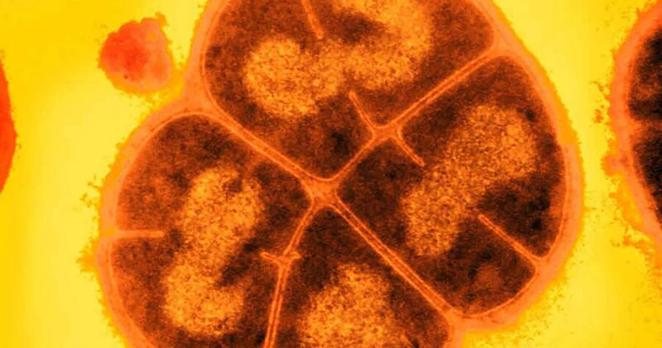
In a first-of-its-kind study, a researchers found that ancient bacteria could survive close to the surface on Mars much longer than previously assumed. If bacteria evolved on Mars when water last flowed billions of years ago, they might still be living in Mars' subsurface.