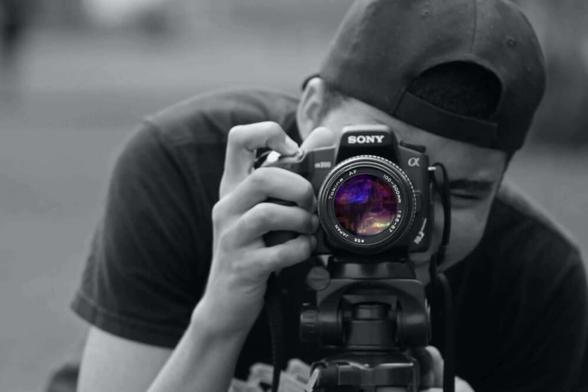
The Retro-Styled Nikon Df DSLR Was Both Behind and Ahead of the Times

The retro-styled Nikon Df has found new life on the used market more than a decade after it launched.

PetaPixel

#fotografie #apple #iphone #dslr #slr #kamera

Was ist nun "besser"? IPhone oder eine teure, große DSLR? Die Antwort ist nicht so einfach. Die Ergebnisse sind überraschend ...

Stefan Wiesner: iPhone statt richtige Kamera?

https://www.youtube.com/watch?v=1paquvsp7yg

iPhone statt richtige Kamera?

YouTube

Rain Forest Oasis

https://flic.kr/s/aHsjHYaaHp)

Doing some summer traveling through time & place rescuing & re-locating long-lost digital scans from 'vintage' drives.

This is along the legendary Hana Highway, on Maui. Hot day, long drive, & then: my "oasis". I like the colors, too.

Taken with a Canon #SLR &
#Fujichrome

More on my site -
Good as any starting point: Kona - @ http://www.fenichel.com/Kona.htm

Flickr album @
https://flic.kr/s/aHsjHYaaHp

#Fenfotos #Hawaii #Maui #HanaHighway.#photography

Gearing up for the Crappy Commie Camera Party (Part VI): The Kiev 60, The Poor Man’s Pentax 67

There’s been a lot of talk* between my mutuals on BlueSky about the Pentax 67, the medium format behemoth SLR from Pentax. I would love one of these humongous beasties, but it’s a camera that’s way out of my budget, and I could only dream. That being said, there is an alternative, and since it’s the Crappy Commie Camera Party at the moment it’s a perfect opportunity to explore these alternatives. 

The Kiev 60  is a medium format single lens reflex (SLR) camera manufactured in Ukraine between 1984 and 1999. Like many Soviet cameras, the Kiev 60 is a copy of another camera, in this case the East German Pentacon Six. It shares the l same lens mount as the Pentacon Six lenses, but from what I have learned is actually an improvement over that camera. The Kiev 60 uses 120 film, giving twelve square 6x6cm images per roll. It has a cloth shutter with speeds of 2s to 1/1000s (plus B). The actual production date of the camera can be determined from the first two numbers of the serial number, and mine was made in 1991.

The camera came fitted as standard with a Volna-3 MC, 80mm f2.8 lens (6 elements in 3 groups), with apertures between f2.8 and f22. The lens is fitted with a Pentacon Six breech mount and the lens can be removed by turning the ring on the front of the lens mount. The Kiev 60 comes with either a battery powered prism TTL viewfinder or a waist level finder. Mine came with the waist level finder, although the ‘loupe in the viewfinder had fallen off’, which might make focusing a little awkward, and I quickly added a prism finder. The lens and the prism finder were also from 1991, and I reckon that these were from the same kit on the Kameratore website, but sold separately. 

Like most of the cameras that I get from the Kamerastore,  it was in the ‘Not Passed’ category, meaning the camera is, ‘untested or tested, inspected, and found to have flaws that will affect typical use’. In this case, ‘the frame spacing is fairly narrow, so frames might overlap depending on the film type, and as mentioned before, ‘the loupe in the viewfinder has fallen off. Also, ‘the lens has oil on the aperture blades, which will affect exposure’, so that is something I will need to address or work around.

As it’s a medium format camera, the Kiev 60 is huge, dwarfing my previous behemoth of an SLR, the Zenit 11, and making my micro four-thirds mirrorless cameras look positively Lilliputian. It’s also heavy, coming in at nearly 2kg with the lens fitted, although this is still lighter than the Pentax 67, which I understand weighs about 2.5kg with lens. There are some issues that I’ll need to address, mainly the oil on the aperture blades, which makes changing the aperture quite sluggish. It’s likely that I’ll invest in a better condition lens, but I need to have a few trial runs with the Kiev 60 first.

The frame spacing issue is apparently quite a common occurrence with the Kiev 60, resulting in overlapping frames, especially at the start of the film. I’ve been reading about this, and I may have discovered two possible solutions, one complicated and involving taking the Kiev 60 apart, the other much simpler. According to an excellent article in 35mmc by Michael Elliott, Kiev 60 TTL: Medium Format SLR Review, the backing paper of Soviet-era 120 films back in the 1980s was thicker than on 120 films nowadays. This means that the camera, which is calibrated for Soviet films, will wind on slightly differently to modern films — not winding the film as far as it should — resulting in overlapping frames.

Elliott’s solution is quite ingenious. He proposes that ‘the thickness of the take-up spool [tells the camera] how far to advance for the next shot, [which] causes the advance to “over-advance” towards the end of the roll’ with modern films. So what he does is add, ‘a piece of [backing] paper … around 10cm long … to the front of the roll, and winding the start marker on the leader to the left edge of the silver ridge just past the start marker on the camera … [S]hooting 2 blank frames rather than 3, and then counting the next frame as a “real” frame yielded 13 well-spaced … frames, with no overlap’.

I cut a 15cm piece of backing paper from a used roll and overlapped this on a second spare backing paper roll so it projected out about 10cm. I then loaded this into the camera and wound the paper along until the ‘start’ marker lined up with the red indicator dot. In fact it went a little past because I did not realise that I could turn the take-up roll by hand to the marker. From the marker I wound the camera for three frames that would take it to the first frame (actually just a little further) and marked either side of the frame. Then I wound the film to the next frame, and marked the position of the frame. And so on.

It worked! There was no overlap of the frames. In fact, it looked like the later frames were a little too widely spaced, so I might not actually get 12 exposures out of a roll. However, what I’ll do with the first roll through the Kiev is to add the 10cm leader and then wind the film so the ‘start’ marker aligns with the red index mark on the film channel. Then I’ll close the cover and wind on until the counter shows ‘1’. After that I’ll expose the film as normal and see what comes out.

The issue with the loupe solved itself quite easily. After opening the camera, and checking out all of the bits and pieces (and really struggling to get the Kiev open the first time), I put the camera aside. Then, a few purs later, the Better Half appeared holding a small baggie: ‘Is this yours? she asked. It was the missing loupe lens, in a small zip bag. The bag had fallen down the side of the chair when I was opening the package. All that’s needed to keep it in place is a little contact cement. Problem solved.

The oil on the lens means that when I’m taking photographs at anything other than the widest aperture there’s a slight delay between pressing the shutter and the camera stopping down the lens to record the image. So in the meantime, what I’ve done is to get a cheap ND4 filter so that I can use the Kiev fully open at high shutter speeds. My rough tests with the Camera Meter app suggests that at f2.8 on a sunny day, with ISO 100 film I’ll need a shutter speed of about 1/1000s, the maximum shutter speed of the camera.

The first roll I’m going to put through this camera is an expired (c.2011) roll of Kodak Portra 160 NC that came with a Holga that I picked up a couple of years ago. I have no idea how this film was stored prior to my receiving it, probably in the box with the Holga, although I’ve stored it in the refrigerator since I’ve had it, which should at least reduce any further deterioration. To be on the safe side, I’ll expose the roll at ISO 25, and see what happens.

https://flic.kr/p/2rhousJ

https://flic.kr/p/2rhpDoe

We took the Kiev 60 on a trip to Barra, and I had a lovely time walking the beach and the pier. With the Camera Meter app, an exposure of 1/500s at f2.8 was recommended and I used the Camera at that setting. After finishing the film in Vagueira, I unloaded the film back at home and was delighted to find that there were no signs of ‘fat’ rolls. A couple of days later I took the film to the lab.

https://flic.kr/p/2rhqbiC

https://flic.kr/p/2rhpFsF

Since I wasn’t sure what I would be getting from the Kiev, I opted for the development only option and brought the negatives home. On inspecting the negatives I was delighted to find that I had images! They were a little ‘thin’ but there was certainly something there. I’m not sure whether the underexpose was a result of the expired film or because I used it with the ND filter, but I was delighted that I got something. 

Unfortunately, my attempted workaround for the overlapping frames wasn’t as successful, the first few frames were still overlapping. One the scans, I’ve shown the whole frame, so you can see what happened. I also got 12½ images out of the film, though the last was just me winding on the film at the end of the roll. But I have images, and I do love the Kiev-60. Who needs a Pentax 67, eh? I’ve posted the whole roll in an album on my Flickr, light leaks and all, if you want to see the rest of the images.

If you are on Mastodon, you can now follow this blog directly. Just go to Mastodon and follow the ‘Snapshot’ WordPress account at @keithdevereux.wordpress.com. All new posts will be automatically updated to your timeline.

*A few posts here and there that caught my eye. 

#CrappyCommieCameraParty #Expired #Kiev60 #Mediumformat #Pentacon6 #Retro #Shittycamerachallenge #Slr #SovietCamera #Ukraine #Vintage

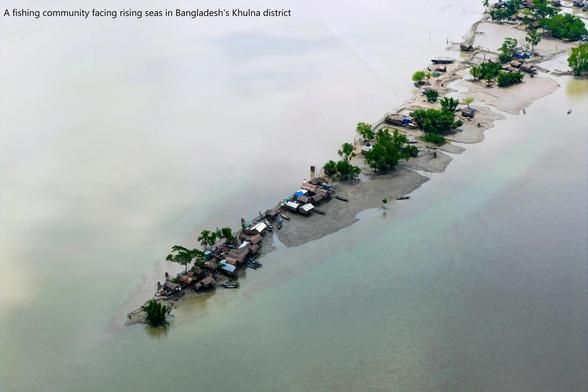
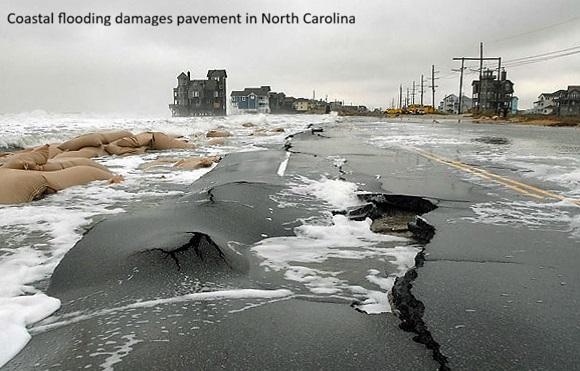
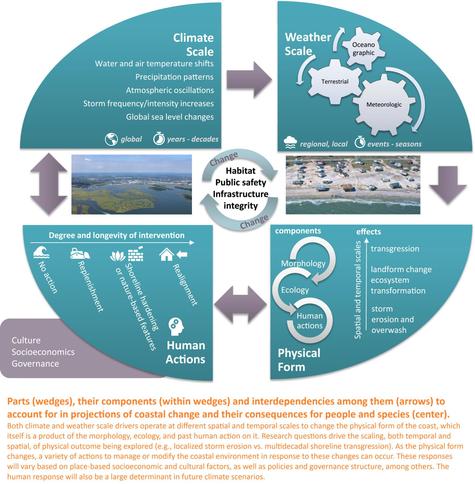
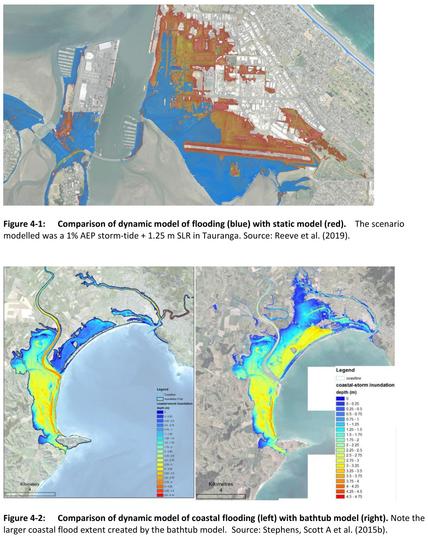
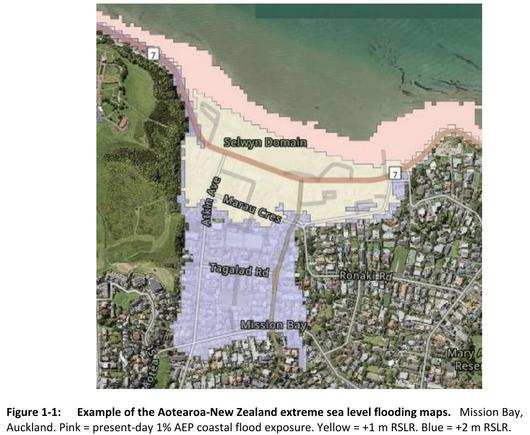
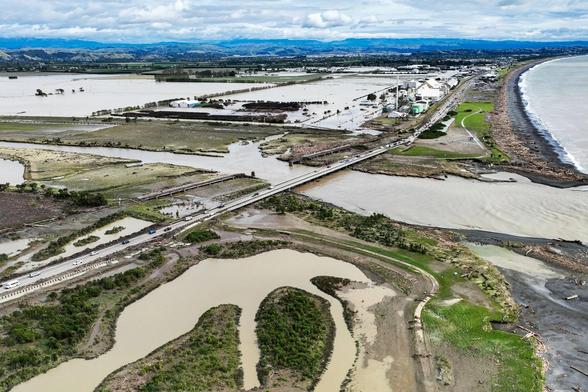
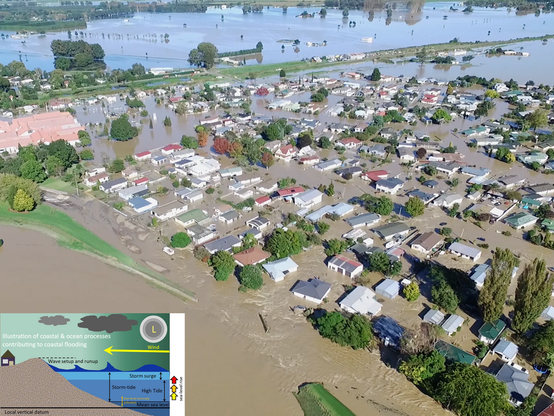
Climate-Driven #SeaLevelRise Exacerbates #Alaskan and #Cascadian #Tsunami Hazards in Southern California: Implications to Design Parameters

by Ignacio Sepúlveda, Andrew Mosqueda

First published: 11 March 2025

Abstract

"Tsunami hazards in Southern California are expected to be exacerbated by the #ClimateChange driven sea level rise (#SLR). Two key questions are how relevant is this exacerbation and whether tsunami design parameters are significantly affected. We perform a non-stationary probabilistic tsunami hazard assessment (nPTHA) in the Southern California bays of San Pedro and San Diego, with consideration of tsunamis generated by earthquakes in the Alaska-Aleutians (#ASZ) and Cascadia subduction zones (#CSZ). We evaluate the changes of the maximum considered tsunami (#MCT) design parameter, defined as a tsunami intensity that is exceeded with a 2% probability in 50 years. MCT elevation maps in the bays are calculated incorporating tides and SLR by means of a surrogate model. MCT elevations at assessed sites in San Pedro Bay and San Diego yield 2 m. The nPTHA shows that tsunamis generated in the ASZ zone are more hazardous in Southern California than those from the CSZ when evaluating MCT intensities. A comparison of scenarios with and without SLR also shows an increase of the MCT elevations of more than a foot in San Pedro Bay and San Diego, demonstrating that SLR causes a relevant impact, comparable to the influence of tides. The effect of SLR increasing MCT values is also comparable to the sensitivity of nPTHA results to some common earthquake epistemic uncertainties, such as the slip marginal distribution. Future tsunami hazard maps shall incorporate SLR when exposure times are long, as well as the uncertainty of tsunamigenic earthquake properties."

Key Points

- Earthquakes in Alaska and Cascadia subduction zones produce tsunami hazards in Southern California that are exacerbated by sea level rise

- The elevation of maximum considered tsunamis (MCT) in San Pedro Bay and San Diego grow by more than a foot when SLR influence is included

- The impact of Alaskan earthquake epistemic uncertainties on MCT elevations in Southern California is similar to that of the sea level rise

Plain Language Summary

"Climate-change-driven sea level rise is expected to worsen tsunami hazards in the long term. Tsunami waves will be able to propagate over rising sea levels that will enable them to inundate higher land. In this study, we quantify the increase of tsunami hazards in Southern California due to sea level rise. We consider tsunamis originated in the Alaska and Cascadia subduction zones. Changes of tsunami design parameters, as a result of the sea level rise, are also analyzed. Namely, we analyze the changes of the 'maximum considered tsunami' (MCT) elevation, defined as the elevation exceeded with probability 2% in 50 years. We find that earthquakes of the Alaska Subduction Zone constitute the main #tsunamigenic contributor. We also find that sea level rise increases MCT tsunami elevations by 0.3 m. With this increase, MCT levels reach 2 m in San Pedro Bay and San Diego. We compare the impact of sea level rise exacerbating tsunami hazards with the impact of common uncertainty sources of tsunami hazard assessment models. The uncertainty of earthquake models, for example, can produce differences in MCT levels that are comparable to the SLR influence."

Source:
https://agupubs.onlinelibrary.wiley.com/doi/full/10.1029/2024EF005435

#ClimateCrisis #ClimateCatastrophe #TsunamiRisks #SeaLevelRise

Photo equipment

Explore this photo album by Francois Dion on Flickr!

Flickr

Found a whole bunch of pictures I took of vintage #photo equipment ( #cameras #lenses etc) #photography

Here is a #film #35mm #slr #camera by #fuji, the #fujica #st605n #m42 mount, taken with a #Fujinon 55mm macro lens

https://www.flickr.com/photos/195844994@N05/54644033439/in/dateposted/

st605n

Flickr
BNY Mellon doubts that easing the US Supplementary Leverage Ratio (SLR) will significantly lower long-term Treasury yields, citing banks' limited capacity and preference for less risky assets, as US regulators move to relax capital requirements for major banks.
#YonhapInfomax #BNYMellon #SLR #USTreasuryYields #GSIB #FedRegulation #Economics #FinancialMarkets #Banking #Securities #Bonds #StockMarket
https://en.infomaxai.com/news/articleView.html?idxno=70398
BNY Mellon Skeptical That SLR Easing Will Lower US Long-Term Yields

BNY Mellon doubts that easing the US Supplementary Leverage Ratio (SLR) will significantly lower long-term Treasury yields, citing banks' limited capacity and preference for less risky assets, as US regulators move to relax capital requirements for major banks.

Yonhap Infomax
I've found (I hope, don't have it in-hand yet) a third option for medium-format #Zeiss glass on #SLR #camera bodies. FotoDiox has the #adapter here (P6-Canon EF) which needs to be that long, apparently. They've a similar option for #Nikon F.
Today I found an option out of the UK (Harblei), puts #Pentacon 6/ Kiev 60 lenses on #Pentax #Spotmatic M42 screw-mounts (which famously cannot use other lenses). A P6-M42! And supposedly its distance/ height will not affect the #length of the #lenses(!)
The US FDIC has joined the Federal Reserve and OCC in supporting a proposal to ease the Supplementary Leverage Ratio for major banks, with public comments open until August 26.
#YonhapInfomax #FDIC #SLR #GSIB #FederalReserve #PublicCommentPeriod #Economics #FinancialMarkets #Banking #Securities #Bonds #StockMarket
https://en.infomaxai.com/news/articleView.html?idxno=69774
US FDIC Backs SLR Easing—Public Comments Open Until August 26

The US FDIC has joined the Federal Reserve and OCC in supporting a proposal to ease the Supplementary Leverage Ratio for major banks, with public comments open until August 26.

Yonhap Infomax