 AlkaT
AlkaTYet another reminder that #AI is biased. The implications of this article are that LLMs at present do not have the characteristics needed to be a good source of #synthetic data. Tons of #methodological implications in this article.
 Christoph Deppe
🥳NEW PUBLICATION OUT NOW #OpenAccess :“TRANSMISSIONS, DECISIONS, DISCOURSES” (with @DannicaFleuss)
Our paper proposes a #conceptual & #methodological framework for assessing “communicative flows” in democratic systems: How to study diverse forms of (diverse) #democraticinnovations #impact on #policymaking (over time)?
➡️ https://doi.org/10.1111/spsr.12657
@academicch @dvpw
#polsci #politicalscience #science #deliberation #democracy
 Centre for Population Change
If you missed our last #CPCCGWebinar, you can now watch it on YouTube 📺
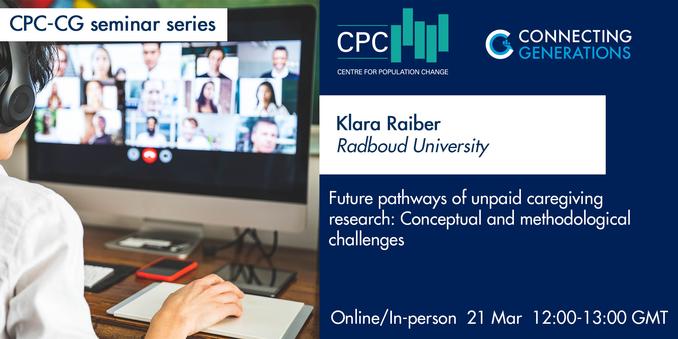
Watch Klara Raiber discuss research on #unpaidcare, missing links and possible #theoretical and #methodological future pathways.
https://youtu.be/z_wEhgFog88

Future pathways of unpaid caregiving research: Conceptual & methodological challenges - Klara Raiber
NEXT WEEK - Joint CRA / #CPCCGWebinar 21 March
👩💻 Klara Raiber from #RadboudUniversity will be talking about #UnpaidCarers research, sketching missing links, and discussing possible #theoretical and #methodological future pathways.
Register to join us online: http://www.cpc.ac.uk/activities/full_events_calendar/807/Joint_CPC_CGCRA_Webinar__Klara_Raiber
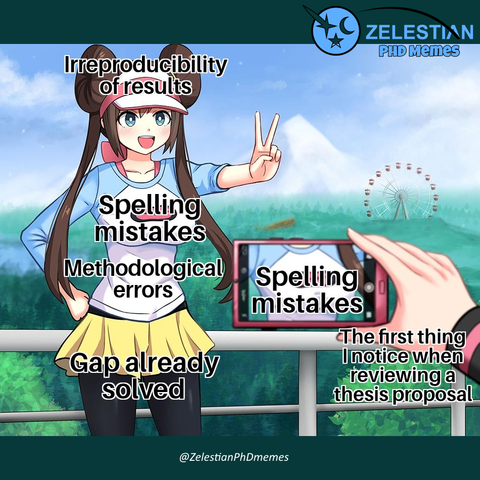
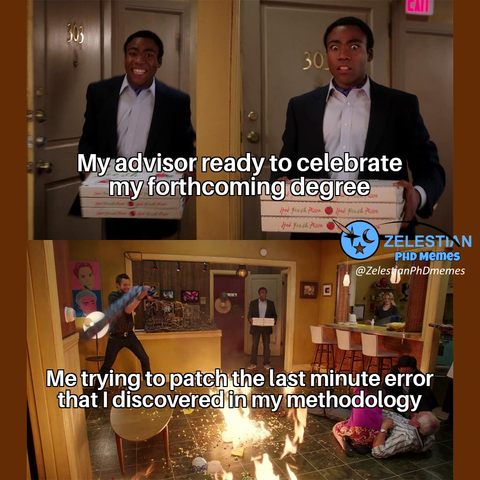
 Zelestian PhD memes
#irreproducibility #results #methodological #errors #gap #already #solved #spelling #mistakes #first #thing #notice #reviewing #thesis #proposal #photo #cellphone #taken #phdstudent #doctoratestudent #phd #doctorate #motivation #meme #memes #phdmotivation #phdmeme #phdmemes #phdlife #phdstudentlife #phdtroll #doctoratemotivation #doctoratememe #doctoratememes #doctoratelife #doctoratestudentlife #doctoratetroll
#advisor #ready #celebrate #forthcoming #degree #grade #postgraduate #trying #patch #LASTMINUTE #error #methodological #discover #methodology #fire #phdstudent #doctoratestudent #phd #doctorate #motivation #meme #memes #phdmotivation #phdmeme #phdmemes #phdlife #phdstudentlife #phdtroll #doctoratemotivation #doctoratememe #doctoratememes #doctoratelife #doctoratestudentlife #doctoratetroll
 Daniel Dvorkin
On #research, and #dreams, and what I do all day.
Nearly all of my work consists of using absolutely standard #bioinformatics and #biostatistics techniques. These methods were long ago worked out in excruciating detail by people much more knowledgeable in their subspecialties than I’ll ever be. Although I grumble about the quality of #scientific #software (and there’s a lot to grumble about) I almost always use mostly-reliable packages rather than writing my own. There are only so many hours in a day, days in a year, and years in a career.
The truth is, that’s the way most #science jobs are, at least in #biology and #medicine—I’m honestly not sure about others. #Methodological research, working out entirely new ways to do things, is largely a privilege of dewy-eyed grad students and slightly more cynical but still idealistic postdocs. #Faculty get to do some, but less the higher up the food chain they get: full #professorship is at least half administration and half overseeing other people’s research and half #grantwriting, and if you’re thinking that’s one too many halves, you’re right. There are probably a couple of other halves in there I don’t even know about.
#Industry scientists like me? The #PhD is an entry-level qualification. We’re not paid to come up with new ways to do things better. We’re paid to use old ways to do things faster. Ultimately, the goal is something new, sure, usually a new #drug for a particular #disease. The process of making that happen is a bunch of painstaking and carefully programmed steps. There’s about as much room for creativity as there was when I was in the service—which BTW is more than people often assume, but with pretty sharp limits. And almost always, the clock is ticking. Loudly.
This may all sound kind of bitter. Yes, there’s some bitterness, but I know I have plenty of company.
No one goes into science for the money or the prestige: without any false modesty at all, I can say that anyone who is capable of becoming a #scientist is capable of doing lots of other things too, and most of those things pay better and get more respect. We start our long and winding road because we see, or think we see, something at the heart of reality no one else has seen before. We think we can bring that into the light and show it to the world. We can make a difference. We believe.
Eventually we come around. It’s not just an adventure, it’s a job.
My point—I swear I have one—is that we grumble about this, and think back wistfully to the days when we could sink into one project, and recall with tolerant amusement our conviction that we alone could reveal the Truth unto the world … and mostly accept it. Do the work, be the cog in the machine, and small-t truth will be revealed. Not just by us alone, no. By us and by everyone who came before us in the chain and everyone after, and a year or five or twenty down the line, someone who would have died will live. They’ll never know our names, and we’ll never know theirs. It’s okay.
And every once in a while, in the middle of this daily grind, we realize that what we have to do to solve this particular problem, get at this particular small truth, no one else has ever done.
So we do it.
We do it, and go back to the grind. Nobody else may ever know we did it. If they do, it will probably be buried in the methods section of a multi-author article in a mid-tier journal. If ten people in the world ever read it, we’ll be pleasantly surprised. A citation, and we’ll be over the moon. And there’s no guarantee of even that much. Locked away in a tech report gathering e-dust, just as likely.
But we know. And sometimes we dream again, for a little while.
 Sabrina Kirschner
The #conference brought together #scientists, #practioners & the #civilsociety to exchange ideas on how to deal with #fakenews & #hatespeech in professional, voluntary and private contexts. In different #methodological & #didactic settings, such as #international & #interdisciplinary working groups, the #conference participants shared their ideas of how to address fake news & hate speech related to #civiceducation, (#mental) #health, #intersectionality, #environment and #press/#socialmedia. 2/2
 Sonja Utz
Nice result of the #workshop on #HMC organized with @franzigaiser @StefanieHKlein and Esther Greussing at #IWM: Paper on the #methodological #challenges of HMC research in special issue of #Publizistik https://link.springer.com/article/10.1007/s11616-022-00759-3

Researching interactions between humans and machines: methodological challenges - Publizistik
Communication scholars are increasingly concerned with interactions between humans and communicative agents. These agents, however, are considerably different from digital or social media: They are designed and perceived as life-like communication partners (i.e., as “communicative subjects”), which in turn poses distinct challenges for their empirical study. Hence, in this paper, we document, discuss, and evaluate potentials and pitfalls that typically arise for communication scholars when investigating simulated or non-simulated interactions between humans and chatbots, voice assistants, or social robots. In this paper, we focus on experiments (including pre-recorded stimuli, vignettes and the “Wizard of Oz”-technique) and field studies. Overall, this paper aims to provide guidance and support for communication scholars who want to empirically study human-machine communication. To this end, we not only compile potential challenges, but also recommend specific strategies and approaches. In addition, our reflections on current methodological challenges serve as a starting point for discussions in communication science on how meaning-making between humans and machines can be investigated in the best way possible, as illustrated in the concluding section.
 DrKryoDrage (He/Him)
Question to my #mediapsychology network. I am writing an article which is quite lengthy. The length is because is an exhaustive methodological and analytical framework for analysing certain media phenomena.
Do you know any #journal on #mediapsychology or #mediaanthropology that publishes this type of papers? i.e., #methodological and with no word limit?
Thanks!
Do you know any #journal on #mediapsychology or #mediaanthropology that publishes this type of papers? i.e., #methodological and with no word limit?
Thanks!