RE: https://mastodon.social/@APC/114936846972756541

We care about the #MajorityWorld. Here are a few servers we recommend:

>>> #Uruguay https://mastodon.uy/about

Uma instância com moderação ativa e foco em pessoas queer/LGBTQIAPN+ que falam português

>>> https://Mastodon.Africa

Run by South Africans, for Africans and everybody else looking for a friendly Mastodon instance.

>>> https://misskey.id/

Decentralised Indonesian social networking platform

>>> https://vzla.masto.host/explore

Venezuelan mastodon server

#Fediverse #GlobalSouth

@7amleh — The Arab Center for the Advancement of Social Media, focused on Palestinian digital rights

@tech4palestine — Tech folks for Palestinian freedom

@redesac_mx — Community and indigenous communication networks across Latin America

@derechosdigital — Digital rights in LatAm

@dilstories — Short films from Uganda: sci-fi, fantasy, horror, Afrofuturism

@peertube — Learn about digital freedom, ethics, and platform alternatives.

#Fediverse #GlobalSouth #MajorityWorld

>>> We care about the Majority World

---> See our glossary term:

https://www.apc.org/en/glossary/majority-world

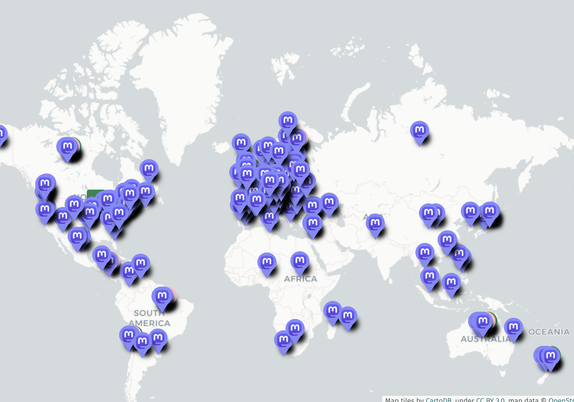
---> Take a look at this map of the Fediverse:

https://umap.openstreetmap.fr/en/map/fediverse-near-me_828094#2/21.4/86.2

---> Let’s give more visibility to voices and perspectives from outside the "global North."

@globalvoices — A multilingual community of writers, translators, and human rights activists.

@restofworld — Nonprofit publication covering tech stories from around the world, far from Silicon Valley.

#Fediverse #MajorityWorld

#SerumpunDiaries, Part 13:

Beberapa tahun lalu, #Chinatown di Kuala Lumpur masih dikenal sebagai kawasan yang dipenuhi barang tiruan. Padahal, daerah ini sempat hampir mati sebelum akhirnya direvitalisasi. Semuanya bermula dari beberapa speakeasy yang mulai menarik perhatian. Seiring waktu, semakin banyak tempat baru bermunculan, hingga akhirnya Chinatown berkembang menjadi destinasi wisata malam yang kita kenal sekarang.

Saya juga sempat mengunjungi beberapa speakeasy ini. Suasananya benar-benar nyaman.

Sebagai seseorang yang lahir dan besar di #Indonesia, saya cukup terkejut saat mengetahui bahwa Chinatown di Kuala Lumpur berawal dari komunitas penambang timah #China yang menetap di sana. Hal ini sangat berbeda dari banyak Chinatown lain di #AsiaTenggara. #Glodok di #Jakarta, #ChợLớn di #HoChiMinhCity, Chinatown di #Singapura—semuanya dibentuk oleh penjajah sebagai “zona ekonomi,” istilah yang sebenarnya merujuk pada pemisahan paksa, kontrol politik, pengawasan sosial, dan segregasi rasis. Saya baru benar-benar memahami hal ini setelah menghabiskan beberapa hari menjelajahi salah satu Chinatown besar musim panas lalu bersama sang terkasih saya.

Selama beberapa tahun terakhir, saya sering merenungkan identitas saya sebagai orang #Asia, terutama setelah melihat bagaimana kaum non-#MajorityWorld memperlakukan orang-orang yang mirip dengan kita lima tahun yang lalu. Hal inilah yang semakin mendorong saya untuk belajar mencintai tetangga dekat. Oleh karena itu, saya menggunakan hashtag “Serumpun Diaries.” Bagi saya, ini juga merupakan bentuk self-love.

Asia Tenggara memiliki sejarah yang begitu kaya. Saya bersyukur bisa menemukan rumah di #Nusantara.

#chinatown #kualalumpur #malaysia #bricstourism #alleyways #kwaichaihong #bars #cafés #upandawaymy #windows #selfies #shotoniphone #apple #laterfed #vsco

We live in a scary world where someone with Elon Musk’s reach and influence can call a Brazilian Supreme Court judge an “evil dictator” and threaten him with imprisonment with apparent impunity, so it’s easy sometimes to miss what’s behind the news and the inflammatory tweets.

You might hear a lot about the suspension of X (formerly Twitter) in Brazil as a violation of free speech, which is the framing Musk prefers, arguing that the actions taken by Brazilian authorities are politically motivated attacks against his companies. But the real reason X has been suspended is that X has refused to comply with directives to name a legal representative in Brazil and remove certain accounts accused of spreading disinformation and inciting unrest.

What’s most striking about Musk’s tone is his apparent disbelief at Brazil’s audacity to challenge and potentially block his platform. It raises the question: why should Majority World countries be expected to accept Big Tech platforms uncritically, as though these platforms are the sole harbingers of development and free speech?

Now, the irony isn’t completely lost on me that the reported heir of an emerald mining family is pretending not to understand why companies extracting value while completely disregarding the negative impact of their business activities is bad. In fact, this isn’t even the first case for one of Musk’s companies in Brazil.

As Lua Cruz argues brilliantly in this article titled “Starlink in the Amazon: Reflections on Humbleness,” Starlink’s introduction to Brazil also carries the same complexities that illustrate how Big Tech techsolutionism and colonial legacies intertwine. Despite expecting a wholly negative impression of Starlink based on the media coverage, by visiting the affected communities and seeing the effects of Starlink on the ground, the complexity of the situation became readily apparent.

While the widely reported negative impacts of disrupting the social fabric and the environmental effects of such technologies do have a toll and are somewhat acknowledged by the communities, the people of the Amazons have been also able to use the technology to their advantage.

Cruz observes that Starlink has brought internet access to Amazon communities previously isolated from digital infrastructure, facilitating access to essential services, improving communication, and enabling territorial monitoring. Moreover, Cruz highlights that communication networks can empower communities by supporting civic rights, such as the right to organize, express opinions, and engage in public decision-making.

“Communities have shown resilience and adaptability in the face of such changes, often finding ways to integrate new technologies in ways that support their needs and goals. However, this resilience should not be taken as a justification for disregarding the potential harms”

While these benefits are significant, they do not erase the ethical concerns surrounding the deployment of such technologies without full engagement with the communities involved. It’s also important to understand how we got here in the first place. The very fact that Starlink has been able to position itself in this tech savior role can be attributed to years of neglect by the state and its deference to the private sector and international companies.

In contrast with the X case, this is an example where the state has failed in its duty, in particular to provide the people with meaningful access to the internet. Instead, they left that role to Starlink and the major corporations exploiting the Amazons who are financing the antennas. The danger of letting these technosolutionist approaches fill the void left by the state is that they often fail to engage meaningfully with affected communities and often overlook complex socio-political dynamics at play in favour of simplistic tech savior narratives.

Technosolutionism is often defined as the idea that any problem can be simply solved with technology, but it’s actually more complex than that, especially when it intersects with colonialism and imperialism. You can tell an approach is technosolutionist when it treats Indigenous communities as passive recipients of “technological aid”, rather than recognizing them as active agents with their own voices, needs, and complexities.

This disenfranchisement of Indigenous voices can often lead to disastrous consequences when they’re not involved in the governance of the technologies deployed for their supposed benefit. After all, the same communication networks that enable participation and access are the ones that can potentially bring disinformation in, as evidenced by the X case.

But when the “tech saviour” fails to deliver on their lofty promises, it is never the technology’s fault. The author brings up the example of how the rather nuanced coverage of Starlink in Brazil by the New York Times was picked up and reduced to racist caricatures by other media outlets, including Brazilian ones, whereas the critique of Starlink was less emphasized or ignored in those derivative reports.

Musk’s refusal to comply with Brazil’s judicial system is yet another a textbook example of this technological imperialism, cloaked in the guise of defending free speech. After all, his disregard for the socio-political impact of his companies is evident; after acquiring Twitter, his first moves included dismantling teams focused on public policy, human rights, accessibility (!) and content moderation.

At the end of the day, X should face the consequences of its business activities in Brazil. Brazil, alongside other Majority World countries, must assert their right and duty to regulate Big Tech, ensuring they respect local public policy and human rights. Ideally, all communities should have both the agency and the sovereignty over technologies that affect their lives, and tech companies should engage with them as such. Please read Lua Cruz’s full article on The Green Web Foundation website.

https://tarakiyee.com/suspending-x-brazils-ongoing-struggle-to-govern-big-tech/

#bigTech #brazil #Colonialism #DigitalInfrastructure #digitalRights #Disinformation #governance #HumanRights #IndigenousRights #MajorityWorld #PublicPolicy #rant #sovereignity #Starlink #technosolutionism #x

Elon Musk hits out at judge threatening to suspend X in Brazil

Elon Musk has stepped up online attacks on a Supreme Court judge threatening to suspend social media platform X in Brazil, calling him “an evil dictator” in an ongoing feud between the two men.

CNN

"Colonialism in Content Moderation Research: The Struggles of Scholars in the Majority World" by Farhana Shahid (PhD student at Cornell and CDT summer intern).
https://cdt.org/insights/colonialism-in-content-moderation-research-the-struggles-of-scholars-in-the-majority-world/

#contentmoderation #nonenglish #MajorityWorld #research

Colonialism in Content Moderation Research: The Struggles of Scholars in the Majority World

By CDT Intern Farhana Shahid Around 75% of Internet users are from non-English speaking countries in the Majority World (i.e., Global South). Yet social media companies allocate most of their content moderation resources to English speaking populations in the West. The disparity in platforms’ content moderation efforts has led to human rights violations and unjust […]

Center for Democracy and Technology

Neurodiversity in the Majority World

Online Event open to everyone.

Our speakers will be looking at nuerodiversity in the Indian context.

Vocabularies of inclusion: How Autistic voices in India are reframing personhood - Shubha Ranganathan

How do Neurodivergent Therapists Engage with Social Justice? - Anna Maria Jacob

Date: Tuesday 23rd July 2024, Time: 1700 hours - 1830 hours (Indian Standard Time) / 12.30 pm - 2.00 pm (UK Time)

The event is free.

Registration link https://forms.office.com/pages/responsepage.aspx?id=ofZoiROsL0e4mfcxbkOfQ2R-n7SIUR9Pj2px-QrEZi1UMFkzOFVUMk5aVlY4MkxVSzNPVUxWTUhUUy4u

#ActuallyAutistic #Neurodiversity
#AutisticRights
#Autism
#ADHD
#SocialJustice
#MajorityWorld
#Inclusion
#Psychology
#India

Microsoft Forms

At the "AI Ethics from the Majority World" workshop, Samuel Segun, PhD discussed the impact of AI on African ethical values, emphasizing Afro-communitarianism and dignity. He highlighted the risks posed by AI adoption and suggested an African-centric AI ethics framework as an alternative to Western paradigms. Watch the whole presentation online on YouTube.

https://www.youtube.com/watch?v=9lLmRdcfXeQ

#AI #Ethics #AfroEthics #DecolonialAI #SustainableAI #MajorityWorld

Decolonial AI & Indigenous Perspectives | 2/11 | Samuel Segun

YouTube

Annual Review of Critical Psychology volume 17: Critical Psychology in the Majority World is out now! Completely open access, free to download and print.

Big thank you to the brilliant authors who contributed to this edition of the journal and co-editors.

Link to the journal available on the Discourse Unit website https://discourseunit.com/annual-review/arcp-17-critical-psychology-in-the-majority-world-2024/

#CriticalPsychology
#MajorityWorld
#openaccessjournal

ARCP 17 Critical Psychology in the Majority World (2024)

ARCP 17 Critical Psychology in the Majority World (2024) Editors: Sonia Soans, Yasuhiro Igarashi, Karolina Dalimunthe, Retno Hanggarani Ninin and Yuliana Hanami The papers in this special issue of …

Discourse Unit

It seems a local and quite well known prof is repeating claims about the imminence of #AGI (artificial general intelligence)

Apart from this being #AIHype, it's also argued based on a very narrow, thin view of #intelligence that assumes that it can be measured, benchmarked and tested

I spent just one day pondering the intelligence I used and witnessed as I navigated my routines and commitments and was left wondering if there are any #feminist, #MajorityWorld, #indigenous or other critiques of claims about #AI

Thoughts, please!

#MAIHT3k