 (Roughly) Daily
“The enclosure of the commons inaugurates a new ecological order. Enclosure did not just physically transfer the control over grasslands from the peasants to the lord. It marked a radical change in the attitudes of society toward the environment.”*…
The Gleaners by Jean-Francois Millet (1857)Several days ago, juries in New Mexico and California found Facebook/Meta (and in California, also YouTube/Google) guilty of knowingly employing algorithms to serve content to minors that caused depression, anxiety, and other mental health harms… behavior par for the course of the (massive, “mechanical”) extractive behavior that is their business model. As NPR reports (on the California verdict):
While the financial punishment is miniscule for companies each worth trillions of dollars, the decision is still consequential. It represents the first time a jury has found that social media apps should be treated as defective products for being engineered to exploit the developing brains of kids and teenagers… The outcome of this case could influence thousands of other consolidated cases against the social media companies. The litigation has drawn comparisons to the legal crusade in the 1990s against Big Tobacco, which forced the industry to to stop targeting minors with advertising…
L. M. Sacasas draws on a comparison to the English “enclosure movement” (and here) to put the stakes of this battle against algorithmic extraction into historical context…
If you were to ask me something like “What’s the most urgent task before us?” or “What counsel do you have to offer in this cultural moment?” I would say this:
Resist the enclosure of the human psyche.
Don’t misunderstand me. I’m sure there are other necessary and urgent tasks. But this would be my contribution to the conversation. I would be offering not only an imperative to pursue, but also, and perhaps more importantly, an analogy to clarify and interpret the techno-economic forces at play in a digitized society. Such analogies or concepts can be useful. They can crystalize a certain understanding of the world and catalyze action and resolve. They can be a rallying cry.
In any case, I’ll say it again: resist the enclosure of the human psyche.
Some of you may immediately intuit the force of the analogy, but I suspect it needs a little unpacking.
Here’s the short version: I’m drawing an analogy between a historical development known as the enclosure of the commons and the condition of the human psyche in the context of a digitized society. The enclosure of the commons is the name given to the centuries-long process by which lands available to the many were turned into a resource to be managed and extracted by the few. My claim is that structurally similar processes are unfolding with the aim of enclosing the human psyche and transforming it into a resource to be managed and extracted…
The longer version, which follows, unpacks that analogy and explains what the impact of “enclosing the human psyche” could– would likely– be. Sacasas concludes…
… The individual human psyche does not seem like a thing held in common. But, in fact, that presumption may itself be a symptom of the enclosure of the psyche, although there are certainly many other forces leading toward that same conclusion. What if the psyche were a thing held in common? That is to say, what if our purchase on reality and the emergence of the self depended on human relationships and communities? From this perspective, the enclosure of the human psyche deprives us of a common world, which yields an experience of solidarity and belonging.
I’ve elsewhere developed this point at greater length, but here I’ll only note Hannah Arendt’s warning that we are deprived of a “truly human life” when we are “deprived of the reality that comes from being seen and heard by others, to be deprived of an ‘objective’ relationship with them that comes from being related to and separated from them through the intermediary of a common world of things.”
That last bit about a common world of things, a material, not only virtual world, is key. The logic of enclosure seeks to lock us into a private virtual world of “bespoke realities,” thus excluding us from the common world of things that yields as well a public consciousness. As Arendt put it, “Only the experience of sharing a common human world with others who look at it from different perspectives can enable us to see reality in the round and to develop a shared common sense.”…
Eminently worth reading in full: “The Enclosure of the Human Psyche“
* Ivan Illich, “Silence is a commons” in In the Mirror of the Past (to which Sacasas alludes in the essay linked above)
###
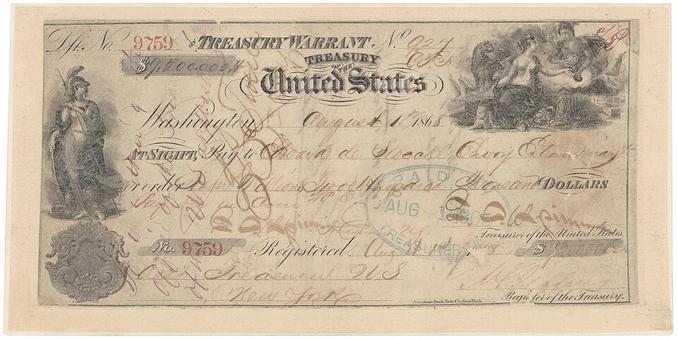
As we cosset commons, we might recall that it was on this date in 1867 that a bilateral treaty was signed effecting the sale of Alaska by Russia to the United States. It was ratified on May15 and American sovereignty took effect on October 18 of that year. The price for the 586,412 square miles that changed hands was $7.2 million in 1867 (equivalent to about $132 million in 2024), or about $0.02 per acre ($0.37 per acre in 2024).
Relevantly to the piece above, the land was and is largely commonly held, by the federal government, by the state, and by Native American tribes. Only roughly 1% of Alaska is in private hands. But that sliver is growing as the Trump Administration moves to “liquidate” federal real estate holdings (sell them to private owners) and in the meantime, licenses huge swathes of Alaska for oil and gas development, mineral extraction, and the infrastrucutre (roads, pipelines) needed to service them. Alaskans are worried.
The $7.2 million check used to pay for Alaska (source) #access #Alaska #AlaskaPurchase #commons #culture #enclosure #enclosureMovement #history #humanPsyche #LMSacasas #land #landAccess #landOwnership #landUse #ownership #politics #psyche #Russia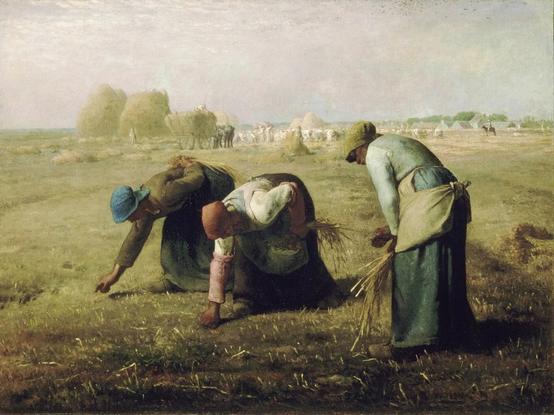
 Adam Blair
 Agroecology Map



 Ms. Que Banh
 Solarpunk Presents Podcast
 ESSARTER Éditions
 Canadian Association For Food Studies
 The Next Summit