WATER CAPACITY CONSTRAINTS FORCE TEMPORARY HALT ON NEW DEVELOPMENTS

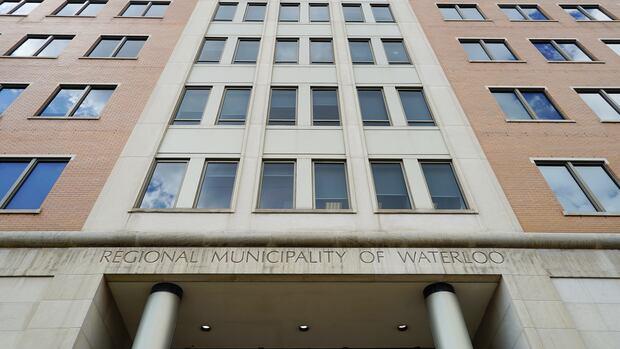
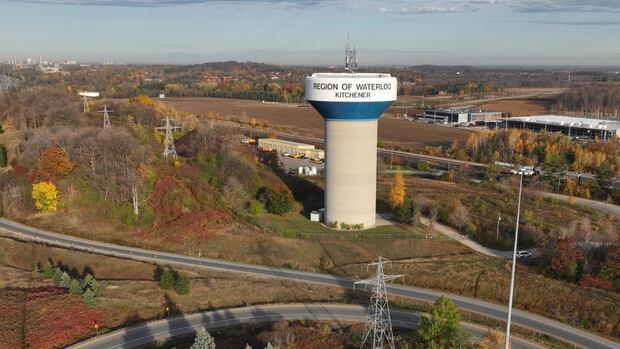
As of January 2026, the Region of Waterloo reached a critical bottleneck. Severe water capacity constraints within the Mannheim Service Area, which encompasses Kitchener, Waterloo and parts of Cambridge, forced a temporary halt on all new development approvals. 

Although existing water supplies are safe, the water supply system lacks the necessary buffers for repairs, prompting the need for emergency plans regarding new infrastructure and enhanced water supplies. 

While the Region of Waterloo struggles with population growth and land development, Peter Huck, distinguished professor emeritus at the University of Waterloo, notes that the Mannheim district relies on a complex Integrated Urban System. 

“The Region of Waterloo is using two types of water,” Huck said. “One is groundwater from about 100 scattered wells, and the other is surface water from the Grand River treated at the Mannheim Treatment Plant.” 

The Mannheim Plant began it’s operations in 1994.  

This creates a technical bottleneck where the wells are at their full capacity and increasing river draw is limited by the need to protect downstream ecosystems. 

The Region initially identified the issue in November 2025 and announced the findings in December 2025, citing that rapid population growth and aging infrastructure led to demand exceeding available capacity.  

The issue has been further discussed and detailed in a Jan. 13, 2026, meeting of the Region of Waterloo’s Sustainability, Infrastructure, and Development committee, where staff confirmed the need for a revised water supply strategy and infrastructure investment. 

During the Jan.13 committee meeting, Sam Nabi, Director of Hold the Line WR, challenged the Region’s ‘surprise’ at the crisis, noting that the 2015 Master Plan had already identified the infrastructure and pumping stations necessary to bolster the Integrated Urban System.  

Nabi questioned why these long-planned interconnections failed to prevent the current bottleneck and challenged the lack of groundwater context in regional planning. He argued against Provincial oversight, calling instead for a collaborative solution led by the local municipalities directly affected by the freeze. 

Huck said that the current 60 per cent operating capacity may be due to equipment that requires more upgrading or replacing it to restore it to its full design potential. 

While Nabi focused on historical planning, Joseph Puopolo, co-CEO of Polocorp Inc., laid out a stark economic forecast for the Region. Puopolo warned that halting development approvals would trigger a “dry-up of municipal development charges, rendering capital budgets irrelevant and driving skilled trades and private investment out of the Region toward more stable municipalities. 

Additionally, he said that investments will be directed elsewhere, citing a further erosion of public trust and inevitable tax hikes if the construction industry remains stalled. 

To prevent what he claims is an economic exodus, Puopolo presented a detailed action plan to the committee, urging Council to decouple planning approvals from water allocation immediately.  

The proposed strategy includes a 30-day sprint to define a capital plan for the immediate refurbishment of the Mannheim system, bridge the gap by initiating a link between the Middleton and Mannheim water systems, and audit high-capacity users by meeting with the Region’s 50 largest water consumers to incentivize rapid reduction in usage before the August peak. 

However, the solution for the water capacity issue isn’t as simple as building more pipes and infrastructure. Alex Latta, associate professor in the Department of Global Studies and the Department of Geography and Environmental Studies at Wilfrid Laurier University, said that while ceasing development entirely is not the answer, the Region must re-evaluate its population targets.  

“We need to re-evaluate the scope of population growth that we have said we can accommodate in our region’s Official Plan,” they said. Huck also highlighted the “social” side of the capacity equation: conservation. While the Region has implemented odd-even lawn watering and low-flush toilet incentives, Huck said that further measures might begin impacting residents’ daily lives, raising the question of whether residents would support the further restrictions necessary to measurably increase the buffer between supply and demand. 

While a Great Lakes pipeline is often discussed as a solution for capacity issues, both Latta and Huck remain cautious. Latta said it would be a “last resort” due to extreme costs, urging the Region instead to adopt aggressive conservation measures and stricter regulation of commercial water permits. 

“One of Canadians’ deeply held myths is that we have boundless supplies of fresh water,” said Latta. “Starting to value and respect water is the first step to living in tune with the hydrological realities of our region.” 

Sam Nabi is WLUSP’s Web Manager

This article was cross published with The Cord.

#alexLatta #canadians #grandRiver #greatLakes #integratedUrbanSystem #mannheimTreatmentPlant #RegionOfWaterloo #RegionOfWaterlooCouncil #SangjunHan #serviceArea #universityOfWaterloo #water #waterConstraints #waterlooRegion #Wilmot #wilmotLandAssembly

REGIONAL COUNCIL AMENDS BY-LAW TO DEFER POSSESSION OF 100VIC

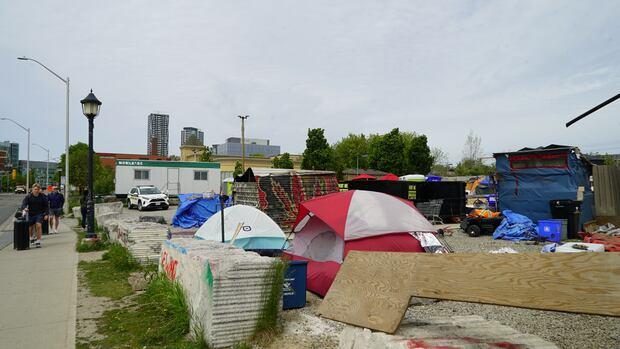
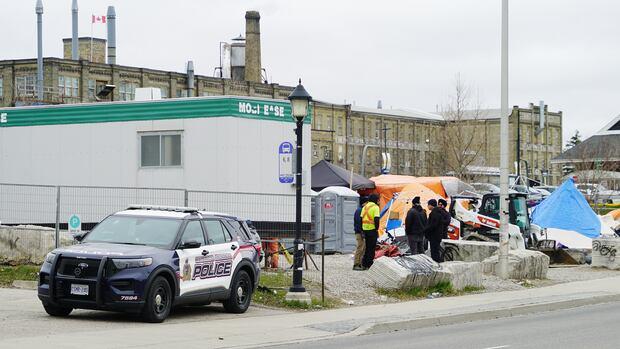
On Jan. 9, 2026,  the Region of Waterloo council amended By-Law 25-021. This deferred the possession date for the Kitchener transit hub site until Apr. 1, 2026. Metrolinx has advised the Region of Waterloo that it requires the use of 100 Victoria St. N. for its Kitchener Central Transit Hub (KCTH). The first version of the bylaw was designed to have encampment residents off 100Vic by the end of 2025.  The region wants to use the property as a staging area for construction vehicles and equipment for the KCTH, planned to be built at the nearby intersection of King St. and Victoria St. 

The amendment was made to allow residents of 100 Victoria St. N. encampment (100Vic) to find alternative housing options.    

“The offer would include an individual housing plan with appropriate alternative accommodation, social service supports and transportation and storage for up to six months at no cost to the person,” Fiona McCrea, regional solicitor and director of legal services, said.   

An information session for current residents of the 100Vic ran on Jan. 5, 2026, along with a public information and input meeting on Jan. 7, 2026. A summary of these two sessions was included in the appendix of the addendum report.   

“There was support expressed at both sessions for the removal of the monetary penalty and the provision of written offers of alternative accommodation included in the amendments,” McCrea said.   

Across the Waterloo Region, there are 24 known encampments and approximately 50-59 residents in them. However, the 100Vic by-law and its amendment would only affect the residents and the encampment there.  The motion of including a safe-tenting by-law came up on the Jan. 9, 2026, meeting. This would outline the procedures which people are to follow when putting up tents in designated areas deemed suitable by a governing body.   

“Such a protocol exists in other communities in Ontario including Hamilton, London, St. Thomas and the Region of Peel. These are provisions set through a by-law that provides the circumstances and conditions [in] which individuals can tent in the municipality,” Peter Sweeney, Commissioner of Community Services, said.  

Safe tenting by-laws come in one of two forms: one where individuals are given specific locations in which they are permitted to tent. The other outlines where people are not permitted to tent and sets provisions of distance from schools, cemeteries and childcare centers.   

For example, London’s Park and Recreation Area By-Law-PR-2 prohibits people from encroaching on municipally owned lands or erecting fences on municipally owned lands without the written consent of the City. Whereas the Region of Peel’s Encampment Policy Framework and Joint Protocols  explicitly outlines areas where encampments are prohibited. 

“Not one person that spoke last night wanted this amendment. Even though you [the council] might think it would be advantageous to those living in the encampment.” Pam Wolf, Region of Waterloo Councilor, said.  

Wolf wanted the Region of Waterloo council to explore the safe tenting protocols of other municipalities. The motion to explore the safe tenting protocol was defeated by a final vote of 8-8. 

#100Vic #AdrianQuijano #byLaw #encampmentPolicyFrameworkAndJointProtocols #housingCrisis #informationSession #kitchenerCentralTransitHub #kitchenerTransitHub #London #metrolinx #parkAndRecreationArea #RegionOfWaterloo #regionalCouncil
Cap on international students to blame for decrease in ridership, says Grand River Transit
A report going before a Region of Waterloo council committee says there were 4.1 million fewer Grand River Transit riders in 2025 compared to 2024.
#ridership #decrease #GrandRiverTransit #RegionofWaterloo
https://www.cbc.ca/news/canada/kitchener-waterloo/cap-on-international-students-to-blame-for-decrease-in-ridership-says-grand-river-transit-9.7077410?cmp=rss
More staff and a lot of money: What the Region of Waterloo says it needs to address water capacity issue
Regional councillors are being asked to approve $1.2 million in spending for nine new employees who would directly tackle the water capacity issue.
#water #staff #money #RegionofWaterloo
https://www.cbc.ca/news/canada/kitchener-waterloo/waterloo-region-water-capacity-issue-staff-report-hire-more-people-budget-costs-9.7063197?cmp=rss
Region of Waterloo looks to change bylaw that could see Kitchener encampment residents out by April 1
The Region of Waterloo is looking to make some amendments to a bylaw it passed last spring regarding a homeless encampment on 100 Victoria St. N. in Kitchener. A public input meeting regarding the bylaw...
#homelessness #bylaw #encampment #Kitchener #RegionofWaterloo
https://www.cbc.ca/news/canada/kitchener-waterloo/region-of-waterloo-by-law-changes-victoria-street-encampment-9.7033655?cmp=rss

WR RELEASES BUDGET FOR 2026

In November, the Region of Waterloo released its 2026 preliminary budget plan, which includes major allocations for local initiatives such as the Ending Veteran Homelessness Initiative and a tree-planting project by the Waterloo Region District School Board (WRDSB).  

The budget lists federal grants among its revenue sources—a sign that recent funding from Ottawa may help support key projects in the region.  

The 2026 budget draft proposes a 4.94 per cent increase in the regional tax levy, which would add around $96 per year to the average homeowner’s bill.  

Meanwhile, the City of Kitchener’s draft budget includes a 2.2 per cent property tax increase, plus utility rate hikes, bringing the total estimated impact for the average household to $117. These increases reflect rising operational costs across housing and homelessness services, transit, infrastructure maintenance and other essential programs.  

In 2025, the region spent $165.2 million on social housing and homelessness initiatives. Across 2024, total spending on affordable housing and homelessness programs reached $245 million, with roughly 23 per cent specifically dedicated to shelters and supportive housing. Without federal and provincial transfers, the Region of Waterloo warns that maintaining current service levels could require even higher taxes or cuts to critical programs.  

“Federal and municipal programs play a critical role in supporting housing and food security locally,” Ke Cao, assistant professor of Strategic Management at Wilfrid Laurier University, said. 

Cao also believes that only the governments can address the crisis we are facing.  

“I teach in business school, and I told my students that the role of government is very important because it handles the business of the whole society,” he said.  

The federal funding announced this year helps relieve some of this financial pressure. The contributions support the Ending Veteran Homelessness Initiative, addressing the gap in local housing services by providing support for veterans, along with other homelessness-response programs.   

This funding helps sustain shelters, outreach teams, and supportive housing while reducing strain on municipal budgets. Additional funds support long-term initiatives such as environmental and infrastructure projects, including the WRDSB’s tree-planting program, which contributes to urban canopy growth and climate resilience.  

According to the preliminary budget, the region plans to increase their spending in 2026 by $11.7 million for housing services and $2.7 million for homelessness-related programs. These increases reflect rising costs for housing and homelessness services, transit, infrastructure and other essential programs. Municipal leaders also welcomed federal contributions, noting that without them, residents would face significantly higher tax burdens and essential services could be reduced.  

“We’re happy to see the $6 billion over 10 years through the Direct Delivery Stream to support regionally significant projects,” Dorothy McCabe, mayor of Waterloo, said.  

In a 2024 public statement, McCabe warned that Waterloo is under structural financial pressure and stressed the need for stable, predictable funding instead of one-time grants to support long-term municipal priorities.   

Advocates, including the Federation of Canadian Municipalities, repeatedly called on Ottawa to expand multi-year funding streams to help municipalities meet growing demands without overburdening residents.  

Federal support combined with municipal budgeting decisions will determine whether services keep pace with community needs or whether tax increases and service pressures continue to rise.   

Although the latest funding provides relief to the Waterloo region community, regional leaders explained that ongoing collaboration between federal, provincial and municipal governments will be essential to sustain programs, stabilize communities and advance long-term priorities such as housing affordability and environmental resilience.  

The Waterloo Region’s annual budget process began on Oct. 22, and regional council plans to review the final 2026 budget on Dec. 16. For more information regarding the preliminary 2026 budgets, visit the Region of Waterloo’s Budget and Financial Statements page. 

#2026 #Budget2026 #canadianMunicipalities #CityOfKitchener #directDeliveryStream #DorothyMcCabe #endingVeteranHomelessness #EndingVeteranHomelessnessInitiative #FederationOfCanadianMunicipalities #KeCao #localPolitics #municipality #preliminaryBudget #RegionOfWaterloo #SangjunHan #strategicManagement #waterloo #WaterlooRegionDistrictSchoolBoard #wilfridLaurierUniversity #WRDSB

ONTARIO WASTE COLLECTION CHANGES

On Nov. 4, 2025, Circular Materials released new details on the changes to curbside recycling in Waterloo Region. Circular Materials is the national not-for-profit which took over responsibility for managing recycling in the province in March 2024.  

The changes are part of Ontario’s new recycling regulation that moves recycling programs to an extended producer responsibility (EPR) model. The new recycling program officially starts on Jan. 1, 2026 and is funded and operated by producers of packaging and paper products.  

“The program takes the costs of and operational responsibility for blue box recycling away from taxpayers and municipalities. This means that residents will no longer be paying for recycling services as this cost will be borne by producers,” Jennifer Kerr, Director of Community and Media Relations at Circular Materials, said.  

Under current recycling programs, each municipality decides what materials can be placed in blue bins. The change introduces a unified materials list that is the same across the province.   

The new list includes previously unaccepted items, including hot and cold beverage cups, toothpaste tubes, black plastic containers and frozen juice containers. The complete list of materials is available on the Circular Materials website.   

“The unified material list and new materials included are a great example of how extended producer responsibility advances innovation and improves environmental outcomes,” Kerr said.  

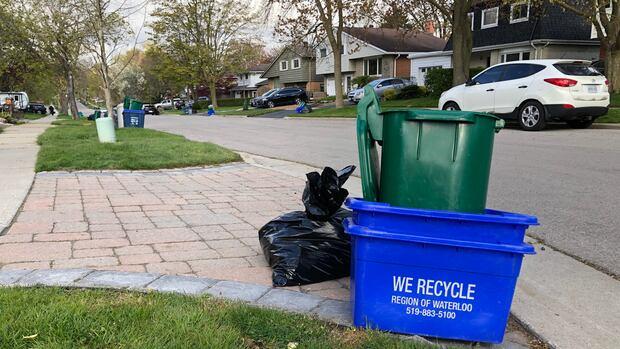
March 2026 brings additional changes to curbside recycling. Recycling collection will shift to a bi-weekly, four-day schedule running Tuesday to Friday. To accommodate the change, Circular Materials is delivering two additional blue boxes to residents starting in January 2026.  

“The new bi-weekly recycling schedule will alternate with the new bi-weekly garbage and organics collection schedule which is managed by the Region of Waterloo,” Kerr said.   

While Circular Materials manages the program, each community is serviced by a different collection contractor. Miller Waste currently provides curbside collection in Cambridge, Kitchener, and Waterloo.   

Starting on Mar. 3, 2026, Miller Waste will provide collection service across all Waterloo Region communities, including North Dumfries, Wellesley, Wilmot and Woolwich. Contact information for local collection services, along with the most up-to-date recycling details, is available at circularmaterials.ca/waterlooregion.  

The move from municipally operated programs to a province-wide program is a major change. Kerr said the feedback from residents has mainly been on clarifying what the changes are.   

“We appreciate residents’ and communities’ continued engagement and participation in recycling through this transition. Resident participation is vital to increasing recycling rates and advancing a more sustainable future,” Kerr said. 

#AlexKinsella #Cambridge #CircularMaterials #jenniferKerr #kitchener #millerWaste #NorthDumfries #recycling #RegionOfWaterloo #waterloo #waterlooRegion #Wellesley #Wilmot #Woolwich

Measles clinics offered to 'priority' groups by Region of Waterloo Public Health as outbreak worsens
Region of Waterloo Public Health will offer measles vaccination clinics to priority groups. It comes after the province has expanded eligibility for the vaccine and as cases continue to rise.
#health #disease #outbreak #vaccine #RegionofWaterloo #News
https://www.cbc.ca/news/canada/kitchener-waterloo/measles-clinics-region-of-waterloo-public-health-expanded-eligibility-1.7543766?cmp=rss

7.6: Abundance, Inclusion, Resilience: The One Million Neighbours Project with Sam Nabi

This episode, Ariel speaks to Sam Nabi about One Million Neighbours, a project bringing together the voices of local non-profits that envisions the future of Waterloo Region once the population has reached one million. Sam discusses the impetus for the project, providing a voice for the voiceless, the issue with grant applications, funding the future, being proactive instead of reactive to harsh policies, and much more. What might an abundant, inclusive, resilient (Ariel says: solarpunk) city look like on the human level? Who lives there, what do they value, and what are their daily lives like? And what does it look like to take action now at the regional/municipal level to ensure that utopian vision?

https://youtu.be/PlJXF0qvV9k

#solarpunk #SolarpunkPresentsPodcast #Episode #SeasonSeven #podcast #interview #OneMillionNeighbours @samnabi @dtkmelissa #VisionOneMillion #HoldTheLineWR #Nonprofits #neighbours #Waterloo #RegionOfWaterloo #Kitchener #KW #UrbanPlanning #transit #PublicSpaces

Today is Victoria Day in Canada, a national holiday, so I briefly considered waiting to post this until Tuesday but screw colonial measures of time; #notmyqueen lol

7.6: Abundance, Inclusion, Resilience: The One Million Neighbours Project with Sam Nabi

YouTube

7.4: Enhancing the local values chain with community gardens feat. Doug Jones

In this episode, Ariel interviews Doug Jones from Waterloo Region Community Garden Network, and he discusses about how the Network was started, what it does, and the benefits of gardening for the health and wellbeing not only for you but for your entire community. We discuss gleaning, food insecurity, access to land, and much more; this is an episode you’re going to want to listen to, especially if rising cost of food and food security are concerns for you these days.

I (Ariel) have included some links to the local organizations he mentions, as well as some that expand on some of the topics we discussed, which you can check out in the YouTube description or on our blog.

#SolarPunk #SolarpunkPresentsPodcast #podcast #food #FoodProduction #LandAccess #CommunityGardens #CommunityGardening #FoodSecurity #Ontario #Canada #RegionOfWaterloo

https://youtu.be/jgj-6UCOkWY?si=M9jGWRTiBh8v3ZcZ

7.4: Enhancing the local values chain with community gardens feat. Doug Jones

YouTube