Study suggests melatonin may enhance DNA repair in night shift workers
📰 Original title: Repairing DNA damage: Scientists discover a surprising new benefit of melatonin
🤖 IA: It's not clickbait ✅
👥 Users: It's not clickbait ✅
View full AI summary https://en.killbait.com/study-suggests-melatonin-may-enhance-dna-repair-in-night-shift-workers.html?utm_source=mastodon_world&utm_medium=social&utm_campaign=killbait.mastodon_world
#health #melatonin #dnarepair #nightshift
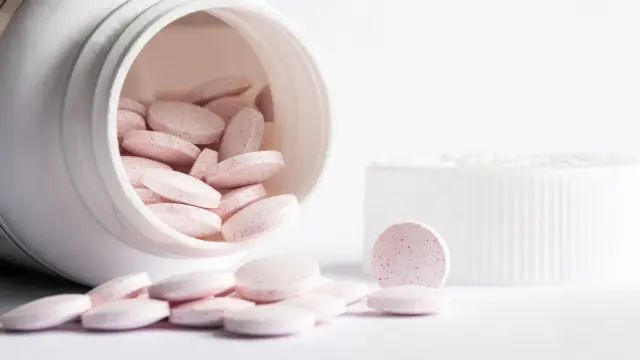
Study suggests melatonin may enhance DNA repair in night shift workers
A recent small clinical trial suggests that melatonin supplementation may help improve the body’s ability to repair oxidative DNA damage in night shift workers. The study, published in Occupational & Environmental Medicine, investigated whether taking melatonin could counteract some of the biological effects associated with working overnight shifts, which are known to disrupt the body’s natural circadian rhythm. Researchers focused on 40 healthcare workers who regularly worked night shifts. Participants were randomly assigned to receive either a 3 mg melatonin supplement or a placebo for four weeks. The supplement was taken about one hour before daytime sleep, following night work schedules.
The study measured levels of 8-OHdG, a biomarker found in urine that reflects oxidative DNA damage and repair activity. Results showed that participants who took melatonin had approximately 80% higher urinary 8-OHdG levels during daytime sleep compared to those in the placebo group, suggesting increased DNA repair activity during rest periods. However, no significant differences were observed during subsequent night shifts, indicating that the effect may be limited to sleep periods following nighttime work.
Researchers believe that melatonin may help restore disrupted circadian signaling, which plays a key role in coordinating DNA repair mechanisms. Night shift work suppresses natural melatonin production, potentially reducing the body’s ability to repair cellular damage linked to long-term health risks, including cancer. Despite these promising findings, the study was small, short in duration, and did not measure long-term health outcomes. Scientists emphasize that larger and longer trials are needed before melatonin can be recommended as a preventive strategy for night shift workers. They also note that environmental factors such as light exposure were not fully controlled, which could influence results.
Study suggests melatonin may enhance DNA repair in night shift workers
📰 Original title: Repairing DNA damage: Scientists discover a surprising new benefit of melatonin
🤖 IA: It's not clickbait ✅
👥 Users: It's not clickbait ✅
View full AI summary https://en.killbait.com/study-suggests-melatonin-may-enhance-dna-repair-in-night-shift-workers.html?utm_source=mastodon_social&utm_medium=social&utm_campaign=killbait.mastodon_social
#health #melatonin #dnarepair #nightshift
Study suggests melatonin may enhance DNA repair in night shift workers
A recent small clinical trial suggests that melatonin supplementation may help improve the body’s ability to repair oxidative DNA damage in night shift workers. The study, published in Occupational & Environmental Medicine, investigated whether taking melatonin could counteract some of the biological effects associated with working overnight shifts, which are known to disrupt the body’s natural circadian rhythm. Researchers focused on 40 healthcare workers who regularly worked night shifts. Participants were randomly assigned to receive either a 3 mg melatonin supplement or a placebo for four weeks. The supplement was taken about one hour before daytime sleep, following night work schedules.
The study measured levels of 8-OHdG, a biomarker found in urine that reflects oxidative DNA damage and repair activity. Results showed that participants who took melatonin had approximately 80% higher urinary 8-OHdG levels during daytime sleep compared to those in the placebo group, suggesting increased DNA repair activity during rest periods. However, no significant differences were observed during subsequent night shifts, indicating that the effect may be limited to sleep periods following nighttime work.
Researchers believe that melatonin may help restore disrupted circadian signaling, which plays a key role in coordinating DNA repair mechanisms. Night shift work suppresses natural melatonin production, potentially reducing the body’s ability to repair cellular damage linked to long-term health risks, including cancer. Despite these promising findings, the study was small, short in duration, and did not measure long-term health outcomes. Scientists emphasize that larger and longer trials are needed before melatonin can be recommended as a preventive strategy for night shift workers. They also note that environmental factors such as light exposure were not fully controlled, which could influence results.
Thrilled to see our work featured on the cover of Molecular Cell.
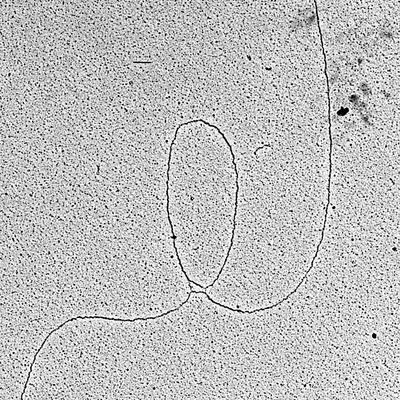
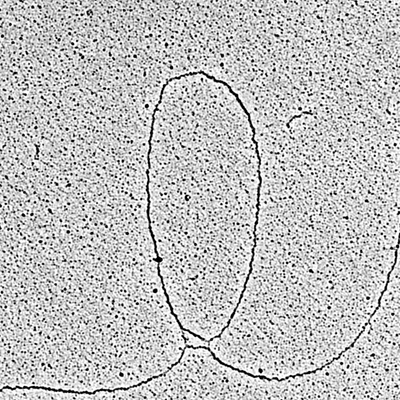
The image is an electron micrograph of an i-loop, the DNA structure we propose as a source of eccDNA formation. Almost like catching circular DNA formation in the act.
#eccDNA #CancerResearch #GenomeInstability #DNARepairThrilled to see our work featured on the cover of Molecular Cell.
The image: an electron micrograph of an i-loop, the DNA structure we propose as a source of eccDNA formation. Almost like catching circular DNA formation in the act.
#MolecularCell #eccDNA #ecDNA #CancerResearch #GenomeInstability #DNARepair @MolecularCell
FANCM (PDB: 5V5X) — DEAD-box ATPase geometry (K1175/Mg²⁺) drives replication fork reversal at interstrand crosslinks, not classical duplex unwinding. Helicase–DNA interface: residues 1290–1297.
Fork reversal fidelity declines with age. FANCM's structural landscape is an underexplored target in replication stress and genomic aging.
#FANCM #FanconiAnemia #StructuralBiology #DNARepair #ReplicationStress #LongevityBiology #Biogerontology
Huge congratulations to @EZ_eta for leading the experimental work, and a big thank you to our collaborators at IIT for their Nanopore expertise, as well as to Michele Giannattasio head of the EM on Single Molecules Facility for his contribution to the structural analysis.
#eccDNA #ecDNA #CancerResearch #GenomeInstability #DNARepair #ReplicationStress
How do cancer-associated extrachromosomal circular DNAs arise?
In our new manuscript, we show that single-strand DNA damage in repetitive sequences can trigger i-loop formation and eccDNA generation. What started at telomeres may reflect a much broader principle across the genome and help explain how ecDNA may emerge in cancer.
https://authors.elsevier.com/a/1n0wG3vVUPZO38
#eccDNA #ecDNA #CancerResearch #GenomeInstability #DNARepair #ReplicationStress
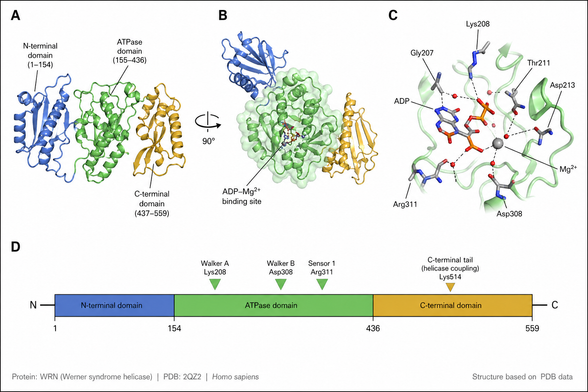
WRN helicase (PDB: 2QZ2) — Walker A/B and Sensor 1 motifs coordinate ADP–Mg²⁺ in the post-hydrolysis state. C-terminal tail (L514) couples helicase and exonuclease activities.
WRN loss → Werner syndrome + simultaneous acceleration of telomere attrition, epigenetic dysregulation, and stem cell exhaustion. A structural window into multi-hallmark aging.
#WRN #WernerSyndrome #StructuralBiology #LongevityBiology #DNARepair #Biogerontology #AgingHallmarks
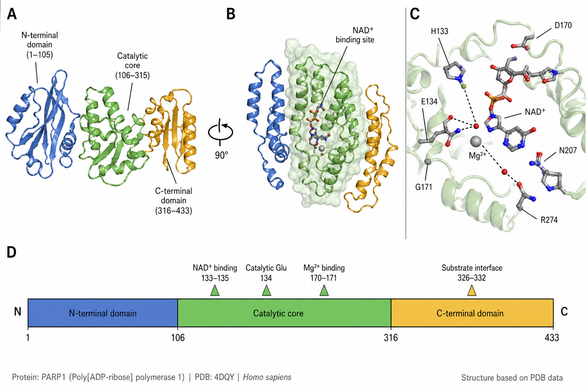
PARP1 (PDB: 4DQY) — catalytic core resolves NAD⁺ positioning (H133/E134/Mg²⁺) and substrate interface (326–332) as structurally separable sites. E134 as the ADP-ribose acceptor base.
Age-associated DNA damage → PARP1 hyperactivation → NAD⁺ depletion → SIRT1/3 inactivation → mitochondrial dysfunction. A structurally grounded feedforward loop in biological aging.
#PARP1 #NAD #StructuralBiology #LongevityBiology #Aging #DNARepair #Biogerontology #Sirtuins
SEO Title
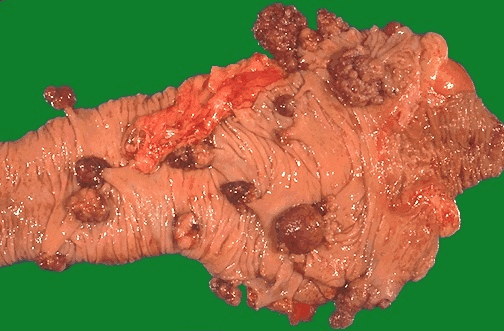
U01.17.002 Lynch Syndrome (HNPCC): Genetics, Screening, and Cancer Risk
Master Lynch Syndrome (Hereditary Nonpolyposis Colorectal Cancer) for USMLE Step 1. Learn about Mismatch Repair (MMR) defects, Microsatellite Instability (MSI), and the 3-2-1 Amsterdam Criteria. High-yield guide on mymedschool.org.
 KillBait News
 KillBait
 Doksani Lab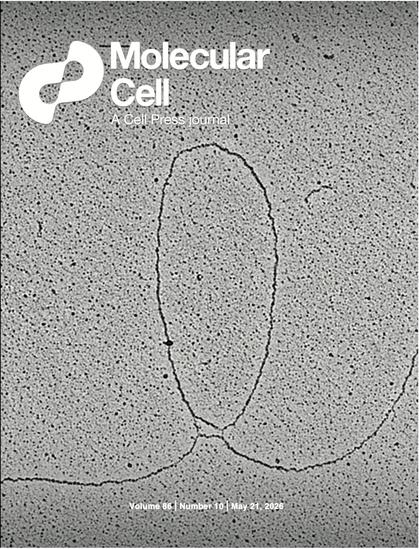
 Lab Doksani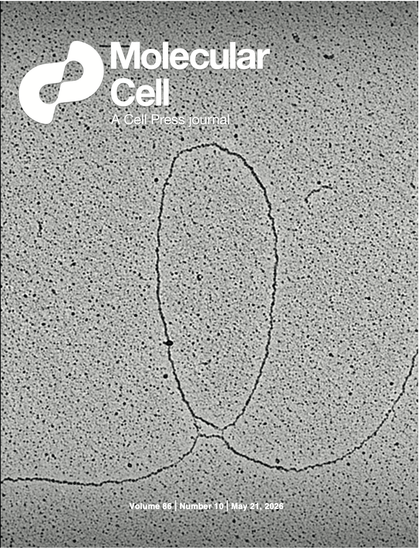
 Alice Frolov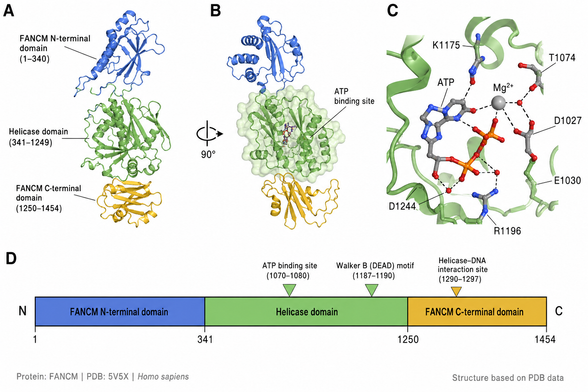
 mymedschool