 Knowledge Zone
What are the #Chances? : Medium
The #Global #Cybersecurity gap deepens as #AI-powered #Attacks surge : Misc
4,000 Meters Below #Sea Level, #Scientists Have Found the #Spectacular ‘#DarkOxygen’ : Pop Mech
Latest #KnowledgeLinks

What are the #Chances? : Medium
The #Global #Cybersecurity gap deepens as #AI-powered #Attacks surge : Misc
4,000 Meters Below #Sea Level, #Scientists Have Found the #Spectacular ‘#DarkOxygen’ : Pop Mech
Latest #KnowledgeLinks
The Secret to Life on Other Worlds: Unveiling Dark Oxygen
Dark Oxygen: The Deep-Sea Secret to Life on Other Worlds?
Imagine descending into the abyssal depths of the Pacific Ocean, where sunlight has never pierced the eternal darkness. At around 4,000 meters below the surface, in a realm of crushing pressure and frigid temperatures, scientists expected to find a world starved of oxygen, reliant on the trickle-down from surface photosynthesis. But in 2024, a team led by Professor Andrew Sweetman from the Scottish Association for Marine Science stumbled upon something extraordinary: oxygen was being produced right there on the seafloor, without a single ray of light. This phenomenon, dubbed “dark oxygen,” has sent shockwaves through the scientific community, challenging long-held beliefs about how life sustains itself on Earth and, more tantalizingly, hinting at possibilities for life beyond our planet.
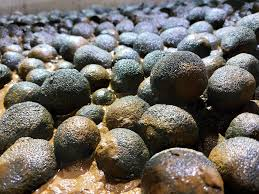
The discovery unfolded in the Clarion-Clipperton Zone, a vast expanse of the Pacific Ocean floor dotted with polymetallic nodules—potato-sized lumps of metal-rich minerals that have formed over millions of years. These nodules, containing manganese, cobalt, nickel, and other elements, were the unexpected culprits. During experiments using benthic chambers—sealed enclosures placed on the seafloor to measure oxygen levels—researchers observed oxygen concentrations not decreasing as anticipated due to consumption by microbes and small creatures, but actually increasing, sometimes tripling over just two days. It was as if the ocean floor was breathing life into its own environment.
To understand this, picture these nodules acting like natural batteries. The researchers hypothesize that the varying metal compositions within the nodules create voltage potentials—up to 0.95 volts—capable of splitting seawater molecules (H2O) into hydrogen and oxygen through a process akin to electrolysis. This “geo-battery” effect occurs because the nodules have layers enriched with different metals, generating an electric field strong enough to drive the reaction. Independent measurements using the Winkler method confirmed the optode sensors weren’t malfunctioning, and further tests showed that removing the nodules halted the oxygen production.
This finding upends a fundamental tenet of biology: that oxygen production on Earth is primarily the domain of photosynthetic organisms like plants and algae, which harness sunlight to convert carbon dioxide and water into energy and oxygen. About half of the planet’s breathable oxygen comes from ocean phytoplankton alone. Yet here, in complete darkness, oxygen is emerging from inorganic processes. The rates observed—between 1.7 and 18 millimoles of oxygen per square meter per day—suggest this dark oxygen could support local ecosystems, providing a vital resource for aerobic life in an otherwise hostile environment.
The human element in this story is palpable. Sweetman first noticed anomalous oxygen spikes back in 2013 but dismissed them as sensor errors. It took years of persistent experimentation, including re-evaluations of data from multiple cruises across the Clarion-Clipperton Zone, to confirm the reality. “I first saw this in 2013—an enormous amount of oxygen being produced at the seafloor in complete darkness,” Sweetman recounted. His team’s perseverance highlights how science often advances through questioning the unexpected, turning what could have been discarded data into a paradigm shift.
But why does this matter for life on other worlds? The implications ripple far beyond Earth’s oceans. For decades, astrobiologists have focused on habitable zones where liquid water and sunlight could support photosynthesis-based life. Moons like Jupiter’s Europa and Saturn’s Enceladus, with their subsurface oceans hidden beneath thick ice shells, were intriguing but challenging candidates because they lack direct sunlight. Life there, if it exists, was thought to rely on chemosynthesis—using chemical energy from hydrothermal vents, much like Earth’s deep-sea vent ecosystems.
Dark oxygen changes that calculus. If metallic minerals can produce oxygen in dark, watery environments, similar processes might occur in these extraterrestrial oceans. Europa’s ocean, estimated to be 100 kilometers deep, could harbor metal-rich rocks on its seafloor, potentially generating oxygen through electrochemical reactions. This oxygen could diffuse through the water, supporting aerobic organisms without the need for photosynthesis. Researchers speculate that dark oxygen might enable complex, animal-like life forms, with sizes ranging from millimeters to centimeters, depending on diffusion and circulatory systems.
Consider Enceladus: its plumes eject water vapor and organic compounds into space, hinting at a dynamic subsurface environment. If polymetallic nodules or analogous structures exist there, dark oxygen production could create oxygen-rich pockets, fostering biodiversity. This expands the habitable real estate in our solar system and beyond. Icy worlds are common in the universe; exomoons around gas giants in other star systems might host similar conditions. The discovery suggests that life doesn’t need a sunlit surface—it could thrive in hidden oceans, powered by geological electricity.
Back on Earth, dark oxygen prompts a reevaluation of life’s origins. The Great Oxidation Event, around 2.4 billion years ago, when oxygen levels spiked due to cyanobacteria, is credited with enabling complex life. But if dark oxygen existed in ancient oceans, it might have provided an earlier oxygen source, perhaps kickstarting aerobic metabolism before photosynthesis dominated. Sweetman himself pondered, “Where could aerobic life have begun?” This could mean life emerged in deep-sea settings, protected from surface hazards like UV radiation.
Moreover, the voltage from these geo-batteries might have aided prebiotic chemistry. Electrotrophy—using electrons directly as energy—could have driven the synthesis of organic molecules, a step toward life. In extraterrestrial contexts, this implies abiogenesis might be more widespread, occurring in dark, metal-rich environments.
The discovery also carries practical warnings. The Clarion-Clipperton Zone is a hotspot for deep-sea mining, targeting these very nodules for rare metals used in batteries and electronics. Removing them could disrupt dark oxygen production, harming fragile ecosystems. Biomass densities supported by this oxygen might reach 3 to 30 grams per square meter, comparable to or exceeding typical deep-sea levels. Environmental groups like Greenpeace argue this underscores the need for caution, as mining could release sediments, altering oxygen dynamics.
Ongoing research is intensifying. In 2025, Sweetman announced a £2 million project backed by The Nippon Foundation and UNESCO to extend studies, including new deep-sea landers capable of reaching 11 kilometers. These will probe deeper into the mechanism, testing for electrolysis and exploring variations across nodule types. Collaborations with NASA are underway, as dark oxygen could inform missions to Europa, like the upcoming Europa Clipper, set to launch in 2024 but with data arriving in the 2030s.
This revelation humanizes our quest for understanding. It reminds us that the universe is full of surprises, hidden in the darkest corners. What seemed like a barren abyss on Earth now pulses with potential, mirroring the unseen oceans of distant moons. As we gaze at the stars, dark oxygen whispers that life might be more resilient and widespread than we ever imagined, waiting in the shadows for us to discover it.
👉 Share your thoughts in the comments, and explore more insights on our Journal and Magazine. Please consider becoming a subscriber, thank you: https://borealtimes.org/subscriptions – Follow The Boreal Times on social media. Join the Oslo Meet by connecting experiences and uniting solutions: https://oslomeet.org
References:
These sources provide empirical backing for the claims, including the original discovery, mechanisms, astrobiological implications, and ongoing research. All links have been verified as active as of January 31, 2026.
👉 Share your thoughts in the comments, and explore more insights on our Journal and Magazine. Please consider becoming a subscriber, thank you: https://borealtimes.org/subscriptions – Follow The Boreal Times on social media. Join the Oslo Meet by connecting experiences and uniting solutions: https://oslomeet.org
#darkOxygen #deepSeaDiscovery #extraterrestrialLifePolymetallic nodules – potential to accelerate green energy systems.
Rocky lumps called polymetallic nodules located 4,000 meters below sea level in the Pacific Ocean can produce “dark oxygen”. This finding upends traditional thinking about where oxygen on earth originated … aka not from plants.
But, wait, there is more. These nodules (there are potentially trillions of them), are filled with rich deposits of nickel, manganese, copper, zinc, cobalt – all metals critical for producing batteries and other advanced green energy devices.
Deep sea mining companies are chopping at the bit to scoop up the nodules from the sea floor. But, 25 countries are lobbying the International Seabed Authority (ISA) Council to implement a moratorium, or at the very least a precautionary pause for mining these “rocks” so more research can be conducted to see how mining these nodules could affect the ocean and potential effects on climate.
https://www.popularmechanics.com/science/environment/a69849400/scientists-found-dark-oxygen-below-sea-level/ #Ocean #SeaMining #Polymetalllic #DarkOxygen #Batteries
"Dark Oxygen" production at the seafloor webinar by Prof Sweetman 2025May06 (3:00-4:30PM EDT, UTC-4).
He will share details of the discovery & evidence for it (hopefully discussing co-production of hydrogen!)
bit.ly/4iRfnWN
#darkoxygen #oxygen #H2 #hydrogen


Attached: 1 image #Hydrogen201 Franz Geiger at Northwestern U @[email protected] quantified the excess energy cost with flipping water before splitting it - #electrolysis. Hematite #OER electrodes were studied; maybe conventional iridium in the future? #oxygen #hydrogen #H2 #electrolyzer
#Hydrogen201
I had a 2024 Zoom with Prof Sweetman of Scottish Association for Marine Science. He described the major discovery of "dark oxygen" production at the deep seafloor, & replicating the generation of #darkoxygen in lab apparatus.
We discussed his plans of including hydrogen #H2 analysis.#Hydrogen201
#oxygen


#Kerala fishermen up in arms against #DeepSeaMining proposal off #Kollam coast
March 22, 2025
"The fishermen in Kerala have already launched several protests against the proposed plan to open up the sea to private mining companies as part of the Union Government’s ‘Blue Economy’ initiative.
"All the fishermen’s associations stand united in their protests against this proposal, alleging that it would bring an end to the fisheries sector in the country, not only in the #ArabianSea but also in the #BayOfBengal.
“ 'The mining, according to the scientific report we have, can disturb the seabed and completely destroy fish spawning habitats. It can also release poisonous gases trapped on the #DeepSeaFloor, causing severe #environmental issues,' Kerala Minister for Fisheries, Saji Cherian, told PTI.
"He said that deep-sea mining requires huge investments and heavy machinery, meaning only #multinational #corporations will be involved, making these areas completely inaccessible to poor fishermen.
"The Kerala government, which is strongly opposing this project, passed a resolution in the Assembly urging the Centre to withdraw it.
"The Minister said the proposed site, off the Kollam shore in Kerala in the Arabian Sea, is very rich in marine resources and serves as a lifeline for fishermen from Kerala and other states.
“ 'We have a highly diverse and extensive fish population in this area. The mining will completely wipe out this habitat, severely affecting the livelihood of fishermen in our region,' Saji Cherian said."
#NoJobsOnADeadPlanet #OceansAreLife #MarineLife #DeepSeaMining #NoDeepSeaMining #DarkOxygen #LifeOnEarth #Extinction #Nodules #Greenwashing #CorporateColonialism #CorporatePolluters
#BatteryAlternatives #NoCobaltMining #RecycleCopper #RecycleCobalt #RecycleZinc #Recycle! #Ecocide #PlanetDestroyers #HumanGreed
#NPR: The U.S. takes a step toward allowing #mining on the ocean floor, a fragile #ecosystem
by Julia Simon, April 25, 2025
"President #Trump signed an executive order Thursday aimed at making it easier for companies to mine the deep seafloor, saying it would create 'a robust domestic supply for critical minerals.'
"There is currently no commercial-scale deep-sea mining anywhere in the world. But companies have long eyed the ocean floor as a potential source of metals like nickel, cobalt, manganese and copper, which are used in batteries for electric vehicles and other technologies.
"The world has no rulebook for deep-sea mining. One company is pushing forward anyway
"These metals can be found in potato-sized nodules lying on the ocean floor. Many of the nodules are in the middle of the Pacific ocean, beyond the legal territory of individual countries.
"Thursday's order might circumvent ongoing international negotiations to regulate deep-sea mining.
"Those regions have traditionally been overseen by an international organization, the #InternationalSeabedAuthority (#ISA). The ISA has hosted talks for years to try to hammer out a rulebook to govern a potential seabed mining industry. The U.S. did not ratify the treaty that governs the seabed, and is not a voting member of the ISA, though in the past under previous administrations it has respected the ISA process.
"In his executive order, Trump instructed federal agencies to expedite the process for reviewing and issuing permits for mining on the seafloor in both U.S. and international territory. It will use a U.S. law from 1980, the "#DeepSeabed Hard Mineral Resources Act."
"Scientists and environmental groups condemned the order, arguing that opening the deep seabed for mining could disrupt important marine ecosystems, and damage the fishing industry.
" 'This is being planned on some of the least resilient #ecosystems on the planet,' says Douglas McCauley, professor of ocean science at the University of California Santa Barbara. 'It would have #catastrophic biological consequences.'
"Underwater mining can create plumes of sediment that could suffocate marine life, and degrade the #FoodWebs that fish depend on, McCauley says.
"There are also important questions about whether we actually need to be mining the seabed to get enough of these minerals for technologies like batteries, says Micah Ziegler, assistant professor of energy and chemical systems at Georgia Institute of Technology.
"While a couple of years ago researchers were concerned about the limitations of land-based mining for metals like cobalt and nickel, a variety of alternative #battery chemistries have been developed that might reduce the need for those elements, Ziegler says."
Read more:
https://www.npr.org/2025/04/25/nx-s1-5376482/trump-seabed-mining-executive-order
#OceansAreLife #MarineLife #DeepSeaMining #NoDeepSeaMining
#DarkOxygen #LifeOnEarth #Extinction #Nodules #Greenwashing #CorporateColonialism #CorporatePolluters #TrumpSucks #Idiocracy
#BatteryAlternatives #NoCobaltMining #RecycleCopper #RecycleCobalt #RecycleZinc #Recycle! #Ecocide #PlanetDestroyers #HumanGreed #NoJobsOnADeadPlanet
'Dark oxygen': a deep-sea discovery that has split scientists
https://phys.org/news/2025-03-dark-oxygen-deep-sea-discovery.html
#HackerNews #DarkOxygen #DeepSea #Discovery #Scientists #Split #Findings #OceanResearch
We may have discovered how #darkoxygen is being made in the #deepsea
What Past #Oceans Tell Us About Our #Climate’s #Future : Medium
What lies beneath #Europa’s #Icy surface? Perhaps a #Heart of #Metal ($) : Nature
#DarkOxygen: New deep #Sea #Expedition to #Explore #Mysterious #Discovery : New Sci
Check our latest #KnowledgeLinks


 Boreal Times Newsroom
 BGDon 🇨🇦 🇺🇸 👨💻
 KeithDPatch
 DoomsdaysCW
 Hacker News
 Steve Dustcircle 🌹
