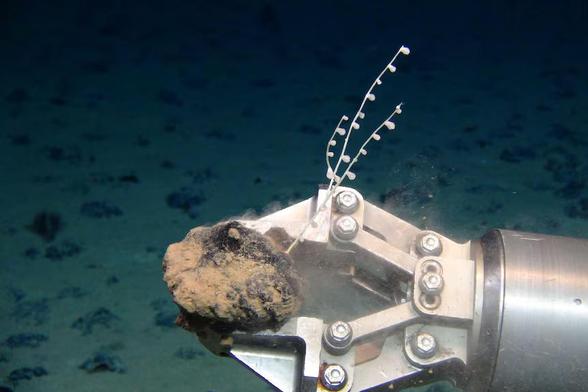
#DeepSeaMining causes immediate loss of #SeafloorLife

by Eric Ralls, February 5, 2026

"Far below the ocean surface, the deep seafloor is often described as one of the planet’s least disturbed ecosystems. That assumption is now being tested.

"Companies are preparing to mine mineral-rich #nodules scattered across the abyss. The shift raises urgent questions about how quickly damage could appear once #industrial machines begin operating.

"A new field experiment offers one of the clearest answers yet. Researchers found that a single trial of a deep-sea mining collector physically removed more than one-third of the animals and species living directly in its path.

"The results show that biological impacts can occur immediately, not only after years of full-scale extraction."

Read more:
https://www.earth.com/news/deep-sea-mining-machines-could-erase-seafloor-life-in-hours/

#DeepSeaLife #OceansAreLife #WorldPol #NoDeepSeaMining #RecycleMetals #DeepSeaMiningMoratorium #OxygenSource #Extinction #PlanetEarth

Deep-sea mining machines could erase seafloor life in hours

A deep-sea mining test shows ecosystem damage can begin immediately, with more than one-third of seafloor animals lost in a single pass.

Earth.com

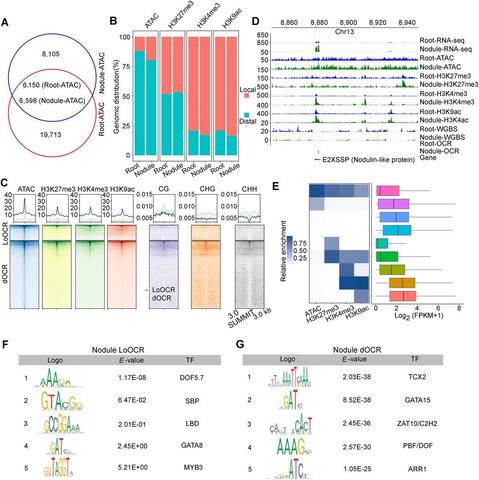
We think #root #nodules are endlessly fascinating!
Not convinced? Then you'd better check out this #OA paper by Wang et al., published in #JIPB!

➡️https://doi.org/10.1111/jipb.70007

@wileyplantsci
#PlantScience #epigenetics #gene #peanut #legume #CropScience #FoodScience #FoodSecurity #botany

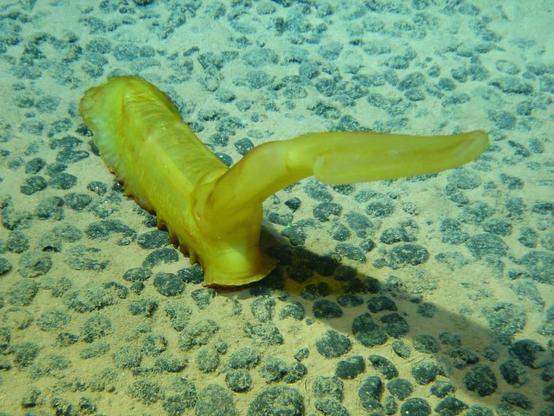
#Nudibranche sur lit de #nodules polymétalliques

#Ifremer (2004). Nodules polymétalliques observés lors de la campagne Nodinaut. Ifremer. https://image.ifremer.fr/data/00424/53575/
#ocean #science

@greenpeace

"Mining the potato-sized rocks on the seafloor called “nodules” only yields four metals of any economic consequence: nickel, cobalt, copper, and manganese. Since copper and manganese are plentiful on land, deep-seafloor mining is really all about nickel and cobalt. And, unlike many have tried to claim, you cannot in fact get meaningful amounts of rare earth elements from the seafloor."

#DeepSeaMining
#nodules

Trump has signed an executive order to open both US and international waters to deep-sea mining, ignoring a global treaty that controls the high seas.

"If you take out the nodules, the ecosystem is gone … the whole living community is gone."

Dr Patricia Esquete

https://www.abc.net.au/news/2025-05-02/deep-sea-mining-us-executive-order-sparks-condemnation/105224062

#news
#DeepSeaMining
#oceans
#mining
#nodules

Trump's deep-sea mining executive order sparks condemnation by scientists and conservationists

Scientists and legal experts warn against commercial deep-sea mining as US President Donald Trump signs an executive order opening up both US and international waters.

ABC News

#Kerala fishermen up in arms against #DeepSeaMining proposal off #Kollam coast

March 22, 2025

"The fishermen in Kerala have already launched several protests against the proposed plan to open up the sea to private mining companies as part of the Union Government’s ‘Blue Economy’ initiative.

"All the fishermen’s associations stand united in their protests against this proposal, alleging that it would bring an end to the fisheries sector in the country, not only in the #ArabianSea but also in the #BayOfBengal.

“ 'The mining, according to the scientific report we have, can disturb the seabed and completely destroy fish spawning habitats. It can also release poisonous gases trapped on the #DeepSeaFloor, causing severe #environmental issues,' Kerala Minister for Fisheries, Saji Cherian, told PTI.

"He said that deep-sea mining requires huge investments and heavy machinery, meaning only #multinational #corporations will be involved, making these areas completely inaccessible to poor fishermen.

"The Kerala government, which is strongly opposing this project, passed a resolution in the Assembly urging the Centre to withdraw it.

"The Minister said the proposed site, off the Kollam shore in Kerala in the Arabian Sea, is very rich in marine resources and serves as a lifeline for fishermen from Kerala and other states.

“ 'We have a highly diverse and extensive fish population in this area. The mining will completely wipe out this habitat, severely affecting the livelihood of fishermen in our region,' Saji Cherian said."

Read more:
https://www.msn.com/en-in/money/economy/kerala-fishermen-up-in-arms-against-deep-sea-mining-proposal-off-kollam-coast/ar-AA1Brtp9

#NoJobsOnADeadPlanet #OceansAreLife #MarineLife #DeepSeaMining #NoDeepSeaMining #DarkOxygen #LifeOnEarth #Extinction #Nodules #Greenwashing #CorporateColonialism #CorporatePolluters
#BatteryAlternatives #NoCobaltMining #RecycleCopper #RecycleCobalt #RecycleZinc #Recycle! #Ecocide #PlanetDestroyers #HumanGreed

MSN

#NPR: The U.S. takes a step toward allowing #mining on the ocean floor, a fragile #ecosystem

by Julia Simon, April 25, 2025

"President #Trump signed an executive order Thursday aimed at making it easier for companies to mine the deep seafloor, saying it would create 'a robust domestic supply for critical minerals.'

"There is currently no commercial-scale deep-sea mining anywhere in the world. But companies have long eyed the ocean floor as a potential source of metals like nickel, cobalt, manganese and copper, which are used in batteries for electric vehicles and other technologies.

"The world has no rulebook for deep-sea mining. One company is pushing forward anyway

"These metals can be found in potato-sized nodules lying on the ocean floor. Many of the nodules are in the middle of the Pacific ocean, beyond the legal territory of individual countries.

"Thursday's order might circumvent ongoing international negotiations to regulate deep-sea mining.

"Those regions have traditionally been overseen by an international organization, the #InternationalSeabedAuthority (#ISA). The ISA has hosted talks for years to try to hammer out a rulebook to govern a potential seabed mining industry. The U.S. did not ratify the treaty that governs the seabed, and is not a voting member of the ISA, though in the past under previous administrations it has respected the ISA process.

"In his executive order, Trump instructed federal agencies to expedite the process for reviewing and issuing permits for mining on the seafloor in both U.S. and international territory. It will use a U.S. law from 1980, the "#DeepSeabed Hard Mineral Resources Act."

"Scientists and environmental groups condemned the order, arguing that opening the deep seabed for mining could disrupt important marine ecosystems, and damage the fishing industry.

" 'This is being planned on some of the least resilient #ecosystems on the planet,' says Douglas McCauley, professor of ocean science at the University of California Santa Barbara. 'It would have #catastrophic biological consequences.'

"Underwater mining can create plumes of sediment that could suffocate marine life, and degrade the #FoodWebs that fish depend on, McCauley says.

"There are also important questions about whether we actually need to be mining the seabed to get enough of these minerals for technologies like batteries, says Micah Ziegler, assistant professor of energy and chemical systems at Georgia Institute of Technology.

"While a couple of years ago researchers were concerned about the limitations of land-based mining for metals like cobalt and nickel, a variety of alternative #battery chemistries have been developed that might reduce the need for those elements, Ziegler says."

Read more:
https://www.npr.org/2025/04/25/nx-s1-5376482/trump-seabed-mining-executive-order

#OceansAreLife #MarineLife #DeepSeaMining #NoDeepSeaMining
#DarkOxygen #LifeOnEarth #Extinction #Nodules #Greenwashing #CorporateColonialism #CorporatePolluters #TrumpSucks #Idiocracy
#BatteryAlternatives #NoCobaltMining #RecycleCopper #RecycleCobalt #RecycleZinc #Recycle! #Ecocide #PlanetDestroyers #HumanGreed #NoJobsOnADeadPlanet

#Oxygen produced in the #DeepSea raises questions about extraterrestrial life

"Over 12,000 feet below the surface of the sea, in a region of the Pacific Ocean known as the Clarion-Clipperton Zone (#CCZ), million-year-old rocks cover the seafloor. These rocks may seem lifeless, but nestled between the nooks and crannies on their surfaces, tiny sea creatures and microbes make their home, many uniquely adapted to life in the dark.

"These deep-sea rocks, called polymetallic #nodules, don't only host a surprising number of sea critters. A team of scientists that includes Boston University experts has discovered they also produce oxygen on the seafloor.

"The discovery is a surprise considering oxygen is typically created by plants and organisms with help from the sun -- not by rocks on the ocean floor. About half of all the oxygen we breathe is made near the surface of the ocean by phytoplankton that photosynthesize just like land-dwelling plants. Since the sun is needed to carry out photosynthesis, finding oxygen production at the bottom of the sea, where there is no light, flips conventional wisdom on its head. It was so unexpected that scientists involved in the study first thought it was a mistake.

"This was really weird, because no one had ever seen it before," says Jeffrey Marlow, a BU College of Arts & Sciences assistant professor of biology and coauthor on the study, which was published in Nature Geoscience.

As an expert in microbes that live in the most extreme habitats on Earth -- like hardened lava and deep-sea hydrothermal vents -- Marlow initially suspected that microbial activity could be responsible for making oxygen. The research team used deep-sea chambers that land on the seafloor and enclose the seawater, sediment, polymetallic nodules, and living organisms. They then measured how oxygen levels changed in the chambers over 48 hours. If there are plentiful organisms breathing oxygen, then the levels would normally decline, depending on how much animal activity is present in the chamber. But in this case, oxygen was increasing.

" 'We did a lot of troubleshooting and found that the oxygen levels increased many more times following that initial measurement,' Marlow says. 'So we're now convinced it's a real signal.'

"He and his colleagues were aboard a research vessel tasked with learning more about the ecology of the CCZ, which spans 1.7 million square miles between #Hawaii and #Mexico, for an environmental survey sponsored by The Metals Company, a deep-sea mining firm interested in extracting the rocks en masse for metals. After running experiments on board the vessel, Marlow and the team, led by Andrew Sweetman at the Scottish Association for Marine Science, concluded the phenomenon isn't primarily caused by microbial activity, despite the abundance of many different types of microbes both on and inside the rocks.

"#PolymetallicNodules are made of rare metals, including #copper, nickel, cobalt, iron, and manganese, which is why companies are interested in mining them. It turns out, according to the study, that those densely packed metals are likely triggering "seawater electrolysis." This means that metal ions in the rock layers are distributed unevenly, creating a separation of electrical charges -- just like what happens inside of a battery. This phenomenon creates enough energy to split water molecules into oxygen and hydrogen. They named this "dark oxygen," since it's oxygen made with no sunlight. What remains unclear is the exact mechanism of how this happens, if oxygen levels vary across the CCZ, and if the oxygen plays a significant role in sustaining the local ecosystem."

https://www.sciencedaily.com/releases/2024/08/240826182909.htm

#LeaveItInTheOcean #DeepSeaMining #NoDeepSeaMining #RecycleCopper #LifeOnEarth #Ecocide #PlanetDestroyers #HumanGreed

Oxygen produced in the deep sea raises questions about extraterrestrial life

Rocks are generating 'dark oxygen' in an area being explored for deep-sea mining.

ScienceDaily
Heavy Metal by Eris And AI

Heavy Metal by Eris And AI

Eris And AI

If Earth loses its sources of oxygen, that won't be a very green transition. smh

#DeepSeaMining opponents suffer major setback

by Amélie BOTTOLLIER-DEPOIS
August 3, 2024

"Opponents of deep sea mining suffered a serious setback Friday when they failed to take a first step toward an international moratorium on the controversial practice.

"Until now, those in favor of such mining—which would deliver minerals key to the green transition but with a potentially high environmental cost—have managed to prevent the #InternationalSeabedAuthority (#ISA) from even taking up any debate on the subject.

"This time, the debate took place, but a draft calling for a 'dialogue' toward 'the development of a general policy... for the protection and preservation of the marine environment' did not advance after a week of talks in Kingston, Jamaica.

"Numerous delegations, from #China to #SaudiArabia to the #Africa group of member states, said the draft lacked clarity and that the ISA's full assembly of 168 members was not the forum to make any decision on the protection of #marine habitats.

"Instead, those countries said the Council, made up of 36 states, should decide.

"Faced with consistent opposition, #Chile withdrew the draft measure as the assembly's annual session—which makes decisions by consensus—drew to a close.

"'We are somewhat disappointed,' said Chilean representative Salvador Vega Telias. Though he believed he had support from a majority of states, he opted to shelve the discussions until July 2025—a proposal that was not approved either.

"Deep sea mining in international waters involves scraping the ocean floor for #minerals like #nickel, #cobalt and #copper, crucial for #RenewableEnergy energy technology.

"Under the UN Convention on the Law of the Sea (#UNCLOS), the ISA is responsible for both protecting the seabed in areas beyond national jurisdictions and for overseeing any exploration or exploitation of resources in those zones.

"Deep sea mining has not yet taken place beyond the experimental and exploratory stage.

"The ISA's Council, which for now only grants exploration contracts, has been drawing up commercial exploitation rules for more than a decade. They are aiming to adopt a mining code in 2025.

"Non-governmental organizations and scientists warn that deep sea mining could damage #habitats and harm species that are little understood, but are potentially important to the #FoodChain.

"In addition, they point to the risk of disrupting the ocean's capacity to absorb carbon emitted by human activities, and the noise that could disturb species such as #whales."

Read more:
https://phys.org/news/2024-08-deep-sea-opponents-major-setback.html

#OceansAreLife #MarineLife #DeepSeaMining #NoDeepSeaMining
#DarkOxygen #LifeOnEarth #Extinction #Nodules #Greenwashing #CorporateColonialism #CorporatePolluters

Deep sea mining opponents suffer major setback

Opponents of deep sea mining suffered a serious setback Friday when they failed to take a first step toward an international moratorium on the controversial practice.

Phys.org