 James Endres Howell
@da_667 C. Wright Mills is worth everyone's time. Lucid prose, dense with insights. He named these social pathologies in the 1950s. "Crackpot realism." "Institutional irresponsibility."
 the agency review
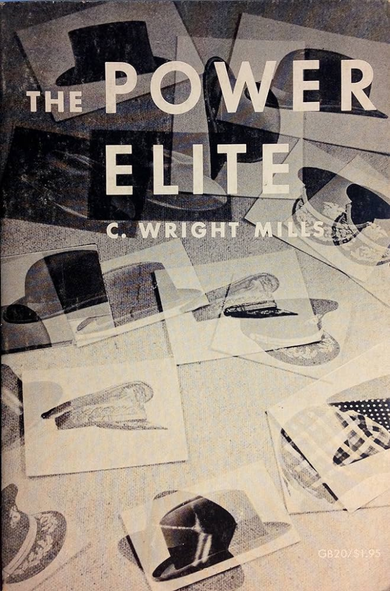
How #CWrightMills’ #1956 #classic #ThePowerElite changed the conversation about #America for ever. Our review: http://wp.me/P23AlC-LD
 The Agency Review
How #CWrightMills’ #1956 #classic #ThePowerElite changed the conversation about #America for ever. Our review: http://wp.me/P23AlC-LD
 Mark Carrigan
Creative thinking as mushroom picking: a sketch of a psychoanalytical account of thinking-through-writing
I’ve been preoccupied by this passage from Feud’s Interpretation of Dreams about the lattice work of associations which builds up the texture of our dream worlds:
The dream thoughts to which we are led by interpretation cannot, from the nature of things, have any definite endings: they are bound to branch out in every direction into the intricate network of our world of thought. It is at some point where this meshwork is particularly close that the dream wish grows up, like a mushroom out of its mycelium.
Bollas talks about this the Evocative Object World (pg 29-30) in terms of “internal constellations of interest” which “form through the associations of thought during the day, usually in response to discrete episodes of lived experience, following long-standing desires in the self”. The analytical significance comes “When the structure reaches an ‘epiphany’ , understood here as a moment of insight that allows the self to increase its reflective capacity, the person looks upon himself and others in a somewhat new manner”. These constellations of interest, the meshwork, builds throughout our everyday experience. From The Evocative Object pg 63:
Without thinking about it much, when we traverse a city – or walk in our district – we are engaged in a type of dreaming. Each gaze that falls upon an object of interest may yield a moment’s reverie – when we think of something else, inspired by the point of emotional contact – and during our day we will have scores of such reveries, which Freud termed psychic intensities, and which he believed were the stimuli for the dream that night. But as a type of dreaming in their own right, the reveries wrought by evocative objects constitute an important feature of our psychic lives.
The clinic provides a site where these associations can be articulated in a manner that ensures reception. The unconscious communication in the psychoanalytical dyad receives these associations in a manner that contributes to further building the meshwork but also creates the condition for these ‘epiphanies’ to emerges the points at which the mushroom rises up out other mycelium and is picked in a manner which changes everything. You cannot go back to being the person who saw things in the old way. Psychoanalysis provides occasions for articulation along with a specific mode of reception. This process happens outside of analysis as well though, in dreams (as in the opening quotation) but also in our engagement with cultural objects. From Forces of Destiny by Christopher Bollas pg 37-38:
And now and then we will be quite transformed by the uncanny wedding of our idiom and an object meeting up at just the right time. One late afternoon in the summer of 1972, I heard a performance of one of Hindmith’s viola sonata in a small church in New England. It immediately served to process a feature of my idiom, and this occasion sponsored vivid and intense feelings and ideas which lifted me into the next moments of my life. Shall we ever have the means to analyse that? Why that particular work?
In a real sense I was not the same person after reading Eliot’s Four Quartets for the first time. Nor was I the same person after binge-reading Game of Thrones. Nor after reading my first x-men comic when I was a kid. Or seeing Gaslight Anthem live for the first time. Or going to my first rave. Or reading Nietzsche’s Ecce Homo for the first time in my late 20s. Or trying to make my own breakcore this winter. Or indeed really getting into Bollas over the last few months. What I love about Bollas is how he provides the means to treat these cultural experiences in a roughly symmetrical way: some are imbued with cultural capital, others are not, but they all contribute to the elaboration of my personal idiom. I’ve chosen these examples because they contribute to ‘epiphany’ as well: in the sense of leading to a change, even if subtle, in how I see myself and my place in the world. They are points where the micro-structure of my idiom gives rise to a change in the macro-structure of my character. Or to put it more poetically, the mushroom rises up out of its mycelium.
As so often happens I’m reminded of a letter C Wright Mills wrote to his friend, the historian William Miller, who was struggling with a new job he had started:
You ask for what one should be keyed up? My god, for long weekends in the country, and snow and the feel of an idea and New York streets early in the morning and late at night and the camera eye always working whether you want or not and yes by god how the earth feels when it’s been plowed deep and the new chartreuse wall in the study and wine before dinner and if you can afford it Irish whiskey afterwards and sawdust in your pants cuff and sometimes at evening the dusky pink sky to the northwest, and the books to read never touched and all that stuff the Greeks wrote and have you ever read Macaulay’s speeches to hear the English language? And to revise your mode of talk and what you talk about and yes by god the world of music which we must now discover and there’s still hot jazz and getting a car out of the mud when nobody else can. That’s what the hell to get keyed up about.
In the register of Bollas we could say that Wright Mills is reminding his friend of all the sensory pleasures to be found in the world (“too much society crap and too much mentality and not enough tactile and color and sound stuff going on“). These are evocative objects which provoke enjoyable feelings in us. They are the objects which make us feel alive. These include “the books to read never touched”, “all that stuff the Greeks wrote”, “to hear the English language” and “to revise your mode of talk and what you talk about”. But also earlier “the feel of an idea”.
This is a phrase forever lodged in my psyche because it immediately captured the phenomenology of creation for me. I know what it feels like when an idea is ready. I know that if I reach for that idea at that moment then expressing it will be energising and rewarding. I’ve written this blog post in less than 10 minutes so far because my experience is that when I have the ‘feel of an idea’ the words will pour forth because I am in contact with what has been evoked in me. If I write it down to return to it later I occasionally find some residue of the energy but usually it’s an inert experience in which I churn out words to tick something off a list. The versatility of blogging rests in its capacity to provide a continually available occasion for articulating a single idea. If I have that feeling, I can immediately reach for the blog and in less than 20 minutes (almost always) I have articulated the idea I felt.
I now see the ‘feel of an idea’ as a particular kind of mushroom which has emerged out of its mycelium. Much as analysis provide fertile terrain for articulating associations (in a manner which leads to more associations) and which are then received in a fruitful way, writing provides the means through which we articulate idea-mushrooms with different modes of reception which shape what we do with them. In these sense we can think of occasions for articulation provided by the different writing practices as offering different ways of ‘picking’ these idea-mushrooms and working with them. I would argue the creative use of LLMs can be seen in terms of this genealogy, or at least they can be used in this way. This is essentially Bertrand Russell’s advice which I picked up a long time ago:
My own belief is that a conscious thought can be planted into the unconscious if a sufficient amount of vigour and intensity is put into it. most of the unconscious consists of what were once highly emotional conscious thoughts, which have now become buried. It is possible to do this process of burying deliberately, and in this way, the unconscious can be led to do a lot of useful work. I have found, for example, that if I have to write upon some rather difficult topic the best plan is to think about it with very great intensity – the greatest intensity of which I am capable – for a few hours or days, and at the end of that time give orders, so to speak, that the work is to proceed underground. After some months I return consciously to the topic and find that the work has been done. Before I had discovered his technique, I used to to spend the intervening months worrying because I was making no progress: I arrived at the solution none the sooner for this worry, and the intervening months were wasted, whereas now I can devote them to other pursuits.
In Generative AI for Academics I wrote that LLMs can be used to plant ideas in the unconscious mind in this way. What I think I’ve finally sketched out is a psychoanalytical account of what this means and how it differs across different kinds of writing practice. How can we plant ideas and then pick the idea-mushrooms in the most enjoyable and creative way possible? I suspect mostly by having multiple modalities through which we do this work i.e. a range of occasions for articulation with the different modes of reception associated with them.
#BertrandRussell #bollas #cWrightMills #feelOfAnIdea #Freud #Thinking #thinkingThroughWriting #writing

 Peter Link 🍉🇨🇺🇵🇸🐧
A Visit with Sociologist C. Wright Mills
https://world-outlook.com/2025/12/29/a-visit-with-sociologist-c-wright-mills/
from #WorldOutlook
Dec. 29, 2025
The following is a 1961 letter and postscript by #Socialist Workers Party (SWP) leaders George Novack and Evelyn Reed to James P. Cannon, who was then SWP national chairman.
Describing a visit by Novack and Reed with sociologist #CWrightMills — author of Listen Yankee: The Revolution in Cuba, the letter centers on an exchange of views on the Cuban revolution, which had triumphed two years earlier, as well as broader issues, including #Marxism and #Stalinism.
The revolutionary victory in #Cuba had a transformational impact, inspiring greater collaboration among fighters for social change who came from different backgrounds and experiences all over the world.
#EndTheBlockadeEmbargo
#CubaSolidarity
#LetCubaLive
#EndSanctionsAgainstCuba #OffTheList
#VivaCuba #CubaSí #AbajoElBloqueo #SolidaridadConCuba
#LatinAmerica #Caribbean
#news #politics #USpol #socialism #Trotsky
A Visit with Sociologist C. Wright Mills
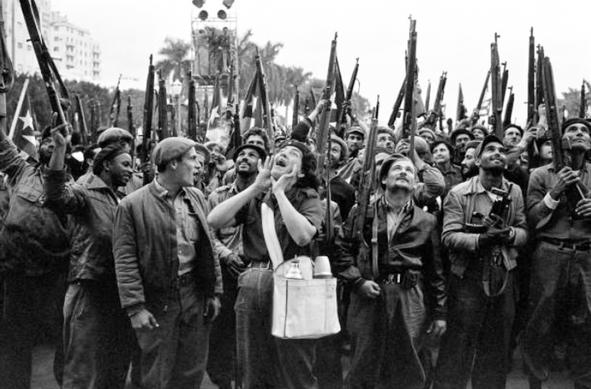
The following is a 1961 letter and postscript by Socialist Workers Party (SWP) leaders George Novack and Evelyn Reed to James P. Cannon, who was then SWP national chairman, describing a visit by Novack and Reed with sociologist C. Wright Mills. What is striking in the exchange is the open-mindedness of socialist leaders at the time, the interest in finding common ground with fighters committed to struggle for a world of social equality and human solidarity. This attitude permeates the writings of Novack, Reed, and Cannon. It is the polar opposite of sectarianism. And it is central to Marxism and to the spirit of the Communist Manifesto, the founding document of the communist movement.
What #CWrightMills figured out in #1956 that we’ve been paying for ever since. We review #ThePowerElite: http://wp.me/P23AlC-LD #sociology

What #CWrightMills figured out in #1956 that we’ve been paying for ever since. We review #ThePowerElite: http://wp.me/P23AlC-LD #sociology
 Don Curren 🇨🇦🇺🇦
‘The #independent #artist and #intellectual are amongst the few remaining personalities equipped to resist and to fight the stereotyping and consequent death of genuine living things.’ - #CWrightMills fivebooks.com/best-books/l... #books #Academia
Academia
Academia

Academia
Current UK higher education policies, which treat students as consumers, are not only killing thinking but also likely to lead to a financial crisis. And yet, academia is a beautiful vocation, with the power to transform lives year in, year out. University of London professor, Les Back, picks the best books on academia.
How #CWrightMills’ #1956 #classic #ThePowerElite changed the conversation about #America for ever. Our review: http://wp.me/P23AlC-LD

The sensory pleasure of academic writing
I thought it was interesting that Sword (2021: loc 1306) frames this as a matter of “cutting ourselves loose from the world of the sense and giving ourselves over to the flow of ideas”. The objection might seem like a pedantic one but I think it’s important to recognise the sensory pleasure which we can and do take in ideas, even if this by no means exhausts what satisfaction can be found in thinking. I want to suggest this sensory pleasure is important for what Fitzpatrick (2019: loc 122) calls ‘generous thinking’: “a mode of engagement that emphasizes listening over speaking, community over individualism, collaboration over competition, and lingering with the ideas that are in front of us rather than continually pressing forward to where we want to go”.
To linger is to stay longer than is strictly necessary, to be reluctant to leave and to be slow to act. If we are reluctant to leave what is keeping us in place? If we are slow to act what leaves us unwilling to move onto the next thing? Generous thinking in this sense entails an unwillingness to immediately mobilise ideas, to see them as resources through which we advance our intellectual career, rather than as focal points for the pleasures which permit our academic lives to be in some reliable sense satisfying.
The sociologist C. Wright Mills once wrote to a struggling friend to remind him of the things in life to get excited about, in a passage which has stayed with me since I first read it over a decade ago:
“You ask for what one should be keyed up? My god, for long weekends in the country, and snow and the feel of an idea and New York streets early in the morning and late at night and the camera eye always working whether you want or not and yes by god how the earth feels when it’s been ploughed deep and the new chartreuse wall in the study and wine before dinner and if you can afford it Irish whiskey afterwards and sawdust in your pants cuff and sometimes at evening the dusky pink sky to the northwest, and the books to read never touched and all that stuff the Greeks wrote about and have you ever read Macaulay’s speeches to hear the English language? And to revise your mode of talk and what you talk about and yes by god the world of music which we just now discover and there’s still hot jazz and getting a car out of the mud when nobody else can. That’s what the hell to get keyed up about.”
It has often felt to me like the pleasure of writing should be understood alongside the sensory pleasures which Mills lists here. He describes “the books to read never touched”, “to revise your mode of talk” and “the feel of an idea” alongside snow, jazz and the mystical stillness of a major city as it sleeps. Every time I read this passage I’m brought back to living in central London, which made it possible to walk through the metropolis in that small window in which it was quiet. There’s a calming quality to these pleasures, a sense of being lifted out of ourselves in a manner which is deeply soothing.
I would suggest that writing, which I understand as a process in which we work with ideas, carries the same potential even if we struggle to realise it. Ideas feel a certain way. Giving form to nebulous insights feels a certain way. Being lost in conversation with people who share your intellectual passions feels a certain way. Being immersed in a thought provoking book feels a certain way. Being frustrated by it feels a certain way. There’s an embodied quality to these pleasures which can be easily overlooked if we too readily invest ourselves in the notion of writing as a cognitive process.
Elbow (1981: 340) draws attention to the embodied quality of new ideas as they emerge for us in the writing process:
“See which part of your body the thought wants to erupt through. Some researchers have found that children have a physical reaction – a piece of tension-release in some part of their body, a shiver of jiggle – when they figure something out. What’s special about figuring something out is that it always consists of a new thought or a new connection, and you can’t have a new thought without really experiencing it.”
There are a rich array of sensory pleasures to be found in the writing process, which take on different meanings for different people and at different points in careers. They can also, I will argue, be squeezed out by other factors which shape what and how we write. In fact this is the norm rather than the exception.
But if we practice naming these experiences, identifying them when they occur, it comes to be easier to recognise and value them. It makes lingering easier, both in terms of justifying it when our to-do list calls to us and allowing the impulse to arise in the first place. To intellectually linger requires making space in which the continual flow of demands can ease, if not be entirely interrupted. This might be taking a book and a notepad to a coffee shop near your office, leaving laptop and phone behind. It might be taking the risk of approaching a speaker at a workshop, in order to voice the ideas which their talk provoked in you. It might be contacting a former collaborator who you now see far too infrequently, in order to suggest catching up via Zoom with no set agenda.
If there is an agenda it ceases to be lingering. It might be that a project or collaboration frames the interaction, with the intention to explore something you might do together in future. But it is possible to linger within the interaction, finding space to enjoy the engagement through which projects might unfold in the future, as opposed to defining your meeting in terms of what it should produce.
Obviously this is more difficult to achieve in practice than it is to opine about in a blog post. If you’re rushing from one commitment to the next it can be extraordinarily difficult to find time to write, let alone savour the ‘feel of the ideas’ you encounter in your writing. If it feels like a continual struggle to find any sustained time for writing, then lingering in the way I’m describing can feel like an unfathomable indulgence: a distraction from both the important and the urgent.
The suggestion frequently made in writing manuals and workshops that academics should not wait for the perfect time to write is certainly correct from a practical perspective. If you can only write on those occasions when it’s possible to block out sustained periods of time freed from other interruptions, then writing will inevitably be confined to summer and sabbaticals at best. But writing in the gaps can also be a stultifying experience, in which the size of the thoughts you think and the ideas you express is curtailed to match the limitations of the time and space available to you.
Writing in the gaps can be a pragmatic adaptation if undertaken in a careful way. It can also be a creative choice if undertaken in a reflective way. But if not embraced with care and reflection it can lead to a shrinking of creative horizons, with rushed writing undertaken in odd moments leading to odd writing marked by a rushed quality.
This is why I believe reflection is so crucial to academic writing: not just reflection on what we write, but on how and why we write. There is nothing intrinsic to how you write which dictates which outcome you will experience. It is unhelpful to imagine there is a right way of approaching your writing, which others have already found but which feels frustratingly beyond your grasp. What is right for you will not be right for someone else. What is right for you at a particular point in your career, or even your week, might not be right for you at another point in time. The key is developing awareness of when you experience those sensory pleasures of ideas that Mills and Elbow describe, and creating conditions where you can linger with them, even if only briefly, amid the demands of academic life.