 💧🌏 Greg Cocks
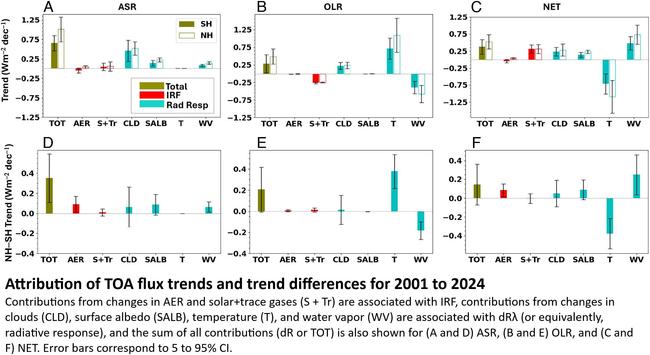
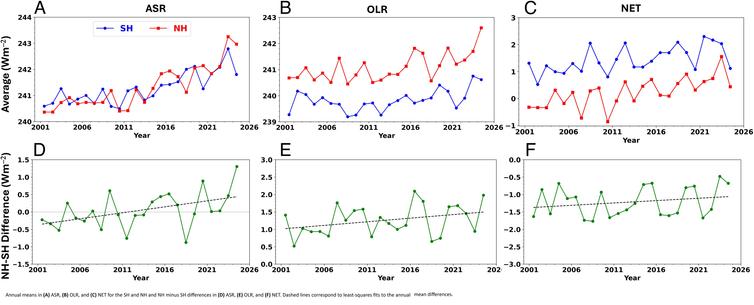
Earth Is Getting Dimmer—and the Northern Hemisphere Is Losing Brightness Faster Than Scientists Expected
(New research challenges the idea that the hemispheres’ matching brightness is a fundamental property of the planet)
--
https://www.smithsonianmag.com/smart-news/earth-is-getting-dimmer-and-the-northern-hemisphere-is-losing-brightness-faster-than-scientists-expected-180987578/ <-- shared technical article
--
https://doi.org/10.1073/pnas.2511595122 <-- shared paper
--
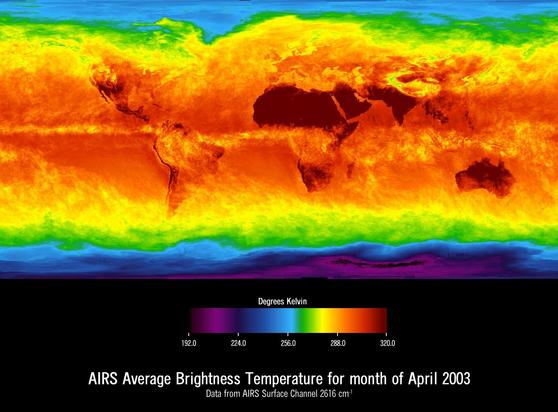
https://www.ncei.noaa.gov/access/metadata/landing-page/bin/iso?id=gov.noaa.ncdc:C00787 <-- shared earth observation datasets, NOAA Climate Data Record (CDR) of AMSU-A Level 1c Brightness Temperature, Version 1.0
--
#GIS #spatial #mapping #spatialanalysis #global #spatiotemporal #remotesensing #earthobservation #earthshine #albedo #brightness #oceanwarming #NorthernHemisphere #SouthernHemisphere #satellite #atmosphere #climate #radiantenergy #darkening #cloud #ASR #watervapour #ocean #marine #aerosol #future
@NCEI
(New research challenges the idea that the hemispheres’ matching brightness is a fundamental property of the planet)
--
https://www.smithsonianmag.com/smart-news/earth-is-getting-dimmer-and-the-northern-hemisphere-is-losing-brightness-faster-than-scientists-expected-180987578/ <-- shared technical article
--
https://doi.org/10.1073/pnas.2511595122 <-- shared paper
--
https://www.ncei.noaa.gov/access/metadata/landing-page/bin/iso?id=gov.noaa.ncdc:C00787 <-- shared earth observation datasets, NOAA Climate Data Record (CDR) of AMSU-A Level 1c Brightness Temperature, Version 1.0
--
#GIS #spatial #mapping #spatialanalysis #global #spatiotemporal #remotesensing #earthobservation #earthshine #albedo #brightness #oceanwarming #NorthernHemisphere #SouthernHemisphere #satellite #atmosphere #climate #radiantenergy #darkening #cloud #ASR #watervapour #ocean #marine #aerosol #future
@NCEI
 Hari Tulsidas




 nickharrison
 Ruth Mottram
 Dr Sam Burgess 🌊 🌍 💸