Построение корпоративной архитектуры в ИТ-проектах на основе методологии TOGAF

Ошибочным будет пытаться рассмотреть разработку программного обеспечения с момента его реализации и внедрения. В литературных источниках по этому поводу говорится, что жизненный цикл программной системы начинается с момента понимания необходимости в ней и завершается ее заменой на аналогичные или более новые образцы [1-2]. Более того, проекту имплементации предшествуют активности предпроекта, включающие бизнес-кейс, проведение тендера и, наконец, заключение договора на внедрение, а завершается все задачами поддержки имплементированного решения и прекращением его применения. Анализ программного продукта через призму его жизненного цикла позволяет увязать бизнес-потребности организации и технические возможности их воплощения [3-4]. В проектах разработки высокосложного программного обеспечения жизненный цикл рассматривается с точки зрения репетиций внедрения, что позволяет понизить риск неуспешного продуктивного запуска. При этом вопросам построения масштабируемой, гибкой и отвечающей запросам бизнес-пользователей корпоративной ИТ-архитектуре в классических проектах имплементации программных систем уделяется меньшее внимание. Отдельное научное направление, отличающееся по содержанию от типовых подходов к разработке и внедрению программного обеспечения и обращающее должное внимание к ИТ-архитектуре, формализовалось в методологии TOGAF [5]. Жизненный цикл программного продукта с точки зрения принципов TOGAF сопровождается непрерывной и устойчивой взаимосвязью между бизнесом, разработкой приложений и ИТ-архитектурой для их развития, что является существенным преимуществом в конкурентной борьбе.

https://habr.com/ru/articles/1043450/

#togaf_10 #adm #корпоративная_архитектура #togaf #the_open_group #eabok #body_of_kbowledge #свод_знаний #библиотека_знаний_togaf #enterprise_architecture

Построение корпоративной архитектуры в ИТ-проектах на основе методологии TOGAF

Ошибочным будет пытаться рассмотреть разработку программного обеспечения с момента его реализации и внедрения. В литературных источниках по этому поводу говорится, что жизненный цикл программной...

Хабр

Как 100+ авторов пишут 100+ процессов в 3 версиях и не путаются. Или как мы переехали с Wiki на Git

У нас было 120 процессов, 9 областей управления, более 100 авторов из 60 компаний, 3 ветки на каждый репозиторий и ещё по одной на каждую задачу, AI-агент, таск-трекер, толстый клиент редактора и три портала документации. Не то чтобы всё это нам было нужно, чтобы описать методологию управления в ИТ. Но когда однажды начинаешь собирать серьёзную базу знаний — возникает тенденция разогнаться так далеко, как только сможешь. Единственное, что меня по-настоящему беспокоило — это конфликты слияния. Нет в мире ничего беспомощнее и безответственнее, чем методолог, пытающийся разобраться, что такое конфликт слияния. И я знал, что скоро мы в эту дрянь попадём. Если вы когда-нибудь пробовали в одиночку причесать чужой Word-документ, в котором двадцать комментариев на полях и три уровня правок разными цветами — вы поймёте, с чего начнётся эта история. Только умножьте на 100 авторов из 60 компаний и 120 процессов. И добавьте ноль бюджета: всё это люди делают по вечерам, потому что им не всё равно, как будет выглядеть управление ИТ в стране. Это не туториал и не обзор инструмента. Это история о том, как я полтора года уговаривал себя, что Wiki — нормальный выбор, потом ещё полгода уговаривал команду, что пора слезать. И как после переезда на Docs as Code половина того, чего я ждал, не случилась, а половина случилась не так. И почему мне всё равно нравится, что вышло. Рассказывай!

https://habr.com/ru/companies/gram_ax/articles/1035488/

#методологии_управления #itil #togaf #cobit #управление_разработкой #docs_as_code #wiki #rag #управление_знаниями #kms

Как 100+ авторов пишут 100+ процессов в 3 версиях и не путаются. Или как мы переехали с Wiki на Git

У нас было 120 процессов, 9 областей управления, более 100 авторов из 60 компаний, 3 ветки на каждый репозиторий и ещё по одной на каждую задачу, AI-агент, таск-трекер, толстый клиент редактора и три...

Хабр

Построение корпоративной архитектуры в ИТ-проектах, используя методологию TOGAF

Ошибочным будет пытаться рассмотреть разработку программного обеспечения с момента его реализации и внедрения. В литературных источниках по этому поводу говорится, что жизненный цикл программной системы начинается с момента понимания необходимости в ней и завершается ее заменой на аналогичные или более новые образцы [1-2]. Более того, проекту имплементации предшествуют активности предпроекта, включающие бизнес-кейс, проведение тендера и, наконец, заключение договора на внедрение, а завершается все задачами поддержки имплементированного решения и прекращением его применения. Анализ программного продукта через призму его жизненного цикла позволяет увязать бизнес-потребности организации и технические возможности их воплощения [3-4]. В проектах разработки высокосложного программного обеспечения жизненный цикл рассматривается с точки зрения репетиций внедрения, что позволяет понизить риск неуспешного продуктивного запуска. При этом вопросам построения масштабируемой, гибкой и отвечающей запросам бизнес-пользователей корпоративной ИТ-архитектуре в классических проектах имплементации программных систем уделяется меньшее внимание. Отдельное научное направление, отличающееся по содержанию от типовых подходов к разработке и внедрению программного обеспечения и обращающее должное внимание к ИТ-архитектуре, формализовалось в методологии TOGAF [5]. Жизненный цикл программного продукта с точки зрения принципов TOGAF сопровождается непрерывной и устойчивой взаимосвязью между бизнесом, разработкой приложений и ИТ-архитектурой для их развития, что является существенным преимуществом в конкурентной борьбе.

https://habr.com/ru/articles/1037612/

#togaf_10 #adm #корпоративная_архитектура #togaf #the_open_group #eabok #body_of_kbowledge #свод_знаний #библиотека_знаний_togaf #enterprise_architecture

Построение корпоративной архитектуры в ИТ-проектах, используя методологию TOGAF

Ошибочным будет пытаться рассмотреть разработку программного обеспечения с момента его реализации и внедрения. В литературных источниках по этому поводу говорится, что жизненный цикл программной...

Хабр

Как построить Value Stream Map (VSM): пошаговая инструкция

Когда организация растет, процессы быстро превращаются в набор разрозненных схем: где‑то BPMN, где‑то регламенты, где‑то таблицы со статусами и ответственными. Но в какой момент становится понятно, что эти схемы плохо отвечают на главный вопрос: какую ценность мы создаем, для кого и какие способности бизнеса реально поддерживают этот поток? В статье разбираем, как построить Value Stream Map с точки зрения корпоративной архитектуры: определить заинтересованные стороны, задать границы потока, выделить этапы создания ценности, связать их с бизнес‑способностями и использовать карту как основу для проектирования целевого состояния организации. Разобрать подход

https://habr.com/ru/companies/otus/articles/1033052/

#Value_Stream_Mapping #VSM #цепочка_создания_ценности #бизнесархитектура #корпоративная_архитектура #бизнесспособности #бизнеспроцессы #BPMN #TOGAF #трансформация_бизнеса

Как построить Value Stream Map (VSM): пошаговая инструкция

Value Stream Mapping в корпоративной архитектуре — это не просто схема бизнес‑процесса, это взгляд на организацию с точки зрения ценности для заинтересованных сторон....

Хабр

Preparing for the TOGAF Enterprise Architecture certification?

Understanding the framework is important—but the right preparation strategy matters just as much.
We provide certification support and sample questions to help professionals prepare with more confidence and clarity.

Explore more: https://www.certimaan.com/post/togaf-enterprise-architecture-certification-exam-questions

#TOGAF #EnterpriseArchitecture #ITCertification #CareerGrowth

AI-supported development bringing us back to requirements-led development?

Let me start by clarifying some terminology.

an informal noun referring to the mood, atmosphere, or aura produced by a particular person, thing, or place that is sensed or felt

This is deeply at odds with the idea of software engineering, where the OED describes engineering as:

the activity of applying scientific and mathematical knowledge to the design, building, and control of structures, machines, systems, and processes

While there is a place for vibing – to explore and help test ideas, when it comes to enterprise solutions with icy, typically have large footprints, or will grow to have large footprints and high data volumes, therefore need a more disciplined approach to ensure all those non-functional considerations can be addressed, and sustained. Put it another way, would you take an artesian approach to building and maintaining a petrochemical refinery?

This is why I try to separate the idea of vibe coding from a more disciplined AI-assisted development. A name that doesn’t roll off the tongue well, but conveys the idea that the engineer is in control and can impose discipline to drive the NFRs.

Hopefully, this also helps address nuance, which is often missing in discussions about the use of AI in software engineering, which is definitely polarising viewpoints (like many things today).

Spec-driven development

Spec Driven Development (SDD) is a growing topic in the A.I. assisted development space, and growing as a reflection of the fact that LLMs are improving rapidly, best illustrated at the moment with Mythos. The basis of SDD is to help drive consistency, structure, sustainability and rigour into the AI dev process (back to vibe coding). Consistency and structure allow us to start to easily agentify or tool aspects of development.

Getting a consistent, clear explanation of what constitutes SDD isn’t necessarily straightforward, but the best definition is in an article by Birgitta Böckeler on Martin Fowler’s website. The article dives into not just a basic explanation, but also characterises the differing approaches. The article teased out three versions of the idea, which paraphrasing are:

  • Spec First – very much like the old-fashioned, here are the requirements that are used to generate a first iteration of the code base. Then subsequent refinements, improvements and general evolution are introduced through successive direct code changes, and/or direct prompting of the LLM to modify different pieces, and add functionality.
  • Spec Anchored – the Spec is retained for ongoing reference and maintained.
  • Spec as Source – we don’t really care bout the code, we want a change, we only edit the spec. Code is almost a form of conversation memory, which prevents the LLM from recreating from scratch and producing an answer that looks a bit different, potentially resulting in API names that differ, etc.

This evolution, particularly as people move or are pushed by leadership fearing losing a competitive edge through perceived lower development velocity, increasingly towards a spec-only approach, left me thinking about the agile manifesto and its declaration:

we value working code over documentation‘.

While this still has to be true, as ultimately, working code delivers the value. But the heading for the documentation has to be clear, concise, and sized for LLMs’ working documentation, as that is how we get to working code. This isn’t just to bash out some instructions and unleash the LLM; it does need to be refined and iterated on (in many ways, just like a book). We should prompt the LLM to seek clarification rather than let it make assumptions. Furthermore, we need the documentation to be accurate because an LLM will exhibit childlike trust, and if it is working with misaligned content, you’re in a 50/50 position. Unleashing an LLM on your codebase may lead to the wrong outcome. Perhaps, we need to extend the Agile manifesto, with a statement like:

we value correct, accurate, clear and concise documentation over any documentation

In other words, when using an LLM in your development context, it is better to get the LLM to reverse engineer the code to create documentation of your current state (even if that is at the price of losing the original context, design ideals, requirements, etc.) than to allow the LLM to see inaccurate and poor documentation. If this new principle is true, then we need to move away from Spec first to atleast Spec anchored approach.

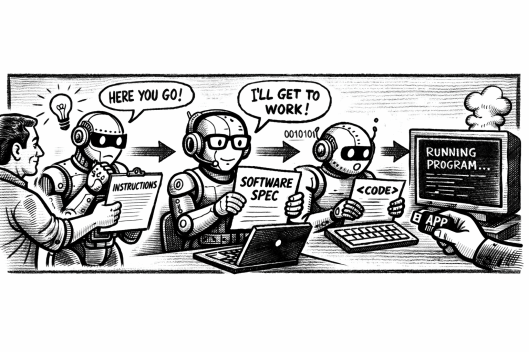
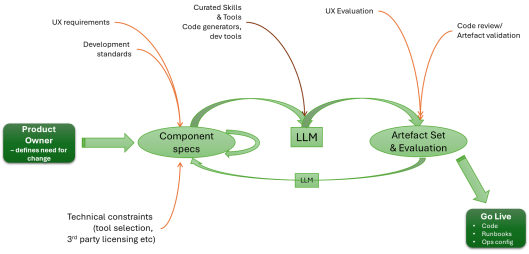
Given this, we should see the heart of an engineering process looking something like:

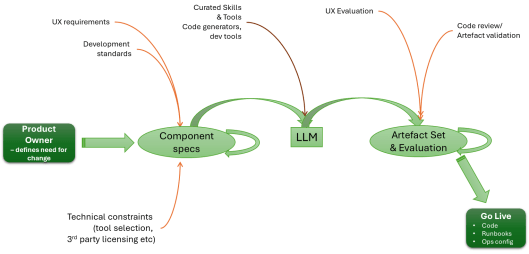
This is what we should expect with a Spec Anchored or Spec as Source. Whereas with Spec First, the return flow will never happen.With Spec First, our process is more like this: once the code for the first iteration is generated, we just iterate on it.

I think one of the challenges with the view of everything is that, as the Spec lead, there is an expectation that, to do it, we go from a very high-level definition straight to code. The reality is that we need the process to be more human-like. We use the LLM to take requirements and drive a high-level design. We then use the LLM to break the HLD into multiple LLDs. Importantly, we iterate on the process, until the decomposition of detail is right. The LLM cycle focuses on just one output at a time. We can certainly then use the LLM to determine consistency and integrity across all the LLDs.

From Requirements to Architectural Views

There is a natural extension to this. If we are to swing back to a document-led approach (albeit with a very different journey from document to working code), could we see increased adoption of TOGAF and other architectural frameworks? Many in the past have used such frameworks as part of the argument as to why things should be code first, as often the framework artefacts are seen as the end, rather than the process and techniques as a means to an end (i.e. we do architecture, therefore I must create a large document set, rather than we do architecture to ensure we get the details we need from code correct).

Certainly, using an LLM to help with the creation and maintenance of architectural views, including making it easier to search for and address inconsistencies across different viewpoints, without necessarily needing very prescriptive, complex, and expensive toolsets.

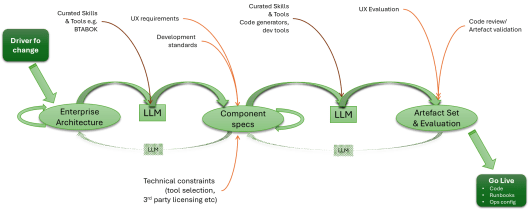
The document flow if we start with architectural frameworks, from Zachman, TOGAF, C4 etc. Note the return flow needed for Spec Anchored or Spec as Source is rarely happens.

A step in this direction may well be projects such as Common Architecture Language Model (CALM), which is supported by the Fintech Open Source Foundation (FINOS), a child organisation of the Linux Foundation. While I haven’t investigated CALM very deeply, the essence is to define the architectural building blocks in a structured manner, which means that, from the definitions, more detailed diagrams can be generated and AI can be used to analyse the artefacts, etc. This sounds like a potential stepping stone between the organisation/enterprise models of Zachman and TOGAF, which aim to describe how both businesses operate and the underlying technology.

Could we see a time when docs and code stay aligned?

My experience has shown that when a spec has been involved in the process, it has exhibited the characteristics of the Spec First approach, and that the most consistently accurate documents are the user manuals, purely because they have to be created from what the code does. But such documents aren’t meant to tell you about the inner workings of a solution. This is true to the point that organisations have abandoned their architectural models, as they can’t be trusted as an as-is reflection and must start from scratch.

But to achieve the value of Spec Anchored or Spec as Source, we have to ensure that the feedback loop is working: the LLM feeds a backup stream with any changes, and downstream inputs, such as the impact of tool selection, can shift the solution. While the feedback loop should be a lot easier, it still requires commitment and effort to ensure that flow happens (certainly, since it is typically not a regularly practised behaviour).

Flies in the ointment

Trying to drive even a Spec Anchored philosophy is going to be difficult if the LLMs aren’t so great at generating quality code, or quality low-level designs that lead to the code generation. These factors are going to be dependent on choice of LLM being used, how the LLM is prompted, and most crucially the target programming languages (A.I. Codex does well with Python and Java, but I doubt it would make a good job of something like Erlang or Lisp).

The second problem is that there is a common error of people wanting to jump in and cut code (or documents), which often comes from:

  • Rather than stopping to ask the question, has this problem been solved before, and in a way I can leverage? We plough on creating new unproven code.
  • The view that the only place where a solution can come from is within the engineering team.

While it will be easy to blame the LLM for problems coming from these actions, are very much human.

Conclusion

As we’ve worked through much of this picture, the irony is that, in many respects, we’re no further forward. We can still make the same mistakes (failing to work through the NFRs properly, failing to define what should happen when something is wrong – aka ‘unhappy paths’, which make recovery simpler). We just have coding and document writing speed shift from 30-40Hz (the speed of a keyboard warrior) to GHz. The same problems can occur because influential decisions are still human (and remember, LLMs are, at their heart, just a computational representation of common thinking (wisdom of crowds, you might say) and therefore still vulnerable).

Going faster means mistakes happen more quickly, and uncorrected mistakes create more mess. To use an analogy, if you crash a car into a wall at 10mph, you’ll damage the bodywork, but it won’t be catastrophic. For many men, the biggest damage will be to the ego. You have the same crash at 100mph, and the outcome will be fatal. While the ability (or lack of) to absorb the energy is what will be the killer, it is actually the fact that you no longer have the time to think and change direction that is the true cause.

Perhaps what we should be seeking from AI is not to get to the end faster, but to use the acceleration to create time to consider what it is we want to achieve and how we continue building on our long-term, more sustainable achievements. This isn’t anti-agile. But it is anti ‘fail fast, fail frequently’ which has been a conflation of ideas without full understanding, and becoming more regularly challenged (like this Forbes Article)

References

#AI #artificialIntelligence #development #LLM #programming #SDD #specDrivenDevelopment #Technology #TOGAF

Процессная архитектура: что это, её связь с TOGAF и почему она является базовым элементом требований на автоматизацию

Типичная ситуация в ИТ-проектах: приходит задача на автоматизацию, бизнес-аналитик начинает с нуля собирать требования, рисовать процесс, согласовывать его с заказчиком, выявлять исключения, уточнять роли и данные. Проходит время, задача уходит в разработку. Через месяц — новый запрос, и снова тот же путь. Процессы рисуются «под задачу», не связаны между собой, в каждом проекте — своя терминология и своё видение. Обратная ситуация - если бы в компании была единая, поддерживаемая и согласованная модель деятельности, которую можно «взять» как основу для любой задачи на автоматизацию. Такая модель и есть процессная архитектура организации. Узнать больше

https://habr.com/ru/articles/1016604/

#методология #управление_требованиями #бизнесанализ #корпоративная_архитектура #бизнесархитектура #bpmn #бизнеспроцессы #archimate #togaf #системный_анализ

Процессная архитектура: что это, её связь с TOGAF и почему она является базовым элементом требований на автоматизацию

Введение: проблема реактивного проектирования Типичная ситуация в ИТ-проектах: приходит задача на автоматизацию, бизнес-аналитик начинает с нуля собирать требования, рисовать процесс, согласовывать...

Хабр

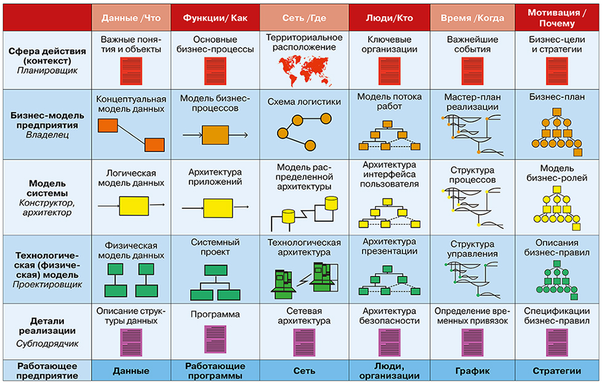
Применение модели Захмана в проектах внедрения, поддержки и развития ERP-систем

Стремительное развитие корпоративных информационных систем, представленных набором информационных систем, автоматизирующих заданную предметную область, диктуют обязательные требования к построению сбалансированной ИТ-архитектуры. Архитектура разрабатываемого и имплементируемого программного решения должна быть построена таким образом, чтобы заложить гибкие, масштабируемые и технологичные механизмы работы, обеспечивая тем самым возможность оперативного реагирования на любые изменения внешней среды. Доступен ряд научно-популярных работ, описывающих различные подходы к построению ИТ-архитектуры, которые обобщены в терминах корпоративная архитектура и архитектура предприятия. Методологии построения корпоративной архитектуры представлены такими подходами как: FEAF, DoDAF [1], а также широко известная и наиболее популярная TOGAF [2]. Несмотря на кажущееся обилие стратегий к формированию ИТ-архитектуры, по большому счету, они апеллируют едиными сущностями, изначально предложенными в модели Захмана. Не взирая на то, что модель Захмана предоставляет широкий теоретический аппарат, который лежит в основе понимания любой архитектуры предприятия, ее использование как в контексте разработки, так и непосредственно в ходе имплементации корпоративного ПО, часто остается незамеченным [3]. Однако применение именно данной модели делает методологии внедрения ИС такими, какие они есть сейчас: структурированными и гибкими, генерализованными и специализированными, а также прозрачными и эффективными. Цель текущей работы состоит в анализе модели Захмана и ее применимости в проектах реализации корпоративных информационных систем. Достижение сформулированной цели потребует решения следующих задач:

https://habr.com/ru/articles/1014002/

#togaf #togaf_10 #eabok #модель_захмана #захман #корпоративная_архитектура #erp #erpсистемы #erpсистема #babok

Применение модели Захмана в проектах внедрения, поддержки и развития ERP-систем

Стремительное развитие корпоративных информационных систем, представленных набором информационных систем, автоматизирующих заданную предметную область, диктуют обязательные требования к построению...

Хабр

Архитектор-методолог: от Discovery и Delivery к IT-Governance через TOGAF и Change Management

В своей практике я часто вижу одну и ту же проблему. Корпоративные архитекторы проектируют схемы целевой архитектуры (в лучшем случае - в репозитории в ArchiMate, но чаще просто в PowerPoint) , Solution и Software-архитекторы принимают тактические решения, а итоговая архитектура реализованного решения всё равно "плывёт" и не соответствует задуманному. Стратегия остаётся слайдами в PowerPoint. Принципы — просто слова на виртуальной доске. Команды разрабатывают "как удобно" (или "как быстрее), а не "как задумано". Почему так происходит? Потому что между стратегией и реализацией есть разрыв, т.к. между ролями участников ИТ-производства нет чётких процессов взаимодействия на уровне конкретных объектов управления и зон ответственности. Преодоление этого разрыва — зона ответственности архитектора-методолога. В этой статье я разберу несколько ключевых концепций, которые помогают этот разрыв закрыть: Discovery и Delivery, TOGAF ADM и Change Management. А в финале покажу, как они агрегируются в IT-Governance — и почему архитектор-методолог (такую роль можно встретить очень редко в виде чётко сформулированного запроса) находится в центре этого агрегатора. Узнать больше

https://habr.com/ru/articles/1013640/

#методология #управление_требованиями #управление_производством #конвейер #archimate #togaf #governance #change_management #discovery #delivery

Архитектор-методолог: от Discovery и Delivery к IT-Governance через TOGAF и Change Management

Введение: почему архитектура работает "в стол" В своей практике я часто вижу одну и ту же проблему. Корпоративные архитекторы проектируют схемы целевой архитектуры (в лучшем случае - в репозитории в...

Хабр

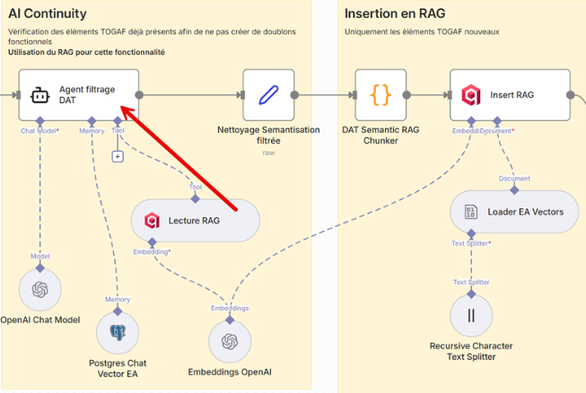
Une approche « Model-Centric », combinée à un prompting avancé, permet d'automatiser des tâches fastidieuses de l’architecte d’entreprise, tout en garantissant traçabilité et continuité.

https://www.urbanisation-si.com/intelligence-artificielle-strategie-et-architecture-1

#togaf #archimate #architecture_entreprise