Africa: African Seismological Assembly Highlights Namibia's Seismic Data Importance: [Namibian] Seismic data has greater benefits to Namibia than just measuring the occurrence of earthquakes, with stakeholders such as the mining sector, construction sector and local authorities relying on its use. http://newsfeed.facilit8.network/TJ9hG3 #Namibia #SeismicData #Earthquake #Mining #Construction


An immense reservoir of liquid water may reside deep under the surface of Mars within fractured #IgneousRocks, holding enough to fill an #ocean that would cover the entire surface of #Earth's planetary neighbor.

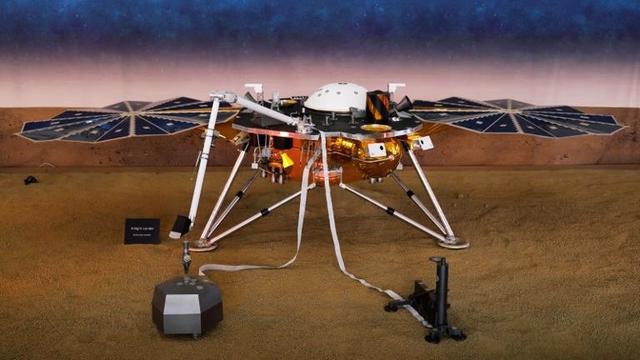
That is the conclusion of scientists based on seismic data obtained by #NASA's robotic #InSightLander during a mission that helped decipher the interior of Mars.

#Space #MarsWater

#SeismicData indicates huge #UndergroundReservoir of #LiquidWater on #Mars
https://www.msn.com/en-us/news/technology/seismic-data-indicates-huge-underground-reservoir-of-liquid-water-on-mars/ar-AA1oGBAi

MSN

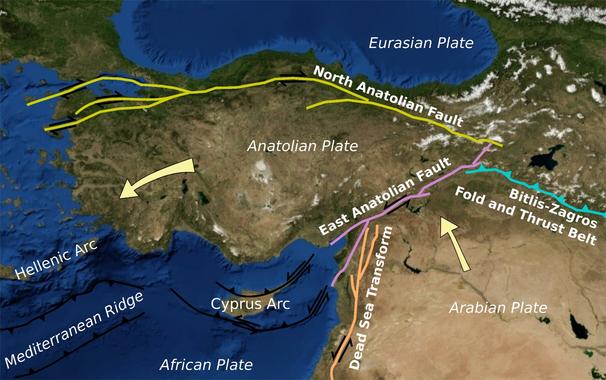
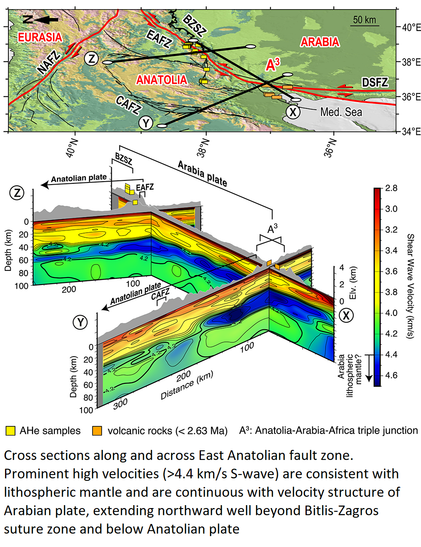
Unlocking Seismic Secrets: Researchers Unearth the Mysteries of How Turkey’s East Anatolian Fault Formed

A University of Minnesota professor heads an international group of geoscientists investigating earthquake-impacted regions. An international team led by the University of Minnesota Twin Cities has successfully determined the age and formation process of the East Anatolian fault, extending from the

SciTechDaily

"The plant was designed to withstand a nuclear strike,” Syrota told the Guardian in an interview in Kyiv. “To destroy the plant from the outside, at least three aircraft bombs, each of 500kg, would have had to be dropped on the same spot. The station was blown up from the inside.”

#SeismicData adds to evidence #Ukraine’s #KakhovkaDam was blown up | #UkraineWar | The Guardian
https://www.theguardian.com/world/2023/jun/09/seismic-data-adds-evidence-ukraine-kakhovka-dam-blown-up

Seismic data adds to evidence Ukraine’s Kakhovka dam was blown up

Signals point to explosion early on Tuesday, as Ukraine says intercepted call proves Russia was responsible

The Guardian
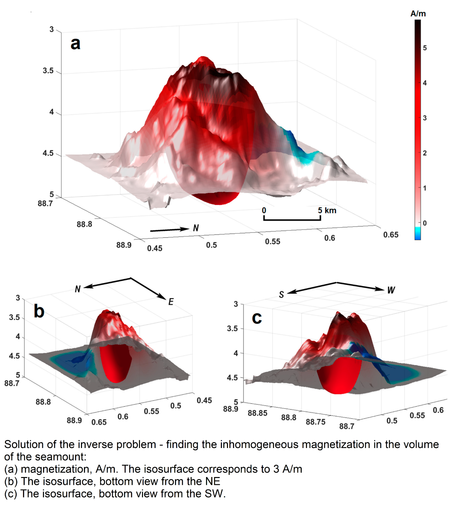
New Insights into the Seamount Structure of the Northern Part of the Ninetyeast Ridge (Indian Ocean) through the Integrated Analysis of Geophysical Data

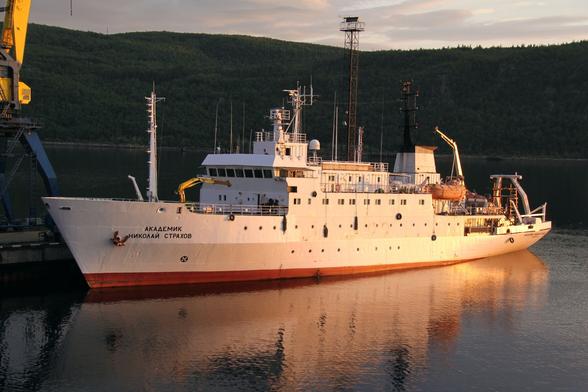
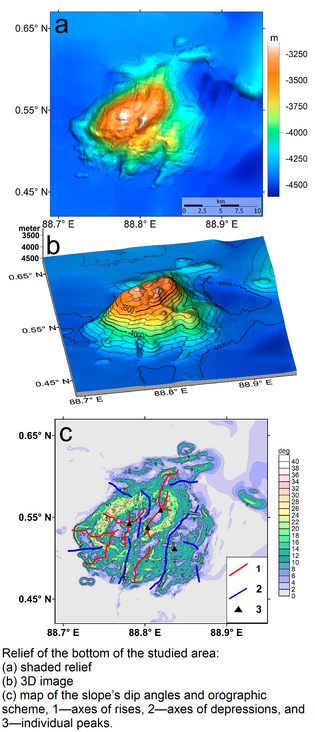
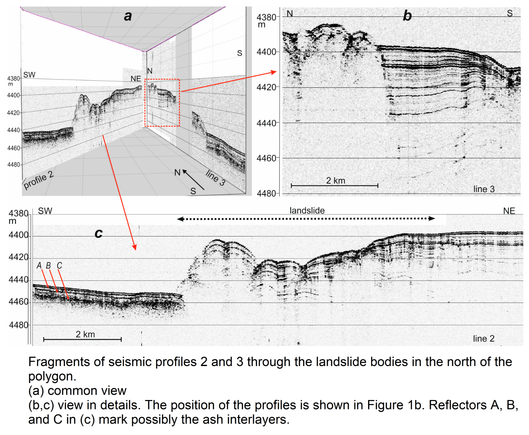
The linear Ninetyeast Ridge (NER) is the longest oceanic intraplate volcanic edifice and main feature in the Eastern Indian Ocean. Many seamounts are located on the ridge, whose origin and age remain unclear due to the lack of samples of the bedrock of which they are composed. Carbonate sedimentary caps on these seamounts prevent their direct geological sampling by dredging, therefore indirect geophysical methods are an alternative. Such integrated geophysical studies (the main methods are multibeam bathymetry and magnetic surveys) were carried out in cruise #42 of the R/V Akademik Boris Petrov in 2017 on a large seamount at the base of the NER’s western slope near 0.5° S. The collected data also includes seismic reflection data that reveal morphology, fault tectonics, depth structure, and an assumed origin of this volcanic feature. The Ninetyeast Ridge was formed by the Kerguelen plume magmatism at 50° S in the giant N-S fault. The seamount studied in cruise #42 of the R/V Akademik Boris Petrov was formed mainly to the north as a result of two-stage magmatism in a transverse strike-slip fault. The first stage (47 Ma) formed the main western part of the seamount at 20° S. The second stage (23 Ma) formed its eastern part at 8° S. The time intervals between the formation of the main massif of the Ninetyeast Ridge and the stages of subsequent magmatism that formed the western and eastern parts of the seamount are approximately 31 and 55 Ma, respectively.

MDPI
Extremely excited to attend @theAGU #AGU22 Mon-Fri. Will be presenting my work on application of #deeplearning in #seismicdata in poster session on Thursday. please passby and say hi.