 Technomantic Cyber Wyrm
This #Metal Explodes When Heated: #Ruthenium
https://www.youtube.com/watch?v=28rhst8mKf4
#science #chemistry #chemicals #chemical #Youtube #nowwatching

This #Metal Explodes When Heated: #Ruthenium
https://www.youtube.com/watch?v=28rhst8mKf4
#science #chemistry #chemicals #chemical #Youtube #nowwatching
https://phys.org/news/2025-03-core-shell-nanocluster-catalyst-enables.html
"newly developed #catalyst features a #ruthenium (Ru)-based nanocluster with a core-shell structure. Despite using only a minimal amount of precious metal, it delivers world-class performance and exceptional stability. Moreover, when applied to industrial-scale water electrolysis equipment, it demonstrated remarkable efficiency, highlighting its potential for commercial applications."
https://en.wikipedia.org/wiki/Ruthenium
(here's an actual tip for an actual commodity set to become much more valuable in the very near future)
#Ruthenium, a polyvalent hard white metal, is a member of the platinum group and is in group 8 of the periodic table:
SciTech Chronicles. . . . . . . . .Feb 18th, 2025
#Ryugu #salt #precipated #sodium #solar-wind #beryllium-10 #interstellar #heliosphere #LIDAR #Zapotec #Guiengola #Tehuantepec #AI #decode #aphasia #converter #Ba3SiO5 #ruthenium #ammonia #mixed-anion
SciTech Chronicles. . . . . . . . . . . . . . . . . . . . .Jan 19, 2025
#heart #muscle #noninvasive #extracellular #intracellular #Upcycling #polymer #ruthenium #metathesis #CRISPR #cognitive #neuroscience #meta-analysis #HIT #executive-functioning #Perplexity #TikTok #merger #ByteDance #no-sale #1.69AU #8x #simulations #1% #flyby
I am excited to announce that our last work is on the interaction of Ru nanoparticle edge facets with hydrogen and butane for the investigation of alkanes hydrogenolysis reactivity is finally online as preprint on ChemRxiv - https://doi.org/10.26434/chemrxiv-2025-x59s5?utm_campaign=shareaholic&utm_medium=mastodon&utm_source=socialnetwork
#compchem #catalysis #physchem #ruthenium #modelling #DFT #ChemicalKinetics

Hydrogen interaction with transition metal surfaces such as those exposed by ruthenium (Ru) nanoparticles is critical in applications like hydrogen storage and catalytic processes such as Fischer-Tropsch, Haber-Bosch, and plastic waste hydrogenolysis. While the Ru (0001) surface is well-studied, hydrogen interaction with the Ru (101 ̅1) and Ru (101 ̅0) facets remains mostly underexplored. In this contribution, we use density functional theory calculations to investigate hydrogen adsorption and dissociation and provide insights into the adsorbed hydrogen role in catalytic polyolefin plastic hydrogenolysis. We start our investigation by exploring all the unique surface and subsurface sites for hydrogen adsorption and dissociation and identify hcp and higher hollow as the most favorable atomic hydrogens adsorption sites on the Ru (101 ̅1) and Ru (101 ̅0) surfaces, respectively. We find that atomic hydrogen can easily migrate on these surfaces to achieve the most stable arrangement at different coverages. We then combine these findings with ab-initio thermodynamics and microkinetic modeling to build surface phase diagrams, which show that both surfaces are fully hydrogenated under typical catalytic conditions. We then study how the presence of the full hydrogen coverage affects the adsorption and dehydrogenation of butane as a proxy for polyethylene, as these are the initial steps in the catalytic hydrogenolysis of polyolefin plastic waste. We find that the adsorption energy of butane decreases when the two surfaces are fully hydrogenated but adsorption remains favorable. We then investigate two possible mechanisms for the dehydrogenation step. The most favorable dehydrogenation mechanism involves the reaction of a surface hydrogen with an alkane hydrogen to produce H2 gas and an adsorbed alkyl radical. However, both mechanisms have positive reaction free energies suggesting that polyolefin dehydrogenation will be slow on these surfaces.

From Detailedpedia: Discharge of radioactive water of the Fukushima Daiichi Nuclear Power Plant
Last updated at 2024-08-21
"Discharge to ocean, treated water
Advanced Liquid Processing System (2013–)
"To prevent the reactor meltdowns from worsening, a continuous supply of new water is necessary to cool the melted fuel debris. As of 2013, 400 metric tonnes of water was becoming radioactively contaminated each day. The contaminated water is pumped out and combined into the reactor-cooling loop, which includes strontium–cesium removal (KURION, SURRY) and reverse osmosis desalination processes.
"In October 2012, TEPCO introduced the "Advanced Liquid Processing System" (ALPS, Japanese: 多核種除去設備), which is designed to remove radionuclides other than tritium and carbon-14. ALPS works by first pre-processing the water by iron coprecipitation (removes alpha nuclides and organics) and carbonate coprecipitation (removes alkali earth metals including strontium elements). The water is then passed through 16 absorbent columns to remove nuclides.
"Wastewater is pumped to ALPS along with the concentrated saltwater from desalination. As some tritium still remains, even treated water would require dilution to meet drinkable standards. Although carbon-14 is not removed, the content in pre-treatment water is low enough to meet drinkable standards without dilution.
"Japan's Nuclear Regulation Authority (NRA) approved the design of ALPS in March 2013. ALPS is to be run in three independent units and will be able to purify 250 tons of water per day. Unit "A" started operation in April. In June, unit A was found to be leaking water and shut down. In July, the cause was narrowed down to chloride and hypochlorite corrosion of water tanks; TEPCO responded by adding a rubber layer into the tanks. By August, all systems were shut down awaiting repair. One unit was expected to come online by September, with full recovery planned by the end of 2013.
"By September 2018, TEPCO reports that 20% of the water had been treated to the required level.
"By 2020, the daily buildup of contaminated water was reduced to 170 metric tonnes thanks to groundwater isolation installations. TEPCO reports that 72% of the water in its tanks, some from early trials of ALPS, needed to be #repurified. The portion of ready-to-discharge water raised to 34% by 2021, and to 35% by 2023.
"Some scientists expressed reservations due to potential #bioaccumulation of #ruthenium, #cobalt, #strontium, and #plutonium, which sometimes slip through the ALPS process and were present in 71% of the tanks.
[...]
"Ferenc Dalnoki-Veress, a scientist-in-residence at the Middlebury Institute of International Studies at Monterey, said regarding dilution that bringing in living creatures makes the situation more complex. Robert Richmond, a biologist from the University of Hawaiʻi, told the BBC that the inadequate #radiological and #ecological assessment raises the concern that #Japan would be unable to detect what enters the environment and 'get the genie back in the bottle'. Dalnoki-Veress, Richmond, and three other panelists consulting for the #PacificIslandsForum wrote that #dilution may fail to account for #bioaccumulation and exposure pathways that involve organically-bound tritium (#OBT)."
Read more [includes references]:
https://www.detailedpedia.com/wiki-Discharge_of_radioactive_water_of_the_Fukushima_Daiichi_Nuclear_Power_Plant
#NoNukes #WaterIsLife #OceansAreLife #TEPCOLies #FukushimaIsntOver #NoDumping #NuclearPowerPlants #PacificOcean #MarineLife
Chicxulub-asteroïde kwam van voorbij Jupiter
De zogenaamde Chicxulub-inslag was een koolstofachtige asteroïde die voorbij de baan van Jupiter is ontstaan. Dit schrijft nieuw onderzoek dat afgelopen week in Sciece werd gepubliceerd.
https://www.kuuke.nl/chicxulub-asteroide-kwam-van-voorbij-jupiter/
#asterode #chicxulub #dinosaurirs #isotopen #jupiter #ruthenium
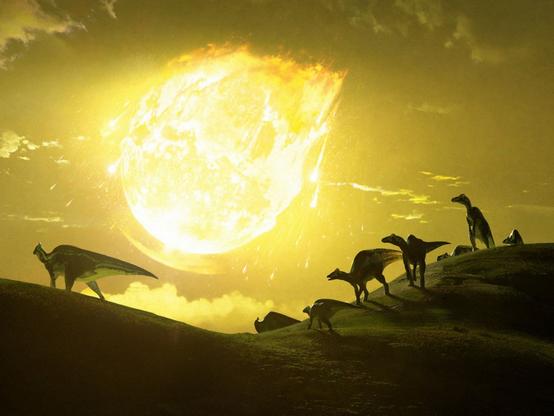
Crater formed from Dinosaur extinction event produced by carbon-rich ‘C-type’ asteroid, scientists suggest
Experts studying material from event 66m years ago find signs to show how Chicxulub impact crater was formed
When a massive space rock slammed into Earth 66m years ago, it wiped out huge swathes of life and ended the reign of the dinosaurs.
Now scientists say they have new insights into what it was made from.
Experts studying material laid down at the time of the event say they have found tell-tale signs to support the idea the Chicxulub impact crater was produced by a carbon-rich,
“C-type”, asteroid that originally formed beyond the orbit of Jupiter.
Mario Fischer-Gödde, co-author of the research from the University of Cologne, said the team are now keen to look at deposits associated with an impact some suggest was behind a large extinction about 215m years ago.
“Maybe this way we could find out if
C-type asteroid impacts would have a higher probability for causing mass extinction events on Earth,” he said.
Writing in the journal Science, the researchers report how they studied different types, or isotopes, of ruthenium within a layer of material that settled over the globe after the impact 66m years ago.
“This layer contains traces of the remnants of the asteroid” said Fischer-Gödde.
The team chose to look at #ruthenium because the metal is very rare in the Earth’s crust.
“The ruthenium that we find in this layer, therefore, is almost 100% derived from the asteroid,”
said Fischer-Gödde, adding that offers scientists a way to determine the makeup, and hence type, of the impactor itself.
The team found samples of the layer from Denmark, Italy and Spain all showed the same ruthenium isotope composition.
Crucially, said Fischer-Gödde, the result is different to the composition generally found on Earth, ruling out a theory that the presence of ruthenium and other metals such as osmium and platinum, are down to past eruptions of the Deccan Traps volcanoes.
The team also cast doubt on the possibility that the impactor was a comet, saying the ruthenium isotope composition of the samples is different to that of meteorites thought to be fragments of comets that have lost their ice.
Instead the ruthenium isotope findings tally with the average composition of meteorites from carbonaceous
(C-type) asteroids
– carbon-rich space rocks that would have formed at the beginning of the solar system, beyond the orbit of Jupiter.
 rexi
rexi

 John Vaccaro (johniac)
 Fabio Colasuonno
 Benjamin Carr, Ph.D. 👨🏻💻🧬
 DoomsdaysCW
 Kuuke's Sterrenbeelden
 Chuck Darwin