Algal Toxins and Wildlife Health
By National Wildlife Health Center September 30, 2019
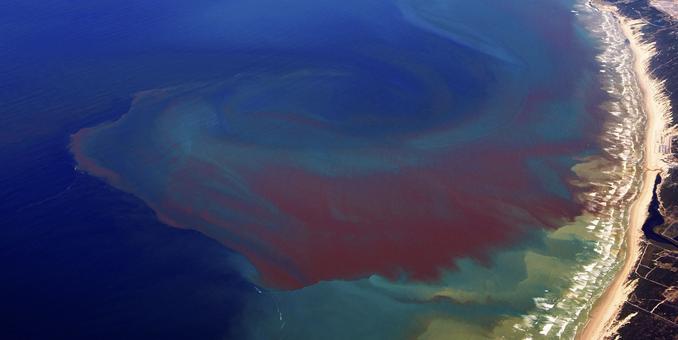
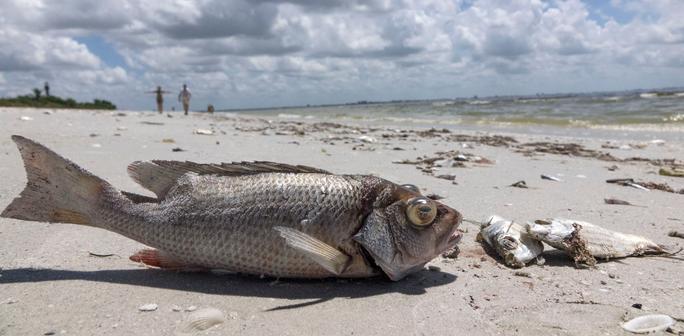
"Harmful #AlgalBlooms (#HABs) have the potential to harm fish and wildlife, domestic animals, livestock, and humans through toxin production or ecological disturbances such as oxygen depletion and blockage of sunlight.
"To investigate the effects of algal toxins on wildlife, the USGS National Wildlife Health Center (NWHC) has examined over 300 dead animals collected during freshwater and marine #HAB events since 2000. Varying levels of algal toxins were found in over 100 of these animals. In some cases, the history, clinical signs, and high toxin levels have allowed scientists to attribute mortality to algal toxicosis. Recent events have included Kittlitz’s #murrelets (Brachyramphus brevirostris) in Alaska that died after consuming sand lance (Ammodytes hexapterus) high in #saxitoxin (Shearn-Bochsler et al. 2014), #GreenTreeFrogs (Hyla cinerea) in Texas with suspected #brevetoxicosis in association with a #RedTide event (Buttke et al. 2018), and #LittleBrownBats (Myotis lucifugus carissima) in Utah found dead during a HAB event at a reservoir commonly used for recreation and as a source of municipal #DrinkingWater (Isidoro-Ayza et al. 2019).
"In other cases, algal toxins have been detected in wildlife, but their contribution to mortality remains unclear. Part of the reason these detections have been difficult to interpret is that the toxic dose of many algal toxins in wildlife species is unknown and the microscopic lesions (if any) particularly in birds, have not been well described. To better understand the effects of these toxins the NWHC is conducting laboratory exposure trials to determine the lethal dose of toxin in birds and to examine the repeated exposure of waterfowl to sub-lethal toxin ingestion. In addition to exposure trials, NWHC is undergoing a retrospective review of previous detections of algal toxin from NWHC’s case archives to examine demographic, spatiotemporal, and diagnostic features associated with wildlife exposure to algal toxins."
https://www.usgs.gov/centers/nwhc/science/algal-toxins-and-wildlife-health
#AlgaeBlooms #WaterIsLife
#Cyanobacteria
#ToxicAlgae #Wildlife
 AI6YR Ben
 Raurquiz
 California Politics Huddle
 Chula Vista Live Data
 💧🌏 Greg Cocks

 Geekoo

 Cliff Schecter
 DoomsdaysCW