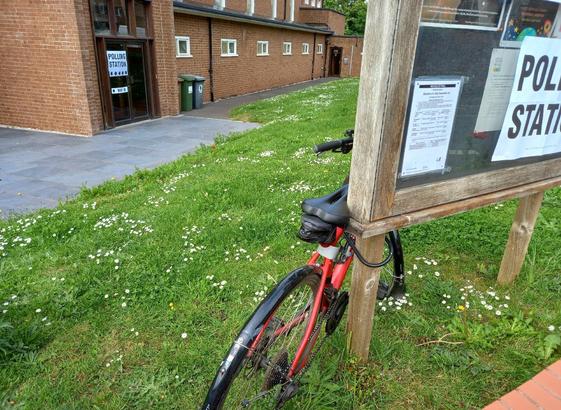
Well, I may not have a pet dog but I do have a pet #bike. I voted a short while ago and here is my vehicle by the #PollingStation for the #CouncilElections

#BikesAtPollingStations #Bicycle #Cycle #Biking #Cycling #MyWork #MyPhoto #CCBYSA #Android #Spring #UK #Politics #England

SENEDD ELECTION: Voting today? Here’s everything you need to know about the new system before you head to the polling station

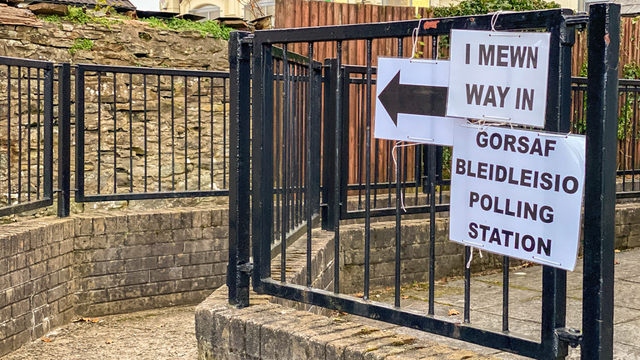
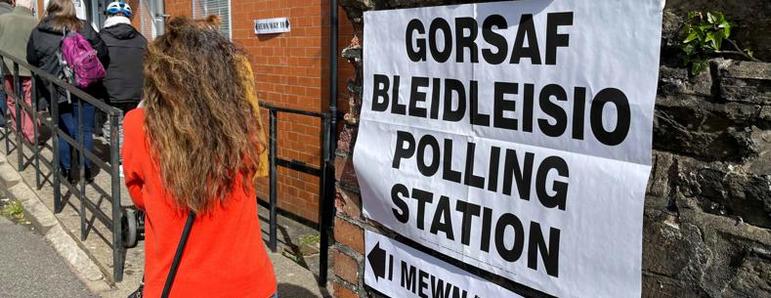
Polls are open across Wales today as voters head out to elect the most important Senedd in Welsh history.

But this election is different to any that has come before – with a brand new voting system that two-thirds of Welsh voters told pollsters they didn’t understand just days ago.

If you’re heading to the polling station today, here’s everything you need to know.

When are polls open?

Polls opened at 7am this morning and will remain open until 10pm tonight. As long as you are inside your polling station – or in the queue – by 10pm, you will be allowed to vote.

Where do I vote?

You can only vote at the polling station listed on your polling card. If you’ve lost your card, don’t worry – you can still vote without it, as long as you can confirm your name and address to the staff.

Do I need photo ID?

No. Photo ID is required for UK General Elections in Wales but is not required for Senedd elections. You can vote without showing ID.

How does the new voting system work?

This is the big one – and it’s where most of the confusion lies.

Wales has moved to a fully proportional system using closed party lists. There are now 96 Senedd Members instead of 60, elected from 16 enlarged constituencies that each return six MS.

Instead of voting for a single named candidate, you will vote for a single political party – or for an individual standing as an independent.

The number of MS each party receives in your constituency depends on the share of the vote they win. A party that wins roughly 50% of the vote in a constituency will get three of the six seats. A party that wins around 17% will get one.

What is a ‘closed list’?

Each party has published an ordered list of candidates for each constituency, with their preferred candidate at the top.

If a party wins one seat, the candidate at the top of their list takes it. If they win two, the top two candidates are elected – and so on.

You cannot pick which individual candidate from a party gets elected. You vote for the party, and the party decides the order.

What does the ballot paper look like?

The ballot paper lists each party with the names of all six candidates underneath, in the order chosen by the party. You place a single cross (X) next to the party of your choice – not next to an individual candidate.

What if I want to vote for an independent?

Independents are listed alongside the parties. You vote for them in the same way – by placing a single cross (X) next to their name.

Can I spoil my ballot deliberately?

You can – though spoiled ballots are recorded and reported separately. Some voters use them as a form of protest.

When will we know the results?

Counting begins at 9am tomorrow morning, with the first results expected by lunchtime. The full picture across all 16 constituencies should be clear by Friday afternoon or evening.

What happens after the results?

The party with the most seats will try to form a government. With 96 seats in the new Senedd, a party needs 49 to command a majority. If no party reaches that, coalition negotiations will begin.

More than two-thirds of Welsh voters didn’t understand the new voting system in the days leading up to today’s election – so if you’re still unsure, polling station staff are available to help.

If you want to find your polling station or check whether you’re registered to vote, full details are available at electoralcommission.org.uk.

#featured #PollingStation #SeneddElection2026 #Voting

Teens to get the vote as UK Government unveils landmark electoral reforms

The changes—hailed as the biggest overhaul of the electoral system since 1969—will lower the voting age from 18 to 16, bringing UK-wide elections in line with those already held in Wales and Scotland.

Deputy Prime Minister Angela Rayner said the move was part of a broader effort to “modernise our democracy” and rebuild public trust in political institutions. “We are taking action to break down barriers to participation,” she said, “supporting our Plan for Change and delivering on our manifesto commitment to give sixteen-year-olds the right to vote.”

What’s changing?

The reforms go beyond the voting age. Key measures include:

  • Automated voter registration, inspired by systems in Australia and Canada, to simplify the process of joining the electoral roll.
  • Expanded voter ID options, with UK-issued bank cards now accepted at polling stations alongside passports and driving licences.
  • Stronger protections for candidates, with tougher penalties for those who intimidate election candidates or campaigners.
  • A crackdown on opaque political donations, with “shell companies” and unincorporated associations facing stricter checks. The Electoral Commission will gain powers to issue fines of up to £500,000.

The Ministry of Housing, Communities and Local Government said the changes were designed to reverse declining turnout and address barriers created by previous voter ID laws. Research from the Electoral Commission found that around 750,000 people did not vote in the last general election due to ID-related issues.

Local voices, national impact

Swansea’s young people—many of whom already vote in Senedd and local elections—will now have a say in shaping national policy. The move is expected to enfranchise up to 9.5 million new voters across the UK.

Rushanara Ali, Minister for Democracy, said the reforms would “strengthen our democratic institutions and protect them for future generations.”

Harry Quilter-Pinner of the IPPR think tank described the changes as “a vital step toward rebuilding confidence, modernising our institutions and pushing back against the rise of populism.”

What it means for Swansea

With Swansea’s youth already active in civic life—from climate action groups to community volunteering—the extension of voting rights is likely to deepen engagement. Local educators and campaigners have welcomed the move, though some have called for stronger political education in schools to ensure young voters feel confident at the ballot box.

The Government says it will introduce legislation in the coming months, with the new rules expected to be in place before the next general election.

Related stories from Swansea Bay News

Automatic voter registration pilots proposed in Wales
Published November 2023: Welsh Government outlines plans to trial automatic registration in Senedd and local elections.

Swansea students talk politics with The Lord Aberdare
Published August 2023: Gower College students quiz member of the House of Lords during civic engagement visit.

Liberal Democrats table bill to give Wales the power to create Bank Holidays
Published October 2023: New legislation proposed to devolve holiday powers to Welsh Government.

First Minister pressed on home insulation record in Senedd debate
Published April 2024: Opposition parties challenge Welsh Labour on energy efficiency and cost-of-living support.

#Election #generalElection #ParliamentaryElection #politicalDonations #politics #PollingStation #teenagers #UKGovernment #VoterID #Voting

Needing directions (or help) to your nearest #PollingStation ahead of #LocalElections2025?

Don't worry @organicmaps has you covered, with fully detailed, offline maps covering walking and accessibility, along with no ads or rubbish thanks to @openstreetmap that anyone can contribute to. #WantGreenVoteGreen #GetGreensElected #Vote1Green

Electoral Commission Imprint: Promoted by D Dell on behalf of Northamptonshire Green Party c/o 38 Waverley Rd, Kettering, NN15 6NT

So nice to see, Tories out in Chelmsford too and four Green MPs 😊
#GeneralElection2024 #voting #pollingstation #votegreen #toriesditched
BBC News - Liz Truss and Jacob Rees-Mogg among big-name Conservative losses - BBC News
https://www.bbc.co.uk/news/articles/cv2gezr05xko
Liz Truss and Jacob Rees-Mogg among big-name Conservative losses

The former prime minister was among high-profile losses as the Tories slump to a historic defeat.

BBC News
A foodbank shutting up shop for the election is the perfect metaphor for this political farce

A foodbank site in North London has closed its doors to host the election. There's no better metaphor for this political farce.

Canary
We don’t have a dog so you just get this boring picture of a #pollingstation. Sorry about that.
For those who have not yet voted...
Find your #PollingStation
https://wheredoivote.co.uk/
#GE2024 #Vote #UK
Where Do I Vote?

We build digital tools to support everyone’s participation in UK democracy.