 (Roughly) Daily
“Stercus accidit”*…
The Wealth of the Nation (1942) by Seymour Fogel. Fine Arts Collection, United States General Services AdministrationAs we try to understand the rifts afflicting our nation and world, many turn to Marx and his framework of class. But in a provocative essay, Catherine Nichols suggests that it was David Hume (in an 1752 essay that identified the unfettering of wealth from land) who identified the origin of our political divisions…
Describing the political map in terms of Left and Right is an accepted convention all over the world, almost to the point of cliché. Yet it is surprisingly complicated to explain whose interests lie on each side of this spectrum. For example, if the Left supports the interests of workers over the interests of employers, why are Left-leaning regions of the United States and elsewhere in the world among the richest? When Japan and South Korea sought to become economic powerhouses in the later 20th century, they adopted Leftist policies such as strong public education, universal healthcare and increased gender equality – if countries seeking to compete in capitalist arenas adopt broadly Leftist policies, then how do we explain why Leftists are always talking about overthrowing capitalism? And if the Left is somehow both the party of workers’ rights and the party of material wealth, then whose interests are supported by the Right? Given such contradictions, how did these terms become so central to modern politics?
The terms ‘left’ and ‘right’ come from the seating arrangements in the National Assembly during the French Revolution, where the combatants used the medieval estate groupings to define their battle lines. According to their writings, land-owning aristocrats (the Second Estate) were the party of the Right, while the interests of nearly everyone else (the Third Estate) belonged to the Left. This Third Estate included peasants working for the landowners but also every other kind of business owner and worker. Decades later, Karl Marx offered a different analysis of capitalism: he put owners of both land and businesses together on one side (the bourgeoisie), while grouping workers from fields and factories on the other side (the proletariat) in a single, world-wide class struggle. The trouble with both these ways of parsing Left and Right is that voting patterns never seem to line up with class. Both historic analyses leave us with questions about the contemporary world – and not just the paradox of why so many Left-leaning places are so rich. Why, for example, do working-class conservatives appear to vote against their material interests, year in and year out, across generations?
The 18th-century philosopher and political theorist David Hume had answers to these questions, though he was writing decades before the French Revolution. While his essay ‘Of Public Credit’ (1752) was a warning about the dangers of Britain’s increasing reliance on debt financing, his apocalyptic vision of the future turned out to describe some features of our current political map surprisingly well. Hume was writing because he believed that debt financing had the power to upend Europe’s traditional power structure and culture by creating a new source of money divorced from tradition or responsibility: stocks and bonds. Unlike land, anyone with some cash could buy war bonds and get an immediate passive income in the form of interest. This was the thin end of the wedge caused by the debt financing that Hume believed was destroying every part of society. The governments of antiquity, Hume argued, saved money to use in battle and then waged wars in self-defence, or else to expand their territory. But the British had invented a new form of warfare that Hume saw no precedent for, even in the merchant states of Nicollò Machiavelli’s Italy: war for trade, funded with money borrowed from private stockholders…
[Nichols unpacks Hume’s observations (centrally, that three groups with stakes in the status quo, heretability, and the sanctity of “family and family hierarchy”tradition”– landowners, aging parents, and want to preserve old power structures, including the family– and traces their relevance, from Hume’s time to ours…]
… There are many reasons for people aligning Right or Left, which is why analyses of class and material interests fall short of describing the realities of people’s politics. Hume foresaw that these specific groups would resent the economic sea-change of the 18th century – and he was correct. Many people would rather have land and power than money and liberty.
Still, the power of the Right hasn’t doomed the Left – no more than the Spanish Inquisition doomed the rise of the Left in 18th-century England and France. As long as governments want to keep the value of their currencies from falling, someone in their ranks will be using the methods of the Left and inventiveness that brought us everything from our banking system to gay marriage. We don’t need to resurrect communism or focus narrowly on class, following Marx. The experiments are far from over, and we should remember that the Left is generally where money comes from in modern times. We give away too much power when we forget it…
Rethinking Right and Left: “Landholder vs stockholder,” from @catherinenichols.bsky.social in @aeon.co.
As for how it’s going at the moment (and further to Hume and the quote in this post’s title), see: “MAGA’s Betrayal of Small Business,” from @pkrugman.bsky.social.
* “shit happens”– often attributed to David Hume, reflecting his skeptical view that human understanding, particularly of cause-and-effect, is limited to habitual belief from experience, implying that unforeseen, messy outcomes (“shit”) inevitably occur in life despite our reasoning.
###
As we sort the Whigs from the Tories, we might recall that it was on this date 1656 that Blaise Pascal (writing under the pseudonym Louis de Montalte) published the first of his Provential Letters (Lettres provinciales), a series of eighteen polemical letters using humor to attack Jesuits for their use of casuistry and their moral laxity. Though the Letters were a popular success, they had little immediate effect on politics or the clergy. But they influenced later French writers like Voltaire and Jean-Jacques Rousseau and ultimately persuaded Pope Alexander to condemn “laxity” in the church and order a revision of casuistic texts.
#attention #attentionEconomy #BlaisePascal #culture #DavidHume #economics #history #JeanJacquesRousseau #Jesuits #KarlMarx #measurementPsychology #measurment #philosophy #politicalDivision #politics #ProventialLetters #religion #society #sociology #Voltaire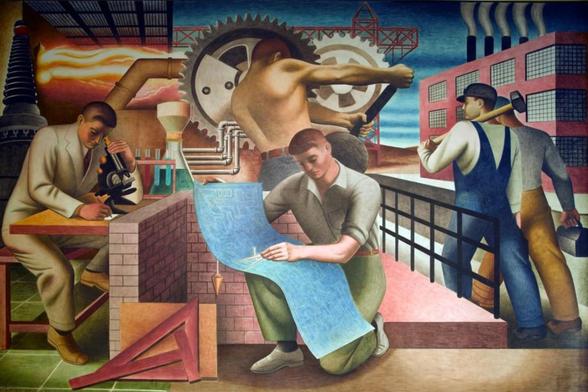

 Eric Darnley Small

 WYM Mod
 machop4838 at KillBait
 Yonhap Infomax News

 A.Stringer
 U.S. Politics in Real Time