@erwinrossen
> I am extra hesitant when a so-called solution conflicts with common sense, no matter what comes rolling out of the cost effectiveness analysis (CEA).

i am happy to hear this.

once i was at an EA talk where the speakers main point was that we need more professional managers to ensure that there is more effective activism being made for less money.

during questions, i argued that our local animal rights activist group worked quite well, despite not having any managers, because we had a lot of succesful campaigns on no budget at all.

then this EA speaker argued that i was completely mistaken about this, because the time i spent speaking up for animals is time i could have spent working in a bank to earn money. (which is what #PeterSinger argues as well.)

that is unfortunately my impression from local EA people, as well as people i hear from online: an unhealthy obsession with effectiveness, always being defined in terms of money.

> However, most people are (in my opinion) on the not-rational-enough side when it comes to giving, and therefore I promote effective altruism to at least shift the balance a bit more towards that middle ground.

i think this "giving" word can be extremely deceptive. many animal liberation activists i am around are extremely deducated, yet they usually don't donate to charities (which is often the EA definition of "giving") because they're poor and frugal persons.

the "giving" of these activists is often defined as worthless or harmful by EA, because of the sole focus on money.

on the other hand, rich people, billionaires, are often praised as philantropists by EA proponents, for "giving" parts of their large fortunes.

i would argue these rich assholes are "takers" instead, and that describing people from the epstein class (like #BillGates) as "givers" (like peter singer does, when he argues for #EffectiveAltruism ) is upside down.

yes, i think the link inside the #podcast feed was broken. here is a direct link to #AliceCrary's criticism of EA.

https://pdcn.co/e/traffic.libsyn.com/secure/overpopulationpodcast/Alice_Crary.mp3?dest-id=1132n667

also, i do think that the average person has a deeply toxic relationship to "giving" that no rationalist calculation can fix.

people here think that if they give 10€ per month to an NGO that say they save 2 animals for 10€, then they have permission to eat 2 animals, because then they're in 0.

people believe this, because NGOs like #farmkind tell people they can offset their harms by giving rationally and effectively.

in fact pretty much all the "animal welfare" NGOs here use that thinking. they suck up all the money, and then they put some labels on the meat packages.

even #greenpeace advertise fish products here under the #naturskånsom label.

the danish society for protection of animals recommend gas chamber for pigs. people feel like they "protect" animals when they "give" to this NGO or buy meat products with their label.

we really really really can't just talk about "rational giving" without clarifying, because when it's not, then i assume it's like the scam that these NGOs are running.

at an EA talk, i heard how EA was donating farming equipment to fish farms, because their rational analysis proved that was best.

and similarly, EA proponents have been pushing #cagefree, which is great advertisement for chicken farmers, but doesn't translate into freedom or wellbeing for #chickens. that is one criticism #AliceCrary is making.

before we dismiss criticism of EA as irrational, and before we let EA proponents monopolize concepts of "rationality" and "effectiveness" and let them define who is "giving" and who is "taking", i think we have to take this criticism in.

@erwinrossen
> Quite a misframing of the tenets of EA: do good and think of how to do this best.

in the context of the #overshoot #podcast, https://populationbalance.org/the-dangers-of-effective-altruism-alice-crary
do you think this is #AliceCrary who gives a wrong picture of what #PeterSinger, #WilliamMacAskill and #SamBankmanFried are saying and doing?

or do you think that bankman-fried, macaskill or singer are misusing the #EffectiveAltruism label?

> Yes, there are people misusing this frame to do evil, but equating EA with that frame is the dangerous path instead.

is this just a discussion of labels? one might say: »yes, lenin, trotsky and stalin called themselves communists but really they were misusing that label to do evil. don't equate communism with them.«

i don't mind if you have another definition of what EA is. i am curious to hear it!

however, peter singer is talking a lot about effective altruism, so i don't think it is wrong of me to talk about him as being a proponent of what he calls effective altruism.

Infanticide? We're Not Talking Abortion.

When the ethicist Peter Singer proposed in 1993 that a newborn cannot be a "person" until 30 days old, it did so only as a rule. This unseemly plan involved granting doctors the power to euthanize disabled infants at the moment – a declaration that horrified people and shocked moral circles. Five years later, Singer had been made the Decamp Professor of Bio-Ethics at Princeton University, which made him credible in the eyes of the academy.

Get Informed
Spirus Gay, l’acrobate anarchiste qui a fait de sa vie et de son corps une œuvre politique - RTBF Actus

Par Sylvain Wagnon, professeur des universités en sciences de l’éducation, Université de Montpellier. Comment définir...

RTBF.be

Stop Gambling Our Future for Meat Deforestation

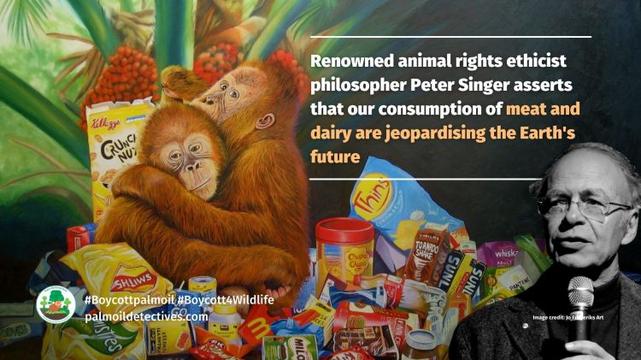
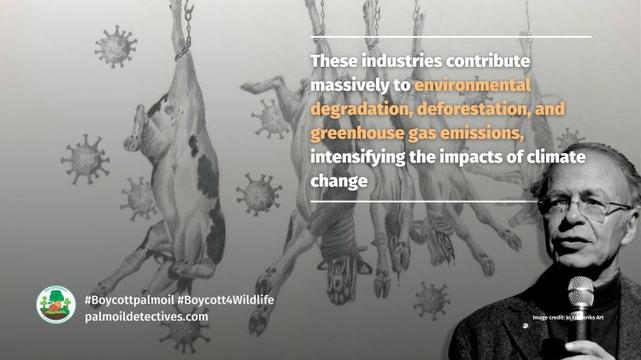
Renowned animal rights ethicist philosopher Peter Singer asserts that our dietary choices, particularly our consumption of meat and dairy, are jeopardising the Earth’s future. These industries contribute significantly to environmental degradation, deforestation, and greenhouse gas emissions, intensifying the impacts of climate change. By indulging in hamburgers and other meat-based products, we are not only compromising our health but also the wellbeing of our planet. For a more sustainable and compassionate future, consider boycotting meat and dairy. Choose to be vegan for the animals and to save our planet #Boycottmeat be #vegan #Boycott4Wildlife

https://youtu.be/ge4S2oHF5oY

Originally published by The Conversation June 15, 2023 and republished here under the Creative Commons Licence, read original.

Peter Singer, Princeton University

I wasn’t aware of climate change until the 1980s — hardly anyone was — and even when we recognised the dire threat that burning fossil fuels posed, it took time for the role of animal production in warming the planet to be understood.

Today, though, the fact that eating plants will reduce your greenhouse gas emissions is one of the most important and influential reasons for cutting down on animal products and, for those willing to go all the way, becoming vegan.

A few years ago, eating locally — eating only food produced within a defined radius of your home — became the thing for environmentally conscious people to do, to such an extent that “locavore” became the Oxford English Dictionary’s “word of the year” for 2007.

If you enjoy getting to know and support your local farmers, of course, eating locally makes sense. But if your aim is, as many local eaters said, to reduce greenhouse gas emissions, you would do much better by thinking about what you are eating, rather than where it comes from. That’s because transport makes up only a tiny share of the greenhouse gas emissions from the production and distribution of food.

With beef, for example, transport is only 0.5% of total emissions. So if you eat local beef you will still be responsible for 99.5% of the greenhouse gas emissions your food would have caused if you had eaten beef transported a long distance. On the other hand, if you choose peas you will be responsible for only about 2% of the greenhouse gas emissions from producing a similar quantity of local beef.

And although beef is the worst food for emitting greenhouse gases, a broader study of the carbon footprints of food across the European Union showed that meat, dairy and eggs accounted for 83% of emissions, and transport for only 6%.

More generally, plant foods typically have far lower greenhouse gas emissions than any animal foods, whether we are comparing equivalent quantities of calories or of protein. Beef, for example, emits 192 times as much carbon dioxide equivalent per gram of protein as nuts, and while these are at the extremes of the protein foods, eggs, the animal food with the lowest emissions per gram of protein, still has, per gram of protein, more than twice the emissions of tofu.

Animal foods do even more poorly when compared with plant foods in terms of calories produced. Beef emits 520 times as much per calorie as nuts, and eggs, again the best-performing animal product, emit five times as much per calorie as potatoes.

Favourable as these figures are to plant foods, they leave out something that tilts the balance even more strongly against animal foods in the effort to avoid catastrophic climate change: the “carbon opportunity cost” of the vast area of land used for grazing animals and the smaller, but still very large, area used to grow crops that are then fed — wastefully, as we have seen — to confined animals.

Because we use this land for animals we eat, it cannot be used to restore native ecosystems, including forests, which would safely remove huge amounts of carbon from the atmosphere. One study has found that a shift to plant-based eating would free up so much land for this purpose that seizing the opportunity would give us a 66% probability of achieving something that most observers believe we have missed our chance of achieving: limiting warming to 1.5℃.

Another study has suggested that a rapid phaseout of animal agriculture would enable us to stabilise greenhouse gases for the next 30 years and offset more than two-thirds of all carbon dioxide emissions this century. According to the authors of this study:

The magnitude and rapidity of these potential effects should place the reduction or elimination of animal agriculture at the forefront of strategies for averting disastrous climate change.

Climate change is undoubtedly the biggest environmental issue facing us today, but it is not the only one. If we look at environmental issues more broadly, we find further reasons for preferring a plant-based diet.

Fires in the Amazon and linked to cattle ranching. Andre Penner/AP Photo

The clearing and burning of the Amazon rainforest means not only the release of carbon from the trees and other vegetation into the atmosphere, but also the likely extinction of many plant and animal species that are still unrecorded.

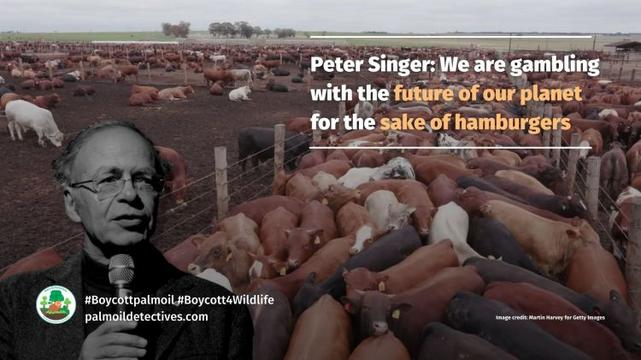
This destruction is driven largely by the prodigious appetite of the affluent nations for meat, which makes it more profitable to clear the forest than to preserve it for the indigenous people living there, establish an ecotourism industry, protect the area’s biodiversity, or keep the carbon locked up in the forest. We are, quite literally, gambling with the future of our planet for the sake of hamburgers.

Joseph Poore, of the University of Oxford, led a study that consolidated a huge amount of environmental data on 38,700 farms and 1,600 food processors in 119 countries and covered 40 different food products. Poore summarised the upshot of all this research thus:

A vegan diet is probably the single biggest way to reduce your impact on planet Earth, not just greenhouse gases, but global acidification, eutrophication, land use and water use. It is far bigger than cutting down on your flights or buying an electric car, as these only cut greenhouse gas emissions.

Poore doesn’t see “sustainable” animal agriculture as the solution:

Really it is animal products that are responsible for so much of this. Avoiding consumption of animal products delivers far better environmental benefits than trying to purchase sustainable meat and dairy.

Those who claim to care about the wellbeing of human beings and the preservation of our climate and our environment should become vegans for those reasons alone.

Doing so would reduce greenhouse gas emissions and other forms of pollution, save water and energy, free vast tracts of land for reforestation, and eliminate the most significant incentive for clearing the Amazon and other forests.

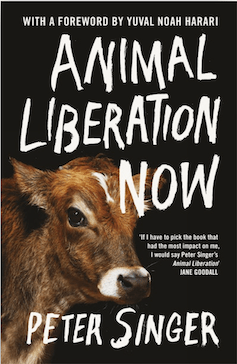
This is an edited extract from Animal Liberation Now by Peter Singer (Penguin Random House).

Peter Singer, Professor of Bioethics in the Center for Human Values, Princeton University

This article is republished from The Conversation under a Creative Commons license. Read the original article.

Originally published by The Conversation June 15, 2023 and republished here under the Creative Commons Licence, read original.

ENDS

Read more about human health, veganism, nutrition and why you should #Boycottpalmoil, #Boycottmeat for your own and the planet’s health

Ecuadorean Viscacha Lagidium ahuacaense

High in the remote granite outcrops of Cerro El Ahuaca, #Ecuador the Ecuadorean #Viscacha Lagidium ahuacaense is plump and fluffy #rodent sporting sage-like long whiskers. From their high perch they look down upon…

Read more

Climate Change Driving Mass Bird Deaths in the Amazon

A recent #study has revealed that even in the most isolated parts of the #Amazon, bird #populations are collapsing due to #climatechange. Research published in Science Advances found that a 1°C increase in…

Read more

Declining primate numbers are threatening Brazil’s Atlantic forest

#Brazil’s Atlantic Forest, one of the most biodiverse ecosystems in the world, is facing severe threats due to deforestation and habitat fragmentation. This has led to a sharp decline in primate species, including…

Read more

Blue-streaked Lory Eos reticulata

Brilliantly coloured and full of energy, the Blue-streaked Lory (Eos reticulata) is a striking and unique #parrot living in the forests of the Banda Sea Islands, #Indonesia. Their scarlet plumage is decorated with…

Read more

Blonde Capuchin Sapajus flavius

The blonde #capuchin (Sapajus flavius) is an enigmatic and critically endangered #primate found in the northeastern forests of Brazil. With their striking golden-yellow fur and intelligent, expressive faces, these capuchins are among the…

Read more

Load more posts

Something went wrong. Please refresh the page and/or try again.

Take Action in Five Ways

1. Join the #Boycott4Wildlife on social media and subscribe to stay in the loop: Share posts from this website to your own network on Twitter, Mastadon, Instagram, Facebook and Youtube using the hashtags #Boycottpalmoil #Boycott4Wildlife.

✓ Subscribed

2. Contribute stories: Academics, conservationists, scientists, indigenous rights advocates and animal rights advocates working to expose the corruption of the palm oil industry or to save animals can contribute stories to the website.

Wildlife Artist Juanchi Pérez

Read more

Mel Lumby: Dedicated Devotee to Borneo’s Living Beings

Read more

Anthropologist and Author Dr Sophie Chao

Read more

Health Physician Dr Evan Allen

Read more

The World’s Most Loved Cup: A Social, Ethical & Environmental History of Coffee by Aviary Doert

Read more

How do we stop the world’s ecosystems from going into a death spiral? A #SteadyState Economy

Read more

3. Supermarket sleuthing: Next time you’re in the supermarket, take photos of products containing palm oil. Share these to social media along with the hashtags to call out the greenwashing and ecocide of the brands who use palm oil. You can also take photos of palm oil free products and congratulate brands when they go palm oil free.

https://twitter.com/CuriousApe4/status/1526136783557529600?s=20

https://twitter.com/PhillDixon1/status/1749010345555788144?s=20

https://twitter.com/mugabe139/status/1678027567977078784?s=20

4. Take to the streets: Get in touch with Palm Oil Detectives to find out more.

5. Donate: Make a one-off or monthly donation to Palm Oil Detectives as a way of saying thank you and to help pay for ongoing running costs of the website and social media campaigns. Donate here

Pledge your support

#animalRights #animalrights #animals #BoycottMeat #BoycottPalmOil #Boycott4wildlife #BoycottMeat #BoycottPalmOil #climateChange #climatechange #dairy #deforestation #diet #ethics #meat #nutrition #PalmOil #palmOilDeforestation #PeterSinger #plantBasedDiet #saturatedFats #vegan #veganism

Antinatalists say human suffering, and climate change, makes having children unethical. Are they right?

Elon Musk believes the collapsing birth rate is humanity’s biggest danger. But antinatalists argue having kids is little…
#NewsBeep #News #Headlines #antinatalism #AU #Australia #birth #birthrate #brilee #child #Children #davidbenatar #ElonMusk #fertility #kids #motherheroine #onechildpolicy #parenting #petersinger #pregnancy #Pronatalism #reproduction'
https://www.newsbeep.com/135746/

‘Als het over dierenwelzijn gaat, zijn veel mensen alleen geïnteresseerd in hun hond of kat’ - Knack

Peter Singer neemt het als filosoof en activist al vijftig jaar op voor de rechten van dieren – met wisselend succes.

Knack
Ah, the #NYRB, where every topic imaginable gets the same amount of intellectual hot air. 🎈 Peter Singer must be thrilled to be sandwiched between climate change and literary gifts. 📚🌍 But hey, at least there's a shop! 💸
https://www.nybooks.com/articles/2025/04/24/circling-the-good-thomas-nagel/ #IntellectualDiscussion #PeterSinger #ClimateChange #LiteraryGifts #HackerNews #ngated
Circling the Good | Peter Singer

In his new book the eminent philosopher Thomas Nagel asks whether humans are capable of redefining morality itself.

The New York Review of Books

#petersinger asked "Would you save a drowning child at the small cost of getting your shirt wet?"

If your answer is yes, you should sacrifice small luxuries like eating out and redirect the savings to #charity .

A tough pill to swallow. But if true, a society that views donation to non-profits as just optional and praiseworthy is evil. It led to #wealthgap , #climatechange , #enshittification and #latestagecapitalism .

Do you agree?
#philosophy #humanitarianaid #ethics #overconsumption

#PeterSinger seems to be busy: he has not answered to our email. We have proposed him to be our “emperor” ambassador. We will be very happy when he will accept. And we are very confident about this, as our initiative is inspired by its #EffectiveAltruism methodology. We just lack, for the moment, a way to receive your donations. Be altruist, be effective and not fanatic, join the #feminuary movement!