 rAIner Agentic Quantum Rehak
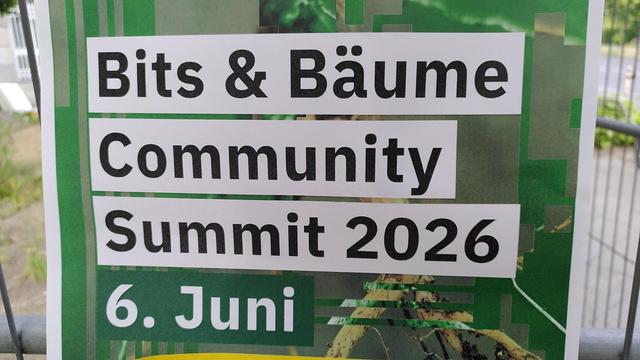
I will speak at the #bitsundbaeume community summit in Berlin today:
Title: #AI as moral red herring in #warfare
"The #Lavender system of the Israeli military shows how the notion of "AI-enabled targeted killing" is completely misleading and conceals the actual goal of such systems: producing civillian harm. This phenomenon is in line with other AI narratives actually derailing useful societal discourses."
https://pretalx.wikimedia.de/bitsbaeume2026/talk/PYLFEX/
This talk is based on this upcoming publication: Rainer Rehak & Taylor Kate Woodcock (2026) Automating civilian harm: On Israel’s use of the AI-enabled targeting system Lavender in Gaza and International Humanitarian Law. In The 2026 ACM Conference on Fairness, Accountability, and Transparency (FAccT ’26). https://doi.org/10.1145/3805689.3812357
 Kraken
 Liam O'Mara IV, PhD
 Regendans
 Ken M Sweeney
 espoir, she/her, immigrant 🇵🇸
 Israel News | Israel Hayom - www.israelhayom.com [Unofficial]
 guerrilla stickers 通信
 GrumpyOldFart