Today in Labor History March 5, 1917: Members of the IWW went on trial in Everett, Washington for the Everett Massacre, which occurred on November 5, 1916. In reality, they were the victims of an assault by a mob of drunken, vigilantes, led by Sheriff McRae. The IWW members had come to support the 5-month long strike by shingle workers. When their boat, the Verona, arrived, the Sheriff asked who their leader was. They replied, “We are all leaders.” Then the vigilantes began firing at their boat. They killed 12 IWW members and 2 of their own, who they accidentally shot in the back. Before the killings, 40 IWW street speakers had been taken by deputies to Beverly Park, where they were brutally beaten and run out of town. In his “USA” trilogy, John Dos Passos mentions Everett as “no place for the working man.” And Jack Kerouac references the Everett Massacre in his novel, “Dharma Bums.”

#workingclass #LaborHistory #IWW #everett #massacre #policebrutality #vigilante #strike #union #police #policemurder #FreeSpeech #kerouac #dospassos #hisfic #novel #literature #writer #author #books @bookstadon

Today in Labor History December 6, 1889: The trial of the Chicago Haymarket anarchists began amidst national and international outrage and protest. None of the men on trial had even been at Haymarket Square when the bomb was set off. They were on trial because of their anarchist political affiliations and their labor organizing for the 8-hour work-day. 4 were ultimately executed, including Albert Parsons, husband of future IWW founding member Lucy Parsons. One, Louis Ling, cheated the hangman by committing suicide in his cell. The Haymarket Affairs is considered the origin of International Workers Day, May 1st, celebrated in virtually every country in the world, except for the U.S., where the atrocity occurred. Historically, it was also considered the culmination of the Great Upheaval, a series of strike waves and labor unrest that began in Martinsburg, West Virginia, 1877, and spread throughout the U.S., including the Saint Louis Commune, when communists took over and controlled the city for several days. Over 100 workers were killed across the U.S. in the weeks of strikes and protests. Communists and anarchists also organized strikes in Chicago, where police killed 20 men and boys. Albert and Lucy Parsons participated and were influenced by these events. I write about this historical period in my Great Upheaval Trilogy.

The first book in this series, Anywhere But Schuylkill, is available from Historium Press. Check it out here: https://www.thehistoricalfictioncompany.com/hp-authors/michael-dunn.

Or send $25 via Venmo (@Michael-Dunn-565) and your mailing address, and I will send you a signed copy!

You read my full article about Lucy Parsons and the Haymarket Affair here: https://michaeldunnauthor.com/2024/03/24/lucy-parsons/

And my full article about the Great Upheaval here: https://michaeldunnauthor.com/2024/03/31/the-great-upheaval/

#workingclass #LaborHistory #haymarket #anarchism #IWW #strike #union #solidarity #riot #police #policebrutality #chicago #EightHourDay #greatupheaval #AnywhereButSchuylkill #historicalfiction #hisfic #books #novel #author #writer @bookstadon

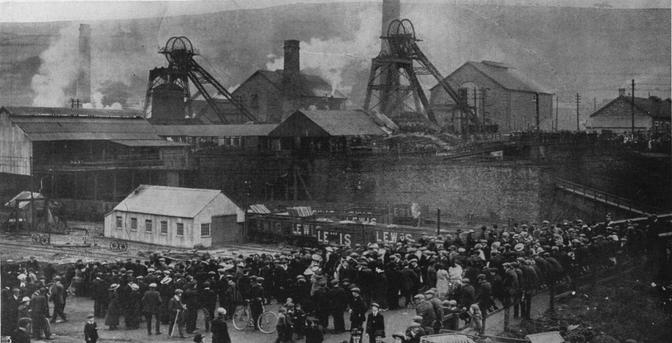
Today in Labor History October 14, 1913: The Senghenydd colliery disaster occurred in the United Kingdom, killing 439 miners. It was the country’s worst mining disaster ever. In May 1901, three underground explosions occurred at the same colliery, killing 81 miners. The cause of the 1913 explosion is unknown. 60 victims were younger than 20. 8 were only 14 years old. 542 children lost their fathers in the disaster and 205 women were widowed. The disaster is portrayed in two works of historical fiction: Alexander Cordell's “This Sweet and Bitter Earth” (1977) and “Cwmwl dros y Cwm” (2013) by Gareth F. Williams.

#workingclass #LaborHistory #coal #mining #disaster #workplacesafety #workerdeaths #historicalfiction #HisFic #novel #books #author #writer @bookstadon

#WritersCoffeeClub 10. How much of your world-building extends beyond what's shown in the text?

A lot. My genre is "hard" #hisfic. The world of the story is real 14th-century history, without any magic or fantasy. So I have to research the history before I can write the story.

Most of the research never gets into the manuscript because it doesn't contribute to the story, but more than once, real events have suggested storylines I hadn't previously thought of.

#writing #writersofmastodon

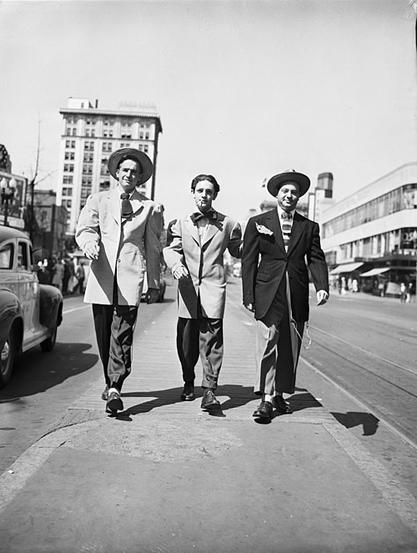
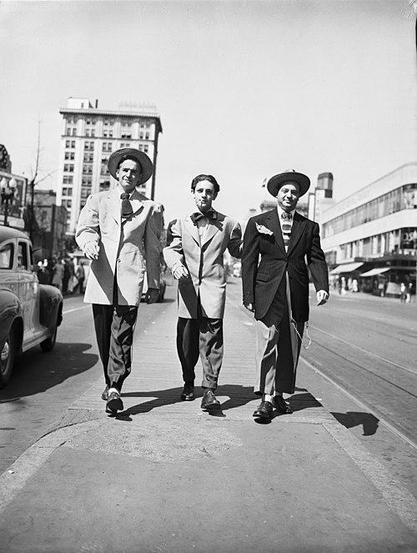
Today in Labor History June 4, 1943: The Zoot Suit riots began in Los Angeles, with white soldiers attacking and stripping mostly Latino, but also some black, Italian and Filipino youth who wearing zoot suits. They did it in response to wartime propaganda vilifying the wearers of zoot suits as unpatriotic hoodlums. There was a government ban on zoot suits and other long, woolen articles of clothing because of war rationing. Additionally, the LA Times had been whipping up racial tensions by publishing propaganda associating Mexican and Hispanic youth with delinquency, particularly in the wake of the Sleepy Lagoon murder. Race riots also occurred that summer in Mobile, Beaumont, Detroit, Chicago, San Diego, Oakland, Philadelphia and New York City.

During the Great Depression, the U.S. had deported between 500,000 and 2 million Mexicans. Of the 3 million who remained, the largest concentration lived in Los Angeles. Because of discrimination, many were forced into jobs with below-poverty wages. And then, the U.S. military built a naval academy in the Latino community of Chavez Ravine, further exacerbating tensions.

Zoot suits (baggy pegged pants with a long, flamboyant jacket that reached the knees) became popular in the early 1940s, particularly among young African American men. It was associated with a sense of pride, individuality and rebellion against mainstream culture. The trend quickly made its way into the Hispanic and Filipino subcultures in southern California. During this time, there was also a rise of pachuco culture among Latin youth. Chicano or pachuco jazz had become incredibly popular. Some of the great Pachuco band leaders included Lalo Guerrero, Don Tosti and Don Ramon Martinez. Margarita Engle depicted The Zoot Suit riots in her young adult novel, Jazz Owls (2018), which she wrote in verse.

#workingclass #LaborHistory #racism #raceriot #Riot #ZootSuit #chicano #mexican #losangeles #propaganda #ww2 #WorldWarTwo #immigration #deportation #jazz #boogie #hisfic #fiction #novel #books #author @bookstadon
Today in Labor History June 1 is the day that U.S. labor law officially allows children under the age of 16 to work up to 8 hours per day between the hours of 7:00 am and 9:00 pm. Time is ticking away, Bosses. Have you signed up sufficient numbers of low-wage tykes to maintain production rates with your downsized adult staffs?

The reality is that child labor laws have always been violated regularly by employers and these violations have been on the rise recently. Additionally, lawmakers have weakened existing, poorly enforced laws to make it even easier to exploit children. Over the past few years, the number of children employed in violation of labor laws rose by 37%, while lawmakers in at least 10 states passed, or introduced, new laws to roll back the existing rules. Violations include hiring kids to work overnight shifts in meatpacking factories, cleaning razor-sharp blades and using dangerous chemical cleaners on the kills floors for companies like Tyson and Cargill. Particularly vulnerable are migrant youth who have crossed the southern U.S. border from Central America, unaccompanied by parents. https://www.epi.org/publication/child-labor-laws-under-attack/

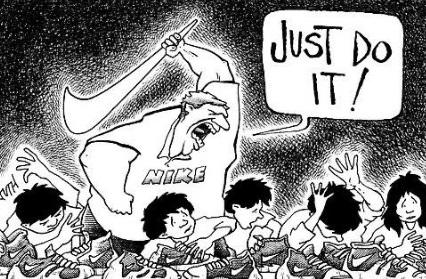
Of course, what is happening in the U.S. is small potatoes compared with many other countries, where exploitation of child labor is routine, and often legal. At least 20% of all children in low-income countries are engaged in labor, mostly in agriculture. In sub-Saharan Africa it is 25%. Kids are almost always paid far less than adults, increasing the bosses’ profits. They are often more compliant than adults and less likely to form unions and resist workplace abuses and safety violations. Bosses can get them to do dangerous tasks that adults can’t, or won’t, do, like unclogging the gears and belts of machinery. This was also the norm in the U.S., well into the 20th century. Many kids began work before they were 10. They often had missing limbs and died young from work-related injuries and disease. However, when the bosses abused them, they would sometimes walk out, en masse, in wildcat strikes. And when their parent went on strike, they would almost always walk out with them, in solidarity.

In my novel, “Anywhere But Schuylkill,” the protagonist, Mike Doyle, works as a coal cleaner in the breaker (coal crushing facility) of a coal mine at the age or 13. He is trying to find a new home for his family before his alcoholic uncle kills one of his siblings. So, he takes a job with a union leader, who is also a gangster, while secretly courting his daughter, and quickly learns that the gang leader, cops and rival gang all want him dead.

You can pick up a copy of my book here:
keplers.com/
https://www.greenapplebooks.com/
https://christophersbooks.com/
https://boundtogether.org//
https://www.historiumpress.com/michael-dunn

Or send me $25 via Venmo (@Michael-Dunn-565) and your mailing address, and I will send you a signed copy!

#workingclass #LaborHistory #children #childlabor #exploitation #capitalism #nike #AnywhereButSchuylkill #coal #mining #books #fiction #novel #hisfic #historicalfiction @bookstadon

@saposcat @technorow From querying, I've learnt that #hisfic seems to have a very narrow time-window. Basically, it means wigs and whalebone, atm.

Today in Labor History March 5, 1917: Members of the IWW went on trial in Everett, Washington for the Everett Massacre, which occurred on November 5, 1916. In reality, they were the victims of an assault by a mob of drunken, vigilantes, led by Sheriff McRae. The IWW members had come to support the 5-month long strike by shingle workers. When their boat, the Verona, arrived, the Sheriff asked who their leader was. They replied, “We are all leaders.” Then the vigilantes began firing at their boat. They killed 12 IWW members and 2 of their own, who they accidentally shot in the back. Before the killings, 40 IWW street speakers had been taken by deputies to Beverly Park, where they were brutally beaten and run out of town. In his “USA” trilogy, John Dos Passos mentions Everett as “no place for the working man.” And Jack Kerouac references the Everett Massacre in his novel, “Dharma Bums.”

#workingclass #LaborHistory #IWW #everett #massacre #policebrutality #vigilante #strike #union #police #policemurder #FreeSpeech #kerouac #dosassos #hisfic #novel #literature #writer #author #books @bookstadon

Today in Labor History December 6, 1889: The trial of the Chicago Haymarket anarchists began amidst national and international outrage and protest. None of the men on trial had even been at Haymarket Square when the bomb was set off. They were on trial because of their anarchist political affiliations and their labor organizing for the 8-hour work-day. 4 were ultimately executed, including Albert Parsons, husband of future IWW founding member Lucy Parsons. One, Louis Ling, cheated the hangman by committing suicide in his cell. The Haymarket Affairs is considered the origin of International Workers Day, May 1st, celebrated in virtually every country in the world, except for the U.S., where the atrocity occurred. Historically, it was also considered the culmination of the Great Upheaval, a series of strike waves and labor unrest that began in Martinsburg, West Virginia, 1877, and spread throughout the U.S., including the Saint Louis Commune, when communists took over and controlled the city for several days. Over 100 workers were killed across the U.S. in the weeks of strikes and protests. Communists and anarchists also organized strikes in Chicago, where police killed 20 men and boys. Albert and Lucy Parsons participated and were influenced by these events. I write about this historical period in my Great Upheaval Trilogy. The first book in this series, Anywhere But Schuylkill, came out in September, 2023, from Historium Press. Check it out here: https://www.thehistoricalfictioncompany.com/hp-authors/michael-dunn

You read my full article about Lucy Parsons and the Haymarket Affair here: https://michaeldunnauthor.com/2024/03/24/lucy-parsons/

And my full article about the Great Upheaval here: https://michaeldunnauthor.com/2024/03/31/the-great-upheaval/

#WorkingClass #LaborHistory #haymarket #anarchism #IWW #strike #union #solidarity #riot #police #policebrutality #chicago #EightHourDay #greatupheaval #AnywhereButSchuylkill #historicalfiction #hisfic #books #novel #author #writer @bookstadon

Michael Dunn | Historium Press

Michael Dunn, author of "Anywhere but Schuylkill" - Historium Press author page

Historium Press

Today in Labor History October 14, 1913: The Senghenydd colliery disaster occurred in the United Kingdom, killing 439 miners. It was the country’s worst mining disaster ever. In May 1901, three underground explosions occurred at the same colliery, killing 81 miners. The cause of the 1913 explosion is unknown. 60 victims were younger than 20. 8 were only 14 years old. 542 children lost their fathers in the disaster and 205 women were widowed. The disaster is portrayed in two works of historical fiction: Alexander Cordell's “This Sweet and Bitter Earth” (1977) and “Cwmwl dros y Cwm” (2013) by Gareth F. Williams.

#workingclass #LaborHistory #coal #mining #disaster #workplacesafety #workerdeaths #historicalfiction #HisFic #novel #books #author #writer @bookstadon