 Chadwick Rye
BRECK: Stone’s Rest — Chapter Ten The Story That Made Us Careful
Daily writing prompt What’s a piece of media (book, movie, song) that changed how you see the world? View all responsesBRECK: Stone’s Rest — Chapter Ten
The Story That Made Us Careful
This is Chapter 10 of BRECK: Stone’s Rest, Book Three of the BRECK series — a serialized noble dark fantasy story by Chadwick Rye. New chapters post daily.
The Story So Far
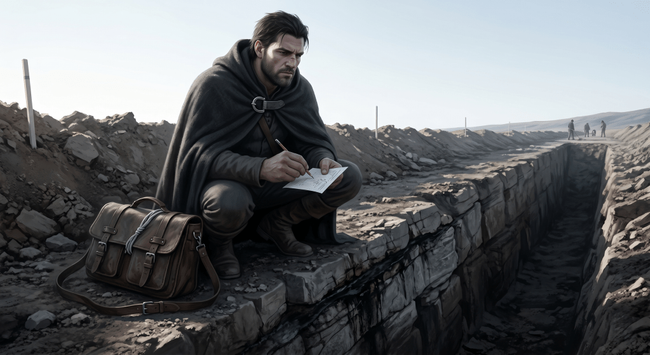
Three days in Garrow’s records found the actual problem — not the trench, but page forty-seven of the original charter, where “affected parties” was defined using a template that never knew the mountains existed. The trench is fixable. The definition is a different problem. Breck needs Mira to start building Frostpeak’s testimony into something a Lumenvale proceeding can receive. He needs the Council to hold long enough to let him try.
← Chapter Nine: The Ending No One Wrote | Chapter Eleven →
Chapter Ten: The Story That Made Us Careful
This chapter asks what changed how a person sees the world — and answers with a story that isn’t a book, but carries more weight than most books ever will.
Mira agreed to the translation work without much discussion, which told Breck she’d already been thinking about it before he asked, possibly since the chamber session, possibly longer. She laid out, with the same flat diagnostic clarity she brought to everything, what it would require and what it might cost.
“Frostpeak’s account can be rendered in a form that’s legible outside Nomados,” she said. “What I carry out of communion with her is specific enough — dates as she experiences them, locations, the progression of what she’s felt in the deep stone over the six years of the concession. I can render that into chronicle form. What I can’t guarantee is that a Lumenvale court will credit the source once they understand what it is.”
“That’s a problem for Caine’s office to solve,” Breck said. “Your job is to make the testimony. His office’s job is to argue it has standing.”
“You trust him to do that.”
“I trust him to try it. That’s all I can ask of anyone in this.”
He left her to begin and was crossing back toward the lift with Jenna when the runner found him — a girl of about twelve, Forge Clan markings on her collar, with the look of someone who’d been told to deliver a message quickly and had taken the instruction seriously. Elder Tomson’s compliments. He had something to say and would appreciate Breck coming to say it where only the two of them would hear it.
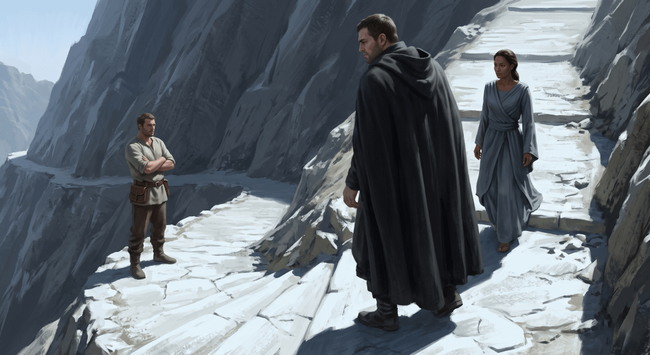
The quarters Tomson kept on Grandfather Ironheart’s lower terrace during the convergence extension were smaller than Breck expected for an elder of his standing — plain-furnished, working-warm, the walls hung with tools rather than decorations. Tomson himself stood at the window when Breck arrived, not looking out of it so much as using it to avoid the room, the way people use windows when they’ve decided to say something they haven’t fully decided they want said yet.
“I’m not your enemy,” Tomson said, without turning around.
“I know that.”
“I want to be clear about it, because I’ve been told I read as one.” He turned then, and looked at Breck the way men who’ve spent a long time in difficult work look at the people they have to trust whether they want to or not. “Daveron granted you standing. I didn’t argue against it once the vote was clear and I’m not arguing against it now. But I want you to understand something before this goes much further, and I want to say it where nobody’s deciding whether to look encouraged or worried by it.”
“I’m listening.”
Tomson moved to the table, sat heavily. “Three generations ago, when my grandfather’s grandfather held this elder seat, there were ground-dwellers who came here with a survey contract and letters from their own government expressing genuine concern about the Peak-rider clans and what they needed. The survey was honest. The letters were sincere. The men who carried them weren’t lying about their intentions.” He looked at the surface of the table as he said it, the look of a man reciting something he learned before he learned to doubt it. “They went back home. The letters made it into their own government’s records as evidence of goodwill and diplomatic engagement. The survey became the basis for a land-use agreement that granted ground-dweller caravans rights to the Shifting Plains corridor and gave the clans nothing in return, because the clans had already demonstrated, by allowing the survey, that the corridor was accessible, which meant it didn’t need to be purchased. The men who came weren’t malicious. They were simply working within a framework that always found a way to give them what they came for.” He looked up. “We tell that story in the Forge Clan the way other clans tell weather wisdom. Not as a warning against outsiders. As a caution against mistaking goodwill for outcome.”
Breck let it sit a moment. “That’s the right story to tell,” he said.
Tomson’s eyes sharpened slightly. He’d expected argument, clearly. “You don’t disagree.”
“Good intentions carried through a framework that doesn’t account for everyone in the room aren’t worth more than the paper they’re written on. I’ve spent three years watching people get hurt by things that were never designed to hurt them. The design is almost worse than malice would be, because at least malice understands what it’s doing.” He folded his hands, let Tomson take his time with the response. “I’m not asking you to trust me. I’m asking you to let me try to change the page the story keeps ending on. If it doesn’t work, you’ll have lost nothing you hadn’t already lost.”
“And if it works,” Tomson said slowly, “we’ll have let another ground-dweller come and go with something we gave him that we can’t take back.”
“Yes,” Breck said. “A ruling. That your peaks have standing. That harm done to them is harm the law is obligated to answer for.” He held Tomson’s eyes. “That’s the thing I’d be taking. If that costs you something, I want you telling me now how it costs you, because I’d rather know.”
Tomson stared at him for a long while, in the particular silence of a man stress-testing a structure he’d been expecting to find hollow. “If you fail,” he said, finally, “we’ve allowed ourselves to be documented as the party that participated in a Lumenvale process that considered the question and declined to grant us standing. That documentation can be used in future proceedings as settled precedent against us.” He said it carefully, the way a man who’s spent a lifetime reading the fine print says things. “That’s what failed petitions have given us before. I am not willing to go into another failed process blind.”
“You’re right to name that,” Breck said. “Caine’s referral isn’t a petition. It’s a case with a specific charter violation in evidence. A failed petition asks for something. A failed case, argued on the basis of documented harm, is harder to use as precedent against the party that was harmed. The question wouldn’t be whether you have standing — it would be whether this specific harm constituted harm under the existing framework. Those are different failure modes.” He paused. “But you should have a lawyer review that distinction before you tell Daveron to let me proceed. I’m a courier, not a lawyer. I believe what I just told you, and I might be wrong about the fine print.”
Something in Tomson’s expression shifted — not warmly, but honestly, the shift of a man adjusting a calibration. “You just told me you might be wrong.”
“I might be wrong about the fine print. I’m not wrong about the trench, or page forty-seven, or what Mira felt in that chamber, or what Bren read on Grandfather Ironheart’s crown.” He stood. “I’ll leave you to decide what weight to give the first of those against the rest.”
He was halfway down the switchback path from Ironheart’s lower terrace, Jenna a quiet three steps behind him, when he saw the man.
Ground-dweller, camp-worker’s clothes, standing at the junction where the switchback met the main path in the casual, unconvincing way of a man pretending to rest who hadn’t been walking hard enough to need rest. Broad through the chest, a foreman’s leather kit on his belt rather than a laborer’s. He wasn’t looking at Breck. He was very carefully not looking at Breck, which was its own kind of looking.
Breck kept his pace even, didn’t slow, didn’t glance back, and noted the exact location and the quality of the not-looking the way he noted everything that arrived sideways — without urgency, without reaction, simply filed.
“Who’s Garrow’s site manager,” he said to Jenna, quietly, once they were past.
“Hask,” Jenna said, equally quietly. “I don’t know him by sight.”
“I think I might,” Breck said, and said nothing else about it for the rest of the walk down.
He thought, going over the day’s material as he walked, about what Tomson’s story had done to the Forge Clan’s worldview, and about the question the day had put in front of it — what changed how a person sees the world. Not a book. Not a song. A thing told around fires in the Forge Clan’s particular keeping, a real event rendered into repeatable form because the real event had been too instructive to let rest in private memory. That was what certain stories did, the ones that mattered most — not entertain, not illuminate in the comfortable way of fiction that left you set down the same person who’d picked it up. The ones that mattered rewired the seeing itself. The Forge Clan looked at surveyors and letters of goodwill and saw, underneath them, the shape of the framework those things always served, because three generations ago the story had been lived first and told after, and the telling had made the pattern visible to people who’d never lived the original.
Breck thought about what story the mountains’ clans would tell three generations from now about this season, about these weeks of convergence and records and a courier from Lumenvale who’d turned up with a referral and a pencil. He thought about the two versions of that story — the one where the framework changed, even partially, even imperfectly — and the one where it didn’t.
He very much wanted the telling to land on the first.
He’d have to earn that, though, and the man at the junction who’d been so carefully not watching him suggested, with a clarity Breck trusted more than most things he could have been told directly, that whatever time he had left to earn it had just gotten shorter.
← Chapter Nine: The Ending No One Wrote | Chapter Eleven →
BRECK: Stone’s Rest is a serialized noble dark fantasy story by Chadwick Rye — Book Three of the BRECK series, crossing from Lumenvale into Nomados. Chapter 10 of 20. New chapters post daily.
✦ Enjoyed this chapter? “The Story That Made Us Careful” continues Book Three of the BRECK series — a skeptic’s honest warning, a foreman who’s started watching, and the question of which version of a story the clans will be telling three generations from now. Browse the full series, follow for daily chapters, or share this with a reader who knows that the stories we tell to survive are the ones that change us most.
#adventure #books #Breck #BRECKColdHarbor #BRECKDeadDelivery #BRECKSeries #BRECKStoneSRest #ChadwickRye #ChadwickRyeAuthor #characterDrivenFantasy #courier #dailyFantasyChapters #dailyprompt #dailyprompt2804 #DarkFantasy #darkFantasySeries #EpicFantasy #fantasy #FantasyConflict #fantasyCourierStory #FantasyFiction #FantasyNovel #FantasyPolitics #FantasyProtagonist #FantasySeries #fantasyWithMoralComplexity #fiction #Frostpeak #GRimdark #HighFantasy #legalFantasy #lowFantasy #Lumenvale #moralFantasy #nobleDarkFantasy #Nomados #onlineFiction #politicalFiction #readFantasyOnline #reading #sentientMountains #sentientWorldFantasy #serializedBook #serializedFantasy #serializedFantasyFiction #serializedFiction #shortStory #StoneSRest #storyteller #Storytelling #veteranCourierFantasy #webSerial #writing