#introduction

"Shelter!" is an initiative for free public overnight-shelters. I am developing it while studying M.A. #Gestaltung at the University of Applied Sciences and Arts #Bielefeld. There is also a project-website: https://shelter.apgw.de

It is about #infrastructure as #art: For #climate-friendly travels. For local #microadventures. #Socially inclusive and #ecologically reasonable.

I like to see many new public shelter-spaces and trekking-places and I want to build shelters together with you, e.g. on public meadows at the edge of cities.

That's also a bit egoistic because I like to experience self-efficacy while building it, and in the best case, make it experiencable for others, too.

Inspiration and motivation is the impressive culture of public fresh air #tourism in #Denmark. There are hundreds of trekking-places for up to two nights, often with wooden shelter-huts. And: You are allowed to place your tent beside of them, if they are already taken...

https://udinaturen.dk/kort/?region=81,82,83,85,84&categories=1106,1111,1112,1115&routes=&organisation=33157274

#Trekking #Bikepacking #Biketravels #Bike #Hiking #Commons

#PleaseBoost (if you like to)

Shelter-Challenge

RE: https://mastodon.social/@sflorg/115729303412817454

This is an interesting article (linked below) about #biodiversity and #populationdynamics of #microscopic #seafloorfauna elements, and their presumed modes of #dispersal and ability to adapt to far away #ecologically different conditions. It focuses on the nematode genus #Halalaimus.
I want to point out that even terrestrial nematodes are masters of interesting #dispersalstrategies, evolved based on their small sizes and limited distance #mobility.

This text by #StefanFWirth, Berlin, 2025

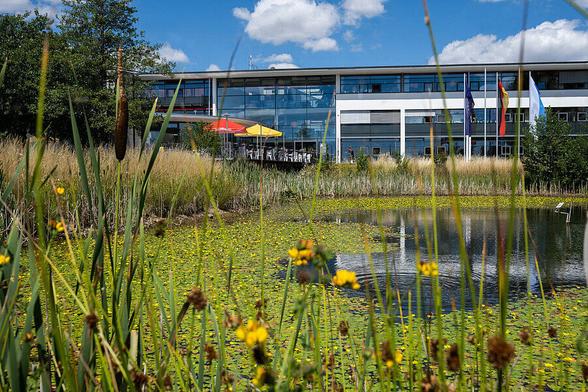
The #Gleisdreieck #urbanpark in #Berlin, opened in its current form in 2014, is located on the former #wasteland of two old #railway stations. It consists of three #parksections stretching from the Kreuzberg district to Schöneberg. In addition to sports and leisure facilities, it also features restaurants and #ecologically diverse #greenspaces with remarkable #urban #biodiversity.

© #StefanFWirth Berlin 2025

Further Reading

E. Zaykova (2021):
http://dx.doi.org/10.1051/e3sconf/202126305037

#Photos
© S F. Wirth

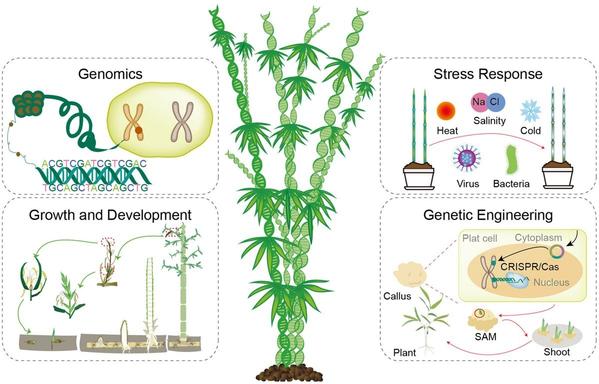
🎍#Bamboo is remarkable: fast #growing, #ecologically significant, and #economically valuable.
Wang et al. explore the #genomics, #biotechnology, and #molecular mechanisms behind its growth, #development, and #stress responses. https://doi.org/10.1111/jipb.13909
@wileyplantsci
#PlantScience #botany #review
🌱 At #HofUniversity, #Sustainability is a way of life! With the launch of our new website on #GreenTech, we highlight our commitment to #SustainableDevelopment#ecologically, #socially & #economically. Explore how we take responsibility and drive change on #campus and beyond. 🌍💡 Learn more: https://t1p.de/v4dr8
Sustainability as a lived philosophy at Hof University of Applied Sciences - Campuls

Hof University of Applied Sciences is sending out a clear signal: Sustainability is not just a buzzword here, but an integral part of campus life. With the launch of the new website on sustainability and the "Green Tech" philosophy, the university is demonstrating how it takes responsibility and promotes sustainable development - ecologically, socially and economically.

Campuls

#Degrowth and #Socialism: Notes on Some Critical Junctures

by Güney Işıkara and Özgür Narin

"Most degrowth thinkers agree that growth, as both a fact and a concept, is brought about by #capitalism. It is even acknowledged that growth is not the driver, but an outcome, the “surface appearance or ‘fetish’ of an underlying process: capital accumulation.” One would then expect that the challenge to it and the imaginary of an alternative society would be based on the negation of capitalism as a mode of production. Yet instead, growth remains the focal point of the discussion.

"The emphasis on growth as an aggregate phenomenon that emerged only with industrial capitalism and turned into an unquestionable economic paradigm following the Second World War is not trivial. It implies that growth as we know it is capitalist growth, or actually accumulation of capital, constituted in processes of exploitation and expropriation peculiar to capitalism, measured by indicators designed by and for capitalist societies. Why should we then be so concerned with growth as such from the viewpoint of a socialist (or #postcapitalist) society? The degrowth position is that it mesmerizes and captivates individual and social imaginaries, political movements, parties, and projects, including that of socialism: “Growth is the child of capitalism, but the child outdid the parent, with the pursuit of growth surviving the abolition of capitalist relations in socialist countries.”

"The transplantation of growth from its capitalist historical context into a socialist future, and thereby the problematization of growth as such—which supposedly transcends social relations upon which societies are founded—can be justified only under one condition: if all growth, regardless of the underlying relations of humans to both humans and nonhuman natures, can be seen as homogeneous, or at least alike to a significant degree. This is precisely what Giorgos Kallis puts forward: 'socialist growth cannot be sustainable, because no economic growth can be #ecologically #sustainable. Growth in the #material standard of living requires growth in the #extraction of materials. This is unavoidably damaging to the environment and ultimately undermines the conditions of production and reproduction.”

"The logical conclusion of this argument is that all human activity involving extraction, transformation, and use of materials—that is, all human reproduction—is in direct conflict with the environment as the former unavoidably damages the latter. This is a reversion to crude materialism founded on the oppositional binary of nature and society. According to Kallis, this conflict becomes #unsustainable if material living standards keep growing. Growth, however, is still understood in its meaning in the capitalist context, representing a process of accumulation.

"The qualitative difference between socialism and capitalism as two distinct modes of production is highly relevant here. The primary function of production under socialism is to provide all citizens with use values to satisfy a universal standard of basic needs (essentials), which determines the length of the necessary working day. This comprises not only shelter, basic food items, clean water supply, health care, education, and accessible public transport, but also child and elder care, parks and recreation, basic cultural and informational services, (possibly) ecological restoration activities, and the like."

Read more:
https://monthlyreview.org/2023/07/01/degrowth-and-socialism-notes-on-some-critical-junctures/

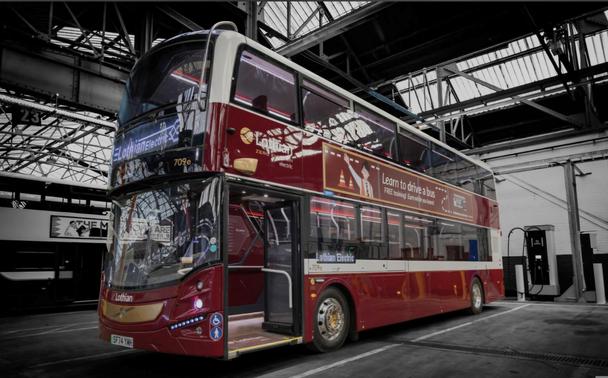
It's a #Bus
You can use them when you don't feel like #Walking,
In countries that thought ahead and spent money on #Infrastructure.

#Cheap #Clean #Ecologically #Responsible #Public #Transport #Edinburgh

Use #Cars while you still can.
If you want.
By 2039, the age of #mass #car #ownership will be well and truly over.
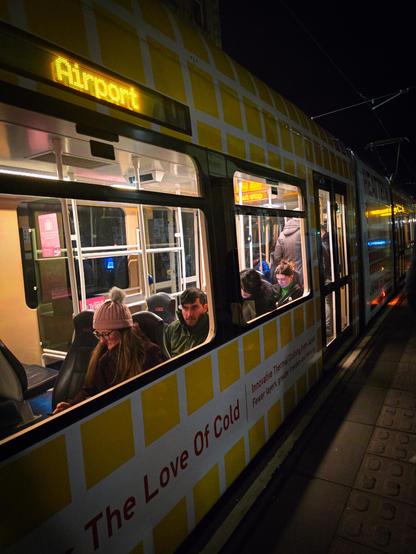
#Edinburgh #Trams #Ecologically #Responsible #Clean #Efficient #Public #Transport

#Mass #Car #Ownership began in the late 1960s.
It will end in the late 2030s.
Car ownership will simply be unaffordable for most people.
NOW is the time for countries to #Invest heavily in cheap, #Ecologically #Responsible, #Public #Transport, and to make cities #Walkable.

#Buses #Trams #Trains

Later will be too late.