 Daily Times - Latest Pakistan News, World, Business, Sports, Lifestyle [Unofficial]
KAUST scientists build nanoscale drug factory inside cells
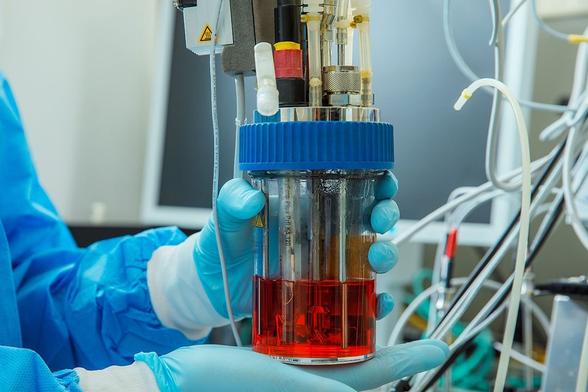
KAUST scientists build nanoscale drug factory inside cells
14 – Doctoral Candidates (MSCA CerebroMachinesTrain Doctoral Network)
CMT-DN
Applications are invited for 14 Doctoral Candidate (DC) positions across 9 European institutions.
See the full job description on jobRxiv: https://jobrxiv.org/job/cmt-dn-27778-14-doctoral-candidates-msca-cerebromachinestrain-doctoral-network/
#brainorganoids #cerebrovascular #drugdelivery #microfl...
https://jobrxiv.org/job/cmt-dn-27778-14-doctoral-candidates-msca-cerebromachinestrain-doctoral-network/?fsp_sid=11929
What looks like a simple bubble can become a delivery system. New materials store therapeutic gases and release them through controlled interfacial dynamics.
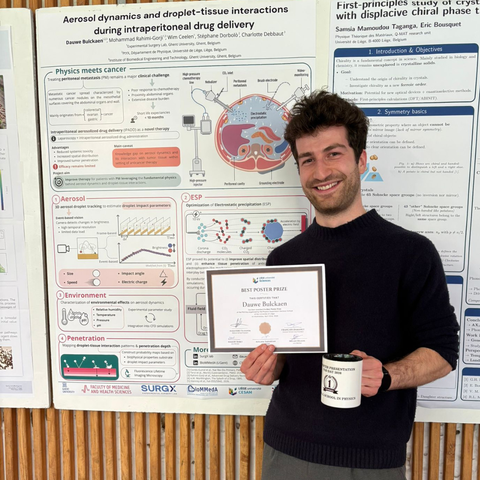
Congratulations to Dauwe Bulckaen, PhD student in #BiomedicalEngineering (UGent – @UniversitedeLiege), recipient of the Best Poster Prize:
Aerosol dynamics and droplet–tissue interactions during intraperitoneal drug delivery.
A recognition of clear scientific communication and impactful poster.
Optimizing particle shape for confined microchannels can boost transport efficiency.
Prolate or oblate spheroids outperform spheres under certain conditions, guiding designs in microfluidics and targeted delivery.
🔗 https://pubs.rsc.org/en/content/articlelanding/2026/sm/d6sm00038j
#Microfluidics #particledynamics #softmatter #Colloids #drugdelivery
Tiny droplets, big potential.
Yale scientists studied 5,000 breakups to understand how droplets split under different conditions.
A step forward for microfluidics applications.
🔗 https://phys.org/news/2026-03-precise-droplet.html
#Microfluidics #dropletphysics #softmatter #MicroReactors #drugdelivery
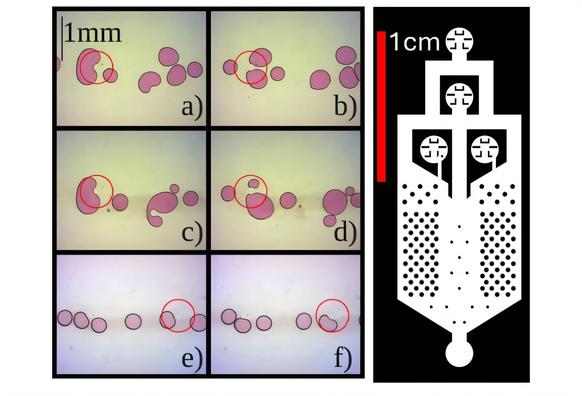
A humble droplet can be an immensely useful tool for a number of fields, from medicine to manufacturing. Controlling the size of the droplet, though, is an important—and very tricky—task. With unprecedented precision, a team of researchers determined how droplets break up into smaller ones, at what size, and under what conditions. The results of this study are published in Soft Matter.
Medikamente Zielsicher – Eine Elektrisch Gesteuerte Freisetzung
Vienna researchers developed a new way to control medicine release using electricity and click chemistry. This could make treatments more effective and reduce side effects.
#PrecisionMedicine, #DrugDelivery, #TUViennna, #MedicalResearch, #ClickChemistry
https://newsletter.tf/vienna-scientists-control-medicine-release-electricity/
This new technology allows doctors to control exactly when and where medicine is released, unlike older methods that sent medicine all over the body.
#PrecisionMedicine, #DrugDelivery, #TUViennna, #MedicalResearch, #ClickChemistry
https://newsletter.tf/vienna-scientists-control-medicine-release-electricity/
Iconovo and Lonza Enter LOI for Strategic Partnership
Iconovo and Lonza have signed a Letter of Intent to establish a long-term collaboration focused on inhalable biologics. This agreement aims to secure their respective positions in the biological medicines sector. Jan Vertommen, VP at Lonza, confirmed the company's interest in inhalable therapies and the intent to expand cooperation with Iconovo.
 jobRxiv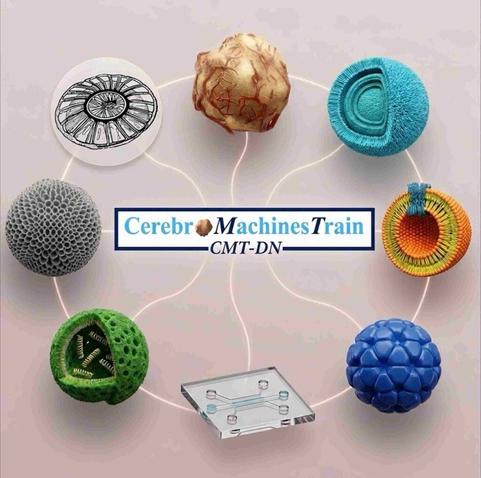
 LeidenForce
 NewsletterTF
 Biostock
 Industry Examiner