‪🚨 Save the date:
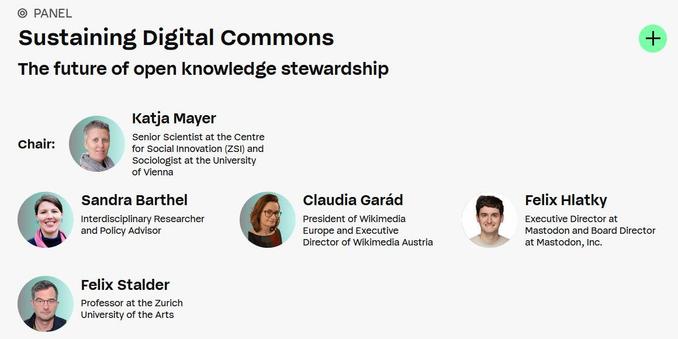
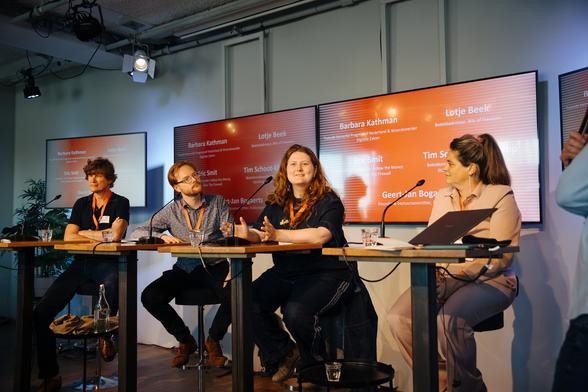
I will be speaking about @offene_netzwerke at Digital Humanism Conference on the 26th of June in #Vienna

@katjamat is moderating our #dighum26 panel on "Sustaining Digital Commons. The future of open knowledge stewardship" together with @mellifluousbox , Claudia Garád @WikimediaAT & @festal

Come and join us!
🔗 https://dighum.wien/

#digitalcommons #openknowledge #wikimedia #mastodon #fediverse #mastodon #stewardship #open #digitalhumanities

F-CP-02 incidents evidence stream reads Shipped.

Third continuous-posture lane lit up end-to-end across n8n, Temporal, LangGraph — with NIS2 Art. 23(4) tied at clause granularity: the three-milestone notification timeline (24h / 72h / 1-month) typed onto the schema.

3 of 7 slots Shipped against 3 distinct clauses: §21(2)(a), §21(2)(e), §23(4).

Field note #47: https://github.com/secops-ng/secops-ng-website/pull/58

#NIS2 #DigitalCommons

blog: field note #47 — F-CP-02 incidents evidence stream Shipped (NIS2 Art. 23(4) three-milestone mapping + ROADMAP flip) by petermat · Pull Request #58 · secops-ng/secops-ng-website

Field note #47 reads the F-CP-02 incidents evidence stream flipping Proposed → Shipped on ROADMAP — third continuous-posture lane lit up end-to-end, against NIS2 Article 23(4) at clause granularity...

GitHub

Field note #44 — F-CP-04 vulnerabilities evidence stream reads Shipped on ROADMAP.

Second continuous-posture lane lit up end-to-end across n8n + Temporal + LangGraph. NIS2 Article 21(2)(e) tied to the schema at clause granularity. Two of seven CP slots now Shipped against two distinct §21(2) clauses.

https://github.com/secops-ng/secops-ng-website/pull/55

#NIS2 #DigitalCommons #SecOps

blog: field note #44 — F-CP-04 vulnerabilities evidence stream Shipped (NIS2 Art.21(2)(e) mapping + ROADMAP flip) by petermat · Pull Request #55 · secops-ng/secops-ng-website

Forty-fourth field note from the SecOps-NG Digital Commons. Frames the F-CP-04 vulnerabilities evidence stream — the second continuous-posture lane in the catalogue — flipping In Progress → Shipped...

GitHub

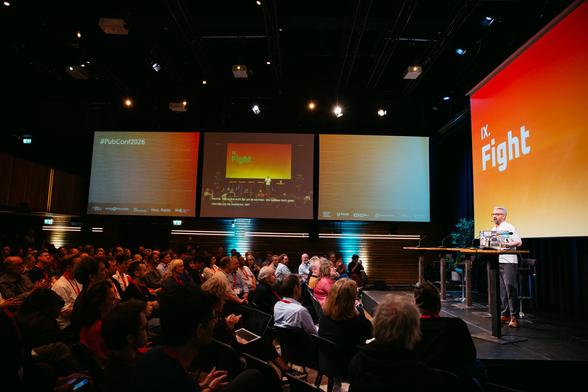
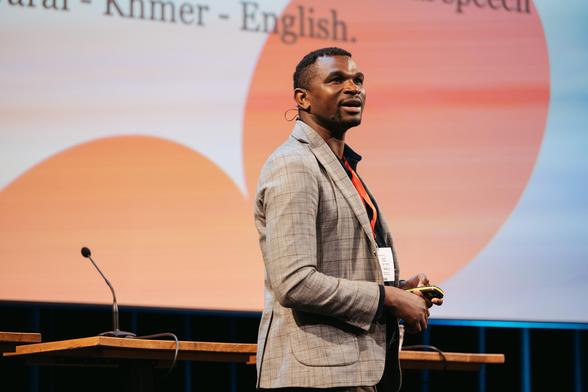
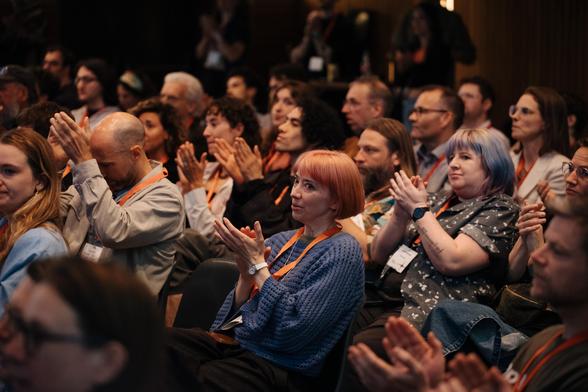
The sixth edition of the PublicSpaces Conference has come to an end! Over the course of three days, we focused on a democratic internet that works for us, with panels, keynote speeches, workshops, art and more!

Many thanks for all the participants for coming and for your enthusiasm.

We hope to see you again next year!
#PubConf2026 #Technology #Democracy #Opensocial #Digitalcommons #Internet

Photos: Lotte Dale & Raymond van Mil

F-CP-01 risk-analysis evidence stream reads Shipped on ROADMAP.

First continuous-posture evidence stream in the catalogue lit up end-to-end across all three reference compile targets — n8n, Temporal, LangGraph — on one shared helper. Typed schema, cross-target byte parity, per-target goldens, drift-detection hook at SKELETON, NIS2 Art. 21(2)(a) mapping at clause granularity.

Field note #41: https://github.com/secops-ng/secops-ng-website/pull/52

#DigitalCommons #NIS2

blog: field note #41 — F-CP-01 risk-analysis evidence stream Shipped (NIS2 Art.21(2)(a) mapping + ROADMAP flip) by petermat · Pull Request #52 · secops-ng/secops-ng-website

Field note #41 closes out the F-CP-01 lane: the first continuous-posture evidence stream in the catalogue reads Shipped on ROADMAP, with NIS2 Article 21(2)(a) tied to the schema at clause granulari...

GitHub

The meaning of open source relies on a weak foundation. The Open Source Initiative made a semantic capture of the concept of « open source » while never doing what they pretend to do: defining open source. This lack of definition work have certainly major impacts on other openness movements.

Open source is a key concept in digital technologies, but it remains an undefined concept.

According to this organization, the Open Source Definition governs its meaning today (https://opensource.org/osd), it's widely used as a basis. The Open Source Definition is a result of a quick and arbitrary decision made by 2 people in 1998, Eric Raymond and Bruce Perens, renaming the Debian Free Software Guidelines that was created by the latter in 1997 to select software to include in the Debian distribution.

What governs mainly the meaning of open source today is based on a document created before the "formalisation" of the concept serving a different purpose.

Then followed by communities, but it's not the result of a continuous work to consider what this emerging concept may means.

The use of « open source » is emerging beyond software to speak about resources where source files are provided (ex: « open source educational resources », https://doi.org/10.48550/arXiv.2107.14330)

Open source resources may become a key question for other openness movements, such as open science or open education.

These movements focus a lot on licensing, missing availability of source files (ex: PDF alone). With a lot of open resources, we are in situation where you have the right to modify without the ability to do so.

This is the case for "open access" articles that are shaping the research landscape. This situation limits the ability to modify and improve these elements. The scientific revolution being underway, probably moving towards more living documents, it creates a gap.

These movements start to consider increasingly the availability of source files, explained for example when producing OER, but could have been done way earlier with a stronger understanding of « open source ». The open science movement may shift slowly from open access resources to open source resources, exploring new research formats and practices.

The entire ability to collaborate in openness movements is probably undermined by a lack of understanding of « open source [resources] ».

By being convinced they defined open source, the OSI probably missed what it could mean. Other openness movements will potentially slowly appropriate the concept as it's meaningful for them leading to a major conceptual revolution. Weak signals, but it's already happening and acceptance may be strong.

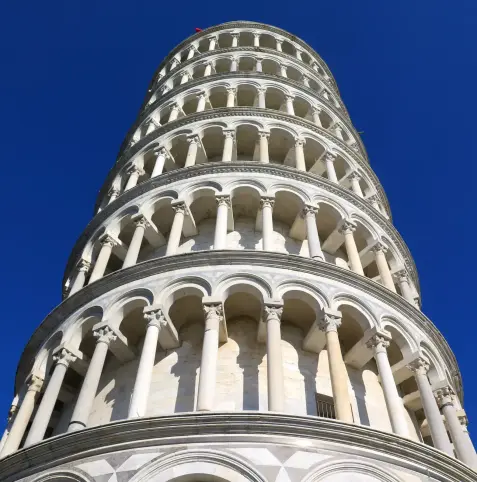
Image: Tower of Pisa

[Related to publication « Open Source 2.0 : From Open Source Software to Open Source Resources? », https://doi.org/10.5281/zenodo.20237079 »]

#openmodels #openscience #openeducation #opensoftware #opensource #openhardware #digitalcommons
For the #OMN, resistance to censorship is a social question as much as a technological one.

Think about how public visibility protects speech. People with status, networks, institutions, or audiences have more resilience when challenged or silenced. The question is: how do we level that power, so everyone gets a share of it?

Technology matters, but technology alone is never enough. The bigger issue is how we shape our communities, institutions, and social relations to distribute power rather than concentrate it.

A healthy #openweb isn't just censorship-resistant code. It's people building cultures of solidarity, mutual support, and public accountability that make censorship harder in the first place.

Tech is part of the answer. Society is the bigger part.

#4opens #Fediverse #digitalcommons #freespeech #OMN #KISS

We shouldn't be satisfied with open licences to release open resources. With the democratisation and institutionalisation of openness movements, but also because of the contemporary crisis, a copyright reform must be a target in our mind.

Open licenses are a complex system, weapons of the weak.

In 1976, the US copyright Act started to protect software with software industry increasingly closing their code source. In reaction in 80's, Richard Stallman started the free software movement while creating the first open licence (Emacs/GNU General Public License) to guarantee software freedom.

Near 1998, Lawrence Lessig fought at the Supreme Court against the Copyright Term Extension Act to counter this extension of over 70 years after author's death (!) to protect the public domain. They failed, and it led to the creation of the organization @Creative Commons and their licences in 2001.

Open licenses exist because the copyright framework does not provide a way to share outside complex licensing mechanisms. Licenses are bad; it's private law based on tools provided by private organisations.

« CC licenses are a patch, not a fix, for the problems of the copyright system. » Creative Commons organization on copyright reform: https://creativecommons.org/about/policy-advocacy-copyright-reform/reform/

A copyright reform would be about integrating a new human right, the right to share.

It's about transforming the public domain which is inconsistent worldwide, where death may be one of the best ways to contribute to it without providing necessarily modification rights.

In fifty years, the landscape changed and open models are becoming mainstream. The EU open source strategy just few days ago, the UNESCO recommendation on open science with a proliferation of national policies on that matter, the UNESCO recommendation on open education with also national policies emerging.

It will be time to flip the table, to change the rules and contribute to the collapse of the open licensing system in order to build the future. We are wasting a tremendous amount of energy because of this inefficient system.

A necessary evil today, but a proper education in licensing should provide a critical framework and not merely explain how it works.

The current copyright system is primarily designed to serve economic interests. In the face of crises, with the need to widely disseminate knowledge and solutions to problems, the entire philosophy behind the copyright system needs to be rethought.

It's a collective battle against powerful forces — this is an ideological conflict for the sake of society.

#openmodels #openscience #openeducation #openhardware #opensoftware #opensource #digitalcommons #creativecommons #copyrightReform

The #OpenSource Maintenance Instrument addresses a structural gap that has defined our work from the beginning: critical open source infrastructure creates public value, yet is often underfunded and institutionally fragile.

The strategy also calls for coordinating shared open #DigitalInfrastructure across Member States through the #DigitalCommons #EDIC. This work is already underway. The Sovereign Tech Agency has helped shape the #DCEDIC from day one... 2/

The EU #TechSovereigntyPackage marks a decisive moment for Europe’s digital policy and for #OpenSource and the #DigitalCommons in particular.

The most important signal for the #SovereignTechAgency: the focus on maintenance and long-term sustainability. Open source already contributes to Europe’s #DigitalSovereignty; the components critical for public services, industry, and #DigitalInfrastructure must be reliably maintained, resourced, and governed over time. 1/