Région #Bretagne call for #postdoc fellowships is now open.
I'm happy to support any application on benthic ecosystem functioning #bioturbation #foraminifera #meiofauna #biogeochemistry #planaroptodes ...
Feel free to reach out and check out the call to check for eligibility:
https://bienvenue.bretagne.bzh/funding-opportunities/bienvenueplus/
#marinejobs #postdocFellowships
Bienvenüe + · BIENVENÜE

BIENVENÜE
We are looking for a motivated student interested in the benthic ecosystem functioning for a PhD project on meiobenthos motion traits :
https://amethis.doctorat.org/amethis-client/prd/consulter/offre/1087
Please reach out if you have any questions
#phdPosition
#meiobenthos #foraminifera #meiofauna #bioturbation
Amethis

Are you looking for a #postdoc in marine sciences ?
Please check out IFREMER call:
https://en.ifremer.fr/Research-Technology/Scientific-strategy/Join-Ifremer-and-Shape-the-Future-of-Marine-Science
If you're interested in #biogeochemistry #symbiosis #deepsea #foraminifera or #bioturbation feel free to reach out. I'd be happy to support your application.
#PostdocFellowships
Join Ifremer and Shape the Future of Marine Science!

Ifremer offers funding for post-doctoral research positions.

Ifremer

Scientists unearth #stingrays' heavy lifting role in estuaries https://phys.org/news/2024-06-scientists-unearth-stingrays-heavy-role.html

Ray #bioturbation rates suggest they shape estuary processes: Molly Grew et al. https://zslpublications.onlinelibrary.wiley.com/doi/10.1002/rse2.411

"When feeding and sleeping, stingrays create pits that look like shallow divots in the ocean floor... this process helps with oxygen penetration in the sand, which many organisms rely on"

Scientists unearth stingrays' heavy lifting role in estuaries

A new study has uncovered the significant role stingrays play in shaping estuaries, revealing threatened stingrays in Brisbane Water may move more than 21,000 tonnes of sand per year.

Phys.org

Global activity of #seafloor #biodiversity mapped for the first time https://phys.org/news/2024-05-global-seafloor-biodiversity.html

Global distribution and environmental correlates of marine #bioturbation https://www.cell.com/current-biology/abstract/S0960-9822(24)00575-X

"like #worms enriching the soil in our garden, invertebrates are doing the same on the #seabed—improving conditions for #ocean life. Understanding how these processes operate gives #scientists insights into what is driving the health of #oceans and how they may respond to #ClimateChange."

Global activity of seafloor biodiversity mapped for the first time

A team of scientists from the U.S. and the U.K. has used artificial intelligence (AI) to map the activities of seafloor invertebrate animals, such as worms, clams and shrimps, across all the oceans of the world.

Phys.org

for different reasons, wild #boar are also beneficial to the #forest #ecosystem, contrary to popular misconceptions. Here's an excerpt from an article by Chantal Lyons, "Rooting for the truth: on wild boar" - Lyons writes, "I suppose there are two layers to this. In terms of their #ecological role, they’re unique. The niche they occupy, and the ecological functions they perform, there are no other animals among British #fauna that do the things they do. For example, their #rooting; #badgers engage in some rooting behaviour, resembling mini boars at times. However, they don’t penetrate the soil as deeply, and their rooting is not as extensive.

There’s a term for it called ​#bioturbation: the act of going into the soil, breaking it open, and mixing the different layers, which impacts the nutrients and the microbial activity in the #soil. This also involves exposing the #seed bank and creating space for #wildflowers to germinate. There’s evidence that bioturbation enhances the soil in a way that makes it easier for #trees, such as #oaks, to germinate and grow.

Related to the rooting behaviour, wild boar are particularly effective at dispersing seeds and spores. They go all over the place, carrying these organisms in their fur and hooves, and even in their digestive systems, subsequently depositing them through excretion. Additionally, their wallowing activities create mini wetlands, providing valuable ephemeral pools that benefit other wildlife."

https://www.rewildingbritain.org.uk/blog/wild-boar-interview-with-chantal-lyons

#Rewilding #UK #GreatBritain #Britain #Biodiversity
Rooting for the truth on wild boar with author Chantal Lyons

Explore wild boars' ecological role, cultural importance and their vital contribution to biodiversity in this Q&A with Chantal Lyons.

Rewilding Britain
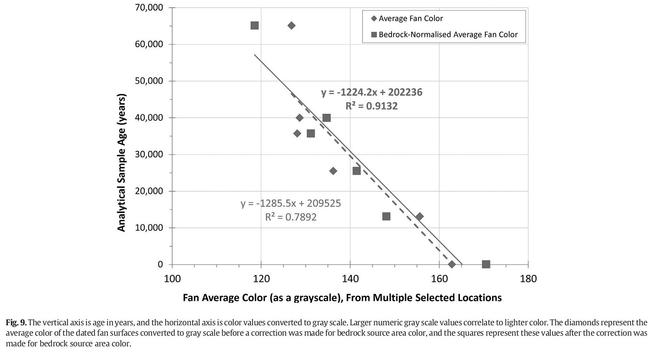
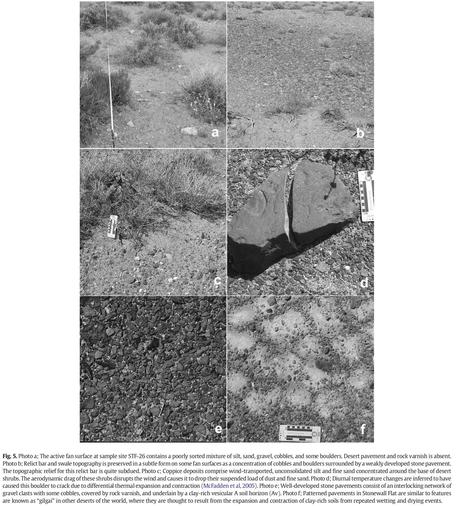
Alluvial Fan Surfaces And An Age-Related Stability For Cultural Resource Preservation: Nevada Test And Training Range, Nellis Air Force Base, Nevada, USA
--
https://doi.org/10.1016/j.jasrep.2015.05.002 <-- 2015 shared paper
--
[during a presentation recently, I was reminded of this 2015 paper’s content today (on which I was a co-author), back when papers wanted B&W images; I wonder how we might have proceeded now, with AI / Machine Learning…]
#GIS #spatial #mapping #Nevada #USA #military #NellisAFB #NAFB #NTTR #archaeology #spatialanalysis #spatiotemporal #corrleation #basinandrange #geomorphology #sediment #alluvialfans #sheetwash #eolian #erosion #deposition #bioturbation #varnish #desert #desertvarnish #age #dating #corrleation #airforce #indigeneous #sampling #cosmogenic #10Be #insitu #StonewallFlat #fans #water #hydrology #arid #imageanalysis #CulturalResource #Preservation

New mechanism for seafloor pockmarks proposed:

"...we conclude that harbor porpoises excavate sediments during benthic foraging. By grubbing the seabed, they cause sandeels to escape from the sediment and initiate the formation of seafloor pits...With the immense number of vertebrates in the ocean, such megafauna-driven macro-bioturbation reshapes the seafloor, modulates sediment transport, and ultimately impacts associated ecosystems on a global scale."

#Bioturbation

https://www.nature.com/articles/s43247-023-01102-y

Millions of seafloor pits, not pockmarks, induced by vertebrates in the North Sea - Communications Earth & Environment

Seafloor pits observed in the sediments off the German North Sea coast could have been excavated by porpoises or other vertebrates, rather than by hydrocarbon release as often assumed, according to analysis of high-resolution multibeam echosounder data.

Nature
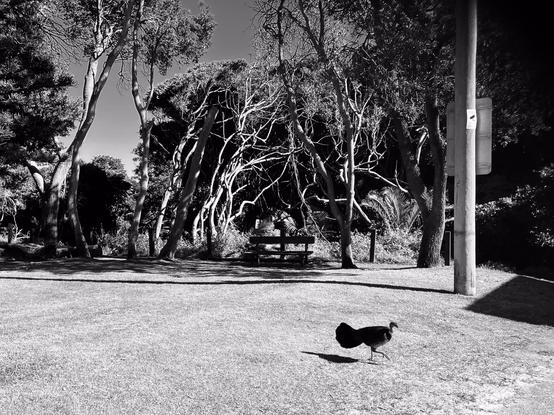
"Bioturbation, the disturbance of soil and litter by digging animals plays an important role for a variety of species and ecological processes in many ecosystems."
Mound-building behaviour of a keystone bioturbator alters rates of leaf litter decomposition and movement in urban reserves
>>
https://onlinelibrary.wiley.com/doi/10.1111/aec.13409
#conservation #soil #bioturbation #BrushTurkey #bandicoot #wildlife #EcosystemEngineering #Sawtell

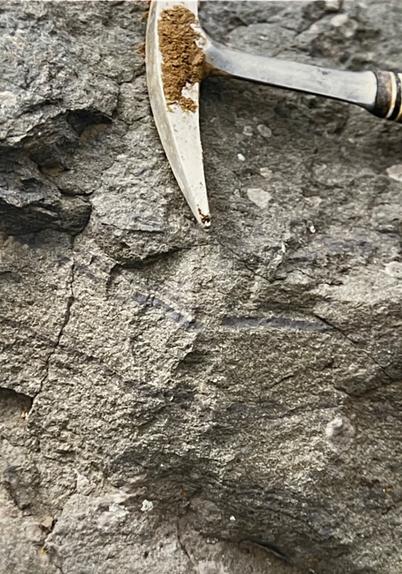
For #FossilFriday, an outcrop with thin sand laminations broken by #bioturbation by shallow sea sand dwellers.

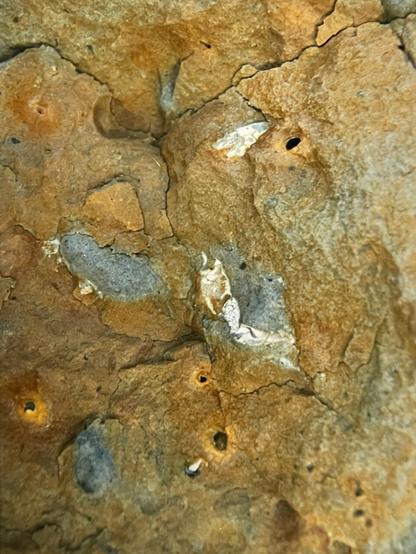
Second photo is from same set of outcrops and is a claw and body parts of a broken up Calianasa “Ghost Shrimp”, the relatives of which still inhabit the Sandy shores today.

#Fossil #Cretaceous #PaleoScenes #Oregon #Rocks #Geology #Coastal #Sediment