“The web of our life is of a mingled yarn”*…

In what does our personhood consist? From what/where does it come? João de Pina Cabral unpacks the seminal thinking of Lucien Lévy-Bruhl and the advances in cognitive science and developmental psychology that suggest that a person is not self-contained, but the outcome of a lifelong process of living with others…

It matters to understand what constitutes a person. After all, if there is one feature that distinguishes human society from other forms of sociality, it is that, at around one year of age, most human beings attain personhood: they learn to speak a language, develop object permanence – the understanding that things do not disappear when out of sight – and relate to others in consciously moral ways. Should all persons be accorded the same rights and duties by virtue of this condition? These are weighty questions that have occupied social scientists and philosophers since antiquity – particularly at moments such as the present, when war and imperial oppression once again raise their ugly heads.

Nevertheless, this question cannot be approached as a purely moral matter, for in order to determine what rights and duties may be attributed to persons, it is necessary to establish what persons are. This longstanding perplexity can now be addressed in increasingly sophisticated ways, following a century of sustained anthropological enquiry.

In September 1926, two of the most eminent anthropologists of the day met in person for the first time in New York. Both were Jewish and born in Europe, but one – Franz Boas – had become an American citizen and was a leading figure at Columbia University in New York, while the other – Lucien Lévy-Bruhl – was a professor in Paris. Both were highly learned, humanistically inclined and politically liberal; they respected one another, yet they did not seem to agree about the matter of the person.

Lévy-Bruhl had begun his career as a philosopher of ethics. His doctoral thesis focused on the legal concept of responsibility. He was struck by the fact that responsibility first arose between persons not as a law, but as an emotion – a deep-seated feeling. He argued that co-responsibility implies a bond between persons grounded less in reason than in the conditions of their emergence as persons. As children, individuals do not emerge out of nothing, but through deep engagement with prior persons – their caregivers. Thus, moral responsibility could not have arisen from adherence to norms or rules; rather, norms and rules emerged from the sense of responsibility that humans acquire as they become persons.

This led him to question how we become thinking beings. Do all humans, after all, think in the same way? He began reading the increasingly sophisticated ethnographic accounts emerging from Australia, Africa, Asia and South America, and was deeply influenced by an extended trip to China. He was an empirical realist, but also a personalist – that is, he accorded primacy to the person as such, refusing to subsume the individual into the group. In this respect, he was not persuaded by the arguments of the great sociologist Émile Durkheim concerning the exceptional status of the ‘sacred’ or the special powers of ‘collective consciousness’. Lévy-Bruhl soon arrived at a striking conclusion: in their everyday practices and especially in their ritual actions, the so-called ‘primitive’ peoples studied by ethnographers did not appear to conform to the norms of logic that had been regarded as universally valid since the time of Aristotle.

As a friend of his put it, Lévy-Bruhl discovered that such peoples are characterised by ‘a mystical mentality – full of the “supernatural in nature” and prelogic, of a different kind than ours’. Indeed, the basic principles of Aristotelian logic that continue to guide scientific thinking – underpinning modern technological development – seemed to be ignored by premodern peoples. Aristotle’s law of the excluded middle (p or not-p) did not appear to apply to their ‘mystical’ modes of thought, both because they tended to think in terms of concrete objects rather than abstractions, and because they exhibited what Lévy-Bruhl termed ‘participation’…

[de Pina Cabral traces the development of Lévy-Bruhl’s thought, starting with Plato’s concept of methexis; elaborates on Lévy-Bruhl’s ideas; and traces te advances in cognitive science and developmental psychology that support them…]

… the very experience of personhood – that is, the sense that I am myself – is not ‘individual’, since its emergence presupposes a prior condition of being-with others. The self arises from a sharing of being with others, from having been part of those who are close to us. One does not emerge as an addition to society, but rather as a partial separation from the participations that initially constituted one’s being.

As I become a person, I learn to relate to myself as an other; I transcend my immediate position in the world. Without this, I would not be able to speak a language, since the use of pronouns presupposes reflexive thought. Thus, as Lévy-Bruhl had already insisted in his notebooks, participation precedes the person. Intersubjectivity is not the meeting of already constituted subjects, but the ground from which subjectivity emerges. Participation, therefore, may be understood as the constitutive tension between the singular and the plural in the formation of the person in the world. In 1935, the great phenomenologist Edmund Husserl expressed this insight clearly in a letter to Lévy-Bruhl where he thanked him for his ideas on participation:

Saying ‘I’ and ‘we’, [persons] find themselves as members of families, associations, [socialities], as living ‘together’, exerting an influence on and suffering from their world – the world that has sense and reality for them, through their intentional life, their experiencing, thinking, [and] valuing.

In acting and being acted upon together in human company during the first year of life, children become ‘we’ at the same time as they become ‘I’, which means that persons are always, ambivalently, both ‘I’ and ‘we’. Participation and transcendence will remain sources of theoretical perplexity for as long as the ‘we’ is approached as a categorical matter – a question of ‘identity’ – rather than as the presence and activity of living persons in dynamic interaction with the world and with one another.

By contrast, once we accept that personhood is the outcome of a process – the encounter between the embodied capacities of human beings and the historically constituted world that surrounds them – participation loses its mystery. As Lévy-Bruhl put it in one of his final notes: ‘The impossibility for the individual to separate within himself what would be properly him and what he participates in in order to exist …’ Participation, therefore, is the ground upon which everyday social interaction is constituted. The ‘mystical’ (or transcendental) potential within each of us – that which animates the symbolic life of groups – is part of the very process through which each of us becomes ourselves…

How does one become a person? “We” before “I”: “To be is to participate,” from @aeon.co.

A (if not the) next question: how does personhood emerge when the formative interactions are increasingly mediated/attentuated by technology?

* Shakespeare, All’s Well That Ends Well, Act 4, Scene 3

###

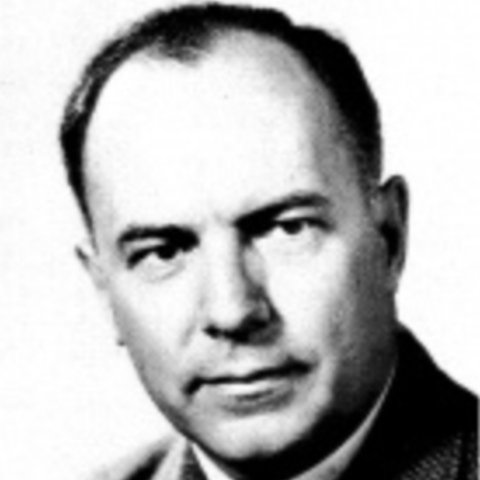
As we get together, we might send behaviorist birthday greetings to a man whose work focused on how one might train the “persons” who emerge: Kenneth Spence; he was born on this date in 1907. A psychologist, he worked to construct a comprehensive theory of behavior to encompass conditioning and other simple forms of learning and behavior modification.

Spence attempted to establish a precise, mathematical formulation to describe the acquisition of learned behavior, trying to measure simple learned behaviors (e.g., salivating in anticipation of eating). Much of his research focused on classically conditioned, easily measured, eye-blinking behavior in relation to anxiety and other factors.

One of the leading theorists of his time, Spence was the most cited psychologist in the 14 most influential psychology journals in the last six years of his life (1962 – 1967).  A Review of General Psychology survey, published in 2002, ranked Spence as the 62nd most cited psychologist of the 20th century.

source

#anthropology #behavior #Behaviorism #culture #FranzBoas #history #identity #KennethSpence #learning #LucienLévyBruhl #person #personhood #Psychology #Science

Panthenogenesis of Power – CHAPTER: BEHAVIORISM AS CONTROL

This chapter reinterprets behaviorism, traditionally seen as a simple psychological theory, as a foundational model of systemic coercion. By analyzing Pavlov and Skinner’s work, it reveals the mech…

Survivor Literacy
Mind vs. Manner: Why I Use Two Lenses to Read Domestic Violence—Not One

A Forensic Breakdown of Behaviorism vs. Psychology—and Why Neither Works Alone in Assessments or Court

Barbara Jo Ladd, PsyD
🇬🇧 Université de Bradford (bradford.ac.uk) : Michael Crowley & Malcolm Dando abordent les altérations multiples éphémères ou persistantes du système nerveux central impactant la conscience, la perception, la mémoire,… globalement, des comportements humains. #brain #weapons #ai #mind #neuroscience #perception #pharma #drugs #slavery #technologies #attention #movements #memory #tactics #learning #psychology #warfare #mental #artificial #cognition #threats #social #behaviorism #future [ https://www.theguardian.com/world/2025/nov/22/mind-altering-brain-weapons-no-longer-only-science-fiction-say-researchers ]
Mind-altering ‘brain weapons’ no longer only science fiction, say researchers

UK academics say latest chemicals are ‘wake-up call’ and urge global action to stop weaponisation of neuroscience

The Guardian
In 1938, B.F. Skinner began to advocate a radical scientific approach to studying and controlling animal behavior. #Poetry #Science #History #Behaviorism #Skinner (https://sharpgiving.com/Sharp/thebookofscience/items/p1938a.html)

Michael Lewis:
"American people elected the president who expressed the feeling of anger they were feeling (at the financial crisis)"

https://www.youtube.com/watch?v=r9UliCVsDcw
#trump #maga #behaviorism #psychology

‘Big Short’ Author: Trump & Musk Could Start a Global MELTDOWN | Aaron Bastani Meets Michael Lewis

YouTube
Gaming News (@[email protected])

Attached: 1 image Nintendo Life just posted: Pokémon Fan Loses "20 Years Worth Of Data" After Performing Switch 2 Transfer Condolences.A Pokémon fan has reportedly lost around "20 years worth of data" from the long-running game series after performing a system transfer from Switch to Switch 2.In the now-deleted Reddit post (thanks, IGN), user ThatOtaku26 states that their save file had Pokémon brought over from previous generations going all the way back to the GBA. ... https://www.nintendolife.com/news/2025/06/pokemon-fan-loses-20-years-worth-of-data-after-performing-switch-2-transfer #gamingNews

MetaCouncil

The Incredible Inconvenience of the Neurodivergent to the “Science of Learning”: You’ll Never See Us Through Your Complexity Controls

Neurodivergent people are treated as noise to be filtered out in most studies supporting the “science of learning”.

The thing is, research like this — serious scientific research into Autism — has historically treated the subjective experiences of its subjects as noise to be filtered out. They all think they can accurately read our emotions if they need to and so don’t need to ask us.

@mykola

We are discounted as outliers.

The varied and dynamic nature of learning environments – too many variables to isolate one out, the way norm-referencing is leveraged to discount outliers, and the lack of applicable research on neurodiverse students – necessitates a more flexible and holistic approach.

Beyond Pavlov’s Perfect Student | Human Restoration Project | Nick Covington Michael Weingarth

Our needs and ways of being are deemed too inconvenient to consider.

Which is why the Disability Industry, the SpEd/SEN leadership, and so many groups of frustrated middle-class parents do not, and may not ever understand people with disabilities. Those groups want us to be like them, or want to sell parents and schools “cures” that will make us be like them. They want me to read the way they do, and to read as fast and as “accurately” (which refers to grabbing plot points, nothing else) as they do. They want me to sit still and focus “on the task at hand” the way they do. They want me to move as they do. Think the way they do. Speak the way they do. Understand the world the way they do. All, of course, in pursuit of capitalist conformity and efficiency. (see Stimpunks for the best deep dives into these issues.)

The Incredible Inconvenience of the Neurodivergent. | by Ira David Socol | May, 2025 | Medium

Kids who are different are told every day, every hour, often every minute, by the most well-meaning people, that they are “born wrong” and require repair. And yes, accommodating our differences is inconvenient, it does create costs and work for those with power, but human diversity and neurodiversity, just like every kind of diversity, strengthens every ecosystem.

And believing that, and acting as if you believe it, is the only humane path.

The Incredible Inconvenience of the Neurodivergent. | by Ira David Socol | Age of Awareness | May, 2025 | Medium

So, the vast majority of studies just ignore us.

This review, which includes 90 studies conducted in 21 countries, reveals that the majority (92%) did not consider neurodiversity as a potential factor influencing cognitive load in online learning.

Neurodiversity and cognitive load in online learning: A systematic review with narrative synthesis – ScienceDirect

Our findings reveal a major research gap, as most studies overlook the distinct neurocognitive profiles of neurodivergent students. Notably, ADHD and ASD learners may exhibit unique cognitive load responses, suggesting that established cognitive load theories and instructional design guidelines might not uniformly be applicable in neurodiverse classrooms. Lastly, inconsistent methodologies in measuring cognitive load in online learning point to the need for more uniform research approaches. Future research should prioritise creating adaptive, inclusive online learning environments that respect and accommodate cognitive differences, which will not only benefit neurodivergent students but also enhance the online learning experience for all students.

Neurodiversity and cognitive load in online learning: A systematic review with narrative synthesis – ScienceDirect

It is past time to consider neurodiversity. Neuroscience without neurodiversity is often misguided and harmful.

The multimedia principle is the idea from multimedia theory that providing both words (usually spoken) accompanied by images supports learning by maximizing working memory. I’m not an expert by any means on this area of research, but It is quite interesting to think that widely accepted evidence-based principles on instructional design/learning like multimedia theory have not been confirmed for very common disability experiences such as dyslexia.

Overall, it really does seem that we are just beginning to consider and test basic “science of learning” principles with attention to neurodiversity. Indeed, as these authors note, “Research on multimedia learning typically assumes that learning outcomes are the result of the design of materials; however, an equally important but less studied consideration is the role individual differences play.”

I’ve always been a little uncomfortable with phrases like “how learning works,” when it is probably more accurate to say “how learning works for many people”

The influence of the multimedia and modality principles on the learning outcomes, satisfaction, and mental effort of college students with and without dyslexia | Annals of Dyslexia

The complexity control of behaviorism and the science of learning has utterly failed us.

Our students are not surgically modified dogs nor are they pigeons in operant conditioning chambers attempting to learn nonsense words. No child enters a classroom devoid of emotion, interest, or prior knowledge. Owing to the key distinctions between the controlled laboratory and the living classroom, there simply may be no connection between what is taught and what is learned; or between the educational intervention and the desired outcome. This is why, in pedagogies centered on instruction drawn from the narrow view of “The Science of Learning,” behaviorism is a complexity control meant to reduce the number of possible variables between instruction and assessment; to better reproduce the uncomplicated relationship between variables in the Skinner Box. We know from listening to students themselves that there has been a persistent crisis in schools, even before COVID: students ask fewer questions the longer they remain in school, engagement plummets alongside mental health, and absenteeism surges. Ultimately, any science of learning matters far less than its implementation. Maintaining fidelity to what happened in, say, Pavlov’s lab matters significantly less if the practices derived from his work contribute to stress, anxiety, and alienation in students.

If the perfect education system requires that you dehumanize the people in it — adults and kids alike — that’s not a system that “works” by most metrics worth caring about. The kids in our schools have to be viewed as more than behaviorist subjects to be acted upon. If we at least admit that much, then the business of teaching gets far more complicated. Suddenly there are a number of other factors we must tend to that matter a great deal. I’ll quote again from apparent “pseudoscientist” Mary Helen Immordino-Yang“As human beings, feeling alive means feeling alive in a body but also feeling alive in a society, in a culture; being loved, being part of a group, being accepted, and feeling purposeful.” These are self-evident truths that we are finally beginning to explore the neurobiological basis for in ways that shatter many previous models of the brain that still hold cultural sway.

Beyond Pavlov’s Perfect Student | Human Restoration Project | Nick Covington Michael Weingarth

Building Frankenstein children from reductionist, complexity-controlled parts is morally wrong and utterly wrong-headed. We must foreground complexity as the baseline for the sciences of learning to have any real meaning when applied to the rich complexity and diversity of human actuality.

Stimpunks do a great job reinforcing this through a Neurodiversity lens and are some of the few ND advocates on here who have wonderful language to capture the needed complexities for understanding each human, rather than categorizing humans into buckets.

Michael Weingarth – Post | LinkedIn

Further Reading

https://stimpunks.org/2025/05/23/professor-guy-claxton-on-the-science-of-learning/

https://stimpunks.org/2023/11/22/on-the-problems-with-science-of-reading/

https://stimpunks.org/philosophy/were-raising-whole-children-not-frankenstein-children/

https://stimpunks.org/2023/12/10/a-neurobiological-basis-for-progressive-education/

#behaviorism #education #neurodiversity #scienceOfLearning