 Journal of Plant Ecology
【Latest accepted article】
#SoilLegacies of #GenotypicDiversity reshape developmental timing and #Ontogenetic #Allometry
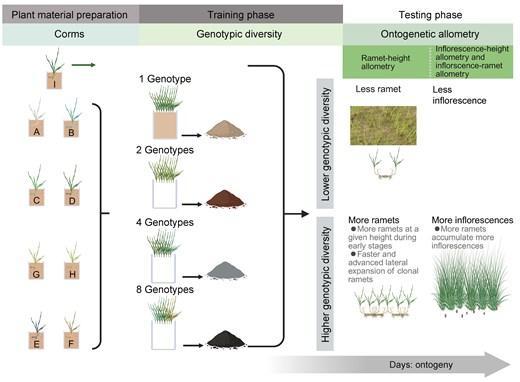
【Latest accepted article】
#SoilLegacies of #GenotypicDiversity reshape developmental timing and #Ontogenetic #Allometry
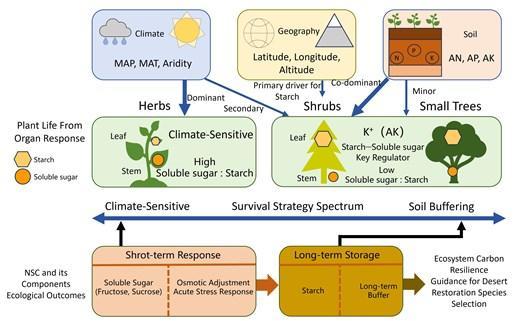
【🎉Latest accepted article】
#SpatialPatterns of #Non_structuralCarbohydrates in leaves and stems of #ChenopodioideaePlants along a desert transect in northwestern China
A biomechanical model of predator-prey pursuit indicates that prey do not frequently escape because they are more maneuverable, but because predators' reaction times give the prey an advantage.
Summary: https://phys.org/news/2026-05-bigger-faster-outfoxed-prey-predators.html
Original paper (not open access): https://www.pnas.org/doi/10.1073/pnas.2534397123
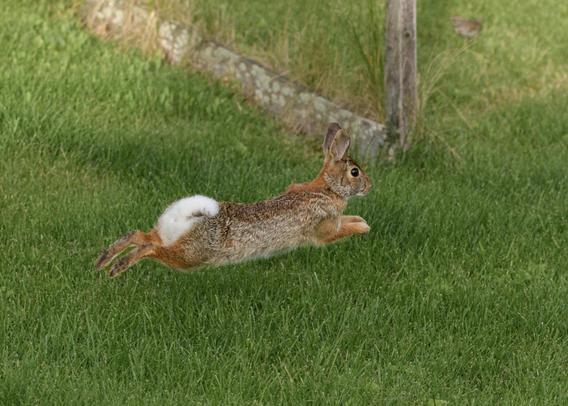
Predators are typically larger, faster, and more powerful than the animals they hunt. Yet in nature, most attacks fail. A new study published in the Proceedings of the National Academy of Sciences, by researchers from the University of Amsterdam Institute for Biodiversity and Ecosystem Dynamics (IBED), asks: why do prey get away so often? The key, the researchers found, lies in something the original model overlooked: reaction times.
Junjiong Shao et al. rigorously investigated how this #Allometry can predict the biomass responses to #GlobalWarming.
#FunctionalEquilibriumTheory | #LeafArea | #MetabolicScalingTheory | #PlantBiomass

Variation of tooth traits in ecologically specialized and sympatric morphs
Manuscript resubmitted To #evolutionarybiology
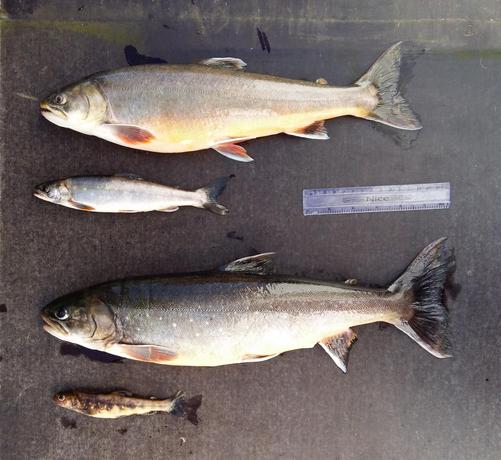
We examined variation in dental traits in four sympatric morphs of Arctic charr (Salvelinus alpinus) which differ in feeding specialisations, head and jaw bone morphology. We studied tooth numbers in six bones (dentary, maxilla, premaxilla, palatine, vomer and glossohyal)
Found cool things
Huifang Wu et al. explored the coordination of above- and below-ground trait relationships among #MangrovePlants in tropical China and compared it with those of #Non_mangrovesPlants.
#LeafWaterUseTraits | #LeafEconomicsTraits | #RootTraits | #LeafWaterStorageTissues | #Allometry

Now published... and on the #BiophysJ cover!
Cell Adhesion Pattern Shows Conserved #Scalings under #Geometrical Control
Studying the relationship between the size and the #anatomy and #physiology of #living #organisms has proven useful in deciphering what the key physical constraints are that apply to them. For instance, total adhesive pad area is found to #scale like organism mass over a wide variety of animal species, possibly to resist against body weight.
In this study, we apply this approach at the cell scale to ask how large-scale geometrical constraints affect the organisation of #adhesion patches and the size of #cellSubstrate contact at different stages of the #cellSpreading process. Indeed, #cells, like many animals, adhere to their substrate. For that, they use specific protein complexes, called #focalAdhesions, which form patches often situated at the cell periphery.
cc @JonFouchard

【💡High Cited 2020-2022 】
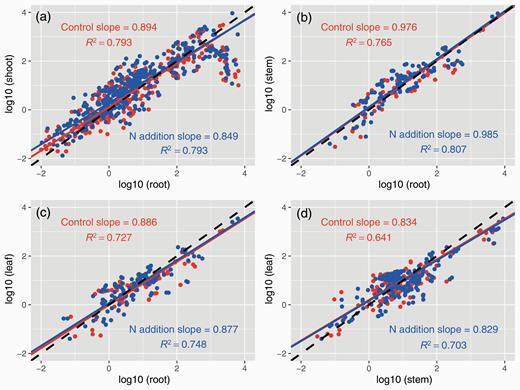
📖 #NitrogenAddition affects plant biomass allocation but not allometric relationships among different organs across the #Globe
#Meta-analysis | #Allometry | #BiomassFraction | #Ecosystem | #PlantFunctionalType
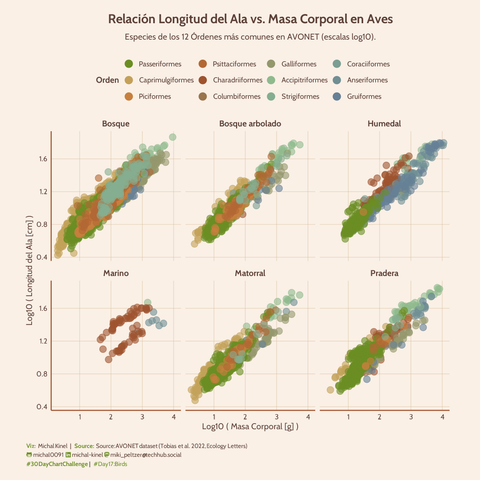
#30DayChartChallenge Día 17: Birds! 🐦 Hoy toca explorar relaciones en el mundo aviar con el increíble dataset AVONET. #RelationshipsWeek #Animals
Graficamos la Longitud del Ala vs. Masa Corporal (log-log) para >9500 especies. ¡Una relación clave en la biomecánica del vuelo! ✈️
Lo interesante:
1️⃣ Facetas por Hábitat: Vemos cómo la relación cambia (o no) entre Bosque, Marino, Pradera, etc. ¡La ecología importa!
2️⃣ Color por Orden: Los puntos coloreados muestran la diversidad taxonómica (12 órdenes principales). Passeriformes por todas partes!
Una visualización "complicada" (Día 15 😉) que revela la interacción entre tamaño, forma del ala, linaje evolutivo y ambiente.
🛠 #rstats #ggplot2 #readxl #data_table | Data: AVONET (Tobias et al. 2022) | Theme: #theme_week3_animals
📂 Código/Viz: https://t.ly/iEHPE
#Day17 #Birds #dataviz #DataVisualization #Ecology #Ornithology #Morphology #Allometry #AVONET #ggplot2 #RStats
 RDN
RDN Charrvein
 Jocelyn Etienne
 Alberto Perez-Posada
 Miki :rstats: