Katerina Symiakaki

10 Followers
24 Following
14 Posts

Aquatic ecologist doing a PhD on #mixotrophy
AQUACOSM child πŸ’§, cat mom 🐱

Interested in all things #rstats, #OpenScience, #plankton, #ImageAnalysis, #microscopy

This is big. No #embargoes. No #APCs.

"The #EU is ready to agree that immediate #OpenAccess to papers reporting publicly funded research should become the norm, w/o authors having to pay fees & that the bloc should support #nonprofit scholarly publishing models.

In a move that could send shockwaves through commercial scholarly #publishing, the positions are due to be adopted by the Council of the EU member state governments later this month."
https://www.researchprofessionalnews.com/rr-news-europe-infrastructure-2023-5-eu-ready-to-back-immediate-open-access-without-author-fees/

#Europe #RightsRetention

EU ready to back immediate open access without author fees - Research Professional News

Provisionally agreed position also expresses support for non-profit publishing models

Research Professional News

Now available on the Leibniz #PostDocs blog:

"Updates on the proposed #WissZeitVG reform"

We provide essential information on this topic in English - for the international #ecr community - in Germany and beyond

https://leibniz-postdoc.de/updates-on-the-proposed-wisszeitvg-reform/

#IchBinHanna
#IchbinReyhan
#ProfsfuerHanna
#AcademicMastodon
#phdchat

Updates on the proposed WissZeitVG reform – Leibniz PostDoc Network

Highly important paper about projected changes in marine biodiversity under different climate scenarios. Based on information on >33000 species and scenarios for 7 environmental factors, Doro Hodapp and colleagues show that we need to expect massive turnover characterized by reductions in suitable habitat size and separation into smaller sub-areas.

https://onlinelibrary.wiley.com/doi/10.1111/gcb.16612

#Biodiversity #RangeShift #Scenarios #HIFMB #ClimateChange #HIFMB
@awi @geomar_en

This is interesting and might be relevant for bloom-ending processes in #phytoplankton. Roseobacter can coexist with Emiliania huxleyi (and important bloom forming coccolithophore important to carbon cycling), providing vitamins for ready supplies of sugar and amino acids. However when an algal cell is dying they bacteria can collect additional compounds and leave in search other other hosts. #algae #oceanography

https://phys.org/news/2023-01-friend-foe-bacteria-algal-hosts.amp

'Friend or foe' bacteria kill their algal hosts when coexisting is no longer beneficial

Scientists have detailed a lifestyle switch that occurs in marine bacteria, in which they change from coexisting with algae hosts in a mutually beneficial interaction to suddenly killing them. The results are published today in eLife.

Phys.org

"Selecting specific wavelengths for ornamental lighting reduces the attraction of insects while maintaining adequate illumination of monuments for aesthetic purposes, resulting in a lower environmental impact on nocturnal insects."

MΓ©ndez et al (2022) Attraction of Insects to Ornamental Lighting Used on Cultural Heritage Buildings: A Case Study in an Urban Area

https://www.mdpi.com/2075-4450/13/12/1153

#insects #lightpollution #openaccess

Attraction of Insects to Ornamental Lighting Used on Cultural Heritage Buildings: A Case Study in an Urban Area

Artificial light at night (ALAN) reduces insect populations by altering their movements, foraging, reproduction, and predation. Although ALAN is mainly associated with streetlights and road networks, the ornamental illumination of monuments is making an increasing (but not well-studied) contribution. We compared insect attraction to two different types of light sources: a metal halide lamp (a type currently used to illuminate monuments) and an environmentally sound prototype lamp (CromaLux) comprising a combination of green and amber LEDs. The experiment was performed within the pilot CromaLux project in Santiago de Compostela (NW Spain). The abundance and diversity of the insects captured between June and October 2021 in the areas surrounding both light sources and in an unlit area were compared. By limiting the light emitted to amber and green, the CromaLux lamps reduced the number and diversity of insects, morphospecies, and orders attracted to the light, with similar numbers captured as in the unilluminated area, while a greater diversity of insects was captured beside the metal halide lamp. This effect has been demonstrated for almost all insect orders trapped, especially in Diptera, Lepidoptera, Coleoptera, Hemiptera, and Hymenoptera. On the contrary, Psocoptera showed a similar attraction to the CromaLux and metal halide lamps, a phenomenon whose causes deserve further investigation. As expected, Diptera were the most diverse and abundant insects in all samples, but the abundance of Lepidoptera was unexpectedly low (4%), which is in line with the worldwide evidence of the progressive decline of populations of this group. The study findings provide evidence that selecting specific wavelengths for ornamental lighting reduces the attraction of insects while maintaining adequate illumination of monuments for aesthetic purposes, resulting in a lower environmental impact on nocturnal insects. This study provides reference data for developing principles of good practices leading to possible regulatory and legal solutions and the incorporation of specific measures for artificial lighting of monuments and urban structures.

MDPI

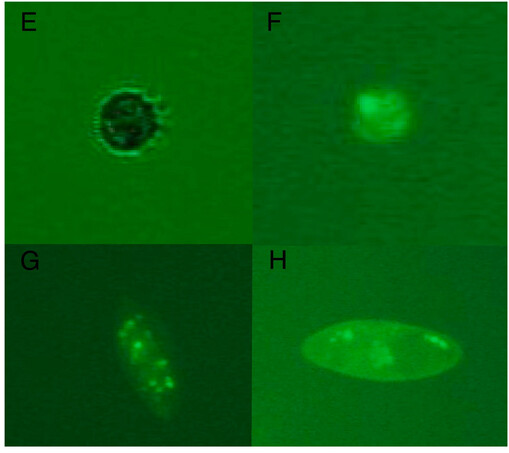
It takes a keen eye to spot a microbe grazing on some viruses! Biologist John DeLong & his colleagues tagged the viruses with a fluorescent glow to see if anything was eating them.

Sure enough, it turns out that several different types of microbes appear to be snacking on viruses.
https://www.pnas.org/doi/10.1073/pnas.2215000120

#life #biology #ecology

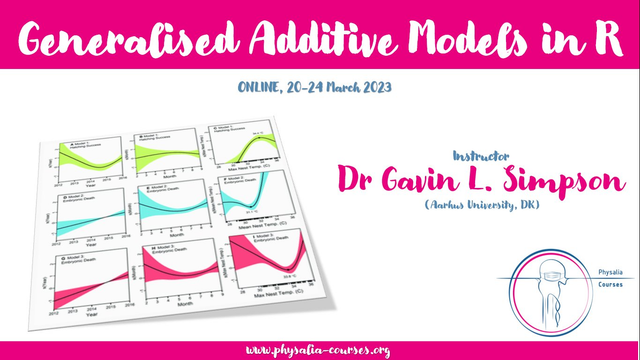
πŸ₯We are beyond excited to inform you that registrations are now open for the 3rd edition of the course Generalised Additive Models in R with @gavinsimpson

✌️We got amazing feedback from the attendees of the first 2 editions of this course!

πŸ”—https://physalia-courses.org/courses-workshops/gams-in-r/

#Rstats #GAMs

Generalised Additive Models in R; a data-driven approach to estimating regression models

20-24 January 2025 To foster international participation, this course will be held online

physalia-courses

This looks crazy. It would be great to try the same with some protist cells.

RT @[email protected]

Our latest work on #bioRxiv answers a simple question: can you see cellular substructures and ultrastructure without fluorescence, or even a πŸ”¬? - Yes, you can! With #UnclearingMicroscopy! @[email protected] @[email protected] @[email protected]
https://www.biorxiv.org/content/10.1101/2022.11.29.518361v1

πŸ¦πŸ”—: https://twitter.com/bewersdorflab/status/1598904200679034881

Dentist: So, do you floss?
Me: Do you use a unique password for every account?

πŸ”– Statistical code in a high-impact medical journal

A journal started asking authors to submit code with their manuscripts. They then analysed the next 314 papers accepted

87% denied using code, even when publishing substantial statistical analysis

10% used code but refused to share it with the journal

For the few that provided code, none scored even moderately on basic quality criteria

Assel & Vickers
https://www.ncbi.nlm.nih.gov/pmc/articles/PMC6705117/

#MedMastodon
#OpenScience
#ResearchWaste
#doi:10.7326/M17-2863

Statistical code for clinical research papers in a high-impact specialist medical journal

PubMed Central (PMC)