Enjoying that window ledge #catsofmastodon #Caturday


| Babraham Website | https://www.babraham.ac.uk/people/member/628 |
| ORCiD | https://orcid.org/0000-0001-5192-3727 |
📯 Thread alert: introducing MAbID, a new combinatorial single-cell profiling method. This was a team effort between PhD-candidate Silke Lochs and me, with the full support of the @[email protected] lab at @[email protected].
Read all about it: http://www.biorxiv.org/content/10.1101/2023.01.18.524584v1
🐦🔗: https://twitter.com/RobinWeide/status/1616528223923499008

I'm really excited to share our #preprint containing a big chunk of my #postdoc work in the Reik Lab at the Babraham Institute.
We wanted to understand how #DNAMethylation and oxidation affect the #enhancer landscape and #GeneExpression as #ESCs exit #pluripotency.
When does mRNA level not predict protein level? A new paper from our lab revisited the question of how well mRNA levels reflect protein variances across different tumors and normal tissues using CPTAC data.
https://journals.plos.org/ploscompbiol/article?id=10.1371/journal.pcbi.1010702

Author summary The abundance of mRNA is often measured as a surrogate variable of protein levels, but how well the mRNA level of different genes correlate with their protein across samples remains incompletely understood. Here we trained machine learning models over large RNA sequencing and mass spectrometry data from up to 8 cancer types in the CPTAC data sets to evaluate how well protein level variances across samples can be predicted from their transcripts. Despite voluminous data, up to one-third of genes shows poor mRNA-protein correlation suggesting their protein abundance is not primarily regulated from cognate transcripts. The inclusion of mRNA level information from protein interaction partners into the prediction models substantially improved prediction performance for a subset of genes, suggesting their protein abundance may be primarily regulated post-transcriptionally through protein-protein interactions. Notably, these proteins involve not only subunits of large multi-protein complexes such as the ribosome as previously suspected, but many proteins that form stable interactions with one or few other partners, including the propionyl-CoA carboxylase, mitochondrial calcium uniporter, calcineurin, and others. The results add to emerging evidence of independent regulation of protein levels from their cognate transcripts and suggest avenues to improve the interpretation of transcriptomics data.
I'm really quite excited to see this #published.
The Knowles lab in #Cambridge (led by Hongjia Zhu and Lianne Roode) developed a cool method of producing #cancer spheroids within microgels.
Co-cultures of cancer cells with #fibroblasts +/- #Notch signalling (one of my first loves when I was in the Narita Lab!) grow at different rates within these microgels - and we saw the same effect in vivo! A really cool tool, congrats to all involved 

re-#Introduction 👋
(as I moved to http://genomic.social 🙂)
I'm an Assistant Professor at Karolinska Institutet and a Group Leader at #SciLifeLab. 🇬🇧 in 🇸🇪
We do #CancerResearch - interested in how drugs kill cancer cells - the molecular basis of why sometimes they work and sometimes they don't #DrugResistance #ChemicalBiology
More here 👇
https://www.seanruddlab.com/
#ScienceTwitter has been a source of good for me during the last 4 (!) years of setting up a lab, #NewPI, so now I'm here
I’m looking for grad students for 2023. Projects related to cell-free placental DNA dynamics, (Epi)genomics, and placental dysfunction. Projects are computational. See website for details about lab, also pls RT (http://wilsonpregnancylab.com)
@IFPA_Official @SRIWomensHealth
@CEEHRC
#womeninscience
Women scientists maybe you thought were men
Maud Menten (Michaelis–Menten equation)
Yvonne Barr (Epstein-Barr virus)
Marilyn Kozak (Kozak consensus sequence)
Tsuneko Okazaki (Okazaki fragments - with her husband Reiji)
Helen Quinn (Peccei–Quinn theory)
Phyllis Nicolson (Crank–Nicolson method)
Hilde Mangold (Spemann-Mangold organizer)
Laura P. Bautz (Bautz–Morgan classification )
Katharine B. Blodgett (Langmuir–Blodgett (LB) film)
Martha Chase (Hershey–Chase experiments)
Happy #caturday, hoping it's as chilled as this...!
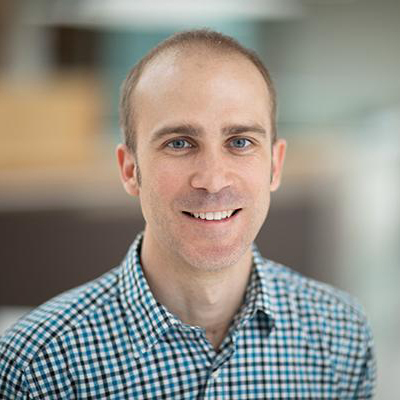 Rob Klose
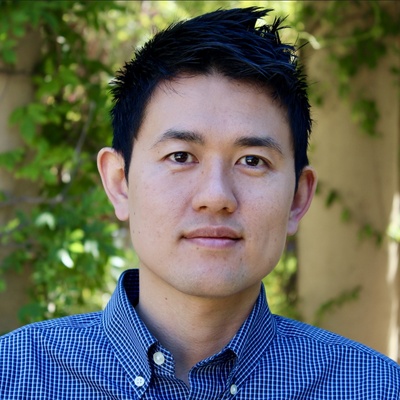 Edward Lau
 Sean Rudd
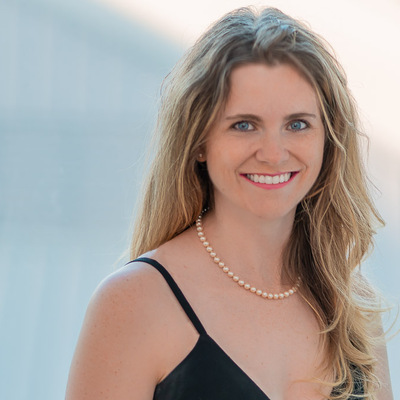 Samantha L Wilson, PhD 🧬 🤰 💻
 Alexis Verger
 the other day about being an