 Christopher E. Stith
 David Chartier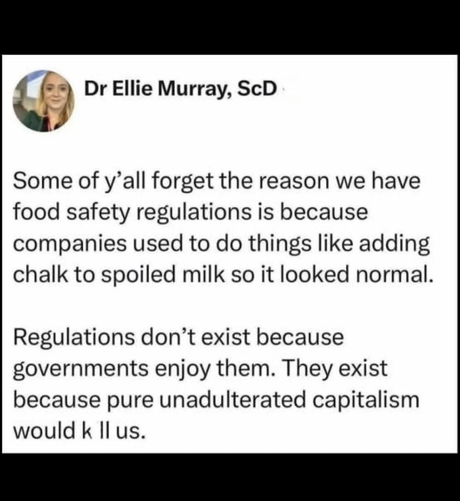
 ig 🏳️🌈
@chartier the curse of good government is that it is invisible, which leads people to believe that government does nothing.
 Christopher Kyba 🇨🇦🇪🇺
 Count Holdem
 Quasit
@chartier
The author Lord Dunsany wrote a very short story on that topic at the time:
THE FOOD OF DEATH
Death was sick. But they brought him bread that the modern bakers make, whitened with alum, and the tinned meats of Chicago, with a pinch of our modern substitute for salt. They carried him into the dining-room of a great hotel (in that close atmosphere Death breathed more freely), and there they gave him their cheap Indian tea. They brought him a bottle of wine that they called champagne. Death drank it up. They brought a newspaper and looked up the patent medicines; they gave him the foods that it recommended for invalids, and a little medicine as prescribed in the paper. They gave him some milk and borax, such as children drink in England.
Death arose ravening, strong, and strode again through the cities.
- "Fifty-One Tales" (1915), by Lord Dunsany
https://standardebooks.org/ebooks/lord-dunsany/fifty-one-tales
#Books #Bookstodon #LordDunsany #Dunsany #FreeEbooks #QuasitBookRecs
 dallo
dallo@dallo Missed that, thanks. Fixed.
 cultdev
@chartier the capitalism we have is killing us anyway, but it’s nice not to eat chalk macaroni
 Alison Wilder
@alisynthesis @chartier yeah. by breathing, even, which is much worse than ingesting it. but there was a time the plastic milk also had chalk in it, and rot bacteria 📈📈📈
 Zazzoo 🇨🇦
 Kevin Ashworth
@chartier
The number of people who are actively making a profit off of poisoning us is on the rise.
The number of people who are actively making a profit off of poisoning us is on the rise.
 lemgandi
 Trebach
 sortius
@chartier Always funny seeing Americans say that stuff.
Chlorine chicken, mystery beef, no testing regime, constant outbreaks of salmonella... yep, regulations are working great there
 Noodlemaz
@noodlemaz @chartier oh, yeh, I get that, it's just a bit rich for a people from a country with nearly no regulation to lecture the world about the importance of regulation.
It's the usual hegemonic play from Americans, at all levels. We live through this daily
 Ben S.
@HunterZ @noodlemaz @chartier because it's posted on the internet. You do understand that the internet crosses the whole globe?
Aaah hegemonic peoples, everyone else doesn't exist unless you let them
 [ˈJuɦo̞ ˈMæn̪t̪yˈs̠ɑ̝lo̞]
You're creating strawpeople needlessly
Edit: got blocked for the above
Edit2: also fun that a person complains both about US-centrism AND that a non-anglo might not write using the same phrases as they themselves would.
 WesDym
 Mouse Potato Does Stuff
@chartier or were never told about it to begin with?
 La Guiri
@chartier @DoomsdaysCW Oh, let me tell you an anecdote.
The European Union has been very slow in coordinating and unifying its consumer protections.
Spain joined the EEC in 1986.
But back in 1984 we had one of the strictest consumer protection laws; it took years for the EU to "reach us" in stuff like informative labels. We also had quirks like a prohibition of bulk buying (as in, unpackaged) to final consumers.
And it was because back in 1981, 330 people died and thousands got seriously ill from industrial-use oil sold as food-grade. To this day, people won't buy canola oil because the name sounds as poison. The case was a form of collective trauma.
 DoomsdaysCW
@laguiri @chartier @DoomsdaysCW
Generally speaking EU-standards are more lax than the state standards they replaced (as one size has to fit all). This is somewhat offset by the fact that the EU-standards are more ubiquitous than the previous spot-checks.
The state standards were usually lobbied so that the worst local practices were grandfathered in to legislation, while disallowing practices found in imports. (The people most affected by the standards are also the people with most money. )
 ✶Rayotron✶
Bread in the US and UK in the 18th and 19th centuries was often adulterated with plaster, alum, bone meal, chalk, clay, or sawdust.
Unadulterated capitalism = adulterated bread (& etc).
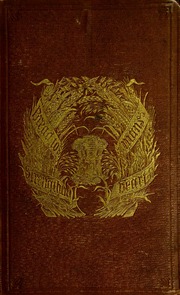
The English bread-book : for domestic use, adapted to families of every grade: containing the plainest and most minute instructions to the learner; practical receipts for many varieties of bread; with notices of the present system of adulteration, and its consequences; and of the improved baking processes and institutions established abroad : Acton, Eliza, 1799-1859 : Free Download, Borrow, and Streaming : Internet Archive
Spine title: Acton's bread book
 Morgan Fletcher
A SHAMEFUL SHAM. "Quakers" Used in the Coffee We Buy. THAT IS THEIR TRADE NAME. Lady Tells What She Knows About the Frauds. Even the Whole - Berry Browned Coffee Is Full of the Vilest Adulterants.
"If the what-is-it coffee adulterant is the same stuff that they in the house I have been working for I can tell you what it is." Mrs. Minnie Le Long smiled as she said these words to THE CALL reporter.
"Yes; tell us, please,' said THE CALL man. "Well, it is old bread, musty barley and dough made from the cheapest kind of flour, all browned to the color of coffee and then ground up and mixed with the coffee." "Are you quite sure about that?" "Sure?" Mrs. Long laughed. "Of course I am sure."

@wesdym 1892, second rate paper, first rate was Hearst's Examiner.
 retrimental
This is a lie, right?
Tell me this is a lie, goddammit.
I encourage you to google Sinclair's The Jungle. Powdered rock mixed with flour was also very popular in the 19th century.
 estelle
 Beggar Midas
@chartier BWAHAHAHAHA...Oh, dear sweet naive child. In some economic systems just COMPLAINING that they were being fed spoiled food measurably could kill them faster than the tainted goods themselves. You think it's capitalism forcing one quarter of north korea to starve to death? Capitalism that created the Holodomor?
Become a better student of history. Regulations in many nations were ENTIRELY because it's ruling class enjoyed them was standard faire across the world until the late 1800's.
Become a better student of history. Regulations in many nations were ENTIRELY because it's ruling class enjoyed them was standard faire across the world until the late 1800's.
 Joel Falcou, Ph. D
@Beggarmidas @chartier yeah sorry you have been endoctrinatef by the retarded us departement of education.
@joel_falcou @chartier ....If you only knew even a fraction of how badly off base you are....I didnt have academic opportunities. I didn't even have a real chance to graduate from high school. I had to get my GED at 17. Why? Because i was randomly singled out for special abuse during the satanicpanic by hysterical zealots staffing PUHSD.
Now i'm not a man given to wantonly hurt, but if you'd said such a thing to my face at any point after age 15 you'd shortly be finding yourself spitting teeth.
Now i'm not a man given to wantonly hurt, but if you'd said such a thing to my face at any point after age 15 you'd shortly be finding yourself spitting teeth.
@joel_falcou @chartier I am what I am DESPITE a public school system wanting me dead. I educated myself as I travelled the world on the survival skills I was forced to perfect just to survive those years. I always had 2-3 college textbooks in my duffel to read filling dead time between gigs.
I don't let SM OP-ED bug me. But you've unintentionally stumbled into a minefeild because of all the lost life opportunities I might have had if it were even remotely true. knowing that now, care to reframe?
I don't let SM OP-ED bug me. But you've unintentionally stumbled into a minefeild because of all the lost life opportunities I might have had if it were even remotely true. knowing that now, care to reframe?
@Beggarmidas @chartier I don't recall asking for your sob stories. Those tired argument about "but the soviet union" are tiring. Usa style capitalism is a piece of shit that is killing the planet. But keep being a boomer
Regulations became necessary due to so-called absentee landlords who were hard to lynch (for obvious reasons) if they overstepped social rules. And as is well-known, absentee landlords exist due to capitalism promoting them as the #1 way to add wealth. Unionbusting to keep labour down is also non-nonviolent.
Also: both your examples are of state capitalistic systems working under threat of war. Food poverty isn't limited presently to North Korea, as you well know.
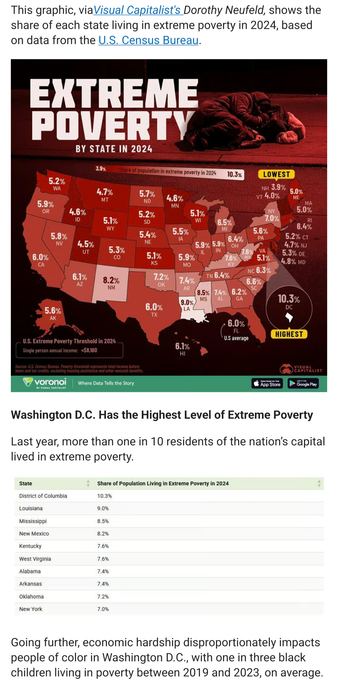
@Beggarmidas I don't live in North Korea or Ukraine, and neither does Dr Ellie Murray, ScD.
 decapitae
 🍉Karl☭Skalidin🌱
@chartier as does regulated capitalism, in the long run, by disturbing the climate. Or wars.
 Hugs4friends ♾🇺🇦 🇵🇸😷
@chartier Will kill people. IS killing people.
 babble encat
@chartier chalk is actually safe to eat and a good vegan source of calcium. Tums antacids are basically chalk
 Charlse the Glider
@babble_endanger @chartier The English used arsenic to adulterate their milk.
@PossumPartyGlider @babble_endanger @chartier
Also: the very common English practice of adding sand to flour to lower the price of bread.
And who can forget THE JUNGLE, the horrible US expose that unintentionally caused the creation of the Food and Drug Administration by revealing that labourers' severed members being mixed to minced meat wasn't a reason to not sell end-product.
 Roy -- the dull one
But chalk doesn't "unspoil" milk. Only changes its appearance.
 Urzl
Urzl Aatch
Aatch Rocket Ship Questioner
Reimagined Mouse Pointer (@[email protected])
The Invisible Hand is currently irradiating prawns https://6abc.com/post/fda-warns-public-not-eat-possibly-radioactive-shrimp-great-value-brand-sold-walmart-13-states/17586897/
 Erebus