 Neil Brown
Ah, the joy of text localisation.
In this context, Microsoft, it is a zip file, not a postcode file, even though I'm in the UK :)

Ah, the joy of text localisation.
In this context, Microsoft, it is a zip file, not a postcode file, even though I'm in the UK :)
Are you *sure*, it's not a list of postcodes?
UND and ZÄHLENWENN appear very high up in the list (corresponding to their position in English, AND and COUNTIF).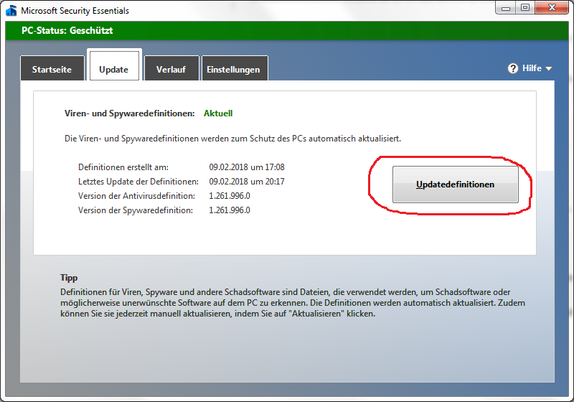
@nemobis @neil That must have been a very long time ago - we're still waiting for them to figure out plural forms. This article from 2014 is still relevant: https://akerbeltzalba.wordpress.com/2014/05/26/while-420km-below-the-iss-a-dani-is-sharpening-his-stone-axe/
That being said, they're the only proprietary software providers that support my language.
@gunchleoc Fun article; you presumably mean this sentence: «no Microsoft product I'm aware of can handle non-English type plurals properly in ANY other language».
Now, I suspect this might be a slight exaggeration. Microsoft participates in #CLDR and I bet they have at least *some* product with plural support. It's even mentioned in their docs for some languages:
https://learn.microsoft.com/en-us/globalization/localization/ministyleguides/mini-style-guide-russian#10-be-careful-with-number-placeholders
But unfortunately plural support is abysmal in most projects. Even in #Wikimedia. :[
https://translatewiki.net/wiki/Plural#Table_of_plural_formats_used_by_projects
@nemobis They do participate in the CLDR, but they don't have any support for it in VisualStudio or their lspkg format, so developers can't use any of it.
What we have gotten over the years is individual developers coming up with hacky solutions to solve the problem for their project. I have stopped counting the number or in-line plural form syntaxes they have come up with. More often than not, plural forms still aren't offered to us.
@gunchleoc Who uses #lspkg? I never heard of it before.
VisualStudio should support any existing standard but I don't expect or want Microsoft to come up with a standard for FLOSS projects.
For example, the #RubyOnRails community has settled on a rather good standard. (Mentioned in the [[Plural]] page above.)
https://guides.rubyonrails.org/i18n.html#pluralization
While e.g. #Mozilla has a long-standing tradition to come at #FOSDEM every other year with yet another proposal for a new #L10n "standard". :D

Rails Internationalization (I18n) APIThe Ruby I18n (shorthand for internationalization) gem which is shipped with Ruby on Rails (starting from Rails 2.2) provides an easy-to-use and extensible framework for translating your application to a single custom language other than English or for providing multi-language support in your application.The process of "internationalization" usually means to abstract all strings and other locale specific bits (such as date or currency formats) out of your application. The process of "localization" means to provide translations and localized formats for these bits.1So, in the process of internationalizing your Rails application you have to: Ensure you have support for i18n. Tell Rails where to find locale dictionaries. Tell Rails how to set, preserve, and switch locales. In the process of localizing your application you'll probably want to do the following three things: Replace or supplement Rails' default locale - e.g. date and time formats, month names, Active Record model names, etc. Abstract strings in your application into keyed dictionaries - e.g. flash messages, static text in your views, etc. Store the resulting dictionaries somewhere. This guide will walk you through the I18n API and contains a tutorial on how to internationalize a Rails application from the start.After reading this guide, you will know: How I18n works in Ruby on Rails How to correctly use I18n into a RESTful application in various ways How to use I18n to translate Active Record errors or Action Mailer E-mail subjects Some other tools to go further with the translation process of your application
 Ian K Tindale
 Alexander Shendi
 Allen but one of the good ones
 James Seward
 Uli Kusterer (Not a kitteh)
 isa
isa 


 Oriel Jutty

 GunChleoc
 Martin H.
 CF Bolz-Tereick
 BobOHara
 Nemo_bis 🌈
 Walter van Holst
 Dec [{(
 )}]
)}]

 hypebeast respawned

 NK30
NK30 

 Sören
Sören Derek 🌈
 Luna Macrosystems✡️🤖🏳️⚧️
 Joe ❌👑
 HedgiePT
 Revchips
 Anton Piatek
 Ángel Domínguez 🎹
 Zombie Byron Kilbourn
 sky "carbonated" piss
 Gavin
Gavin