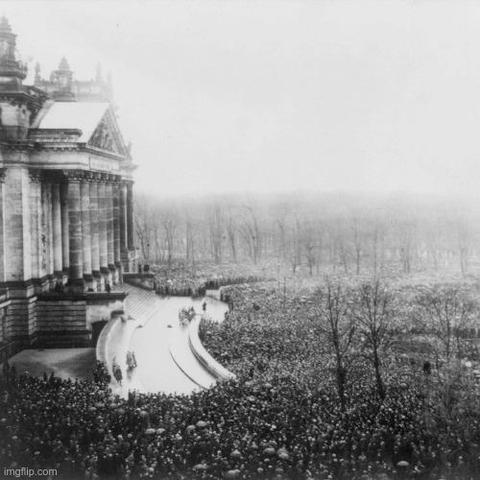
Today in Labor History November 9, 1918: Striking workers stormed the City Palace and the Rote Burg or "red fortress" in Berlin, freeing over 600 prisoners and declaring the buildings to be property of the people. Later that day, Karl Liebknecht, of the Spartacus League, stood on a truck and declared a Free Socialist Republic. This came on the heels of a General Strike, called the night before by the Revolutionary Stewards (union members who had opposed Germany’s participation in World War One), in which thousands of workers took to the streets, many of them armed. The soldiers and police who had been sent to suppress them, instead threw down their weapons and joined the revolution.
The revolution had begun in October, 1918 with the sailors’ mutiny in Kiel. Within a week, workers' and soldiers' councils controlled both the government and military institutions throughout the country. A Republic was declared on November 9, 1918. On November 10, workers formed the Council of the People’s Deputies, led by the two main socialist parties: the Social Democrats and the Independent Social Democrats. The Council promised to implement an eight-hour work day and to give women the vote. The left-wing factions of the revolution, like the Spartacists, also wanted to nationalize key industries, democratize the military, and replace the parliamentary government with one run by Workers’ Councils.
On January 1, 1919, Liebknecht and Rosa Luxemburg founded the Communist Party of Germany (KPD). Discontent over the direction the Social Democrats were going led many other leftist groups to join the KPD. In early January, they attempted to overthrow the Social Democrats in the Spartacist Uprising. The Social Democrats called on the Freikorps, a paramilitary composed of World War One veterans, many of whom were suffering from PTSD, who ultimately quashed the uprising. 200 people died in the fighting. The Freikorps then murdered Luxemburg and Liebknecht in an extrajudicial execution. Members of the Freikorps later supported the Nazis rise to power. Many of them went on to join the SS.
#workingclass #LaborHistory #rosaluxemburg #karlliebknecht #spartacus #socialism #communism #workerscouncils #revolution #nazis #fascism
#OTD Nov 6 1918-1919
No Kaiser ( #NoKings ) Revolt
https://stories.workingclasshistory.com/article/10656/hamburg-under-workers'-control
Account by Ikarus.
https://libcom.org/article/wilhelmshaven-revolt-1918-1919-ikarus
#directaction #frombelow #Hamburg #labourmovement #NoKaiser #organize #rankandfile #solidarity #Wilhelmshaven #workerscontrol #workerscouncils #workingclasshistory
Today in Labor History February 11, 1919: The Seattle General Strike ended after five days as a result of a sell-out compromise by AFL bureaucrats. The strike began in response to government sanctioned wage cuts. Both the AFL and the IWW participated. During the strike, the workers formed councils, which took over virtually all major city services, including food distribution and security. They also continued garbage collection. Laundry workers continued to handle hospital laundry. And firefighters remained on duty. They established a system of food distribution, which provided 30,000 meals each day. Any exemption to the work stoppage had to be ok’d by the General Strike Committee.
#workingclass #LaborHistory #seattle #generalstrike #IWW #americanfederationoflabor #workerscouncils
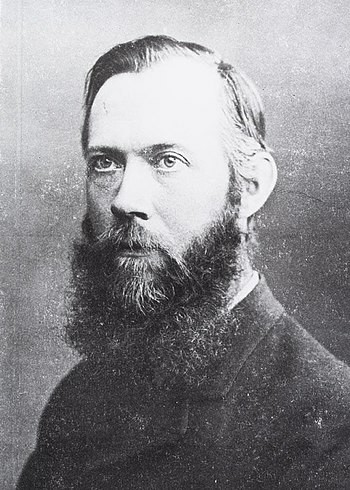
Today in Labor History January 2, 1873: Anton Pannekoek (1873-1960) was born on this date. He was a Dutch astronomer, mathematician and radical left-communist. Among other works, he published the pamphlet “Darwinism and Marxism,” 1916, which strongly attacked the social Darwinists, like Spencer, and their racist, eugenicist ideology. He also wrote the classic, “Workers Councils” and was one of the founders of the Council Communism movement, along with Otto Ruhle, of Germany. He was a sharp critic of Lenin and authoritarianism. Lenin attacked the Council Communists in his pamphlet, “Left Wing Communism: An Infantile Disorder.
#workingclass #LaborHistory #pannekoek #communism #councilcommunism #ottoruhle #workerscouncils #socialdarwinism #eugenics #science
We all know about #Rojava, and how important it is for #anarchism worldwide. Now more than ever, they need our support.
What is far less well-known is that there is also a strong anarchist movement in the rest of #Syria, that has played a critical role in the #SyrianRevolution through #organizing #WorkersCouncils all across the country. The #Assad #regime targeted members of these councils for forced disappearance and exile, and #HTS / #SNA will likely do the same. They, too, need our support.
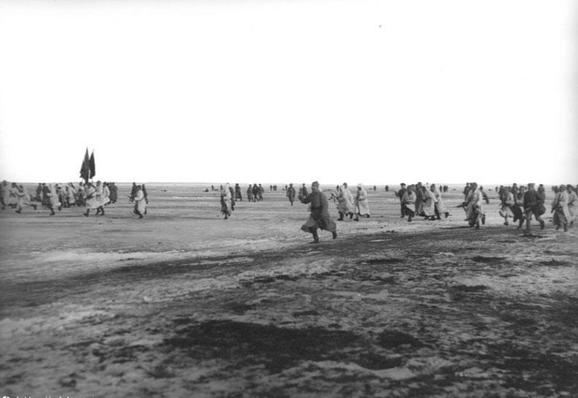
Leo Muellner, 'The Kronstadt rebellion' (1995)
More on the rebellion: https://en.wikipedia.org/wiki/Kronstadt_rebellion
#OTD #OTD1921, the revolutionaries/rebels passed the Petropavlovsk resolution: https://en.wikipedia.org/wiki/Kronstadt_rebellion#Petropavlovsk_resolution
#art #anarchism #socialism #The Left #CommunistLeft #left #communism #bolshevism #antibolshevism #Russian #revolution #soviet #kronstadt #workers #WorkersCouncils #proletarian #peasants #councils #painting
Today in Labor History February 11, 1919: The Seattle General Strike ended after five days as a result of a sell-out compromise by AFL bureaucrats. The strike began in response to government sanctioned wage cuts. Both the AFL and the IWW participated. During the strike, the workers formed councils, which took over virtually all major city services, including food distribution and security. They also continued garbage collection. Laundry workers continued to handle hospital laundry. And firefighters remained on duty. They established a system of food distribution, which provided 30,000 meals each day. Any exemption to the work stoppage had to be ok’d by the General Strike Committee.
#workingclass #LaborHistory #seattle #generalstrike #IWW #americanfederationoflabor #workerscouncils
Today in Labor History April 13, 1919: The military attempted a coup against the Bavarian Republic of the Workers Councils. Anarchists led a successful counter attack.
#WorkingClass #LaborHistory #anarchism #socialism #soviet #WorkersCouncils
Today in Labor History March 15, 1920: The Workers Council movement began a strike in Turin, Italy, which spread to other northern cities by April. Workers took over and occupied factories, running them under their own leadership and rules, bypassing and ignoring the bosses. The government sent warships and soldiers to quash the uprising. Anarchist Errico Malatesta and Antonio Gramsci played key roles in the occupation.
#WorkingClass #LaborHistory #turin #italy #WorkersCouncils #anarchsim #socialism #uprising