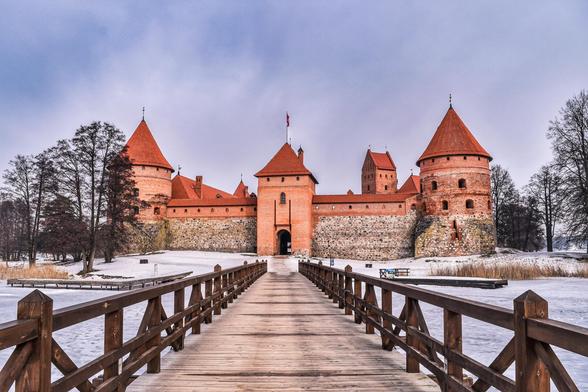
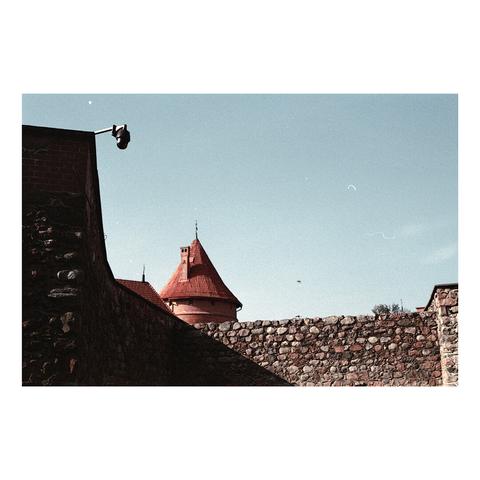
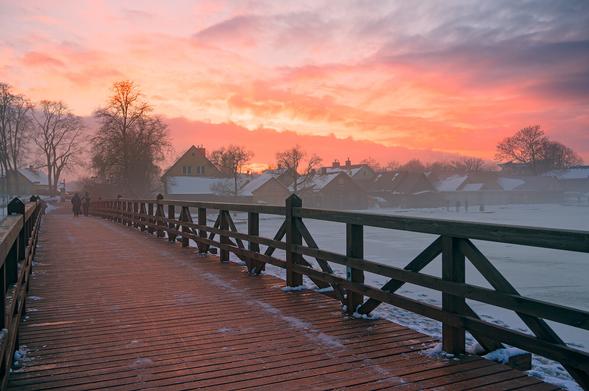
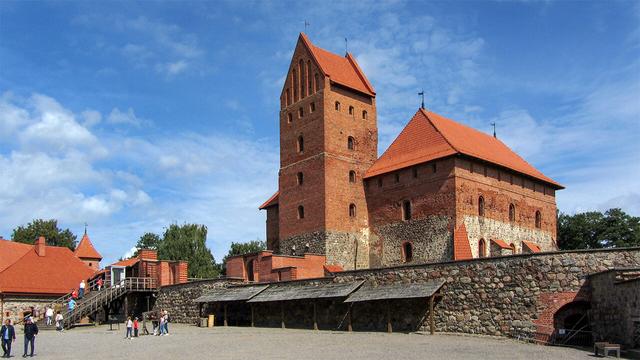
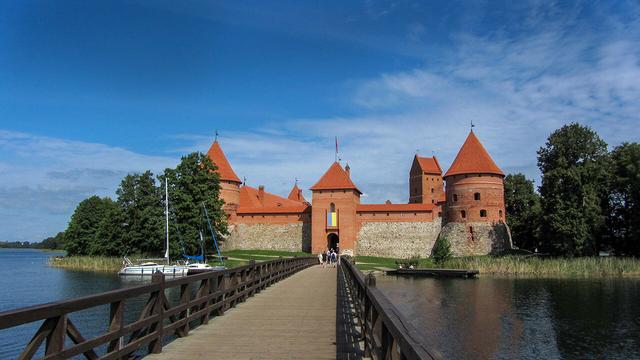
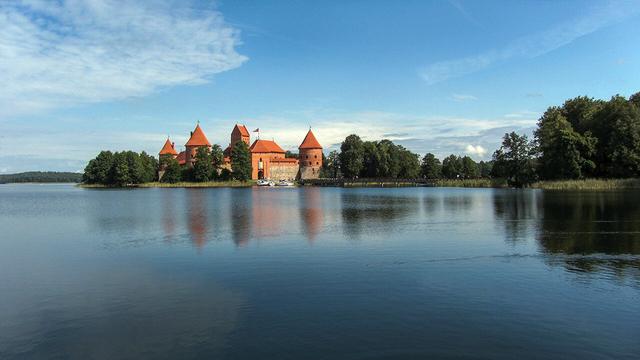
Trakai Island Castle, Lithuania
Part 3 of 3 - Fall, Reconstruction and the Present

In the 17th century, Trakai Castle, located in the then Grand Duchy of Lithuania (part of the Polish-Lithuanian Commonwealth from 1569), was severely damaged by numerous armed conflicts. In 1655, during the Polish-Russian War (1654–1667), when Russian and Cossack troops invaded Lithuanian and Polish lands, both the castle and the town of Trakai itself fell victim to plunder and destruction. Furthermore, between 1655 and 1660, during the so-called “Swedish Deluge,” the Swedes invaded large areas of the Polish-Lithuanian Commonwealth, including Lithuania, continuing their devastation of Trakai and the castle.

Despite reconstruction attempts in the second half of the 17th century, the fortress fell into ruin. By the 18th century, the structure was abandoned, and towns had developed around the castle. In the 19th century, the castle became an inspiration for Lithuanian Romanticism and symbolized national identity. The first archaeological and conservation work began in the late 19th century, and the first serious reconstruction attempt was undertaken between 1930 and 1935.

After World War II, between 1950 and 1984, the castle underwent a thorough reconstruction, restoring its appearance to that of the Grand Duchy of Lithuania. Since 1984, the Trakai History Museum has operated here, and the castle is one of Lithuania’s most important tourist attractions, symbolizing the region’s rich history and culture.

#troki #trakai #zamek #castle #pilis #litwa #lithuania #lietuva #historia #history #widok #view #landscape #architektura #architecture #photo #photography

Trakai Island Castle, Lithuania
Part 2 of 3 - The golden years and the change of function

After its completion, Trakai Castle became one of the most important political and military centers of the Grand Duchy of Lithuania. In 1410, after the Battle of Grunwald, the castle’s military significance gradually declined, as the defeat of the Teutonic Knights reduced the threat in the area.

From 1420 to 1430, the castle served as the residence of Duke Vytautas and the site of important diplomatic negotiations.

In 1506, the castle underwent changes under the rule of Sigismund the Old, who commissioned the reconstruction of the residential areas in the Renaissance style. Further modernizations took place in the mid-16th century under Sigismund Augustus, who also adapted the castle for prison purposes.

In the 16th and early 17th centuries, the castle served as a representative residence, although its military significance had diminished. It also served as a storage facility for important state documents and valuables.

#troki #trakai #zamek #castle #pilis #litwa #lithuania #lietuva #historia #history #widok #view #landscape #architektura #architecture #photo #photography
Trakai Island Castle, Lithuania
Part 1 of 3 - Beginnings and construction

The history of Trakai Castle begins in the 14th century, during a period of rapid expansion for the Grand Duchy of Lithuania. In 1323, Duke Gediminas moved the capital of Lithuania to Trakai, which initiated the construction of the first fortress. In 1337, during the reign of Duke Kęstutis, the first brick castle was built on a peninsula on Lake Galve, intended to defend against invasions by the Teutonic Order. Unfortunately, the castle was captured and destroyed by the Teutonic Knights in 1377. Following these events, in 1378, Kęstutis decided to build a new fortress on an island in Lake Galve. Construction began around 1382. After Kęstutis’s death, his son, Grand Duke Vytautas, continued the construction and expansion of the castle. The fortress was ultimately completed between 1404 and 1408, representing the Gothic architectural style. The castle served as a strategic defensive fortress and a princely residence, constituting an important defensive point against the Teutonic Knights.

#troki #trakai #zamek #castle #pilis #litwa #lithuania #lietuva #historia #history #widok #view #landscape #architektura #architecture #photo #photography
Trakai

Trakai, l'antica capitale lituana e il suo castello rosso che si specchia nel lago Gatve, una bella gita giornaliera da Vilnius.

Tag 8: Tra­kai – Vilnius
84km, 533hm

Von Tra­kai nach Vil­ni­us sind es auf dem kür­zes­ten Weg gera­de mal 30 km. Da wir aber erst um 15 Uhr in unser Quar­tier kön­nen (wich­tigs­tes Fea­ture: Wasch­ma­schi­ne!), müs­sen wir nach dem Früh­stück ein paar Stun­den ummi­biagn (für unse­re nicht-öster­­rei­chi­­schen Leser*innen: Zeit tot­schla­gen). Und wie geht das bes­ser als auf dem Fahr­rad? In einer wei­ten Schlei­fe geht es durchs Hügel­land und […]

Gudrun in Urlaub: Baltikum - Sommer 2025

More: https://le-chat-a-velo.at/2025/08/tag-8-trakai-vilnius/

#BezirkVilnius #Eurovelo11 #Intec #Lietuva #Litauen #Neris #OsteuropaRoute #Reiserad #Trakai #Traken #VilniausApskritis #Vilnius