Ref 4. Contrasting patterns of change in snowline altitude across five Himalayan catchments (2025). Orie Sasak et al

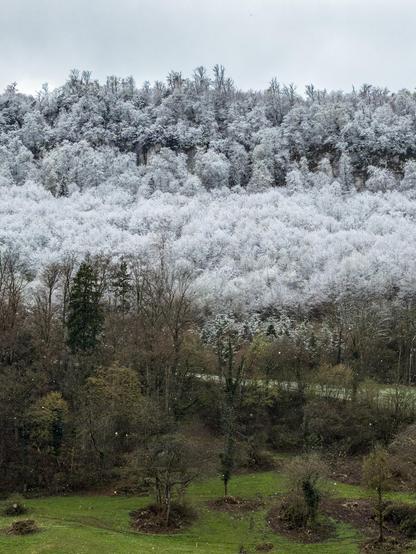
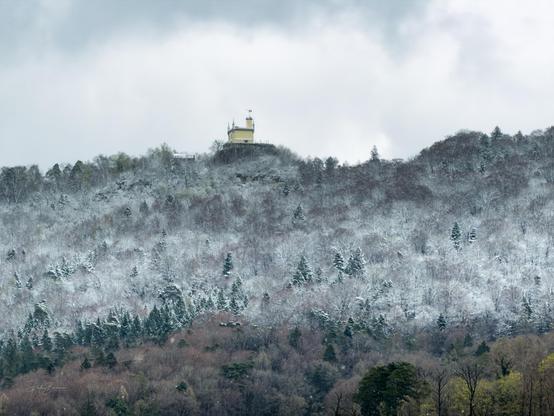
We found that long-term changes in SLA are primarily driven by shifts in the local climate, whereas seasonal variability may be influenced by geographic features in conjunction with climate.

#research #climate #geography #snowline #altitude #LocalClimate #GlobalWarming #RiverBasin #Mountains

🧵(5/6)

https://tc.copernicus.org/articles/19/5283/2025/

Contrasting patterns of change in snowline altitude across five Himalayan catchments

Abstract. Seasonal snowmelt in High Mountain Asia is an important source of river discharge. Therefore, observation of the spatiotemporal variations in snow cover at catchment scales using high-resolution satellites is essential for understanding changes in water supply from headwater catchments. In this study, we adapt an algorithm to automatically detect the snowline altitude (SLA) using the Google Earth Engine platform with available high-resolution multispectral satellite archives that can be readily applied for areas of interest. Here, we applied and evaluated the tool to five glacierized watersheds across the Himalayas to quantify the changes in seasonal and annual snow cover over the past 21 years and analyze climate reanalysis data to assess the meteorological factors influencing the SLA. Our findings revealed substantial variations in the SLA among sites in terms of seasonal patterns, decadal trends, and meteorological controls. We identify positive trends in SLA in Hidden Valley (+11.9 m yr−1), Langtang (+14.4 m yr−1), and Rolwaling (+8.2 m yr−1) in the Nepalese Himalayas but a negative trend in Satopanth (−15.6 m yr−1) in the western Indian Himalayas and no significant trend in Parlung in southeastern Tibet. We suggest that the increase in SLA in Nepal was caused by warmer temperatures during the monsoon season, whereas the decrease in SLA in India was driven by increased winter snowfall and reduced monsoon snowmelt. By integrating the outcomes of these analyses, we found that long-term changes in SLA are primarily driven by shifts in the local climate, whereas seasonal variability may be influenced by geographic features in conjunction with climate.

Ref 3. Cryosphere change in the warming Himalaya: Snow cover & snowline trends in Nepal’s Langtang Basin (1988-2024). D Pradhananga et al

Snow-covered area (SCA) and its migrating lower boundary, the snowline elevation (SLE), are vital indicators of climate change and water availability in mountain regions.

Snowline elevation rose by approximately +2.24 m/year (p = 0.088), indicating an upward shift of seasonal snowpack.
#nepal #glaciers #snowline
🧵(4/6)

https://www.nepjol.info/index.php/jtha/article/view/80875

Cryosphere change in the warming Himalaya: Snow cover and snowline trends in Nepal’s Langtang Basin (1988-2024) | Journal of Tourism and Himalayan Adventures

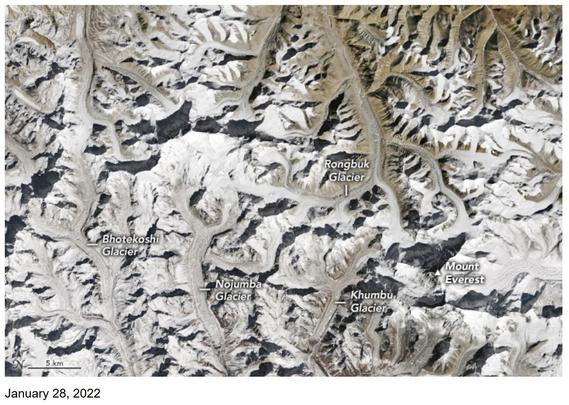
Himalayan Snow Lines on the Rise

More and more, mountain snow in the Mount Everest region is vanishing into thin air.

Snowline | Font Free Downloads

Snowline Font Free download. Click now to create a custom image with your own words from Snowline font.

Font Free Downloads

New Zealand's glaciers shrinking faster, scientist warns

"Overall, the #snowline has been rising and in the most recent years we're seeing that rise accelerate, so we're experiencing a continued trend of glacial ice loss," said principal scientist Andrew Lorrey in a statement.

https://phys.org/news/2024-03-zealand-glaciers-faster-scientist.html

#ClimateCrisis #Cryosphere #NewZealand #Glacier

New Zealand's glaciers shrinking faster, scientist warns

New Zealand's glaciers are shrinking as ice melts at an accelerating rate, a top government scientist warned Monday after concluding a monitoring expedition in the country's Southern Alps.

Phys.org
https://social.bund.de/@DLR/109551526810874272
@DLR
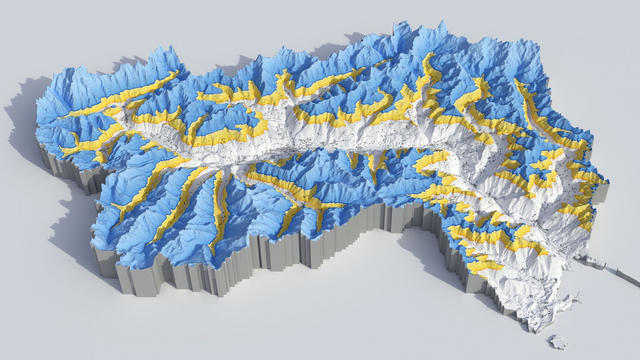
"The #snowline in the #Alps is shifting upwards - this is confirmed by 15,000 images from earth observation #satellites. ❄️ Less snow also means less #water for the rivers: #Northern Italy experienced one of the worst droughts in 70 years in 2022. The #Landsat data set has enabled the determination of the #snow line in the Alps since 1985.
The details: https://www.dlr.de/content/de/artikel/news"
DLR (@[email protected])

Attached: 1 image Die #Schneegrenze in den #Alpen verschiebt sich nach oben - das bestätigen 15.000 Aufnahmen von Erdbeobachtungs-#Satelliten. ❄️ Weniger Schnee bedeutet auch weniger #Wasser für die Flüsse: #Norditalien erlebte 2022 eine der schwersten Dürreperioden seit 70 Jahren. Der #Landsat Datensatz ermöglicht eine Ermittlung der #Schneegrenze im Alpenraum seit 1985. Die Details: https://www.dlr.de/content/de/artikel/news/2022/04/20221221_satellitenbilder-zeigen-schneemangel-in-den-italienischen-alpen.html

social.bund.de