https://linuxarverne.org/documentation-des-membres/231-discussion-autour-des-licences-libres-et-materiel-ouvert-au-lieu-dit-jeudi-21-mai
#creativecommons #openhardware #clermontferrand
Dinalab has published their first paper about the Mothbox project for insect monitoring, which is a project that is accessible to non-scientists. #OpenScience #OScH #OpenHardware#CitizenScience
https://besjournals.onlinelibrary.wiley.com/doi/full/10.1111/2041-210x.70327
I believe @hikinghack is the person to talk to if you want to know more.
Après quelques années de réflexions sur le sens de l'« open source » né d'une volonté d'expliquer ce concept, je viens de rédiger et publier mon premier article (preprint) de recherche citoyenne intitulé « Open Source 2.0 : From Open Source Software to Open Source Resources? ».
Article disponible sur Zenodo au DOI suivant: https://doi.org/10.5281/zenodo.20237079
Pas encore vraiment une œuvre d'art mais un moyen de synthétiser les réflexions pour ouvrir le débat — dans le milieu académique notamment — sur le sens de cette notion qui pourrait être autre chose que ce à quoi nous l'associons aujourd'hui.
Je développe principalement l'idée des « ressources open source », ces ressources numériques pour lesquelles sont fournis les fichiers sources pour en permettre la modification (ex: odt/docx/markdown/latex d'un pdf). Avec les ressources numériques, on a régulièrement cette configuration entre des fichiers source et une ressource finale dérivée de ceux-ci.
Une question majeure pour les ressources ouvertes où souvent on s'arrête aux licences ouvertes sans considération de ces éléments plus techniques; les droits fournis ne sont alors en réalité pas applicables.
J'invite les acteurs et actrices des différents mouvements d'ouverture à se saisir de ce sens nouveau et émergeant d'« open source » car il influence en profondeur notre gestion des ressources numériques. Les ressources open source pourraient être un moyen de développer les pratiques collaboratives dans ces différents domaines comme dans l'open science et l'open education.
Dans une logique de science ouverte et pour renforcer ce travail, je suis à la recherche d'évaluations (ouvertes) par les pairs: https://prereview.org/preprints/doi-10.5281-zenodo.20237079
Une idée d'article qui me démangeait depuis un moment, j'ai enfin passé ce cap la semaine dernière.
Ce n'est qu'une potentielle révolution conceptuelle sur une notion fondamentale de notre univers numérique. À suivre dans les prochaines années.
L'« open source » ne doit plus être un sujet logiciel ❤️🔥
#openmodels #opensource #openScience #openeducation #REL #opensoftware #openhardware #digitalcommons #citizenscience #scienceouverte #educationouverte #logicielsLibres #OER #opensourceresources
What is « open source »? Commonly associated with software whose source code is available under a licence following the « Open Source Definition » (OSD) of the Open Source Initiative (OSI), the definition of open source remains a major source of confusion and conflict. Within software communities the OSD is controversial, and with the democratisation of other openness movements (open science, open education, open hardware, etc.) there is an increasing question regarding open source beyond software for digital resources where source files are provided. The topic of « open source resources » can be essential to enable modifiability of openly available resources in these various domains, greatly enhancing the ability to collaborate. Based on the review of more than 200 documents related to debates and usages of the notion, conducted as independent citizen research, this paper argues for a paradigm shift in the very meaning of « open source ».Preprint v0.1:- PDF and source files available on Zenodo. Concept DOI: 10.5281/zenodo.20237079- Produced through Codeberg forge. - Open peer review available from PREreview. - Written with AI assistance — all ideas, arguments and conclusions remain the author's own. - Licence: Creative Commons Zero 1.0 Universal — Released into the public domain.
@remixtures I think the only sustainable solution to this conundrum is radically open hardware and firmware. And to create sufficient demand to make this a viable business, regulations will have to require it.
There are examples like Raptor Computing and Oxide, that are successfully selling open hardware, but they are, alas, also American.
@wikiyu
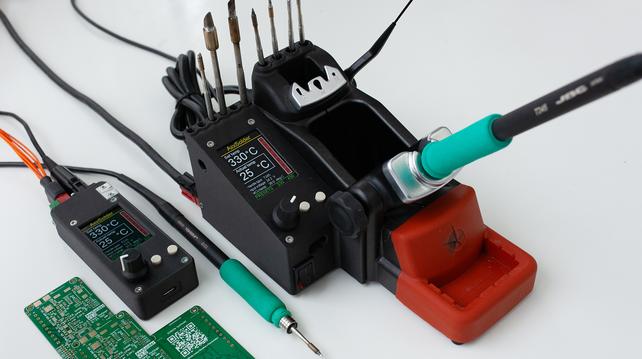
Rozważałem przez chwilę takiego malucha z bateryjką, ale uznałem, ze nie. Raz, że pewnie za rok bateria by nie działała, dwa, że jak już czegoś takiego używam to ostatnia rzecz o której chcę myśleć to oszczędzanie prądu w baterii, i trzy zaraz by się okazało, że polutować nogi spoko, ale jak jest gdzieś coś większego wylane to mocy brakuje. Być może nie, ale tego się obawiałem.
Patrzyłem też na #OpenHardware… ale to lutownica której nie umiałbym polutować :D
https://github.com/AxxAxx/AxxSolder
Twelve years of volunteer work. One #OpenHardware PowerPC desktop. A community that refused to quit.
I spoke with Roberto Innocenti of the Power Progress Community about the Powerboard Tyche: NXP T2080, schematics under CERN OHL 1.2, PCB finished March 2026.
Their first prototype booted on the reference kit. The custom board refused to boot for 18 months. They pivoted to desktop and kept going.
~€3,500 left to close the prototyping campaign.
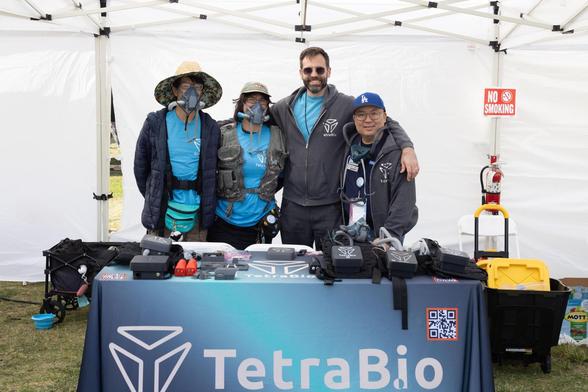
Yay, finally got the pic of us from the tetrab.io booth at LA Makerfaire.
We applied to exhibit at Open Sauce! Hope we'll be seeing you there.