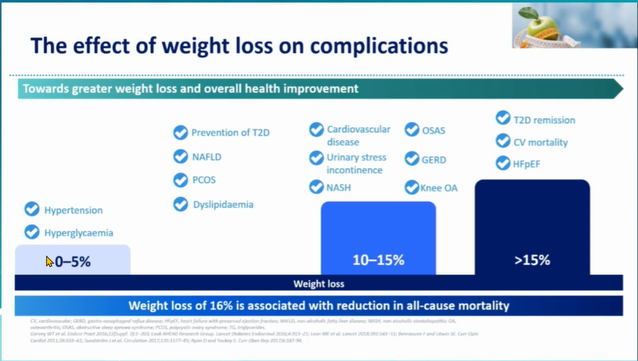
Übergewicht verursacht unzählige Folgeerkrankungen, so auch Typ-2-Diabetes.
Gute Nachricht: Abnehmen hilft – je früher, desto besser. So reichen bereits 5-10% Gewichtsabnahme, um Typ-2-Diabetes zu verhindern, aber wenn der Diabetes bereits da ist, müssen es schon mindestens 15% sein, um in eine Remission zu kommen.

Prof. McGowan, UK

#ATTD2025 #Diabetes #dedocVoice #dedoc° #Diabeteskonferenz #NothingAboutUsWithoutUs #Bluthochdruck #PCOS #NAFLD #Reflux #Schlafapnoe #Arthrose
@diabsite

Interpreting Common Cirrhosis Lab Tests

You are wracked with countless tests that you don’t fully understand

https://gayinthecle.com/2025/01/28/common-cirrhosis-tests/

#gay #lesbian #bisexual #transgender #queer #cle #lgbtq #gayinthecle #advice #healthy #cirrhosis #NAFLD #AFLD #liverdisease

Interpreting Common Cirrhosis Lab Tests

You are wracked with countless tests that you don’t fully understand

Gay in the CLE
Legume Diet Reduces Liver Disease Risk
Replacing meat or poultry with legumes can modestly lower non-alcoholic fatty liver disease risk.
Replacing 80 g/wk of red/processed meat with legumes was linked to modestly lower risk for NAFLD. No significant association found when legumes replaced fish. The study emphasizes that for NAFLD, which has no treatment, a diet substituting red & processed meat w/ legumes can reduce incidence by 3%-4%... https://www.medscape.co.uk/viewarticle/legumes-swap-lowers-risk-liver-disease-2025a10000d3 #nafld #nash #mash #medicine
Legumes Swap Lowers Risk for Liver Disease

Not only are beans good for your heart, turns out they help the liver as well.

Medscape UK
Non-alcoholic fatty liver disease is associated with overactive bladder in women and with benign prostate hyperplasia in men, "Beyond the Abstract," by Hakkı Uzun, MD

UroToday - GU OncToday brings coverage of the clinically relevant content needed to stay at the forefront of the dynamic field of GU oncology and urology.

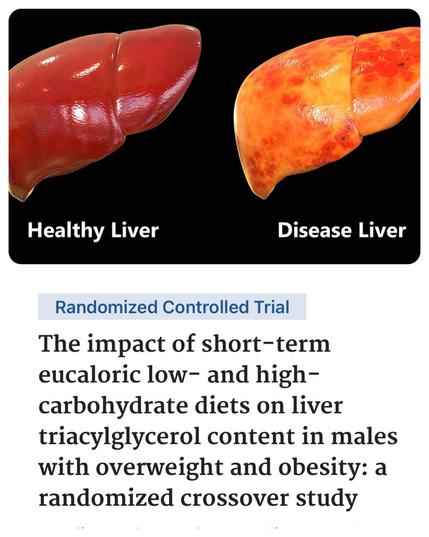
Discover how a ketogenic diet (LCHF) can improve liver health by reducing liver fat by 35.3% in just four days! This study, published in the American Journal of Clinical Nutrition, suggests that reducing carbs and increasing healthy fats might be more effective than conventional low-fat, high-carb diets. Learn more about the study and its implications for managing NAFLD. 

#LiverHealth #KetoScience #LowCarb #NAFLD

Happy to announce the launch of Health Union LLC's newest site, NASHDisease.net. I am on the first wave of Contributors & Moderators to talk about my experience with this disease firsthand. It is commonly known as Fatty Liver Disease. If you or a loved one have this diagnosis, I encourage you to join this community for information and camaraderie. #NASH #NAFLD #MASH #MAFLD #FattyLiver #FattyLiverDisease
For all my hepa friends, feel free to check this out & share it with patients & families!
Ellagic Acid May Represent Potential Food Intervention for Non-Alcoholic Fatty Liver Disease: Study | Sci.News

Ellagic acid is a polyphenolic, non-flavonoid compound naturally found in a variety of fruits, such as pomegranates, raspberries, strawberries, and grapes, and nuts, such as pistachios, pecans, walnuts, and acorns.

Sci.News: Breaking Science News

Risks of digestive diseases in #longCOVID: evidence from a population-based cohort study

https://t.ly/sa_q8

“we found even in people with mild #COVID19 symptoms who did not receive hospitalization treatment, the risks of GI dysfunction, #PUD, #GERD, & #NAFLD were evident, while the risks of severe liver disease, IBD, & biliopancreatic diseases were not”

@longcovid
#PwLC #LC #postcovid @covid19
#COVID #SARSCoV2 @novid #novid #CovidIsNotOver @auscovid19

Risks of digestive diseases in long COVID: evidence from a population-based cohort study - BMC Medicine

Background In the post-pandemic era, a wide range of COVID-19 sequelae is of growing health concern. However, the risks of digestive diseases in long COVID have not been comprehensively understood. To investigate the long-term risk of digestive diseases among COVID patients. Methods In this large-scale retrospective cohort study with up to 2.6 years follow-up (median follow-up: 0.7 years), the COVID-19 group (n = 112,311), the contemporary comparison group (n = 359,671) and the historical comparison group (n = 370,979) predated the COVID-19 outbreak were built using UK Biobank database. Each digestive outcome was defined as the diagnosis 30 days or more after the onset of COVID-19 infection or the index date. Hazard ratios (HRs) and corresponding 95% confidence intervals (CI) were computed utilizing the Cox regression models after inverse probability weighting. Results Compared with the contemporary comparison group, patients with previous COVID-19 infection had higher risks of digestive diseases, including gastrointestinal (GI) dysfunction (HR 1.38 (95% CI 1.26 to 1.51)); peptic ulcer disease (HR 1.23 (1.00 to 1.52)); gastroesophageal reflux disease (GERD) (HR 1.41 (1.30 to 1.53)); gallbladder disease (HR 1.21 (1.06 to 1.38)); severe liver disease (HR 1.35 (1.03 to 1.76)); non-alcoholic liver disease (HR 1.27 (1.09 to 1.47)); and pancreatic disease (HR 1.36 (1.11 to 1.66)). The risks of GERD were increased stepwise with the severity of the acute phase of COVID-19 infection. Even after 1-year follow-up, GERD (HR 1.64 (1.30 to 2.07)) and GI dysfunction (HR 1.35 (1.04 to 1.75)) continued to pose risks to COVID-19 patients. Compared to those with one SARS-CoV-2 infection, reinfected patients were at a higher risk of pancreatic diseases (HR 2.57 (1.23 to 5.38)). The results were consistent when the historical cohort was used as the comparison group. Conclusions Our study provides insights into the association between COVID-19 and the long-term risk of digestive system disorders. COVID-19 patients are at a higher risk of developing digestive diseases. The risks exhibited a stepwise escalation with the severity of COVID-19, were noted in cases of reinfection, and persisted even after 1-year follow-up. This highlights the need to understand the varying risks of digestive outcomes in COVID-19 patients over time, particularly those who experienced reinfection, and develop appropriate follow-up strategies.

BioMed Central
When #stigmatizing labels get in the way of talking about a serious chronic disease, it's time to choose words more carefully. This is why #MASLD has replaced #NAFLD.
https://conscienhealth.org/2023/12/is-this-liver-fatty-or-steatotic-does-it-matter/
Is This Liver Fatty or Steatotic? Does It Matter? - ConscienHealth

Fatty liver disease is out, steatotic liver disease is now in. New research brings insight into stigmatizing language of of liver disease.

ConscienHealth

What Do My Fibroscan Results Mean – Fatty Liver

Understand your FibroScan Scores For Fatty Liver. Is your fatty liver reversible? #fibroscan #fattyliver #liverhealth #fattylivertreatment #fattyliverdisease #NAFLD #NASH

https://fixfattyliver.com/what-does-my-fibroscan-scores-mean-fatty-liver/

What Do My Fibroscan Results Mean - Fatty Liver - Fatty Liver Treatment & Diet

Understand your FibroScan Scores For Fatty Liver: What do your LSM and CAP scores mean? Is your fatty liver reversible?

Fatty Liver Treatment & Diet