2026 Top Energy Technologies including #Solar, #Wind, #MicroHydroPower, #Storage, #WaterHeating, #SolarTracker, #MicroHomes, #BalconySolar. Energy Independence or Reduced Electricity Bills. 14mins www.youtube.com/watch?v=N0mW...

2026’s Top Energy Technologies...
2026’s Top Energy Technologies That Make Your Home Truly Independent — No More Bills

YouTube

To rise and shine for the daily grind, to pay for yet more doom and gloom, is an overbearing task. But I have hope!

I find joy outdoors and working creatively—productively—with my hands and with my mind; hard work and restful reflection do me well.

The idea of a homestead is tantalizing—but in this economy? Haha! What humor. A solar- or wind-powered microhome perhaps but not a house, and certainly never one of wood comparable to that of a home built before the 1920s!

I lack inspiration and I hope someone out there can help me to find it.

Do you know of newcomer-friendly forums or message boards for those interested in organizing and cooperating with one another to establish an atmosphere of intercommunal aid and the transferal of skills? (That’s how humans became the “dominant species” of Earth, after all!)

If I can start making plans for a truly independent future, I can look forward to my future.

Part 2. What am I looking for?

I don’t know. That’s why I’m asking for help!

Part 3. In Closing…

Please help.

My lifetime #goal is to found a #CommunityCenter network to:

I really hope y’all can help me #inspire myself and my community. Thx :’)

Stereophonic

Microhomes - Ressaca (Vídeo oficial)

YouTube

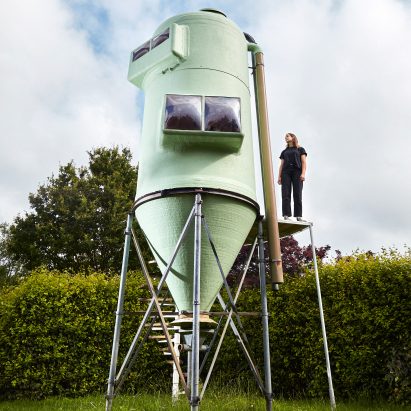
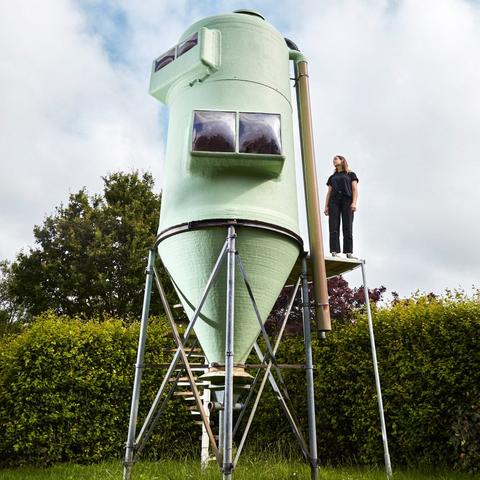
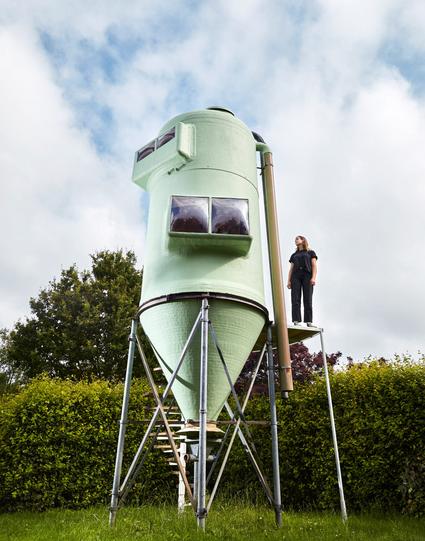
Stella van Beers converts grain silo into micro home

Design Academy Eindhoven graduate Stella van Beers has created a watchtower-style house inside a grain silo.

In a project called Silo Living, Van Beers transformed the disused agricultural structure into a two-level living space, which she believes could function as a short-term home.

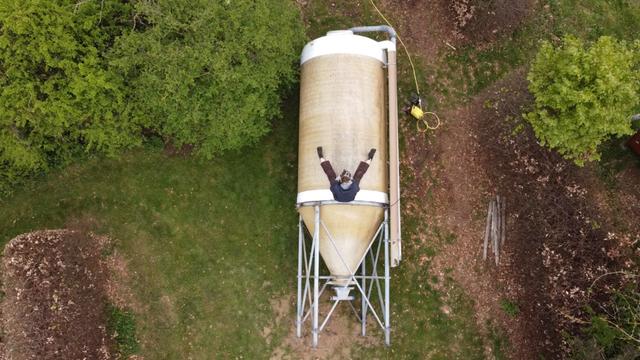
The project converts a seven-metre-high grain silo

While silos are not ideally proportioned for living, they offer some unique benefits. They can often be installed in rural locations without planning permission.

They are also readily available in the Netherlands as a country-wide reduction in livestock has resulted in lower demand for grain, leaving many of these structures redundant.

The designer had to add doors, windows and floors

Van Beers hopes to inspire new uses for these disused silos, which are otherwise costly to dispose of and impossible to recycle.

"You always see them in rural areas," she told Dezeen. "I always really wanted to go inside one, so thought it could be a nice place for a temporary stay."

Van Beers created two storeys inside the silo

To test her concept, the designer found a seven-metre-high silo for sale online. "I thought, if I want to do something with a silo then I have to just buy one and see what's possible," she said.

After explaining her plans to the owner, he let her take it away for free.

A spiral staircase and deck provides access

Originally there was no way for a person to enter the silo, so Van Beers started by changing that.

She installed a set of double doors, then added a spiral staircase and access deck.

[

Read:

Micro homes inside water pipes could take advantage of unused urban space

](https://www.dezeen.com/2018/03/16/movie-james-law-cybertecture-opod-tube-housing-micro-homes-water-pipes-video/)

To make the most of the space inside, she installed two floors, connected by a mini staircase and ladder.

The lower level is a living space, with a ledge that functions as a space to eat or work.

A mini staircase and ladder connects the levels inside

The mezzanine above is a sleep space, so is entirely taken up by a mattress.

Both storeys now have projecting windows and there's also a skylight that functions as a lookout point.

Windows were added to both floors

"A cylindrical house is not something you see very often, so it was a bit of a challenge," said Van Beers.

Most of the adaptations use standard components, so could be easily replicated on a variety of silos. The designer hopes to inspire silo owners to get creative.

The windows project out, creating some additional space

"There are a lot of things I would change if I made another," she said, "but I'm really happy with this as a first prototype. A few people have slept in it already."

"If you have a bigger silo, you could use it as a living space for a longe amount of time," she suggested.

A porthole in the top creates a lookout point.

Van Beers created the project for her bachelors degree at Design Academy Eindhoven. She presented it at the graduation show, which took place during Dutch Design Week in October.

Other projects on show included glass blown inside bread and "trauma-healing" garments.

The post Stella van Beers converts grain silo into micro home appeared first on Dezeen.

#residential #all #architecture #videos #netherlands #designacademyeindhoven #studentprojects #architecturevideos #microhomes #residentialconversions #graduates

Stella van Beers converts grain silo into micro home

Design Academy Eindhoven graduate Stella van Beers has created a watchtower-style home inside a grain silo.

Dezeen

Ten tiny houses that make the most of their compact plots

Stacked volumes and space-saving floor plans feature in this roundup of 10 tiny houses around the world, from an Australian mobile cabin on wheels to a micro home in Tokyo with a pair of funnelled roofs.

Top: photo is by Studio Edwards. Above: photo is by Kai Nakamura

House Tokyo, Japan, by Unemori Architects

Japanese studio Unemori Architects built this corrugated steel-clad house comprising several stacked boxes on a 26-square-metre plot of land in densely populated Tokyo.

"You have to be experimental and clever with regards to its utmost usage and we looked towards how diverse and extendable the space could be within the tiny plot," said the studio.

Find out more about House Tokyo ›

Photo is by Studio Edwards

Base Cabin, Australia, by Studio Edwards

Base Cabin is a geometric micro home that features a sleek rubber skin and is mobile thanks to a set of wheels on which it can roll.

Melbourne-based Studio Edwards took cues from the recognisable A-frame hut for the cabin's design, which was created in this shape for its structural efficiency as well as to give a neat and compact appearance.

Find out more about Base Cabin ›

Photo is by Andrés Villota

Casa Parásito, Ecuador, by El Sindicato

With a floor plan of only 12 square metres, Casa Parásito is a tiny parasitic home that sits atop an urban building in Quito, on which it relies for support and services.

Architecture office El Sindicato attached the dwelling to the existing building with steel foundations and included a bathroom, kitchen, bed and living space in the design, as well as save-spacing storage areas.

Like Base Cabin, Casa Parásito is formed from an A-frame timber structure that aims to make the most of limited interior space.

Find out more about Casa Parásito ›

Photo is by Joe Fletcher

Koto x Abodu, USA, by Koto and Abodu

British studio Koto and American homebuilder Abodu created their eponymous collection of identical prefabricated Accessory Dwelling Units (ADUs) for sites in San Jose, California.

With a limited width of 4.26 metres, the Koto x Abodu model is designed to be easily transported and features various save-spacing elements – from storage under the home's only bed, to a built-in bench in the living room and a petite galley kitchen.

Find out more about Koto x Abodu ›

Photo is by Henry Woide

Jupp House, UK, by Phillips Tracey Architects

One-storey Jupp House was designed to replace an old garage and shed on a plot of land at the end of a suburban garden in Acton, London.

Local firm Phillips Tracey Architects clad the house in dark brick and grey zinc. Internal floor space of just 66 metres is made up of two connected wings that display an irregularly angled roofline.

Find out more about Jupp House ›

Photo is by Hoang Le

TH House, Vietnam, by ODDO Architects

Crowned emerging architecture studio of the year at the 2021 Dezeen Awards, Vietnamese practice ODDO Architects stacked five storeys onto a backland plot to create TH House, a family home in Hanoi.

Despite its only four-metre-wide and six-metre-deep site, the house is designed to feel bright and airy through the addition of lightwells and perforated walls that open out its interior spaces.

Find out more about TH House ›

Photo is by Ruy Teixeira

Casa Container, Brazil, by Marilia Pellegrini

Brazilian architect Marilia Pellegrini demonstrated the potential of reusing shipping containers by designing a micro show-home inside a pair and decorating the interiors with minimalist Nendo furniture.

Created in São Paulo, the repurposed Casa Container is comprised of two 12-metre long containers that have been covered in sleek white Dekton, highlighting how industrial objects can be disguised and transformed to create luxury housing.

Find out more about Casa Container ›

Photo is by Masao Nishikawa

Jewel, Japan, by Apollo Architects and Associates

A skinny, L-shaped structure defines Jewel by Apollo Architects and Associates, a black steel-clad home in Tokyo that is just 1.4-metres-wide on its smallest side.

Building with a crowded site in mind is a common approach to contemporary urban Japanese houses, due to finite and expensive land. For this project, the architecture firm was especially limited by the "flagpole" nature of the plot – square with a narrow approach in a heavily populated neighbourhood.

Find out more about Jewel ›

Photo is courtesy of Grimshaw Architects

The Peak, Australia, by Grimshaw Architects

Prompted by the desire to provide affordable housing for young people in urban parts of Australia, Grimshaw Architects designed a set of 35-square-metre micro homes for Kids Under Cover, a charity that supports the country's homeless youth.

Called The Peak, the non-profit prefabricated homes are especially created to accommodate affordable IKEA furniture and have high ceilings in order to give occupants a greater sense of space inside.

Find out more about The Peak ›

Photo is by Koji Fujii Nacasa and Partners

Love2 House, Japan, by Takeshi Hosaka

Architect Takeshi Hosaka built a tiny Tokyo house for himself and his wife that features a pair of funnel-like roofs that tops a total floor area of only 19 square metres.

The height of Love2 House's slanted ceilings opens out its compact interior, which features a dining table located in close proximity to the street, while skylights and a floor-to-ceiling sliding door connect indoor and outdoor spaces.

Find out more about Love2 ›

The post Ten tiny houses that make the most of their compact plots appeared first on Dezeen.

#residential #all #architecture #microhomes #roundups

Ten tiny houses that make the most of their compact plots

Stacked volumes and space-saving floor plans feature in this roundup of 10 tiny houses, from a cabin on wheels to a micro home with funnelled roofs.

Dezeen

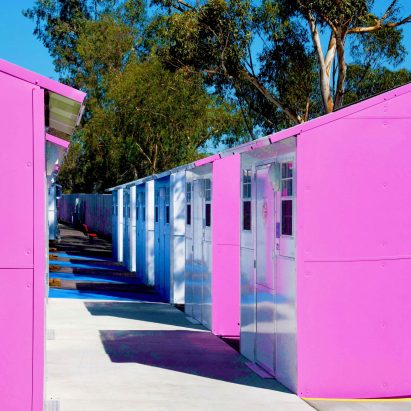
Tiny home village by Lehrer Architects provides temporary shelter for LA's homeless

Local studio Lehrer Architects has built a community of brightly coloured tiny houses on a narrow strip in Los Angeles for the city's homeless residents.

The Whitsett West Tiny Home Village occupies an oddly shaped stretch of land in North Hollywood, measuring a quarter of a mile long and only 20 feet (six metres) wide in places.

The Whitsett West Tiny Home Village occupies an oddly shaped site beside LA's 170 freeway

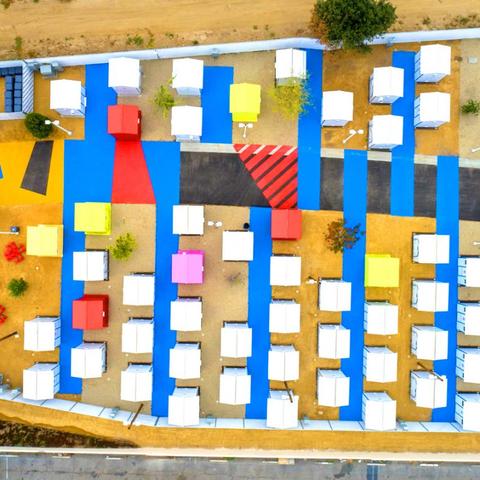
The community includes 150 beds in 77 units, as well as hygiene trailers, storage, offices and communal spaces.

Necessary infrastructure like electricity, storm drains, sewers, water, ADA accessibility and drainage are also integrated.

The village has 77 units that can house up to 150 residents

This is the fourth collaboration of this nature in seven months between Lehrer Architects and the City of Los Angeles, resulting in the creation of transitional housing on disused urban lots, including the Alexandra Park village.

"After completing three successful Tiny Home Villages, each in a very different urban setting, working on this site felt particularly satisfying," said Lehrer Architects partner Nerin Kadribegovic.

"The oddity of its shape, and location forced us to use every tool in our design palette to make this forgotten piece of land bring dignity and joy to its future residents."

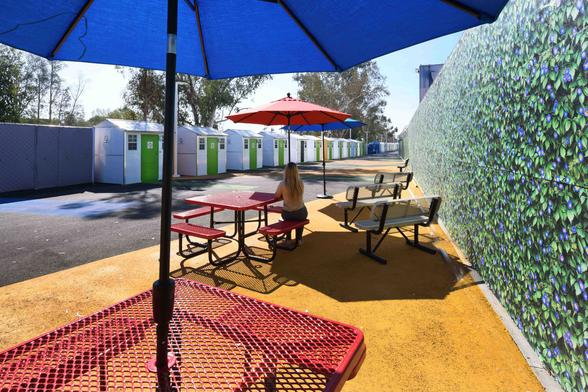
The site has communal areas for eating and socialising

The lockable micro homes, which sleep one or two people, are manufactured by Pallet Shelter and delivered to the site flat and unassembled.

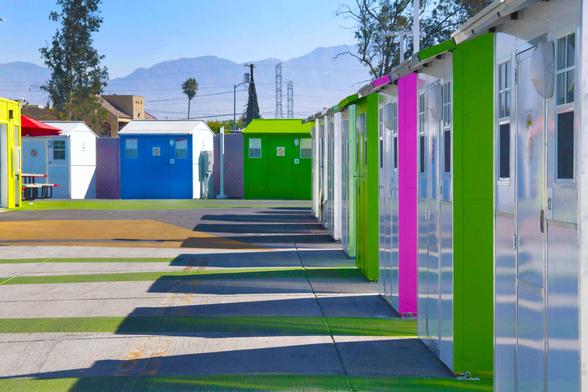
The eight-by-eight-foot (2.4-by-2.4-metre) structures come in white, but have been decorated by Lehrer Architects in bright hues to create a more desirable place to live.

They are arranged in rows facing communal outdoor spaces that are also colourfully patterned in blue, green and yellow.

"A profound joy of these projects is the necessity for – and intensity of – their visual presence," said Lehrer Architects founder Michael B Lehrer. "Every tool in our visual palette was employed starting with perspective, procession, and colour."

Bright colours were chosen to create a more desirable place to live

An eight-foot sound barrier blocks noise from the adjacent freeway and offers residents privacy.

Like the studio's previous tiny home villages, Whitsett West is intended as temporary accommodation for LA's unhoused population, which is estimated to number over 40,000 people.

The village also incorporates hygiene trailers, storage, offices and other necessary infrastructure

The city has built eight of these villages so far over the past year, and currently has plans to construct eight more on dilapidated or leftover pieces of land.

Other projects created to rehouse those experiencing homelessness in LA include an apartment complex built from shipping containers and a bright white housing development.

The post Tiny home village by Lehrer Architects provides temporary shelter for LA's homeless appeared first on Dezeen.

#residential #all #architecture #usa #losangeles #california #housing #microhomes #homelesshousing #homelessness #lehrerarchitects

Tiny home village by Lehrer Architects provides temporary shelter for LA's homeless

Los Angeles firm Lehrer Architects has built a community of brightly coloured tiny houses on a narrow strip for the city's homeless residents.

Béres Architects hides cabin on stilts in a Hungarian forest

This cabin in the Alpokalja forest near Kőszeg, Hungary, was entirely built on stilts as an isolated getaway that would harmoniously integrate with the surrounding trees.

Cabin Moss is comprised of an angular extrusion raised on slender stilts. The 40 square-metre structure, described by architecture studio Béres Architects as "tiny, but comfortable," still enjoys a separate sleeping nook.

Cabin Moss is raised on slender stilts

The project was designed to be built by a single person. After having collaborated with Béres Architects previously, the owner, Attila Hideg, enlisted their help to design a wooden cabin for him to build himself.

Raising the structure on stilts facilitated the construction process, as no foundations needed to be dug for the building. This also allowed the team to locate the cabin close to existing trees without disrupting their roots.

Béres Architects designed the structure so it wouldn't need a foundation

"We respected the natural values of the site at extraordinary levels," architect Attila Béres said.

"Thin stilts are carefully located so that we could keep and protect the roots of the surrounding trees. No need for any excavation or filling with machines that ruin the natural context."

The building's exterior is a uniform greige colour that is meant to contrast the interior finishes.

"The warm and cosy interior is wrapped in a rough surface that lets the forest create colours and patterns after its own taste," the studio said.

Exposed wooden planks line the ceilings

The cabin consists of three rooms – a combined kitchen and living space, a bathroom and a bedroom. A storage shelf runs the entire length of the building, providing some continuity between the rooms.

In the kitchenette and the bedroom, exposed wood planks on the walls and ceilings create bright interior spaces for daytime use.

The bathroom, meanwhile, has a darker finish that contrasts the other rooms.

Dark interiors in the bathroom

The interiors include several space-saving features within the cabin's limited footprint, such as a niche in the living area built into the window sill, and pocket doors between each room.

"One of the project’s design cornerstones was the effort of staying small," the studio explained. "No unnecessary spaces, no leftovers, no wasted square metres. This is the starting point of being environmentally friendly."

[

Read:

Open AD designs spa in Latvia with Corten-clad cabins

](https://www.dezeen.com/2021/11/01/open-ad-ziedlejas-latvian-nature-spa-architecture/)

The house does not use any mechanical cooling system, as its windows are positioned to allow for natural ventilation. Heating and hot water, meanwhile, is provided by electricity.

Béres Architects is led by Attila Béres. The Budapest-based studio has also completed an apartment in Kőszeg, exposing the walls of a 400 year-old building that had been covered over the years by previous renovations.

The cabin was designed to integrate with its surroundings

Other tiny home projects include a van in Ecuador that was outfitted with plywood interiors and a home that architect Takeshi Hosaka designed for himself in Tokyo that measures only 19 square metres.

The photography is byTamás Bujnovszky.

The post Béres Architects hides cabin on stilts in a Hungarian forest appeared first on Dezeen.

#residential #all #architecture #wood #stilts #hungary #budapest #woodenarchitecture #microhomes #hungarianhouses #cabins

Béres Architects hides cabin on stilts in a Hungarian forest

This cabin in a Hungarian forest was built by its owner on stilts as an isolated getaway that would harmoniously integrate with the surrounding trees.

Plywood furniture turns 1990s van into mobile home for Ecuadorian couple

Architects Juan Alberto Andrade and María José Váscones have transformed a Chevy van into a house-on-wheels for a young couple that includes a kitchenette, a fold-up dining table and a full-sized mattress.

The project, Dodo Van, involved the conversion of a 1993 van made by the American car company Chevrolet. The couple – a lawyer and an environmental engineer – purchased the vehicle for their travels and their work with local communities.

Architects Juan Alberto Andrade and María José Váscones have converted a van into a mini home

To oversee the conversion of the van, they turned to architects Juan Alberto Andrade and María José Váscones, who are based in Guayaquil and have also completed an office in the city.

The brief for the van called for creating a simple living environment within its five square metres of space, and under its 1.86-metre ceiling.

"The area conditions the space – developing a project that is flexible enough to adapt to different everyday situations and solving the basic needs of living," the designers said.

The home includes a kitchenette, fold-up dining table and a place to sleep

The exterior was left mainly untouched. Within the van, the designers created a pared-down living environment that includes a kitchenette, a lounge space, a portable table for eating and working, and a sleeping platform for two people.

The van's seating can accommodate the transportation of six passengers.

The architects had to create something that was able to adapt to everyday situations within the limited space

Service functions were incorporated into the long sides of the vehicle, behind the front seats.

"Design strategies were developed that allowed the space to be transformed into various configurations according to its needs, based on the decision to liberate longitudinal circulation and maintain the interior morphology of the vehicle," the designers said.

Cabinets open out and can be used to store kitchen utensils or act as countertops

Occupying the front portion is the compact kitchen, which features several cabinets and a sink. Small, triangular cuts in the cabinet doors enable them to be opened without the use of handles. One of the doors folds down and becomes a table or countertop.

Next to the kitchen is the living space, where the team placed a bench containing storage space. In front of this area is a large trunk that hides the van's portable table, which has legs that can be easily taken on and off.

The rear furniture can be converted into a platform for a full-sized mattress.

"The mattress is custom made," the designers said. "It involves three pieces that fold, making them easier to store."

The mattress can be folded into three when not in use

Interior walls are clad in six-millimetre-thick plywood, while 12- and 15-millimetre boards were used for the flooring and furniture.

A natural matte finish is meant to make the van feel more spacious. Mineral wool was used to provide thermal and acoustical insulation on the floor, walls and ceiling.

While the interior is lined with plywood, the exterior has been left largely untouched

The interior is powered by an independent battery linked to the van's alternator and a 110-volt transformer. The van has tanks for storing both clean and used water.

Other mobile dwellings include a 1960s travel trailer that Edmonds + Lee Architects converted into an office and crash pad for a tech entrepreneur, and a canvas caravan by Belgian designer Axel Enthoven that is shaped like the Sydney Opera House.

The photography is byJAG Studio.

Project credits:

Architects in charge: Juan Alberto Andrade, María José Váscones
Collaborators: Cuqui Rodriguez
Providers: Masisa El Fortín, Mega Metales, Mega Kywi, Acimco
Local hand work: Eusebio Tomalá

The post Plywood furniture turns 1990s van into mobile home for Ecuadorian couple appeared first on Dezeen.

#transport #all #design #plywood #vehicles #caravans #microhomes #ecuador

Plywood furniture turns 1990s van into mobile home for Ecuadorian couple

Architects Juan Alberto Andrade and María José Váscones have transformed a Chevy van into a house-on-wheels for a young couple that includes a kitchenette, a fold-up dining table and a full-sized mattress.

Lehrer Architects builds colourful village of micro homes for Los Angeles homeless

Alexandria Park Tiny Home Village is a development of 103 micro homes designed by Lehrer Architects to provide homeless housing in Los Angeles.

Located on a narrow plot in a park in North Hollywood, the brightly coloured complex can house up to 200 people at a time in its gabled shelters.

Alexandria Park Tiny Home Village is in North Hollywood

The eight-foot-wide (2.4 metres) square-shaped cabins, which can accommodate one or two people, are made by Pallet, a manufacturer of homeless shelters based in Washington State.

Alexandria Park Tiny Home Village is named after the park it sits in, near the 170 Freeway. The project is a collaboration between local practice Lehrer Architects and architects and engineers from the Los Angeles City Bureau of Engineering.

The complex can house up to 200 people in 103 shelters

"LA is surely among the most vibrant laboratories in the world today to be designing and building projects in — big, small permanent, transitional – to remediate and eliminate homelessness," said studio founder Michael B. Lehrer.

Homelessness is a serious issue in Los Angeles, with high rents and a lack of affordable housing exacerbating the situation. The last annual homeless count for the city, made in June 2020, recorded 66,433 people living on the streets, in shelters or in vehicles.

Lehrer Architects built the cabins around existing trees

"From design to policy to sweating bureaucratic and regulatory conflicts and challenges, this is an auspicious and unprecedented period of experimentation and idea churn, learning lessons fast and embracing those lessons from one project to the next," added Lehrer, who founded his practice in 1985.

"It is thrilling to be here using our medium to give, develop and invent form and processes to transform LA into a fully housed city."

Geometric patterns in the asphalt are picked out in bright colours

Alexandria Park Tiny Home Village is arranged like a residential neighbourhood in miniature, with cabins arranged in rows on either side of a main street style thoroughfare.

Geometric blocks of yellow, blue, red and green cover the asphalt surfaces between the shelters, which are arranged in neighbourhood-style clusters marked by gravel surfaces.

Some of the cabins are painted to add visual interest

In keeping with the cheerful colour scheme, some of the cabins have been painted and the rest left white.

To decide which cabins should be painted, Lehrer Architects took their architectural model and rolled a 3D camera down the central street. This helped them chose which cabins to paint to function as colourful markers as people walk through the complex.

Each of the cabins can be locked by the occupant to give them a sense of security and ownership, and there is a designated play area for pets.

Some of the prefabricated modular units contain facilities for the village's occupants, including a communal dining area, showers and restrooms, a laundry, pest control services and a place to receive assistance with accessing the City services.

The individual shelters are lockable

Oak trees from the park have been incorporated into the layout and more have been planted to create shady places for the residents to enjoy.

"This way residents do not have to exit the village to enjoy the park and the natural shade canopy," said Lehrer Architects LA Partner Nerin Kadribegovic.

Up to two people can be accommodated in each shelter

The village in the park only took 13 weeks to construct. Lehrer Architects had previously worked on a smaller pilot project for the scheme at Chandler Boulevard and applied the learnings to speed up the process.

"Each component – tiny home, admin trailers, hygiene units and so on – has exact technical requirements," explained Kadribegovic.

"Being already familiar with these requirements enabled us to solve problems quickly and focus on making the Village an attractive and welcoming community."

The prefabricated shelters are by Pallet

Later this month a third community designed by Lehrer Architects, Tiny Home Village Shelter at Sunset and Alvarado, will open on the city's East Side.

More design to address homelessness in Los Angeles includes a concept for lockable domed shelters by Perkins and Will and Homes for Hope, a series of modular shelters designed by Madworkshop.

Photography courtesy of Lehrer Architects.

The post Lehrer Architects builds colourful village of micro homes for Los Angeles homeless appeared first on Dezeen.

#all #architecture #residential #usa #losangeles #california #housing #microhomes #shelters #homelesshousing #homelessness

Lehrer Architects builds colourful village of micro homes for LA homeless

Alexandria Park Tiny Home Village is a development of 103 tiny homes arranged in a complex by Lehrer Architects for homeless people in Los Angeles.