8-Jan-2026
Researchers search for why some people’s #gut #microbes produce high alcohol levels

Researchers have identified specific gut bacteria and #metabolicPathways that drive #alcohol production in patients with #autoBrewerySyndrome (ABS), a rare and often misunderstood condition in which people experience #intoxication without drinking alcohol

https://www.eurekalert.org/news-releases/1111885

#science #metabolism #ethanol #physiology

Researchers search for why some people’s gut microbes produce high alcohol levels

Mass General Brigham study of 22 people with a rare condition known as auto-brewery syndrome has found a link between gut microbes and intoxication symptoms, pointing to new treatment strategies

EurekAlert!

and a GO-Causal Activity Model (GO-CAM https://geneontology.org/docs/gocam-overview/) that is based directly on GO annotation data.

Useful links to external resources (FlyCyc, Reactome, KEGG) and publications are provided, as well as options to export the gene list to analysis, download and orthology tools.

For more information, see this Commentary: http://flybase.org/commentaries/2024_12/MetabolicPathways.html

#FlyBaseTootorial #GeneGroups #MetabolicPathways

GO-CAM overview

Introduction to GO-CAMs

Gene Ontology Resource
Autism could be diagnosed with stool sample, scientists say

Researchers found differences in the gut microbes of autistic people, raising hopes for faster diagnosis

The Guardian
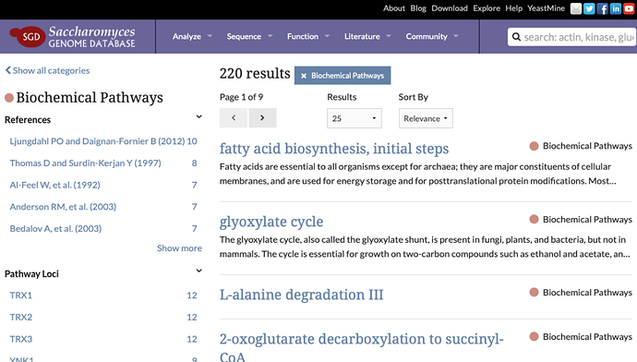
Check out the Biochemical Pathways search at SGD (yeastgenome.org)!
SGD blog post here: https://www.yeastgenome.org/blog/biochemical-pathways-now-in-sgd-search
(grabbed from our buds at @yeastgenome on Twitter):
YeastPathways database of #metabolicPathways, #enzymes in #buddingYeast #Saccharomyces #cerevisiae is manually curated by SGD biocurators. Search category “Biochemical #Pathways” is now available with facets (subcategories) for References, Loci
https://yeastgenome.org/search?q=&category=pathway
Biochemical Pathways now in SGD Search | SGD

The Saccharomyces Genome Database (SGD) provides comprehensive integrated biological information for the budding yeast Saccharomyces cerevisiae.

How do intracellular pathogenic #bacteria scavenge host nutrients? @KMitosch @kiran_r_patil @TypasLab &co use 13C-mannitol to track #Salmonella's #metabolism when growing inside host cells, revealing its food sources & #MetabolicPathways #PLOSBiology https://plos.io/3OImjZh
A pathogen-specific isotope tracing approach reveals metabolic activities and fluxes of intracellular Salmonella

How do intracellular pathogenic bacteria scavenge essential nutrients from the host? Difficulties in distinguishing between bacterial and host metabolites have made this challenging to address, but this study shows that 13C-mannitol allows direct tracking of the metabolism of Salmonella when growing inside host cells, revealing the food sources and metabolic pathways that intracellullar pathogens use.

Newly discovered #bacteria and their proteins could advance our understanding of global nutrients https://utmsi.utexas.edu/blog/entry/new-bacteria

New globally distributed bacterial phyla within the FCB superphylum https://www.nature.com/articles/s41467-022-34388-1

"The volume of #proteins found in these phyla that have no similarity to any known sequence is exciting. It is fascinating that these previously overlooked #microbes have different #MetabolicPathways which could support their worldwide distribution in different habitats"

Newly discovered bacteria and their proteins could advance our understanding of global nutrients

The power of metagenomics strikes again. Marine microbiologists discovered five new bacteria phyla (four never described and one poorly described) from the ocean floor that contain an unusually large number of novel protein families. An international group of researchers led by...

Meteorites and simple metals as catalysts for metabolic pathways at the origin of life

Researchers from the University of Strasbourg have demonstrated that hydrogen gas and simple metals or meteorites cause parts of the reverse Krebs cycle to occur without enzymes. Some version of this metabolic pathway is thought to date back to life's origin. The results of this study support the hypothesis that naturally occurring metals acted as catalysts for the first protometabolic reactions.

Phys.org