 Elements of Mutual Aid
 Chapter 4: Air | The Elements of Mutual Aid

Chapter 4: Air | The Elements of Mutual Aid
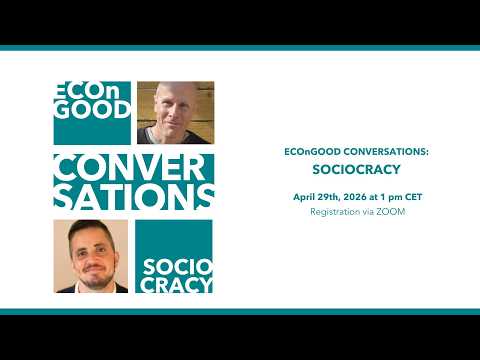
Great conversation! 👀
#sociocracy #wellbeingEconomy #ECOnGOOD
#SharedPower #horizontality #Hierarchy
https://www.youtube.com/watch?feature=shared&v=AMrs0_Dn2WI
Two: horizontality.
Organisation at eye level. Decision making based on consensus and consent, not just voting for a majority.
Three: prefiguration
This term was coined by Carl Boggs. This is the radical praxis of anarchism. It means that you need to curve out the conditions for anarchist spaces to exist. We shouldn't wait until it happens, but we should actively create it.
The Good Place:
In a good society, self-management would flourish on every scale. In a good society, there would be non-hierarchical, directly democratic, and participatory community assemblies (and co-federations thereof) with embedded councils and rotating delegates, means of existence and production would be held and managed in common, politics and economics would meet needs and desires of people, direct collective decisions would be made through dialogue, people would share in the implementation of policies in agreed upon ways, everyone would be free from domination, exploitation, and oppression, and everyone would be free to make collective and individual decisions about what they do bounded and enriched by the freedoms of others to do the same (Kropotkin, 1906, Bookchin, 2007, Ocalan, 2014, Sixth Commission of the EZLN, 2016, Ostrom, 2021, Dirik, 2022, Usufruct Collective, 2022). Such a goal (and principles in relation to such a goal) shapes the general strategy that should be used which shapes the more variable sub-strategies and tactics that should be used (Correa and Walmsley, 2022).
Conclusion:
There are multiple kinds of social movement organizations people can form or join including but not limited to community assemblies, labor unions, and student unions. People can form and join social movement organizations rooted in self-management, mutual aid, and direct action in opposition to hierarchy. People can also join social movement organizations to help spread those processes and practices through dialogue and demonstration in a way that makes social movements more able to achieve the goals they are aimed towards. While some liberatory elements can be forged relatively soon or at group inception, other dimensions can take more time to develop. Ethically and strategically coherent processes, practices, and goals need to be cultivated, nourished, and continuously recreated. Social movement organizations and participants thereof can strategically adapt and wield such elements of liberatory organizing according to relevant needs and variables to meet short-term, mid-term, and long-term needs and goals. We all face the hydra of hierarchy in different ways in different contexts. We can choose which social movement organizations we join and/or start with others based on needs, capacities, desires, and conditions to try to find ways to develop a free and egalitarian society and achieve positive goals along the way. It is up to people organizing together to wield the practices of self-management, mutual aid, and direct action against hierarchy towards grander horizons of freedom, equality, and solidarity. As social movement organizations and actions multiply, they can work on joint projects together and when applicable form co-federations. Overtime, through opposition and reconstruction, self-managed social movement organizations can form an alternative to business as usual and overthrow hierarchical rule.
https://usufructcollective.substack.com/p/elements-of-liberatory-social-movement
#anarchism #anarchy #socialism #communism #directaction #mutualaid #democracy #directdemocracy #horizontality #socialmovements #organizing #organization

01/31/2024 Introduction: Social movement organizations are groups where people can come together to meet the needs of participants and others through reconstructing new practices, ways of relating, and decision making while also opposing domination, exploitation, and oppression. Social movement organizations can help meet people’s short-term needs while also taking actions to transform society. Social movements organizations vary in many ways. They can be in relationship to community issues, workplace issues, student issues, and beyond. At their best, social movement organizations wisely use free and egalitarian processes to meet short-term, mid-term, and long-term needs of people. However, not all social movements organizations have the kinds of organizational relations, qualities, and contents that make them ethical and effective. Free and egalitarian relations and practices require the means thereof; they will not emerge out of nowhere. The freedom of each and all has objective, universal, and necessary features as well as subjective, particular, and contingent features. The freedom of each and all needs to be continuously recreated, co-authored, and given life by people responding to unfolding conditions.
Some critiques of horizontality/non-hierarchy are basically: "horizontality/non-hierarchy+ABC bad things or minus XYZ good things = some less than good/effective thing." But that's an issue of the absence of XYZ good things / the presence of ABC bad things-- not horizontality
The same could be said of many critiques of direct democracy (direct collective decision making). Direct democracy+ABC bad things or minus XYZ good things is unsurprisingly not as ethical/effective as Direct democracy + XYZ good things and minus ABC bad things.
It is when there is a gestalt of multiple liberatory processes/practices/goals that various necessary but insufficient features for liberatory organizing can meaningfully thrive and mutually qualify each other.
https://usufructcollective.wordpress.com/2023/07/18/gestalt-of-the-good-2023-remix/
#anarchism #anarchy #communism #communalism #libertariancommunism #libertariansocialism #democracy #directdemocracy #selfmanagement #mutualaid #directaction #nonhierarchy #antihierarchy #horizontalism #horizontality #freeassociation #socialecology #ethics #normativeethics #metaethics
Points of Unity template for shared processes and practices (for social movement groups and popular organizations of various kinds): ***Although descriptively accurate, the above is not formulated to be the best name for practical use in movement context as it is too jargon heavy and wordy. Alternative names: Points of Unity, Group agreements, Shared Agreements, Group Practices, Shared Practices, Group Processes, Shared Processes, etc
Direct-Democracy: Direct democracy refers to direct collective decision making. Direct democracy enables collective dialogue, decisions, and actions to achieve various goals and solve various problems. Deliberation is foundational to a practical direct democracy as it enables questions, amendments, conversations, problems, solution criteria, multiple perspectives, critiques, concerns, alternative possibilities, dissent, and evaluation of pros and cons to round out proposals and decisions made. After deliberation, there is an aim for full agreement. If there is not full agreement, there is further discussion and then a decision is made by majority vote. ***The specifics of direct democracy can be tweaked and even left out of this section and simply included in the bylaws.
Horizontality: Horizontality refers to the presence of self-organization and the absence of hierarchy. Hierarchy refers to institutionalized top-down command obedience relations. Horizontality includes freedom from hierarchy, freedom from oppression, freedom from domination, freedom from exploitation, and freedom to participate in self-managed groups and relations. This group strives to be internally horizontal and contribute to horizontal relations. etc. ***can alternatively be called or framed as: non-hierarchy, or egalitarian relations, or opposition to hierarchy. With different groups, different framings and wordings will make more sense. Depending on group and context, it may or may not make sense for a group to give a list of various hierarchies in such a points of unity document. For sake of brevity, it can make sense to include the substance of horizontality within other points.
Free Association and Participatory activity: Free association refers to freedom of and from associations as well as participatory activity within associations. For there to be free association and participatory activity, persons and groups must have the guaranteed freedoms to choose their activities and associations while respecting and enabling freedoms of others to do the same. All labor, work, and action within this group is to be voluntary and non-coerced. If someone does not like a policy that is made, they can continue to argue for and advocate an alternative proposal, continue to argue one’s point formally and informally, choose to not participate in the implementation of the policy they disagree with while remaining in the group, or choose to leave the association. *** This point can potentially be included in other points of unity without being its own point. Also, it is often implied that a group is such a voluntary association so including this for a group as an explicit point may or may not make sense.
Direct Action: Direct action refers to opposing exploitation, domination and oppression through self-managed action to meet needs of people. Direct action can be contrasted to indirect action of top-down organizing and relying on rulers to solve social problems. Direct action includes a wide array of potential activities and campaigns against specific hierarchical institutions for short term, mid-term, and long-term goals. *** A description giving examples of direct action tactics such as occupations, expropriations, blockades, strikes, boycotts, etc. is optional. An alternative to the wording to “domination, exploitation, and oppression” can be “unfreedom and injustice” or something sufficiently similar.
Mutual Aid: Mutual aid refers to voluntary multidirectional help to meet needs. Mutual aid can exist within a group, between groups, between groups and persons, between persons etc. Mutual aid enables groups and people to pool abilities, needs, ideas, proposals, actions, infrastructure, resources, tools, etc. together. Mutual aid can include a wide array of potential activities from mutual assistance towards common goals (including direct action goals), creating or participating in development of the commons (including communal fields, factories and workshops, social centers, libraries, eco-technology projects, etc), free food distribution, communal childcare, etc. ***Such a list or variation thereof is optional to include.
For groups that collaborate with other groups in various formal and informal ways:
Co-Federalism: Co-federalism refers to ways organizations can freely collaborate for inter-collective coordination, decisions, and actions in a way that enables decision making power to be in the hands of people directly. Delegated persons and councils of collectives can meet up for deliberation and administration. Such delegates and co-federal councils are mandated and recallable to their respective popular assemblies, are merely communicative, administrative, and have no policy making power. All policies are made and ratified by general assemblies directly. ***Alternatively the words federalism, confederalism, intercommunalism, inter-collectivity, egalitarian federation, etc. can be used in place of co-federalism. Co-federalism is a neologism, and confederalism and federalism both have connotative issues despite them referring to an essential practice for horizontal and free inter-organizational relations.
Addendum point for Community assembly groups in particular:
Communal Self Management: Communal self-management refers to horizontal, democratic, participatory community politics and economics. Such communal and intercommunal self-management can exist on every scale from the block, to the neighborhood, to the city, and beyond. Means of existence and production needed by communities are to be held and managed in common. Policies and protocols for communal economics are managed by communal assemblies and co-federations thereof. Such communal assemblies and co-federations thereof have embedded participatory councils that self-manage implementation within the bounds of their respective mandates and protocols. Such a communal economy aims towards providing each and all with free access to needs.
***The above point is specifically for community assembly groups. It generally makes the most sense for groups that are at relatively a mature level development to the point where they have sufficient power, means of production, and popular support.
Alternative framing that synthesizes the first three points of unity into a single point:
Participatory Democracy: Participatory democracy refers to a combination of direct collective decision making, without rulers, where people freely participate in decision making and implementation of decisions. ***By condensing the substance of the first three points into a single point, a lot of clutter disappears. From here, people can fill out this point through their own descriptions or through copying, pasting, and blending some of the more essential sentences from the first three points of unity listed as needed. An alternative framing for this point could be “self-management” in such a way that includes the substance of direct democracy, horizontality, and free association. As coherent as the first three points are as separate points rounding each other out, they are rather cumbersome and can be difficult to wrap one’s mind around. Creating a single point that combines the essential features of those points can help clear up confusion. Something like a practical unity of Participatory Democracy as defined above (or alternatively Self-Management), Direct Action, and Mutual aid can lead to a lot of coherence and functional use for groups starting from scratch or otherwise developing such points of unity overtime. Having three points makes a point of unity for processes and practices easier to agree with, comprehend, and communicate to new people.
https://usufructcollective.wordpress.com/2023/01/14/liberatory-points-of-unity-template-2023-remix/
#Anarchism #anarchy #socialism #communism #libertariansocialism #libertariancommunism #mutualaid #directdemocracy #democracy #federation #federalism #confederalism #directaction #horizontality #horizontalism #freedom #equality #organization
Points of Unity template for shared practices and processes (for social movement groups and popular organizations of various kinds): ***Although descriptively accurate, the above is not formulated to be the best name for practical use in movement context as it is too jargon heavy and wordy. Alternative names: Points of Unity, Group agreements, Shared Agreements, Group Practices, Shared Practices, Group Processes, Shared Processes, etc
Direct-Democracy: Direct democracy refers to direct collective decision making. Direct democracy enables collective dialogue, decisions, and actions to achieve various goals and solve various problems. Deliberation is foundational to a practical direct democracy as it enables questions, amendments, conversations, problems, solution criteria, multiple perspectives, critiques, concerns, alternative possibilities, dissent, and evaluation of pros and cons to round out proposals and decisions made. After deliberation, there is an aim for full agreement. If there is not full agreement, there is further discussion and then a decision is made by majority vote. ***The specifics of direct democracy can be tweaked and even left out of this section and simply included in the bylaws.
Horizontality: Horizontality refers to the presence of self-organization and the absence of hierarchy. Hierarchy refers to institutionalized top-down command obedience relations. Horizontality includes horizontal rights such as freedom from hierarchy, freedom from oppression, freedom from domination, freedom from exploitation, and freedom to participate in self-managed groups and relations. This group strives to be internally horizontal and contribute to horizontal relations. etc. ***can alternatively be called or framed as: non-hierarchy, or egalitarian relations, or opposition to hierarchy. With different groups, different framings and wordings will make more sense. Depending on group and context, it may or may not make sense for a group to give a list of various hierarchies in such a points of unity document.
Free Association and Participatory activity: Free association refers to freedom of and from associations and participatory activity within associations. For there to be free association and participatory activity, persons and groups must have the guaranteed freedoms to choose their activities and associations while respecting and enabling freedoms of others to do the same. All labor, work, and action within this group is to be voluntary and non-coerced. If someone does not like a policy that is made, they can continue to argue for and advocate an alternative proposal, continue to argue one’s point formally and informally, choose to not participate in the implementation of the policy they disagree with while remaining in the group, or choose to leave the association. *** This point can potentially be included in other points of unity without being its own point. Also, it is often implied that a group is such a voluntary association so including this for a group as an explicit point may or may not make sense.
Direct Action: Direct action refers to opposing exploitation, domination and oppression through self-managed action to achieve various goals. Direct action can be contrasted to indirect action of top-down organizing and relying on rulers to solve social problems. Direct action includes a wide array of potential activities and campaigns against specific hierarchical institutions for short term, mid-term, and long-term goals. *** A description giving examples of direct action tactics such as occupations, blockades, strikes, boycotts, etc. is optional. An alternative to the wording to “domination, exploitation, and oppression” can be “unfreedom and injustice” or something sufficiently similar.
Mutual Aid: Mutual aid refers to voluntary multidirectional help to meet needs. Mutual aid can exist within a group, between groups, between groups and persons, between persons etc. Mutual aid enables groups and people to pool abilities, needs, ideas, proposals, actions, infrastructure, resources, tools, etc. together. Mutual aid can include a wide array of potential activities from mutual assistance towards common goals, creating or participating in development of the commons (including communal fields, factories and workshops, social centers, libraries, eco-technology projects, etc), free food distribution, communal childcare, etc. ***Such a list or variation thereof is optional to include.
For groups that collaborate with other groups in various formal and informal ways:
Co-Federalism: Co-federalism refers to ways organizations can freely collaborate for inter-collective coordination, decisions, and actions in a way that enables decision making power to be in the hands of people directly. Delegated persons and councils of collectives can meet up for deliberation and administration. Such delegates and co-federal councils are mandated and recallable to their respective popular assemblies, are merely communicative, administrative, and have no policy making power. All policies are made and ratified by general assemblies directly. ***Alternatively the words federalism, confederalism, intercommunalism, inter-collectivity, egalitarian federation, etc. can be used in place of co-federalism. Co-federalism is a neologism, and confederalism and federalism both have connotative issues despite them referring to an essential practice for horizontal and free inter-organizational relations.
Addendum point for Community assembly groups in particular:
Communal Self Management: Communal self-management refers to horizontal, democratic, participatory community politics and economics. Such communal and intercommunal self-management can exist on every scale from the block, to the neighborhood, to the city, and beyond. Means of existence and production needed by communities are to be held and managed in common. Policies and protocols for communal economics are managed by communal assemblies and co-federations thereof. Such communal assemblies and co-federations thereof have embedded participatory councils that self-manage implementation within the bounds of their respective mandates and protocols. Such a communal economy aims towards providing each and all with free access to needs.
***The above point is specifically for community assembly groups. It generally makes the most sense for groups that are at relatively a mature level development to the point where they have sufficient power, means of production, and popular support.
Alternative framing that synthesizes the first three points of unity into a single point:
Participatory Democracy: Participatory democracy refers to a combination of direct collective decision making, without rulers, where people freely participate in decision making and implementation of decisions. ***By condensing the substance of the first three points into a single point, a lot of clutter disappears. From here, people can fill out this point through their own descriptions or through copying, pasting, and blending some of the more essential sentences from the first three points of unity listed as needed. An alternative framing for this point could be “self-management” in such a way that includes the substance of direct democracy, horizontality, and free association. As coherent as the first three points are as separate points rounding each other out, they are rather cumbersome and can be difficult to wrap one’s mind around. Creating a single point that combines the essential features of those points can help clear up confusion. Something like a practical unity of Participatory Democracy (as defined above), Direct Action, and Mutual aid can lead to a lot of coherence and functional use for groups starting from scratch or otherwise developing such points of unity overtime.
https://usufructcollective.wordpress.com/2023/01/14/liberatory-points-of-unity-template-2023-remix/
#anarchism #anarchy #socialism #communism #communalism #socialmovements #libertariansocialism #libertariancommunism #egalitarianism #horizontality #federalism #democracy #mutualaid #freeassociation #pointsofunity #pou #organizing #freedom #revolution #organization
What is Anaculture?
https://itsgoingdown.org/what-is-anaculture/
A critical look at permaculture and how it can inform anarchism and its project of revolutionary social and ecological transformation. Originally posted to Sabot Media. Anaculture is a method by which we can abolish the State and implement a gift economy based on self-determination, horizontality, mutual aid, and solidarity.
#anaculture #permaculture #anarchism #gifteconomy #autonomy #horizontality #mutualaid #solidarity

A critical look at permaculture and how it can inform anarchism and its project of revolutionary social and ecological transformation. Originally posted to Sabot Media. Anaculture is a method by which we can abolish the State and implement a gift economy based on self-determination, horizontality, mutual aid, and solidarity. One where people contribute what work...

 ecosentido
 bebatjof 🇵🇸
 Usufruct Collective

 OccuWorld
 John Girouard