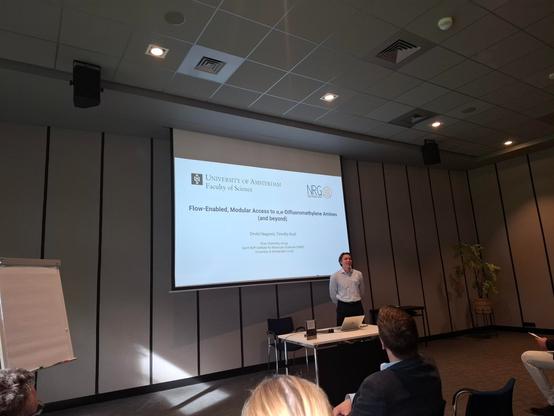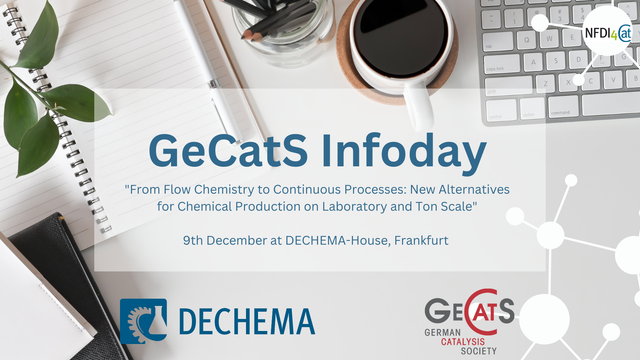
GeCatS Infoday 2025 — From Flow Chemistry to Continuous Processes
9 Dec 2025 | DECHEMA-Haus, Frankfurt
Continuous processes, microreactors, electro-/plasma-/photochemistry, automation & modularization: top trends with a focus on applications, scale-up, and efficiency. Invited talks + 2 poster sessions = perfect forum for exchange.
Sounds exciting? It is. Worth attending!
#Chemistry #Catalysis #FlowChemistry #ContinuousProcessing #ScaleUp #Automation #Modular #DECHEMA
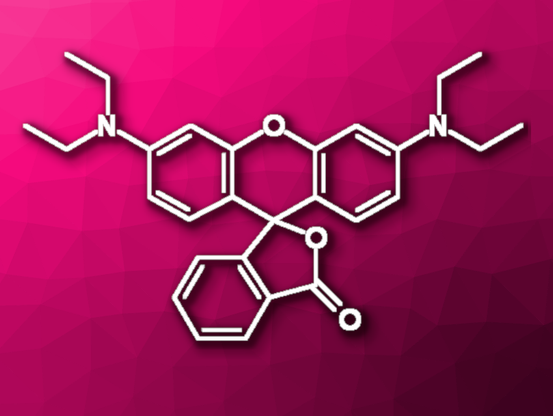
Making Rhodamine B Dyes Using a Continuous Flow Method:
Simple catalyst- and solvent-free protocol uses a single-screw mechanochemical approach
https://www.chemistryviews.org/making-rhodamine-b-dyes-using-a-continuous-flow-method/
#mechanochemistry #dyes #flowchemistry #greenchemistry #chemistry #chemistryviews #chemviews
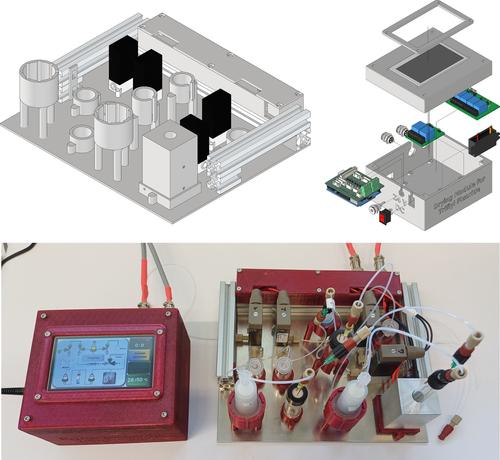
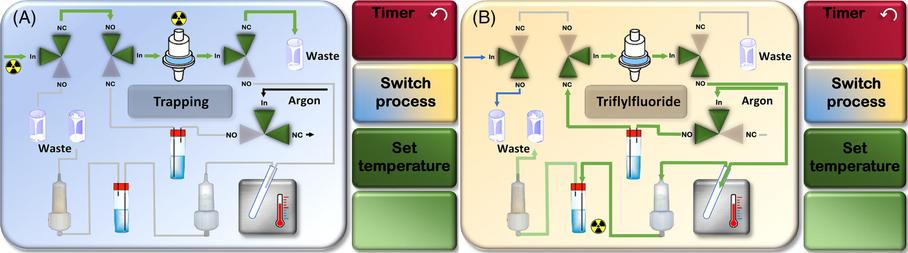
#Radiochemistry: #OpenSource flow setup for rapid & efficient [18F]fluoride drying for #automation of #PET #tracer syntheses:
-several advantages over traditional azeotropic distillation
https://doi.org/10.1002/jlcr.4080
#DIYbio #chemistry #lab #instruments #FlowChemistry #fluorination
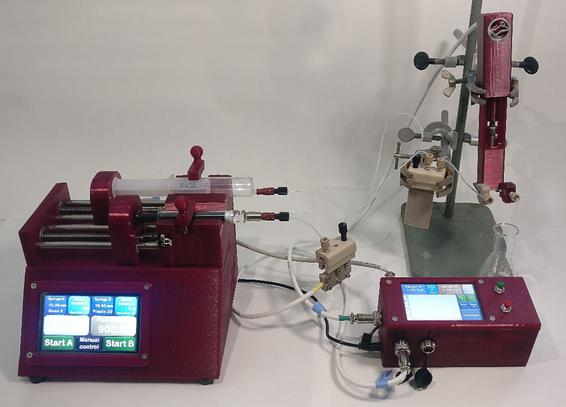
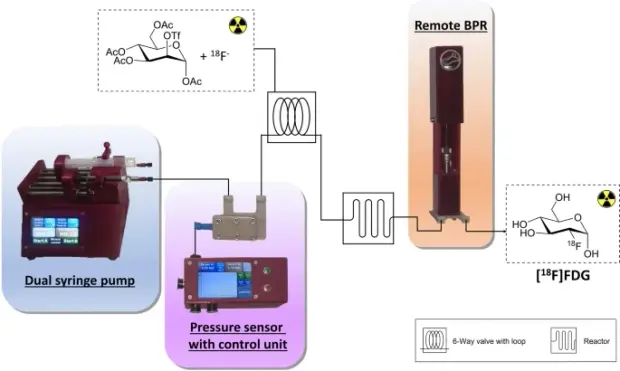
In this work, we introduce a low-cost open-source flow system that includes a dual syringe pump with implemented pressure sensor and back pressure regulator. The entire system can be built for around 500 €. Commercially available flow systems can be very expensive with equipment starting at, but often greatly exceeding, 10,000 €. This high price of entry makes such technology prohibitively expensive for many research groups. Such systems stand to benefit the emerging academic pharmaceutical field by providing the experience and availability of reliable and affordable solutions. To implement accessible flow chemistry at research facilities, the systems must be made affordable. In addition, space in research laboratories is usually limited and commercially available flow systems can be very bulky. Having a compact and individually adjustable system is thus beneficial, with 3D printing technology offering the solution. Our compact 3D-printed system meets the needs of many applications in flow chemistry research as well as educational requirements for universities. As a proof of concept, we conceptualized, developed, and tested a custom flow system that can be used to synthesize [18F]2-fluoro-2-desoxy-d-glucose ([18F]FDG), the most commonly used PET-tracer. This system was designed to perform the typical functions and operations required in radiotracer production i.e. radiofluorination, dilution, SPE-trapping, deprotection, and SPE-elution. With this proof-of-concept in hand, the system can be easily customized to produce other radiopharmaceuticals. Graphical Abstract
📌 Check out this Editorial by our Guest Editor Philipp Heretsch as well as the other contributions to his and Andreas Kirschning’s Thematic Issue “Platform and enabling technologies in #OrganicSynthesis”
Download the complete issue with just one click: 👉https://www.beilstein-journals.org/bjoc/series/114/?M=y