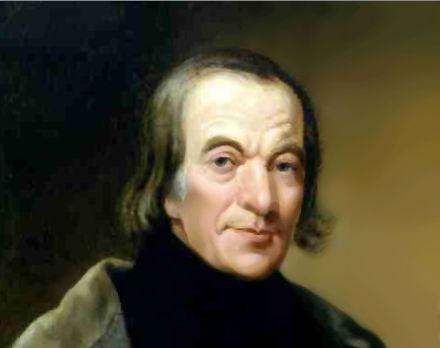
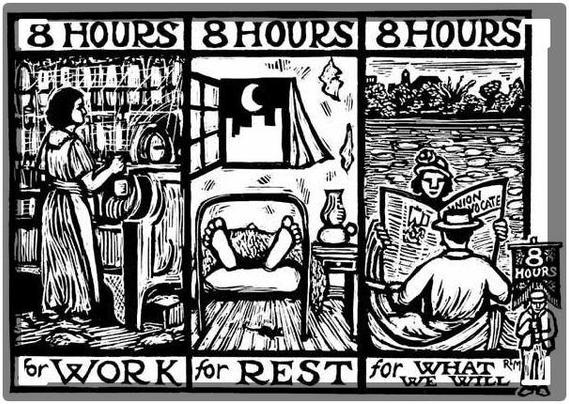
Today in Labor History May 14, 1771: Utopian-socialist Robert Owen was born on this day in Wales. In the early 1800s, he made a fortune in textiles. However, he tried to run his mills on higher principles than greed. One of his reforms was to offer prices at his company store that were only slightly higher than their wholesale cost. This was in marked contrast to his competitors, who paid their workers only in scrip and charged exorbitant prices at their company stores. In 1810, Owen implemented the eight-hour workday for his employees. And in 1817, he came up with the slogan, “Eight hours labor, eight hours recreation, eight hours rest.” He also provided free schools for the children of factory workers.

In 1824, he travelled to America and invested his fortune in an experimental socialistic commune at New Harmony, Indiana. It only survived for two years. However, it changed many aspects of American culture. Residents created the first public library and public school system open to both boys and girls. The town also became an important center of scientific research in the mid-1800s.

#workingclass #LaborHistory #socialism #utopia #EightHourDay #library #robertowen

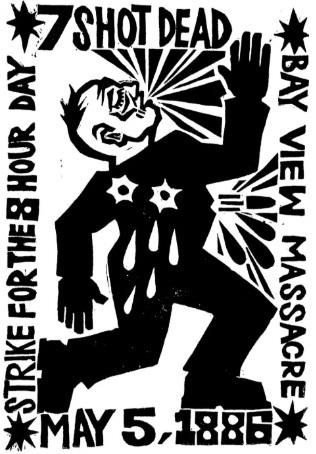
Today in Labor History May 5, 1886: The Bay View Massacre occurred in Milwaukee, one day after the Haymarket bombing, in Chicago. Workers in both cities were demonstrating for the 8-hour work-day. There were approximately 1,400 strikes that year for the 8-hour day. In Milwaukee, the governor called out the state militia. They shot and killed seven protesters, including a 14-year-old boy. No militiamen were ever charged. However, the authorities convicted fifty of the strikers and sentenced them to hard labor for "rioting."

#workingclass #LaborHistory #bayview #massacre #riot #EightHourDay #union #strike #haymarket #mayday

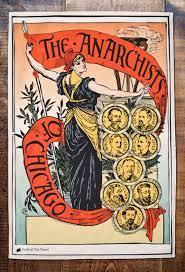
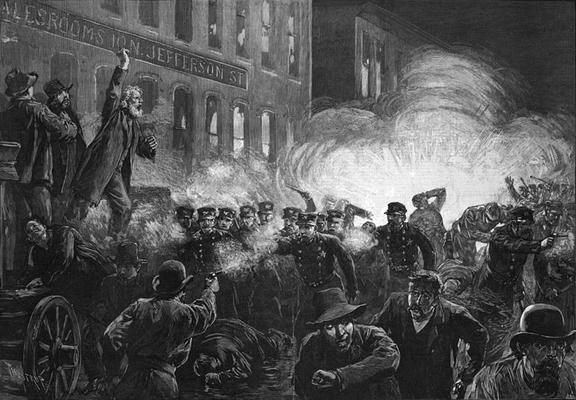
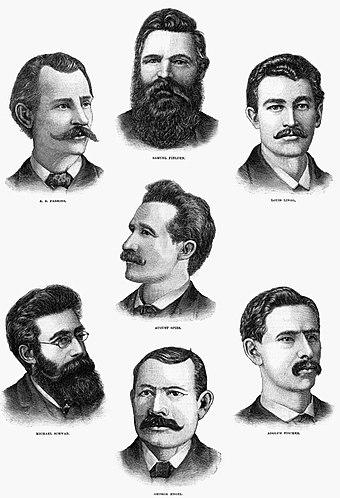
Today in Labor History May 4, 1886: A day after police killed four striking workers and injured hundreds, protesters gathered at Haymarket Square in Chicago. As the peaceful event drew to a close, someone threw a bomb into the police line. Police responded by shooting into the crowd, killing one and wounding many. Eight anarchists were later framed even though most were not even present at the Haymarket rally and there was no evidence that linked any of them to the bombing. They tried and convicted eight anarchist leaders in a kangaroo court: August Spies, Albert Parsons, Adolph Fisher, George Engel, Louis Lingg, Michael Schwab, Samuel Felden and Oscar Neebe. Parson’s brother testified at the trial that the real bomb thrower was a Pinkerton agent provocateur. This was entirely consistent with the Pinkertons modus operandi. They used the agent provocateur, James McParland, to entrap and convict the Molly Maguires, 20 innocent Irish union activists, just a few years prior. As a result, twenty of them were hanged and the Pennsylvania mining union was crushed. McParland also tried to entrap WFM leader, Big Bill Haywood, for the murder of Idaho Governor Frank Steunenberg. Steunenberg had crushed the WFM strike in 1899, the same one in which the WFM had blown up a colliery. However, Haywood had Clarence Darrow representing him. And Darrow proved his innocence.

On November 11, 1887, they executed Spies, Parson, Fisher and Engel. They sang the Marseillaise, the revolutionary anthem, as they marched to the gallows. The authorities arrested family members who attempted to see them one last time. This included Parson’s wife, Lucy, who was also a significant anarchist organizer and orator. In 1905, she helped cofound the IWW. Moments before he died, Spies shouted, "The time will come when our silence will be more powerful than the voices you strangle today." And Engel and Fischer called out, "Hurrah for anarchism!" Parsons tried to speak, but was cut off by the trap door opening beneath him.

Workers throughout the world protested the trial, conviction and executions. Prominent people spoke out against it, including Clarence Darrow, Oscar Wilde, George Bernard Shaw, and William Morris. The Haymarket Affair inspired thousands to join the anarchist movement, including Emma Goldman. And it is the inspiration for International Workers’ Day, which is celebrated on May 1st in nearly every country in the world except the U.S.

You can read my complete bio of Lucy Parsons here: https://michaeldunnauthor.com/2024/03/24/lucy-parsons/

You can read my article on the Pinkertons here: https://michaeldunnauthor.com/2024/04/04/union-busting-by-the-pinkertons/

And my article on the Molly Maguires Here:
https://michaeldunnauthor.com/2024/04/13/the-myth-of-the-molly-maguires/

#LaborHistory #workingclass #anarchism #haymarket #execution #deathpenalty #chicago #union #solidarity #IWW #maythefourth #eighthourday #lucyparsons #bigbillhaywood #pinkertons #mollymaguires #police #strike

Today In Labor History May 1, 1867: The Chicago General Strike. While most people familiar with the history of May Day recognize the 1886 Haymarket Affair, and the persecution of the Chicago’s anarchists, as some of the earliest events in the fight for the Eight Hour Workday, very few people know about the Chicago General Strike of 1867, which was organized 20 years earlier to demand an Eight Hour Workday. The 1867 strike occurred several years before Haymarket martyr Albert Parsons, and future IWW organizer Lucy Parsons, had even moved to Chicago, and just a few years after the end of chattel slavery in the U.S.

At the time of the 1867 General Strike, people had to work 12-14 hours per day, when they could find work at all. Conditions were dangerous and workers often lived in squalid, crowded tenements. Chicago had been a hotbed of labor organizing already for the past several years. And the National Labor Union had recently succeeded in getting Congress to pass a toothless Eight Hour Day bill that was routinely ignored by employers, without consequence. Angry over this, Chicago unions began organizing for a General Strike, which began on May 1, 1867. On the first day of the strike, over 6,000 people (roughly one-third of the city’s workforce at the time) were out on the streets. For the next week, they effectively shut down portions of the city. Similar strikes broke out in other Illinois towns. However, the authorities then mustered the state guard, who occupied the working-class neighborhoods and crushed the strike.

#workingclass #LaborHistory #generalstrike #chicago #eighthourday #anarchism #mayday

Today In Labor History May 1, 1886: The first nationwide General Strike for the 8-hour day occurred in Milwaukee and other U.S. cities. In Chicago, police killed four demonstrators and wounded over 200. This led to the mass meeting a Haymarket Square, where an unknown assailant threw a bomb, killing several cops. The authorities responded by rounding up all the city’s leading anarchists, and a kangaroo court which wrongfully convicted 8 of them, including Albert Parsons, husband of Lucy Parsons, who would go on to cofound the IWW, along with Mother Jones, Big Bill Haywood, Eugene Debs, and others. Worldwide protests against the convictions and executions followed. To honor the wrongfully executed anarchists, and their struggle for the 8-hour day, May first has ever since been celebrated as International Workers Day in nearly every country in the world, except the U.S.

You can read my complete bio of Lucy Parsons here: https://michaeldunnauthor.com/2024/03/24/lucy-parsons/

#workingclass #LaborHistory #anarchism #haymarket #bombing #policebrutality #police #prison #execution #deathpenalty #GeneralStrike #IWW #lucyparsons #motherjones #EightHourDay #mayday

Today In Labor History May 1, 1884: The Federation of Organized Trades and Labor Unions, forerunner of the AFL, resolved that "8 hours shall constitute a legal day's work starting May 1, 1886." Ironically, this union, created as a conservative foil against the radical Knights of Labor, helped radicalize workers with its resolution. It was this fight, for the 8-hour day, that led a few years later to the Haymarket affair, the execution of innocent anarchists, and the international celebration of May 1 as International Workers Day.

#workingclass #LaborHistory #EightHourDay #union #KnightsOfLabor #mayday #haymarket #anarchism #prison

History of May Day, or International Workers’ Day: the Haymarket Affair, Chicago.

Today in labor history April 30 1886: 50,000 workers in Chicago were on strike. 30,000 more joined in the next day. The strike halted most of Chicago’s manufacturing. On May 3rd, the Chicago cops killed four unionists. Activists organized a mass public meeting and demonstration in Haymarket Square on May 4. During the meeting, somebody threw a bomb at the cops. The explosion and subsequent gunfire killed seven cops and four civilians, many likely from “friendly” fire from the cops themselves. Nobody ever identified the bomber. None of the killer cops was charged. However, the authorities started arresting anarchists throughout Chicago.

Ultimately, they tried and convicted eight anarchist leaders in a kangaroo court. The men were: August Spies, Albert Parsons, Adolph Fisher, George Engel, Louis Lingg, Michael Schwab, Samuel Felden and Oscar Neebe. Only two of the men were even present when the bomb was thrown. The court convicted seven of murder and sentenced them to death. Neebe was give fifteen years. Parson’s brother testified at the trial that the real bomb thrower was a Pinkerton agent provocateur. This was entirely consistent with the Pinkertons modus operandi. They used the agent provocateur, James McParland, to entrap, convict and execute 20 Irish labor leaders (the so-called Molly Maguires) in Pennsylvania just a few years earlier. McParland also tried to entrap WFM leader, Big Bill Haywood, for the murder of Idaho Governor Frank Steunenberg. Steunenberg had crushed the WFM strike in 1899, the same one in which the WFM had blown up a colliery. However, Haywood had Clarence Darrow representing him. And Darrow proved his innocence.

On November 11, 1887, they executed Spies, Parson, Fisher and Engel. They sang the Marseillaise, the revolutionary anthem, as they marched to the gallows. The authorities arrested family members who attempted to see them one last time. This included Parson’s wife, Lucy, who was also a significant anarchist organizer and orator. In 1905, she helped cofound the IWW, along with Big Bill Haywood, and others. Moments before he died, Spies shouted, "The time will come when our silence will be more powerful than the voices you strangle today." And Engel and Fischer called out, "Hurrah for anarchism!" Parsons tried to speak, but was cut off by the trap door opening beneath him.

Workers throughout the world protested the trial, conviction and executions. Prominent people spoke out against it, including Clarence Darrow, Oscar Wilde, George Bernard Shaw, and William Morris. The Haymarket Affair inspired thousands to join the anarchist movement, including Emma Goldman. And it is the inspiration for International Workers’ Day, which is celebrated on May 1st in nearly every country in the world except the U.S.

You can read my complete bio of Lucy Parsons here: https://michaeldunnauthor.com/2024/03/24/lucy-parsons/

You can read my article on the Pinkertons here: https://michaeldunnauthor.com/2024/04/04/union-busting-by-the-pinkertons/

And my article on the Molly Maguires Here:
https://michaeldunnauthor.com/2024/04/13/the-myth-of-the-molly-maguires/

#workingclass #LaborHistory #anarchism #haymarket #lucyparsons #IWW #emmagoldman #strike #union #EightHourDay #PoliceBrutality #killercops #prison #deathpenalty #Pinkertons #police #mayday #generalstrike

May 1 and the Chicago Bomb That Shaped the World

By Cliff Potts, CSO, and Editor-in-Chief of WPS News
Baybay City, Leyte, Philippines — May 1, 2026

May 1 is Labor Day in much of the world. In the United States, however, Labor Day is observed in September. That difference traces back to a single city, a single rally, and a single bomb thrown in Chicago in 1886.

The event is known as the Haymarket affair. It was not planned as a riot. It began as a labor demonstration connected to a nationwide campaign for an eight-hour workday.

In the late nineteenth century, twelve-hour and even fourteen-hour workdays were common in American industry. Workers across multiple trades began pushing for an eight-hour standard. On May 1, 1886, hundreds of thousands of workers across the United States went on strike or marched in support of that demand.

Chicago was one of the movement’s centers.

The Rally at Haymarket

On May 4, 1886, a rally was held in Chicago’s Haymarket Square. It followed several days of strikes and a deadly clash between police and workers at the McCormick Reaper Works factory.

The Haymarket gathering itself began peacefully. Speakers addressed a crowd that reportedly shrank as rain fell. Late in the evening, as police moved in to disperse the remaining demonstrators, an unknown person threw a dynamite bomb into the line of officers.

The explosion killed one officer immediately and wounded many others. Police opened fire. Several officers later died from injuries. Civilian deaths are harder to document precisely, but multiple protesters were also killed or wounded.

The identity of the bomber has never been definitively established.

The Trial and Executions

In the aftermath, authorities arrested eight anarchist activists. The prosecution argued that their rhetoric had incited the violence, even though there was no clear evidence tying any of them to the bomb itself.

The trial was widely criticized at the time. Nevertheless, all eight men were convicted. Four were executed by hanging in November 1887. One died in jail before execution. Three were later pardoned in 1893 by Illinois Governor John Peter Altgeld, who sharply criticized the fairness of the proceedings.

The Haymarket affair became a symbol, not just of labor unrest, but of state power and the limits of dissent.

Why May 1 Matters Globally

Following the events in Chicago, labor movements in Europe and elsewhere adopted May 1 as International Workers’ Day. It became a day of rallies, marches, and demonstrations focused on labor rights and social reforms.

In much of the world today, May 1 is an official public holiday.

The United States took a different path. In 1894, amid fears of radicalism and social unrest, Congress established Labor Day in September. That move separated American observance from the international May Day tradition.

The divergence was political. May 1 had become associated with radical labor activism and, in some circles, anarchism and socialism. September Labor Day offered a more domesticated alternative.

Law, Labor, and the American Model

The Haymarket affair did not immediately produce sweeping labor reforms. The eight-hour day would take decades of struggle, negotiation, and legislation to become standard.

In 1935, the National Labor Relations Act established federal protections for certain types of labor organizing and collective bargaining. That law reshaped the relationship between employers and employees.

Later, the Taft–Hartley Act placed limits on union activity, including restrictions on certain types of strikes and political labor actions. The American system evolved into a structured, regulated labor environment distinct from many European parliamentary models.

Today, most employment in the United States is at-will. Workers may leave jobs without cause, and employers may terminate employment for most non-protected reasons. That structure influences how labor disputes unfold.

Market Signals and Worker Agency

Large-scale labor action does not always take the form of formal strikes. In recent years, labor economists have pointed to mass voluntary job changes — sometimes labeled the “Great Resignation” — as a form of market signal. Workers left positions in significant numbers, often seeking better pay, safer conditions, or more flexibility.

Such movements are not centrally organized in the traditional union sense. They reflect shifts in labor supply and demand, worker confidence, and broader economic conditions.

When labor markets are tight, workers typically hold more bargaining power. When unemployment rises, that leverage declines. These dynamics shape what forms of labor action are sustainable.

A Chicago Event With Global Impact

The Haymarket bomb altered public perception of labor activism overnight in 1886. What had begun as a campaign for shorter workdays became associated, in the public imagination, with violence and radicalism.

That reputational shift influenced how labor movements were treated in the United States for decades. It also elevated May 1 into a global symbol of worker solidarity.

The eight-hour workday — once considered radical — eventually became standard practice in many industrialized nations. What was contested in 1886 is routine in 2026.

The Ongoing Conversation

May 1 is not simply about one rally or one bomb. It is about the tension between labor and capital, protest and order, reform and repression. It reflects how economic systems respond to pressure and how societies define acceptable forms of dissent.

The Haymarket affair remains a case study in how quickly events can reshape public narratives. It demonstrates how legal systems, media framing, and political power interact in moments of crisis.

In Chicago in 1886, the world watched an industrial democracy struggle with questions of fairness, authority, and reform. Those questions did not end with the executions. They became part of an international labor memory that still surfaces every May 1.

For more social commentary, please see Occupy 2.5 at https://Occupy25.com

APA References

Avrich, P. (1984). The Haymarket tragedy. Princeton University Press.
Green, J. (2006). Death in the Haymarket: A story of Chicago, the first labor movement, and the bombing that divided gilded age America. Pantheon Books.
Foner, P. S. (1995). May Day: A short history of the international workers’ holiday, 1886–1986. International Publishers.

#ChicagoHistory #eightHourDay #Haymarket #laborMovement #MayDay #NationalLaborRelationsAct #TaftHartley
Today in Labor History April 25, 1886: The New York Times called the eight-hour workday movement "un-American" and blamed the "labor disturbances” on “foreigners." Other media prophesied that the eight-hour day would cause "loafing and gambling, rioting, debauchery and drunkenness."

#workingclass #LaborHistory #solidarity #classwar #EightHourDay #NewYorkTimes #racism #immigration #nativism #xenophobia

Today in Labor History April 18, 1914: IWW workers in Taft, California, continued their strike against Standard Oil. It was the first strike ever against the company. The workers demanded an eight-hour day and a 50-cents raise.

#workingclass #LaborHistory #standardoil #IWW #union #strike #california #eighthourday