 Estelle Platini
 Brasil de Fato [Unofficial]
Somos a maioria nas cidades, mas a política urbana ainda não nos prioriza
'Lewis takes up a debate with several Black feminists who have, at various times, questioned the idea of family abolition, whose central argument has been that, very often, Black families have been sites of resistance against racism. Similarly, we could point to many experiences of class struggle in which sectors of working families have played a key role against the attacks of capital: supporting strikes, establishing relations of solidarity between factories and neighborhoods, staging rent strikes, maintaining soup kitchens, creating movements in defense of public services, and many other forms of resistance. The tradition of “women’s commissions” in strikes, for example, has allowed the working class to articulate fighting forces far beyond the workplace.
'To this criticism Lewis responds that, even so, we should not cease working for the abolition of the family, since we would not need its “protective shield” if we managed to build a society without racism. The argument contains a grain of truth, but it stops halfway. It fails to contemplate the role that the family relations within sectors of the working class and oppressed can play in moments of heightened class struggle. On another level, it doesn’t account for the fact that capitalism, while it needs such a “social cell” for its own reproduction, constantly undermines working families’ very conditions of existence. Marx and Engels remarked on this in the mid-19th century, pointing to the length of the working day, the lack of decent housing, and the general precariousness of working class life.'
Josefina L. Martínez : https://www.leftvoice.org/love-and-care-beyond-capitalism/
#property #gender #subordination #dependence #family #debates #debate #abolition #antiCapitalism #Fourier #Lewis #sociology #anthropology #communities #feminism #feminisms #chores #care #queer #rainbowMafia #historyOfIdeas #Marxism #relationships #abolitionism #culturalism #radicalFeminism #materialism #classes #revolution #domesticWork #classStruggle #careWork #historyOfFeminism
Somos a maioria nas cidades, mas a política urbana ainda não nos prioriza

Decent Societies Must Recognize the Value of Care Work
“A crass, self-serving elite wants us to define economic success by the growth of stock market indices and cryptocurrency. They couldn’t care less about our health or the long-run sustainability of our national prosperity.”

"A crass, self-serving elite wants us to define economic success by the growth of stock market indices and cryptocurrency. They couldn't care less about our health or the long-run sustainability of our national prosperity."
A crisis of social reproduction
“We are living in a world that is the most cognitively demanding world that there has ever been...So it is unsurprising that people feel that they are overwhelmed. They can’t focus. They can’t concentrate because that is the world we live in.”
>>
https://www.abc.net.au/news/2026-04-21/women-adhd-medication-overtake-men-australia-data-four-corners/106583242
#zeitgeist #CareWork #CrisisOfCare #women #gender #ReproductiveLabour #DoubleBurden #CareDeficit #austerity #overwhelmedness #speed #ClimateCrisis #lifeworld #pharmaceuticals #medication #SocialTransition
Isyerofa Ninnfuto explores the struggles of migrant workers in the UK, highlighting how nurseries under capitalism are a contradictory space in which the love and care of children coexists with the subordination of workers to management.
https://interregnum.ghost.io/early-years-unequal-fears-a-nursery-workers-suspension-story/
#migrantworkers #care #carework #migrants #migrant #nursery #capitalism #workers #workersrights #work #earlyyearseducation #children #uk
Isyerofa Ninnfuto explores the struggles of migrant workers in the UK, highlighting how nurseries under capitalism are a contradictory space in which love and care for children coexists with the subordination of workers to management.
Wie sieht #Fürsorge aus, wenn sie niemand sieht? In der #Ukraine übernehmen Männer schon lang #CareWork. Doch ihre Arbeit bleibt unsichtbar, weil Fürsorge als klassische „Frauensache“ gilt. Ilona Grabmaier zeigt: Es ist Zeit, unser Bild von Fürsorge zu überdenken. #Gender
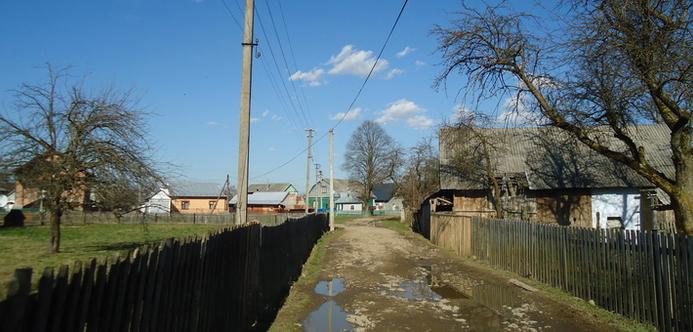
Autorin: Ilona Grabmaier „Hier gibt es keine sorgenden Männer!“ – Diese Aussage begegnete mir zu Beginn meiner ethnografischen Feldforschung in einem Dorf in der Westukraine immer wieder. Und doch zeigen meine Forschungsergebnisse eindrücklich, dass...
❓ Wie und auf welchen Grundlagen werden unterschiedliche Tätigkeiten anerkannt?
❕Sich um Mitmenschen und gemeinsam Genutztes zu kümmern, ist unabweisbarer Teil des Wirtschaftens. In diesem Verständnis, sind Sorge-Arbeit (Care) und "produktive" Arbeit gleichwürdig. Beide verdienen vielfältige Formen der Wertschätzung, die sich nicht daran orientieren, was wie gut verkaufbar ist. Bezahlung ist dabei nicht das primäre Mittel der Anerkennung. Entscheidend ist, dass Menschen ausreichend Zeit haben zu tun, was zu tun ist und dass sie über die Art der Anerkennung selbst bestimmen.
👉 Zeitbanken, wie die Stadin Aikapankki aus Helsinki, bewerten Zeit, Bedürfnisse und aktive Beiträge aller Beteiligten gleich.
👉 Die Gleichwürdigkeit der Tätigkeiten drückt sich im selbstverwalteten Krankenhaus von Cecosesola unter anderem darin aus, dass alle ihre jeweiligen Arbeitsplätze selbst reinigen. So entsteht die Anerkennung aller notwendigen Tätigkeiten im eigenen Tun.
🗨 Was sind deine Gedanken dazu?
#commons #commoning #fediverse #carework #careeconomy #cecosesola #valuingcare

Well, this week has so far involved a seizure from Jarrah (he missed a dose of his medication, which doesn't bode well for reducing it over the next month, but we'll cross that bridge when we come to it), a night of digestive issues for me, and a call from Dad late this afternoon, who thankfully didn't need the hospital this time (probably just dehydrated and low blood sugar; I went over and made him a cuppa and a sandwich).
It's Tuesday. Wtf. I'm putting in an order for less drama for the rest of the week please.
However! Good things are happening all the same:
+ Kid4 has been playing Diablo 2 and loving it and keeps asking me stuff and last night we had a chat about some things (waypoints and identifying items) and he said, 'It's so great to be finally playing a game that I can talk to you about!' (because I play few games, but Diablo 2 is one of my very faves)
+ we have a hot day forecast tomorrow but after that, hopefully it'll be into cooler weather
+ the kitchen stayed clean until the weekend! I say 'stayed clean' – I mean, I kept it clean. Obviously it's a bit messy now given the last couple of days but I feel like it's not overwhelming. Also, the fam is helping with this – yay for a virtuous circle
+ fit in a good trumpet practice before Dad called. I missed so many days last week and I really noticed the difference in my lesson
+ I ordered a record for my birthday soon and it arrived and I'm so delighted 🥰
#GoodThings #busy #family #CareWork #trumpet #housework #music #gaming #jarrah

In June, the conference “Knowing and Doing Care” will bring together different approaches and ways of understanding and examining care practices in the past and present, in the East and West. A special focus will be placed on transcultural interconnections between the past and present, between East and West. If you are interested in the topic, you can submit your own contributions until March 17. All information: https://www.uni-kiel.de/en/cluster-roots/details/news/konferenz-knowing-and-doing-care-comparing-care-roots-of-care
#CallForPapers #conference #Care #CareWork #CarePractices #PastAndPresent

 Robert (aus_dem_rahmen)
 P Gurgel-Segrillo
 BellingenNSW
 Interregnum
 de.hypotheses
 Commoning-Muster der Woche
 Bec
Bec Cluster ROOTS