 Theo
TheoMoping after another episode. As I grow older, the loss of control during an episode hits me harder than ever because I'm still stuck in my perception that "as an adult" I should know better than gestures wildly this. I can now recognise my triggers, but still failing miserably at prevention...
 ReginaT
Kennt Ihr das, Ihr #adhd brains in meiner Bubble?
Ich habe irren Hunger, aber nur ein paar wenige Gerichte würden grad passen, und die sind nicht erreichbar.
Spätestens übermorgen bin ich dann so hungrig, dass ich mir im Supermarkt 4 Tüten Chips kaufe und die völlig irre in mich reinschiebe.
#BingeEating
Ich habe irren Hunger, aber nur ein paar wenige Gerichte würden grad passen, und die sind nicht erreichbar.
Spätestens übermorgen bin ich dann so hungrig, dass ich mir im Supermarkt 4 Tüten Chips kaufe und die völlig irre in mich reinschiebe.
#BingeEating
 Kpop News Hub
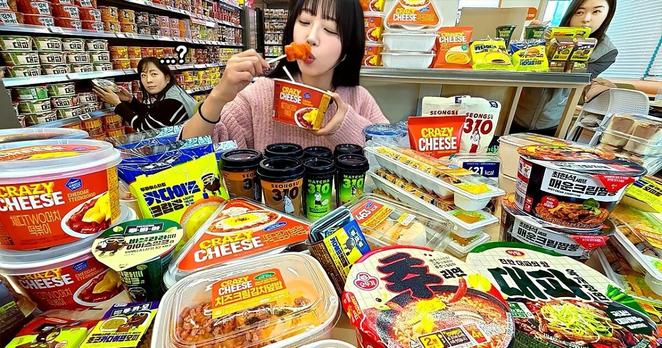
Mukbang YouTuber Tzuyang's Weight Hits All-Time Low Despite 6-Hour Binge-Eating #6Hour #alltime #BingeEating #Hits #Mukbang #Tzuyangs #Weight #YouTuber
https://kpopnewshub.com/mukbang-youtuber-tzuyangs-weight-hits-all-time-low-despite-6-hour-binge-eating/?fsp_sid=19284
https://kpopnewshub.com/mukbang-youtuber-tzuyangs-weight-hits-all-time-low-despite-6-hour-binge-eating/?fsp_sid=19284
 Imbezil
Regelmäßig nach physisch oder emotional also psychisch anstrengenden Tagen, ist meine Erschöpfung so groß, dass es eine riesige Hilfe für mich ist, zu einem Riegel greifen zu können. Ich würde sonst die ganze Zeit nichts essen und irgendwann so einen riesen Hunger haben dass ich das nächst beste und schnellste in mich Reinstopfen würde vor Hunger. Binge eating nennt sich das, glaube ich. Was mir dann unfassbar hilft sind Riegel die wirklich nährtechnisch und qualitativ sind. Sie überbrücken diese Erschöpfung großartig, sie erfüllen ganz viele Funktionen aufeinmal: Komfort, Erholung, Reduktion von Aufgaben und Reizen und Anforderungen, geben Energie, tanken quasi auf, um wieder für Alltag Kraft zu haben. Sie müssen aber auch schmecken. Wenn es gustatorisch und von den Sinnesreizen nicht passt, wird es zu einer eigenen Qual & Anforderung, Überwindung. Wenn sie Spaß machen, belohnend wirken, dann braucht es keine bzw wenig Überwindung dafür. Das ist unser Geheimrezept für #bingeeating faszinierender weise sind wir alle als Familie so. Und btw ist die Deutsche Tradition zum Abendessen oder zum Frühstück einfach Brot oder Brötchen zu essen auch genau das. REDUKTION VON KOMPLEXION. Großartig. Dasselbe gilt übrigens für meine Kultur den #Balkan. Die Reduktion von KOMPLEXION sieht da so aus, dass man immer Salami, Speck, geräuchertes Fleisch am Stück hat, dass man sich und Kindern schnell aufschneidet. Zack satt und genährt. Wenn man dann aber plötzlich sich pflanzenbasiert ernährt wird das sehr schwer, weil all dieses schnell "gemacht" aka. Aufgemacht/angeschnitten und nahrhaft und qualitativ nicht so existiert. Außer in Form von Riegeln. Und daher freue ich mich immer, wenn ich welche finde, die mir manchmal auch das Schokocreme Brot ersetzen, weil mir das Brot auspacken, schneiden und beschmieren und dann verschmiertes Gesicht und Hände abwischen zu müssen zu viel ist. Das wird sehr typisch sowohl #adhs als auch #audhs als auch #autismus zugeordnet. Und schön ist es, w
 Sky
SkyUnterschied: Adipositas - Binge Eating Syndrom
Hier mal eine kleine Erläuterung worin der Unterschied zwischen Adipositas und dem Binge Eating Syndrom liegt.
Adipositas bedeutet zuerst einmal, dass ein Mensch sehr viel Körperfett hat. Umgangssprachlich sagt man oft „stark übergewichtig“. Es gibt unterschiedliche Schweregrade. Manche Menschen haben eine leichte oder mittlere Adipositas. Andere haben eine sehr schwere Form, die man morbide Adipositas per magna nennt.
 Dr. Jennifer Weeks
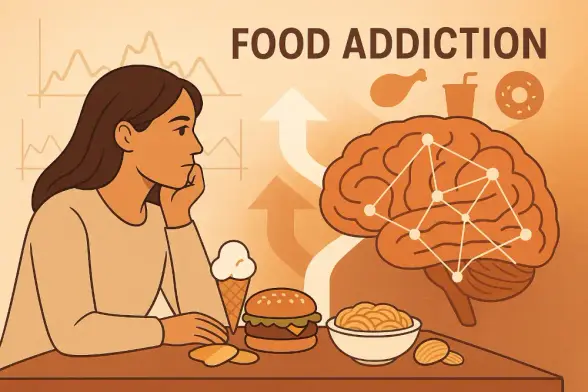
Is Food Addiction Real? Just in Time for Thanksgiving!
Originally Published on November 25th, 2025 at 08:00 amFood Addiction: The “Addiction” We All Talk About
Many of us have joked about being “addicted” to ice cream or chips, describing an intense craving that feels impossible to resist. This common experience is at the heart of a serious scientific debate: Is Food Addiction (FA) a genuine addiction, similar to substance addiction?
The conversation has grown more complex as modern definitions of addiction have expanded.
Influential bodies like the American Society of Addiction Medicine no longer require the ingestion of a psychoactive substance for something to be considered an addiction. Similarly, behavioral addictions like gambling disorder are now formally recognized. This has intensified the scientific inquiry into whether addictive-like eating fits the same mold.
To find answers, a recent longitudinal study looked at the role of emotion regulation, how we handle our feelings, to compare food addiction and substance misuse.
The findings were surprising, revealing critical differences in the emotional pathways that drive these behaviors. This article breaks down the three most impactful takeaways that challenge what we think we know about food addiction.
1. The Counter-Intuitive Role of Positive Emotions in Food Addiction
Takeaway 1: Acting on a Good Mood Predicts Substance Misuse, But Deters Food Addiction.
One of the study’s most unexpected findings relates to “positive urgency.” It’s described as a psychological trait. One defined as the tendency to act impulsively when experiencing strong positive emotions, like feeling overjoyed or extremely happy.
The research, which tracked women over six months, found a striking divergence.
A one-unit increase in a person’s positive urgency score was associated with:
- A 100% to 200% increase in the odds of future alcohol or drug-related problems.
- A 50% decrease in the odds of future food addiction.
Why would feeling good lead to such different outcomes?
The researchers suggest it comes down to the reinforcing power of the substance or behavior.
Individuals high in positive urgency may seek to amplify or extend their good feelings, and psychoactive substances are far more effective at this than food.
The study’s authors explain: Women with greater positive urgency may tend to select psychoactive substances such as alcohol or drugs that can more effectively amplify or prolong their positive feelings, rather than food. Food’s effects are less potent and thus less reinforcing than psychoactive substances.
This discovery is significant because it highlights a fundamental difference in the emotional triggers for food addiction versus substance misuse.
While a good mood might increase the risk for substance misuse, it appears to have the opposite effect on addictive-like eating.
Licensed Professional Counselors, do you need continuing education hours?
Look no further!
If you find this article interesting, Dr. Weeks’ course Sexual Education and Porn Use in Women, and her other unique courses, will engage and educate!
2. How We Judge Our Feelings Matter… But Differently
Takeaway 2: Not Accepting Your Negative Emotions Has Opposite Effects on Food Addiction vs. Alcohol-Related Problems
Another key aspect of emotion regulation is the “non-acceptance of one’s negative emotions.”
This is the tendency to have self-critical or judgmental reactions like shame, guilt, or frustration to your own distressing feelings.
Here again, the study found that this trait was linked to food addiction and alcohol-related problems in opposite ways:
- Non-acceptance was associated with more severe food addiction symptoms.
- Non-acceptance was associated with less severe alcohol-related problems.
The researchers hypothesize that this difference may be rooted in social stigma.
Women who feel ashamed of their negative emotions might turn to food as a coping mechanism because overeating is often viewed as less stigmatized than alcohol misuse.
The study references other research showing that the label “food addict” is perceived as less shameful than “substance or alcohol addiction.” This suggests that societal norms and the fear of judgment can profoundly shape which coping behaviors we adopt.
3. The Complicated Truth About Negative Moods and Food Addiction
Takeaway 3: The Link Between Bad Moods and Bingeing Isn’t a Simple One
The idea that we eat to soothe bad feelings, often called “emotional eating,” is a popular one. This is related to the concept of “negative urgency,” or the tendency to act impulsively when experiencing strong negative emotions.
At first glance, the study’s data seemed to support this common belief.
When looking at a single point in time, the researchers found that negative urgency was a common link between both food addiction and substance misuse.
However, when they analyzed the data over time in a more sophisticated multivariate model, the picture changed dramatically.
After controlling for other emotion-regulation factors, negative urgency was not a significant predictor of future food addiction or substance misuse problems.
This doesn’t mean bad moods are irrelevant.
Rather, it suggests that negative urgency might be a “fellow traveler.” It’s present alongside the true driver, but not in the driver’s seat itself.
When the researchers statistically controlled for the powerful effect of positive urgency, the predictive signal from negative urgency faded away. This finding challenges the simple narrative that “feeling bad leads to addiction” and reveals that, over the long term, other emotional factors are far more influential.
Conclusion: A Different Kind of Struggle
While food addiction and substance addiction share surface-level similarities like cravings and loss of control, this new research paints a picture of two surprisingly different psychological profiles.
One is characterized by impulsivity in good times, which predicts substance misuse, while the other is marked by self-judgment in bad times, which predicts addictive-like eating.
This challenges the one-size-fits-all model of addiction.
The study’s overall conclusion is clear: “These findings suggest that FA [Food Addiction] is not associated with the same key deficits in emotion regulation as SA [Substance Addiction].”
This leaves us with a critical question to consider:
If the emotional drivers for food addiction and substance addiction are so different, does this mean we need to rethink how we talk about, prevent, and treat addictive-like eating?
Are you exploring your trauma? Do you feel your childhood experiences were detrimental to your current mental or physical health? Utilize this free, validated, self-report questionnaire to find out.
Take the Adverse Childhood Experience (ACE) Questionnaire
Are you a professional looking to stay up-to-date with the latest information on, sex addiction, trauma, and mental health news and research? Or maybe you’re looking for continuing education courses?
Stay up-to-date with all of Dr. Jen’s work through her practice’s newsletter!
Have you found yourself in legal trouble due to your sexual behavior? Seek assistance before the court mandates it, with Sexual Addiction Treatment Services.
Are you looking for more reputable, data-backed information on sexual addiction? The Mitigation Aide Research Archive is an excellent source for executive summaries of research studies.
#addictionResearch #bingeEating #copingAndEmotions #eatingDisorders #emotionalEating #emotionalRegulation #evidenceBasedPractice #foodAddiction #negativeUrgency #positiveUrgency #shame #stigmaAndShame #substanceMisuse #traumaAndAddiction #treatmentImplications #womensMentalHealth
Wie sich meine Sicht aufs Abnehmen verändert hat
Von 2002 bis 2004 habe ich schon einmal über 120 kg abgenommen. Der Auslöser war eine Ansage meines Hausarztes: „Wenn Sie so weitermachen, sind Sie in einem Jahr tot.“
Dieser Satz traf tief und ich beschloss, ohne große Vorbereitung, ohne großartig etwas über Ernährung zu wissen, anzufangen. Von einem Tag auf den anderen stellte ich meine Ernährung um.
Damals war ich hochmotiviert. Viel Halt gab mir ein Internetforum, in dem eine Art familiärer Zusammenhalt herrschte.

Heute der erste richtige Fressanfall
Heute ist es passiert. Gestern habe ich noch einen Fastentag durchgezogen, voller Hoffnung, und heute war eigentlich auch alles okay, bis dieser verdammte Brief vom Jobcenter kam. Ich kann gar nicht beschreiben, wie sehr mich das in Rage gebracht hat. Schon allein die Art, wie sie mir da schreiben, was sie von mir wollen (auf die Einzelheiten will ich hier nicht eingehen), hat mich komplett aus dem Gleichgewicht gebracht. Dazu kam die miese Nacht davor. Unterm Strich weit über 4000 Kalorien. abSpecktrum {Sky}
Meine Tochter ist gerade ein paar Besorgungen für mich machen.
Hab ihr vorhin noch geschrieben, sie möchte mir noch eine Tafel Milka mitbringen.
Macht sie nicht. Wenn ich sowas will, soll ich es mir selbst holen.
Mein binge-gesteuertes Hirn ist mega sauer. Mein wahres Ich ist ihr sehr dankbar 
Gestern ist es mal wieder passiert. Die Binge-Störung hat gnadenlos nach altem Muster zugeschlagen. Von einer Minute auf die andere war mein Kopf wie umgepolt, als hätte jemand den Schalter einfach umgelegt, und ich habe eine riesige Portion Chicken Wings mit Pommes in mich hineingeschlungen. Ohne Genuss, ohne Freude. Einfach nur reingestopft.
Mein Kopf war ohnehin schon nicht in guter Verfassung, dazu kam der Ärger über eine bestimmte Sache, und dann wurde in der Nachbarschaft gegrillt. Die Düfte zogen durchs Fenster, und das reichte, um den Teufel in meinem Kopf zu wecken.
Doch schlimmer als das Essen selbst war, dass ich von dem Essen riesigen Durst bekam. Habe fast drei Liter Wasser getrunken, und mit dem, was ich über den Tag verteilt schon hatte, wurden es fast fünf Liter. Die Quittung kam prompt, heute Morgen Ödeme im Gesicht, und mein rechter Arm und die Hand waren nach dem Schlafen stark geschwollen. Körperlich und mental fühle ich mich miserabel.
Natürlich kam direkt nach dem Essen die übliche Lawine: Schuldgefühle, Selbsthass, Hoffnungslosigkeit. Aber zum Glück ist das heute schon wieder ein Stück weit in den Hintergrund getreten.
Das einzig Positive: ich habe nicht auch noch zu Süßkram gegriffen. Ein kleiner Lichtblick im Chaos.
Ursprünglich wollte ich am Montag auf die Waage, aber das verschiebe ich um eine Woche. 36 Stunden nach so einem Anfall, noch dazu mit Wassereinlagerungen auf die Waage zu steigen, wäre pure Selbstsabotage. Das Ergebnis würde mich direkt in die nächste Krise stürzen.
Also nehme ich es, wie es ist. Heute gibt es angepasstes Futter: Skyr und Brokkoli. Zusammen mit meinen Supps habe ich damit die Grundversorgung gesichert und kann wenigstens ein Teil von gestern wieder ausgleichen.
Jetzt heißt es: tief durchatmen, den Blick nach vorn richten – und erst einmal durch diesen Tag kommen.
#BED #BingeEating #ProjektPhönix #NutriHackCollective #HackYourLimits #Abnehmen #Ernährugsumstellung #Diät #IF #OMAD #IntermittierendesFasten #Intervallfasten #SkyCrew