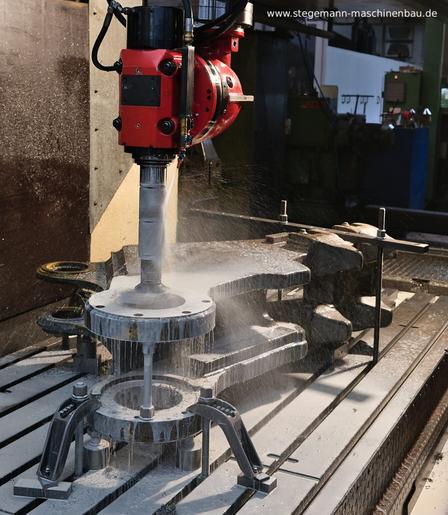
@stepheneb @RuthMalan @ewen Maybe it's a good moment to bring out some classic quotes again:

"We make our tools and then they shape us."
(not giving attribution because I've seen far too many conflicting sources for it)

"The limits of my language means the limits of my world."
— Ludwig Wittgenstein

Also this one:

"You don't need tools. You need techniques."
(here I actually don't know the source)

All of them, but especially the latter two, have been very influential on my tool-building journey and design philosophy in general. Tools are concrete instantiations of concepts, techniques, but techniques themselves are much more important, more transferable and more valuable to learn, to adopt and to internalize.

Tools are replaceable, or at least they should be.

In almost every other field of human endeavor, tools have mostly been replaceable and skills learned (aka techniques) are directly transferable. Only when it comes to software have we changed this behavior to fully bind large parts of our problem solving skills & approaches, and in many cases, our entire livelihoods, to a handful of increasingly monopolistic tool vendors, whose only interest is to extract value, bind us to their tooling, their platforms and their network effects.

I've seen this in all parts of the creative and tech industries: Help and condition people to become a power users/operators (or "thought leaders") in these insular systems, support and entice them with a few extra morsels thrown here and there to select people (e.g. sponsorship deals), dangle career opportunities, invitations to conferences/events where they sing praise to the platform lords and opportunities. In the end, this "community engagement" is all a form of marketing for these providers, platform-based nepotism, connections, revolving doors, more than about the actual work produced or transferable skills obtained.

For the longest time, I found this behavior especially predominant and so very alienating in the "creative industries", which just seemingly can't get enough of this model! Rather than investing time & effort into helping shape and co-create ownable tools and transferrable techniques themselves, to experiment and create with techniques "outside the box", for the longest time the de-facto behavior has always been to become a "company man"-type person/expert.

Narrow field experts, consultants and "platform wars" everywhere, for as long as I can remember: AtariXL vs. C64, ST vs Amiga, Flash vs. Director, Cubase vs Protools vs Ableton, Adobe vs Affinity, Houdini vs. Alias vs. Blender, Light Room vs. Dark Table, Processing vs. OpenFrameworks vs. Cinder, React vs Angular vs. Vue, C vs Rust vs Zig etc.

In some sense it doesn't even matter if these are closed or open source platforms/providers. Entire disciplines/sectors are tied up in monolithic & monopolistic tools and the streamlined visions/philosophies of their purveyors.

Every creative idea and solution is mostly approached & judged through the lenses of these tools and their capabilities. For many even only unconsciously so. Auto-pilot mode engaged.

Almost every one of these discipline-defining tools has turned into super complex bloatware, deemed necessary to establish and maintain monopoly status, cover all bases. And even though these tools have become so huge and do afford a vast spectrum of creative expressions, I've been finding it extremely disturbing and alienating that, as a social group, especially "creative" professionals are exhibiting such strong consumerist behaviors and just aren't more interested in questioning and shaping these workflows, these tools and possibilities/options themselves, seemingly unaware (or uncaring) about that second part of the first quote above:

"...and then they shape us"

#ToolMaking #Creativity #Tech #Monopolies #Platform #Behavior #Quote

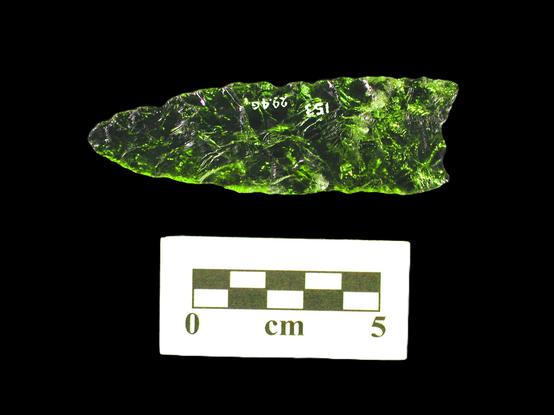
Why did Clovis toolmakers choose difficult quartz crystal? New study offers clues

Quartz crystals are difficult to knap due to size, hardness, and crystalline structure, making them a "low-quality" raw material. However, the Clovis people of North America sometimes made points and other tools from this material despite its drawbacks. To determine whether the quartz crystal points of the Clovis were functionally comparable to those made from higher-quality toolstones, Dr. Briggs Buchanan and his colleagues conducted scaling and geometric morphometric analyses on Clovis crystal points. The study is published in Lithic Technology.

Phys.org

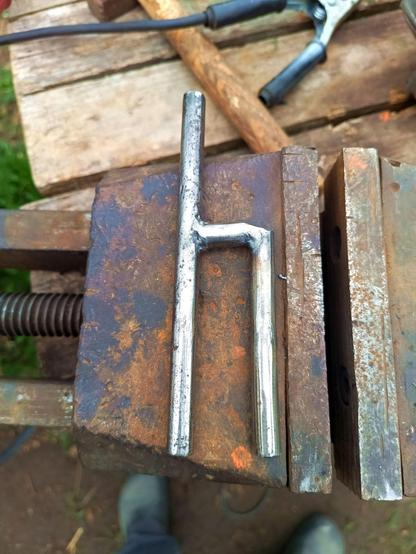
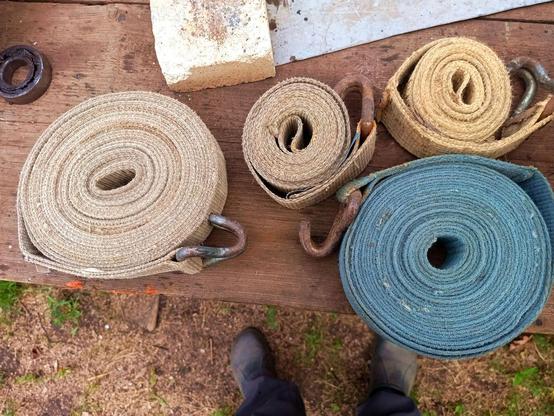
Made a thing I saw some Youtuber use. Its as useful as it looked, and easy to make.

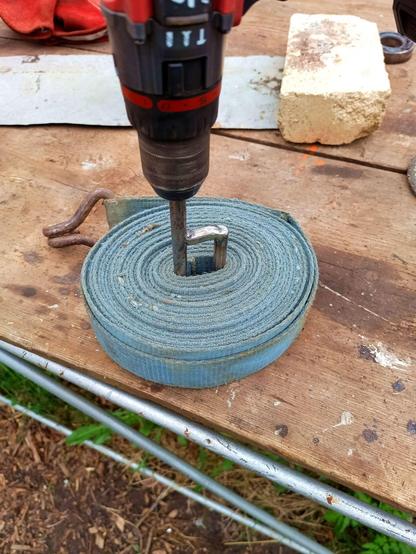
Couple bits cut off a rusty rod, cleaned up and welded together as letter "h" and voila, a webbing winder for use with a battery drill.

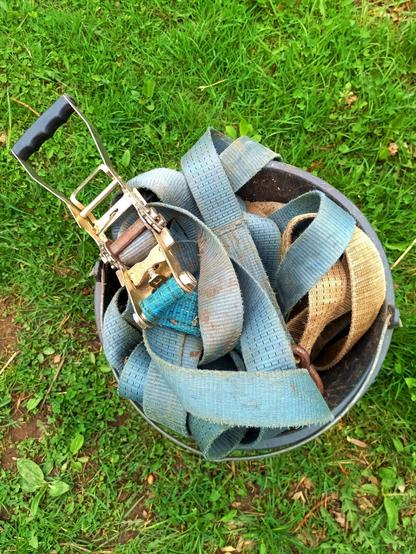
Instead of a tangled mess in a bucket, I've got my cargo straps ready for next use in record time. Should also work with the firehose, but I haven't tried that yet.

If you're making one, two tips:

1. The short leg should be terminating before the long leg reaches the bottom so it can be used against a flat surface. About 5-10mm shorter.

2. The legs should be slightly narrower at the bottom than at the top, to make it easy pulling the tool out of a tight roll when done.

#Tools #Toolmaking #Welding #DIY #Webbing #Winder #Homestead #CargoStrap

FOSS, single-file, vanilla, save with CTRL + S. This is designed to make single file webpages/programs in absolute position or VW. The keyboard is like Vi. 20 levels per project. #OpenSource #FOSS #IndieDev #ShowAndTell #Maker #HackerCulture #KeyboardShortcuts #ToolMaking #SelfHosted #WebDev #CodingLife #SoftwareEngineering #DIY #DevLife #WebTool
FOSS, single-file, vanilla, save with CTRL + S. This is designed to make single file webpages/programs in absolute position or VW. The keyboard is like Vi. 20 levels per project. #Maker #Creative #DIY #ShowAndTell #OpenSource #FOSS #CreativeToots #DigitalArt #IndieDev #BuildInPublic #ToolMaking #HackerCulture #WebTools #AppDesign #UserInterface

Incidentally, I normally post ‘quiet public’, meaning I use no hashtags because they don’t work in that mode. Posts look better, too. Stupid word, hashtag.

So if you want to follow along in my woodworking, restoration, or tool-making threads, for a good laugh, as I explore doing these things, the best way to do that is follow me, or use my feed somehow. It’s mostly about that here anyway, and sometimes house projects and #gardening.
⚒️ 💥 ✌️

#woodworking
#restoration
#HandTools
#ToolMaking

I heartily appreciate both utility and beauty. Useful objects that are also beautiful bring me joy.

I'd never heard of sashiko until my therapist suggested I try it as a meditative practice. I loved the idea, and really like the look of the traditional patterns I've seen, so I gave it a try. I like it well enough to keep doing it, and made myself a sashiko thimble using a quarter, some scrap fabric, and a hair elastic.

But I find drawing grids to be both very difficult, and tedious enough to be a barrier.

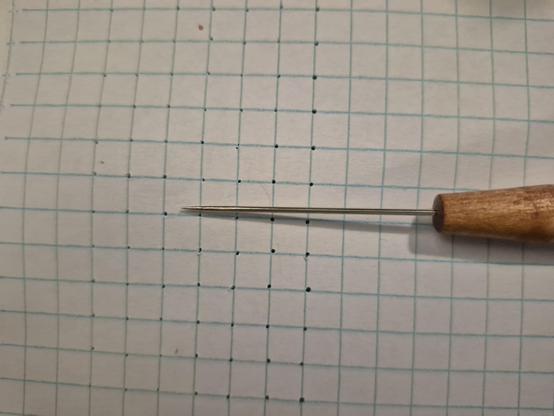
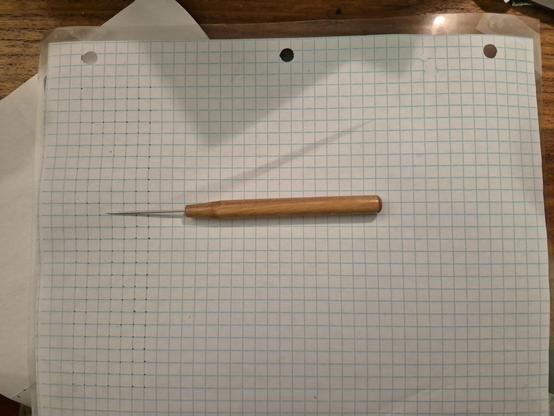
So now I'm making a stencil. I've taped a piece of graph paper to an old thin plastic cutting board; the kind you can roll up, and I'm punching holes through it at the corners of the squares with an awl. I expect this would also work well using paperboard (the sort of thin cardboard cereal boxes are made of) and a regular needle.

I think making some of the tools I'm going to use is a helpful way of committing to the practice, so I'm more likely to keep doing it than if I just bought commercially available ones. Also, I get to enjoy making the tools.

Making the stencil is tedious, but I'm very pleased with myself about the idea, and I'll be happy to have an easier way to draw grids.

#Sashiko #ToolMaking #Embroidery #VisibleMending

Cameron Koczon how Fictive Kin’s product development starts with “a Seinfeld” - an app that does nothing - and ends with a polished core experience.

📻 Tune in: https://interfacecafe.com/designing-tools-cameron-koczon/

#ProductDesign #UX #ToolMaking #Software #Podcast

Designing Tools is Awesome: Cameron Koczon, Partner at Fictive Kin

Fictive Kin’s Cameron Koczon on understanding the foundational impact of design.

Interface Café

#SGU #TheSkepticsGuideToTheUniverse
The Skeptics Guide #1061 - Nov 8 2025

Quickie with Bob: #Nanotech #Cancer Drug; News Items: NEO #Robot, UN #Climate Report, Human #Toolmaking, Worst #Panspermia #Headline Ever, AI-Powered #Wound #Healer; Who's That #Noisy; Your Questions and E-mails: Horse #Evolution, Stranded #Taikonauts; #Science or Fiction

Webseite der Episode: https://www.theskepticsguide.org/podcast/sgu

Mediendatei: https://traffic.libsyn.com/secure/skepticsguide/skepticast2025-11-08.mp3

The Skeptics Guide to the Universe

The Skeptics Guide to the Universe | Weekly science podcast produced by the SGU Productions llc. Also provides blogs, forums, videos and resources.