Human genetics implicate thromboembolism in the pathogenesis of long COVID in individuals of European ancestry
SARS-CoV-2 infection can result in long COVID, characterized by post-acute symptoms from multiple organs. Current hypotheses on mechanisms underlying long COVID include persistent inflammation and thromboembolism; however, compelling evidence from humans is limited and causal associations remain unclear. Here, we tested the association of thromboembolism-related genetic variants with long COVID in the Long COVID Host Genetics Initiative ( n cases=3,018; n controls=994,582). Primary analyses revealed that each unit increase in the log-odds of genetically predicted venous thromboembolism risk was associated with 1.21-fold odds of long COVID (95%CI: 1.08-1.35; P =1.2×10⁻³). This association was independent of acute COVID-19 severity, robust across genetic instruments and methods, and replicated in external datasets for both venous thromboembolism and long COVID. Downstream analyses using gene-specific instruments, along with protein and gene expression data, suggested the protease-activated receptor 1 (PAR-1) as a potential molecular contributor to long COVID. These findings provide human genetic evidence implicating thromboembolism in long COVID pathogenesis.
### Competing Interest Statement
B.S. is a full-time employee of Bristol Myers Squibb. M.K.G. has consulted for Tourmaline Bio and serves in the Editorial Board of Neurology, both not relevant to this work. L.V.W. reports research funding from GlaxoSmithKline, Genentech and Orion Pharma, and consultancy for Galapagos and GlaxoSmithKline, outside of the submitted work. C.E.B. has received grants and consultancy fees from 4D Pharma, AstraZeneca, Chiesi, Genentech, GSK, Mologic, Novartis, Regeneron Pharmaceuticals, Roche and Sanofi. M.C.H. reports research funding from Genentech, site principal investigator work for Novartis, consulting fees from Comanche Biopharma, and advisory board service for Miga Health, all unrelated to the present work. K.F. received research grants from Novo Nordisk and Swedish Orphan Biovitrum AB (Sobi). T.V. has participated in advisory boards and/or acted as a speaker on behalf of Bayer, BMS/Pfizer, Boehringer Ingelheim, Daiichi Sankyo, Leo Pharma, Sanofi Aventis. P.V. has received research funding from Bayer, BMS, Pfizer, and Leo Pharma, and honoraria from Bayer, Pfizer, BMS, Daiichi-Sankyo, Sanofi-Aventis, Leo Pharma, Anthos Therapeutics, and Astra-Zeneca.
### Funding Statement
A.S. is supported by Life Sciences Research Partners (LSRP). T.N. is supported by a research fellowship of the Japan Society for the Promotion of Science for Young Scientists (22J30004) and by a Grant-in-Aid for Scientific Research (B) (23H02917). M.K.G. is funded by the German Research Foundation in the form of an Emmy Noether grant (GZ: GE 3461/2-1, ID 512461526). B.G.G. is supported by the Wellcome Trust (221680/Z/20/Z). L.V.W. holds a GlaxoSmithKline Asthma + Lung UK Chair in Respiratory Research (C17-1). B.R. is supported by a Wellcome Career Development Award fellowship (302210/Z/23/Z). H.Z. is supported by the Swedish Research Council (2021-03050), the Knut and Alice Wallenberg Foundation (2023.0141), Groschinskys Minnesfond, the Max Planck Society as well as Cornell's, Philip-Soerensen's, and Hedlund's foundations. H.M.O. is supported by the Academy of Finland (#1350181) and the NIH (R01AI170850). K.F. is supported by the National Institute of Health (R01Hl161365), KU Leuven (C14/23/121), research foundation Flanders (FWO; G072921N). T.V. is supported by a grant from FWO (1843423N). PHOSP-COVID is jointly funded by a grant from the MRC-UK Research and Innovation and the Department of Health and Social Care through the National Institute for Health Research (NIHR) rapid response panel to tackle COVID-19 (grant references: MR/V027859/1 and COV0319). The views expressed in the publication are those of the author(s) and not necessarily those of the National Health Service (NHS), the NIHR or the Department of Health and Social Care. This study would not be possible without all the participants who have given their time and support. We thank all the participants and their families. We thank the many research administrators, health-care and social-care professionals who contributed to setting up and delivering the study at all of the 65 NHS trusts/Health boards and 25 research institutions across the UK, as well as all the supporting staff at the NIHR Clinical Research Network, Health Research Authority, Research Ethics Committee, Department of Health and Social Care, Public Health Scotland, and Public Health England, and support from the ISARIC Coronavirus Clinical Characterisation Consortium. We thank Kate Holmes at the NIHR Office for Clinical Research Infrastructure (NOCRI) for her support in coordinating the charities group. The PHOSP-COVID industry framework was formed to provide advice and support in commercial discussions, and we thank the Association of the British Pharmaceutical Industry as well NOCRI for coordinating this. We are very grateful to all the charities that have provided insight to the study: Action Pulmonary Fibrosis, Alzheimer's Research UK, Asthma + Lung UK, British Heart Foundation, Diabetes UK, Cystic Fibrosis Trust, Kidney Research UK, MQ Mental Health, Muscular Dystrophy UK, Stroke Association Blood Cancer UK, McPin Foundations, and Versus Arthritis. We thank the NIHR Leicester Biomedical Research Centre patient and public involvement group and Long Covid Support.
### Author Declarations
I confirm all relevant ethical guidelines have been followed, and any necessary IRB and/or ethics committee approvals have been obtained.
Yes
The details of the IRB/oversight body that provided approval or exemption for the research described are given below:
This study used summary statistics from genome-wide association studies performed in FinnGen (release 10; available from https://r10.finngen.fi/), the Long COVID Host Genetics Initiative (available from https://my.locuszoom.org/gwas/793752/; https://doi.org/10.1101/2023.06.29.23292056), the Million Veteran Program (available from dbGAP, accession code no. phs001672.v2.p1), the PHOSP-COVID study (https://www.phosp.org/), the COVID-19 Host Genetics Initiative (release 7; available from https://www.covid19hg.org/results/r7/), the UK Biobank (available from http://ukb-ppp.gwas.eu/), the Genotype-Tissue Expression project (v10; available from https://gtexportal.org/home/downloads/adult-gtex/qtl), and the GeneSTAR Research Study (available from http://www.biostat.jhsph.edu/∼kkammers/GeneSTAR/).
I confirm that all necessary patient/participant consent has been obtained and the appropriate institutional forms have been archived, and that any patient/participant/sample identifiers included were not known to anyone (e.g., hospital staff, patients or participants themselves) outside the research group so cannot be used to identify individuals.
Yes
I understand that all clinical trials and any other prospective interventional studies must be registered with an ICMJE-approved registry, such as ClinicalTrials.gov. I confirm that any such study reported in the manuscript has been registered and the trial registration ID is provided (note: if posting a prospective study registered retrospectively, please provide a statement in the trial ID field explaining why the study was not registered in advance).
Yes
I have followed all appropriate research reporting guidelines, such as any relevant EQUATOR Network research reporting checklist(s) and other pertinent material, if applicable.
Yes
This study used summary statistics from genome-wide association studies performed in FinnGen (release 10; available from https://r10.finngen.fi/), the Long COVID Host Genetics Initiative (available from https://my.locuszoom.org/gwas/793752/; https://doi.org/10.1101/2023.06.29.23292056), the Million Veteran Program (available from dbGAP, accession code no. phs001672.v2.p1), the PHOSP-COVID study (https://www.phosp.org/), the COVID-19 Host Genetics Initiative (release 7; available from https://www.covid19hg.org/results/r7/), the UK Biobank (available from http://ukb-ppp.gwas.eu/), the Genotype-Tissue Expression project (v10; available from https://gtexportal.org/home/downloads/adult-gtex/qtl), and the GeneSTAR Research Study (available from http://www.biostat.jhsph.edu/∼kkammers/GeneSTAR/).
<https://r10.finngen.fi/>
<https://my.locuszoom.org/gwas/793752/>
<https://doi.org/10.1101/2023.06.29.23292056>
<https://www.phosp.org/>
<https://www.covid19hg.org/results/r7/>
<http://ukb-ppp.gwas.eu/>
<https://gtexportal.org/home/downloads/adult-gtex/qtl>
<http://www.biostat.jhsph.edu/~kkammers/GeneSTAR/>
 Tom Kindlon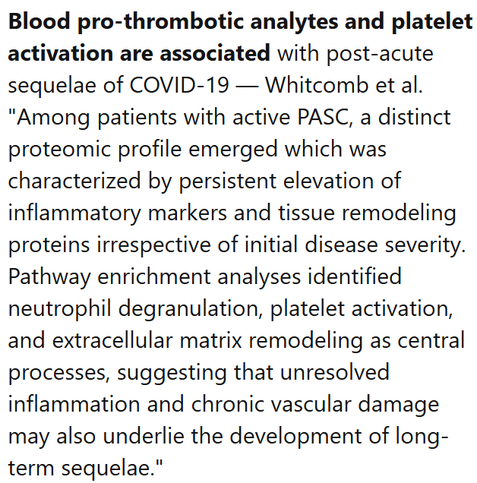
 Richard Lewis
 Zoomers of the Sunshine Coast 🇨🇦
 Mr Spock's cat